Change happens

“The only way to make sense out of change is to plunge into it, move with it, and join the dance.” –Alan Watts

Flow with it. Don’t resist. 

Be willing to let go of what was for what is and what will be. 

Adaptability to change is more powerful than cleverness or strength. 

Worse than Nero

Religious violence has a long and terrible history.

From Sapiens by Yuval Noah Harari:

“In the 300 years from the crucifixion of Christ to the conversion of Emperor Constantine, polytheistic Roman emperors initiated no more than four general persecutions of Christians. Local administrators and governors incited some anti-Christian violence of their own. Still, if we combine all the victims of all these persecutions, it turns out that in these three centuries, the polytheistic Romans killed no more than a few thousand Christians. In contrast, over the course of the next 1,500 years, Christians slaughtered Christians by the millions to defend slightly different interpretations of the religion of love and compassion.”

And he adds this for perspective:

“On 23 August 1572, French Catholics who stressed the importance of good deeds attacked communities of French Protestants who highlighted God’s love for humankind. In this attack, the St Bartholomew’s Day Massacre, between 5,000 and 10,000 Protestants were slaughtered in less than twenty-four hours. … More Christians were killed by fellow Christians in those twenty-four hours than by the polytheistic Roman Empire throughout its entire existence.”

Harari’s book is an epic survey of the history of humans on earth. It’s filled with sobering details like this along with a hopeful perspective on how far we have come.

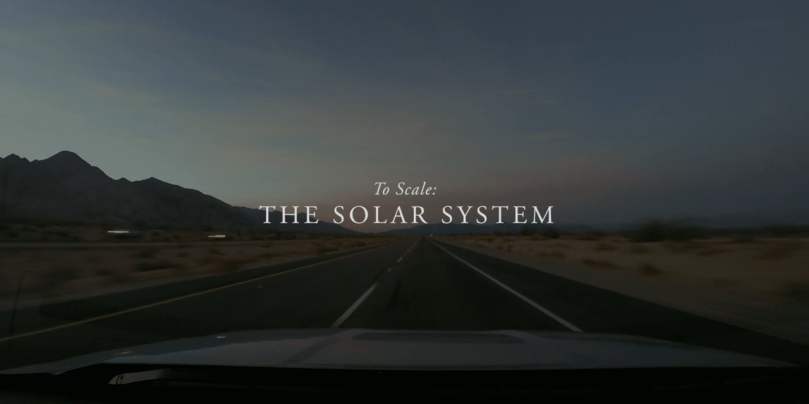
To Scale: A short film to put you in your place

Those pictures of the solar system with all the planets lined up in the order of their orbits are nice ways to visualize where things are in general. But they are nowhere close to representing the true scale of the size of the solar system.

Wylie Overstreet and Alex Gorosh made this amazing short film that actually shows the solar system to scale. They had to go to the desert and use seven miles of open land to put the sun and the orbits of the marble-sized earth and the other planets in their proper perspective.

Watching this film is seven minutes well spent. It’s a clever concept very well executed.

And it’s a great reminder of not only just how small we are (that seems to be a theme here) but also how we tend to underestimate the vast amounts of emptiness out there. Only a tiny portion of the universe is tangible.

It’s good to be here.

How wonderful to be anywhere at all.

535226062_1280x640

Sunday night Stoic: Fraction of infinity

Meditations 12.32:

“The fraction of infinity, of that vast abyss of time, allotted to each of us. Absorbed in an instant into eternity.The fraction of all substance, and all spirit.

The fraction of the whole earth you crawl about on.

Keep all that in mind, and don’t treat anything as important except doing what your nature demands, and accepting what Nature sends you.”

I continue to be drawn to perspectives showing me how small I am, how little I matter in time and space.

Our default state is to think of the universe as our universe. We experience reality, of course, primarily from our first-person vantage point.

But our portion of all that is and was and will be is an infinitesimal fraction. And that delights me and unburdens me and makes trivial all the things we inflate to be “important”.

What’s important is fulfilling your nature, no matter how tiny you may be in the very big picture.

Be excellent. Accept what comes. Do what you can with what you’ve got. Enjoy the life you have in the brief moment you’re here.

Excellent links

Some of the best things I found on the internet this week:

  • The Dirty Secret of Public Speaking – and What to Do About It – Nick Morgan regularly offers the most effective insight on what makes for a good presentation. This post highlights the reality that most audiences rarely remember much of anything a speaker says. Morgan offers some good tips on overcoming that along with this challenge: “make sure that your speech is about only one idea.” I struggle with this, too often relying on a quantity of ideas in the hope that it will be more likely for everyone in the audience to find something of value.
  • How the Rams Built a Laboratory for Millennials – WSJ – In addition to shorter meetings and later wake up calls, this NFL team is adjusting to a different generational mindset by regularly drilling down to one key question, a question everyone should ask no matter your generation:

They also need to know “why” to everything: If you explain a concept to them on the field, they need to know the reason behind it. Millennial players questioning everything is something that’s helped the Rams, the team says, because it forces coaches and executives to examine their own methods (Why are we doing this?).

“I don’t agree that you, when you become students at colleges, have to be coddled and protected from different points of view. I think you should be able to — anybody who comes to speak to you and you disagree with, you should have an argument with ‘em. But you shouldn’t silence them by saying, ‘You can’t come because I’m too sensitive to hear what you have to say.’ That’s not the way we learn either.”

Goals are individual experiences and accomplishments you strive for. A vision is the bigger picture. Your life’s vision defines who you want to be, what you want to be known for and the set of experiences and accomplishments you aim for. Your vision helps define the goals by giving you a framework to evaluate those goals.

Your vision becomes your why.

Meticulous attention to detail

My friend Emily is a young professional not too far removed from college. She’s living a dream working in New York City.

She was featured in an interview online and had this very thoughtful response, profound even, when asked for her most important advice:

“My biggest piece of advice is to fiercely and tirelessly pay meticulous attention to detail, and specifically the details that no one else thought to or cared to remember. Be that person with the mindset that “no job is too small.” What I have discovered time and time again, is that people trust other people that really care; not just about the beautiful clothes and the red carpets, but the less glamorous details that people steer clear from. Don’t steer clear of those things. Embrace them, run with them, and when that trust is built into a foundation that cannot be torn down by one mistake, those big things suddenly become yours. And these big things you create are so beautifully done because of how much you cared about the little things. And those are going to be your true moments of pride.”

I can’t add to that. So well said. And so true. 

Care more than seems reasonable. 

Improvise

Your life is daily improv.

Be willing to trust that you will come up with something worthwhile when your moment comes. 

Think of those cliche icebreaker activities where everyone goes around a circle and answers the same question, like “What’s your favorite book?” 

The activity is designed to have people get to know each other better. But what really happens?

You’re acting like you’re paying close attention to what everyone is saying, but you’re actually rehearsing in your mind what you will say when it’s your turn. 

What if, instead, you emptied your mind and focused completely on the others? When your turn came you would have to trust that something intelligible would come out of you. 

In fact, the spontaneous, improvised response is likely to be more effective than the one you would have contrived. 

Your life is now. Strengthen your improv muscles by showing up regularly and being as fully present as you can be. 

Say “Yes” to whatever circumstances you find yourself facing. Trust that the life you’ve lived has prepared you for this moment. 

Just keep swinging

“My motto was always to keep swinging. Whether I was in a slump or feeling badly, the only thing to do was keep swinging.” —Hank Aaron

ht @garretkramer

Have a bias for action.

Do something rather than nothing.

Even a step in the wrong direction is better than standing still.

You don’t have to feel right to act. Just do what you think is best.

Don’t wait on inspiration. Inspiration is for amateurs.

If you’re in a slump, don’t stand at the plate with your bat on your shoulder, hoping for ball four.

Swing.

And keep swinging.

Sunday night Stoic: Don’t let anything deter you

Meditations 12.1:

“Everything you’re trying to reach—by taking the long way round—you could have right now, this moment. If you’d only stop thwarting your own attempts. If you’d only let go of the past, entrust the future to Providence, and guide the present toward reverence and justice. 

Reverence: so you’ll accept what you’re allotted. Nature intended it for you, and you for it.

Justice: so that you’ll speak the truth, frankly and without evasions, and act as you should—and as other people deserve.

Don’t let anything deter you: other people’s misbehavior, your own misperceptions, What People Will Say, or the feelings of the body that covers you (let the affected part take care of those). And if, when it’s time to depart, you shunt everything aside except your mind and the divinity within … if it isn’t ceasing to live that you’re afraid of but never beginning to live properly … then you’ll be worthy of the world that made you.

No longer an alien in your own land.

No longer shocked by everyday events—as if they were unheard-of aberrations.

No longer at the mercy of this, or that.”

Accept what is. Resistance is futile

And have the courage to do the right thing. Always. 

So simple. So hard. 

This gem of a book never fails to both comfort and challenge.

Going for it on fourth down, every time

I’ve posted about maverick Arkansas high school football coach Kevin Kelley before, and now Andy Staples of SI writes about seeing his team, the Pulaski Academy Bruins, in person where they ended the opponent’s 84-game home winning streak.

Kelley’s team is famous for going for it on almost every 4th-down, opting for onsides kicks on every kickoff, and now building laterals into many of their passing plays. Here’s Staples’s take on why this is so successful:

The Bruins don’t win because they don’t punt or because they attempt onside kicks every time or because their receivers routinely lateral on plays that aren’t the last one of the game. They win because of the attitude Kelley’s approach instills on Pulaski Academy’s sideline and the mindset it instills on the other sideline. The Bruins always play as if they’re down 10 with 90 seconds to go. Think about all the points you’ve seen scored in that type of situation. The offense plays as if it has nothing to lose. The defense tightens, playing to protect the lead rather than to advance the cause. That’s every minute of every Pulaski Academy game.

Wouldn’t you love to play on a team with that kind of bold philosophy? Wouldn’t you love to work on a team with a disregard for convention, with an attitude of curiosity and boldness that defies the caution that restrains most organizations?

The safe thing is to do what everyone else does: Build a resume that looks like everyone else’s. Produce work like everyone else does. Avoid artistic risks and leaps of faith. Accept the conventional wisdom and common assumptions because they’re conventional and common and safe.

But caution is the devil.

What if you had the courage to go for it on fourth down regularly, to try the uncommon path, to follow your reason and your creativity in a different direction altogether?

There is a lot of elbow room out on the edges. Not many have the chutzpah to go there. The competition for average levels of success is way stiffer than it is for extraordinary success because so few aim that high. It seems counterintuitive, but it might be easier for you to achieve a crazy, scary dream than to achieve the safe, sanitized middle class American dream.

Even if you regularly fall short when you defy convention, you’ll have a lot more fun than if you had just followed along with the crowd. And you’ll be strengthening your courage muscles and making yourself even more willing to be bold.

Don’t punt. Go for it.

Biden and Colbert and real talk

My first career was working on Capitol Hill. I walked into it a bright eyed “Mr. Smith” going to Washinton. 

I didn’t leave it four years later as a jaded cynic exactly. I still had it in my head that I might be fit for a political career. But the longer I was away from D.C., the more the allure of politics faded. 

After D.C. I stumbled into a job working with college students and gradually grew into appreciating making a difference one young friend at a time. 

Eventually, I stopped even following politics very closely. I don’t watch TV news. It seems mostly inane and insulting. Skimming the headlines on The New York Times keeps me up to date, and social media is filled with the absurdities of the current political process. 

And the headlines now point to a process that attracts seemingly the most shameless, vacuous people imaginable. The news I have seen looks to be something from a Saturday Night Live parody instead of actual public discourse. 

Maybe that’s why I was so heartened by this conversation on The Late Show this week between Stephen Colbert and Vice President Biden. 

It’s worth watching. These men have a remarkable, touching conversation on national television on what is supposed to be a zany talk show. They talk about heart-wrenching loss and faith and healing as these two men are uniquely able to do. (Biden lost his son to cancer recently, and lost his daughter and first wife in an accident at the beginning of his career in the Senate. Colbert’s father and two of his brothers were killed in a plane crash when Colbert was ten.)

Biden has a well earned reputation for connecting with authenticity and heart and often delightfully unscripted goofiness. He’s being urged to run for President, and you can see in this conversation with Colbert that he’s almost physically agonizing over whether he’s whole enough after the recent death of his son to even consider it. 

This kind of vulnerability is so rare in most public officials and office seekers. What passes for bold candor in politicians lately is not courageous or vulnerable at all. 

Colbert, by the way, keeps elevating his craft. He’s offering smart and savvy and challenging entertainment and ideas. In a society addicted to click-bait and wowed by lip-sync battles, who knows if there’s a place for the kinds of conversations Colbert is having. I hope so. 

And I hope there are more Joe Bidens out there who have the courage to be real and show some heart as they attempt to truly lead. 

You can rue the political process and tune it out for your own peace of mind. But we still need men and women of real character to have the courage to step into the fray and bring integrity and empathy and honest-to-goodness vision. 

Don’t settle for less in those you entrust with the public good. 

Wonderful life: Rebooting my college talk again

I get asked to speak on campus to student groups several times each academic year. I’m honored to be invited, and it’s a chance for me to be intentional about thinking through and sharing something that might awaken possibility in college students. 

Tonight was my first gig of the semester. Instead of dusting off a talk I did the previous year, I like to start over and rethink and reboot. 

I will often include stories and quotations and points I’ve used before but mix them with new ideas and stories and a fresh narrative structure and theme.

There’s a lot of value in regularly starting over, even with—especially with—the tried and true. 

Your best work may be buried under the good work you’ve been too content with. Dig it up and and shake it out and get busy making something new. 

Screen Shot 2015-09-09 at 4.13.53 PM

The formula for greatness

I found this 2006 article, What it takes to be great, in Fortune.com’s archives.

It covers much of the same ground as Daniel Coyle’s book, The Talent Code.

In short, the key to greatness is… wait for it… practice—diligent, consistent, focused, challenging practice.

From the article:

The best people in any field are those who devote the most hours to what the researchers call “deliberate practice.” It’s activity that’s explicitly intended to improve performance, that reaches for objectives just beyond one’s level of competence, provides feedback on results and involves high levels of repetition.

Most of us just go through the motions and simply repeat what we are good at already. It’s easy and feels good. But that kind of practice does nothing to propel you forward.

Masters, however, repeatedly push themselves to failure and focus on steady, incremental improvements.

Simply hitting a bucket of balls is not deliberate practice, which is why most golfers don’t get better. Hitting an eight-iron 300 times with a goal of leaving the ball within 20 feet of the pin 80 percent of the time, continually observing results and making appropriate adjustments, and doing that for hours every day – that’s deliberate practice.

Consistency is crucial. As Ericsson notes, “Elite performers in many diverse domains have been found to practice, on the average, roughly the same amount every day, including weekends.”

Evidence crosses a remarkable range of fields. In a study of 20-year-old violinists by Ericsson and colleagues, the best group (judged by conservatory teachers) averaged 10,000 hours of deliberate practice over their lives; the next-best averaged 7,500 hours; and the next, 5,000. It’s the same story in surgery, insurance sales, and virtually every sport. More deliberate practice equals better performance. Tons of it equals great performance.

What’s encouraging about all this is that greatness isn’t the domain of those born with extraordinary gifts. They may have an advantage, but ultimately it comes down to factors you can control—the quality and quantity of your effort, your willingness to build effective habits and put in the kind of practice that leads to steady but sure improvement.

Determine what you want to be great at, come up with a plan to get there, and then do the work.

Amy Poehler? Yes Please!


I spent more than five hours in the car tonight, driving to a family beach getaway for this holiday weekend. 

My wife and I listened to the audiobook of Amy Poehler’s Yes Please.  
It doesn’t seem to have much of a narrative arc, but it’s a fun listen. Poehler narrates herself and there are surprise guest voices who add serendipitous fun. 

She is candid and occasionally crude, but she is endearing throughout with thoughtful insights and doses of life wisdom. And now I just want to binge watch Parks and Recreation

By the way, the gold standard of comedy memoir audiobooks is Steve Martin’s Born Standing Up. So, so good. 

The guardian

Solid insight from @garrytan:

Steve Jobs was that guardian for Apple. He was ruthlessly protective of the experience Apple products provided for their customers. 

Walt Disney was all about “plussing” and relentlessly improving the Disney experience. 

This article about Stephen Colbert shows he’s personally overseeing even very small details about his reinvention of The Late Show. 

My friend Kevin was telling me today that Taylor Swift is like that with her concerts. 

Committees and bureaucracy are more likely to offer safe but unexceptional products and services. 

A singular and determined voice is usually generating and guiding the very best work. 

Steer into the fear

From Neil Gaiman’s masterful 2012 “Make Good Art” commencement address:

Do the stuff that only you can do.

The urge, starting out, is to copy. And that’s not a bad thing. Most of us only find our own voices after we’ve sounded like a lot of other people. But the one thing that you have that nobody else has is you. Your voice, your mind, your story, your vision. So write and draw and build and play and dance and live as only you can.

The moment that you feel that, just possibly, you’re walking down the street naked, exposing too much of your heart and your mind and what exists on the inside, showing too much of yourself. That’s the moment you may be starting to get it right.

The things I’ve done that worked the best were the things I was the least certain about…

That vulnerable feeling—as if you’re opening yourself too much, exposing more than feels safe—is worth the risk.

The best things—love, art, any act of authentic creation or wholehearted kindness—come from that place which seems so fragile but which is actually your singular source of strength.

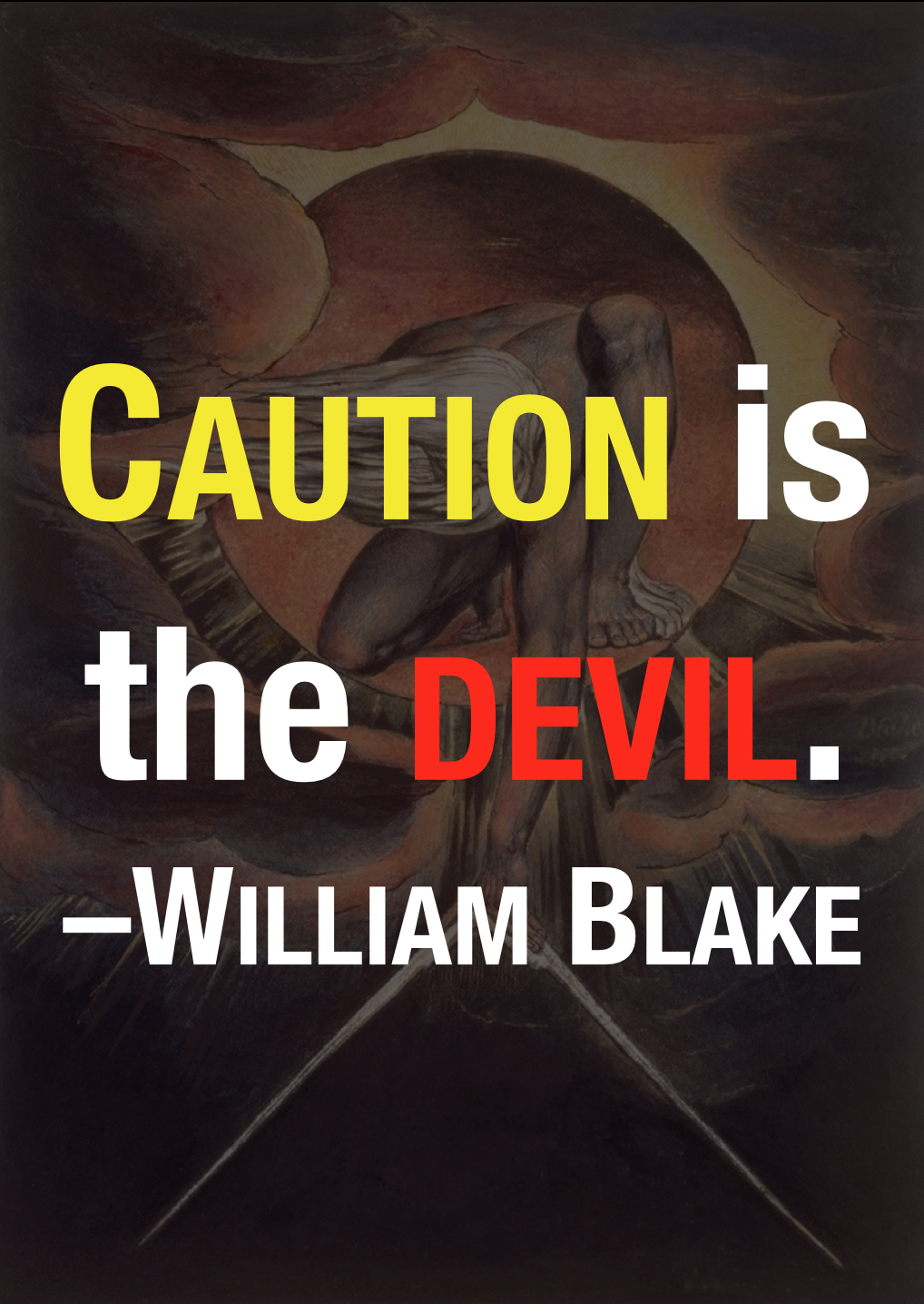
“Caution is the devil” said William Blake. The resistance within is powerful.

It takes courage. If there was no fear, courage would be pointless. Fear gives you the opportunity to craft a better version of yourself.

Steer into the fear if that’s what it takes to bring out what is best in you, to produce the kind of love and beauty that only you—the one and only you—can ever make.

Screen Shot 2015-09-01 at 4.35.44 PM

Walking man

Imagine being offered a pill that promised you seven extra years of life if you took it daily. There are no negative side effects. And it’s completely free. 

The only catch is that it takes 25 minutes each day to take this pill.

A daily 25-minute walk could add seven years to your life.

That’s the headline that got me out the door with my dog after dinner tonight. The summer heat has been my excuse for being less consistent about my daily walk. 

But even on a warm evening, I come back from a walk feeling better physically and emotionally. 

We are walking animals. It’s what we are wired to do. Our ability to stand upright and walk and run was key to becoming who we are.

But our modern culture is making us into sitting animals. Our prosperity and comfort, relative to almost all of our ancestors, is also making us weaker in many ways. 

I’m using modern technology, though, to motivate me to get off my butt more often. I use the Pedometer++ app to track my steps, and I aim for the green confetti that erupts on my phone screen when I cross the 10,000 step threshold each day. It’s silly that this motivates me, but it’s effective.

Our lives could be so much better engineered for walking. If we lived in walking distance of our work and shopping and leisure we would naturally be so much more active.

Urban life offers this advantage. I walked so much more when I lived in Washington, D.C. There was too much friction involved in driving.

If you can’t place yourself in a more walkable place, you can at least build walking into your daily habits.

Take your dog, your friend, your kids, your spouse. Or load up a podcast to listen to or some favorite music or just enjoy a quiet stroll. 

But if you walked a little more than a mile each day, you would not only add years to your life, you might add more life to your years.

Sunday morning Stoic: Right now

Meditations 11.7:

“It stares you in the face. No role is so well suited to philosophy as the one you happen to be in right now.”

Nothing is better for your growth and potential improvement than whatever circumstances you find yourself in right now. 

Even if those circumstances seem to suck. Especially, actually.

There’s no going back to fix what is. 

The only way forward is facing things as they are. 

Love, as best you can, what is. 

Act, even, as if you had intentionally chosen whatever circumstances you find yourself in. Consider whatever you’re facing to be part of your master plan to bring out the best in you.

Use the materials offered to you by life as it is right now to strengthen your mind and propel you forward.