Sharp insight and life wisdom from the astute (and funny) Jerry Seinfeld:
“All things on Earth only exist in different stages of becoming garbage.”
“Your home is a garbage processing center where you buy new things, bring them into your house, and slowly crapify them over time.”
This, by the way, is from one of the richest people in the entertainment business, a man who can buy more things than most of us could even imagine. (And I find that comedians have some of the wisest insights. They seem to observe life and its absurdities much more intently and honestly than most.)
Few things retain real value in your life over time. That shiny new awesome gadget is just future garbage. Same with that new piece of clothing or jewelry or furniture. Look through your stuff and consider what has remained valuable to your over a long period of time. I have some great things that have endured and remain useful and don’t have me itching to replace them. But most of my stuff has a pretty short shelf life.
I’m a “thrower-outer” and don’t feel overly attached to things. But I let too much clutter – future garbage – hang around in my life for too long. This is a great time of year to scan my surroundings and accelerate the garbage creation process for the inessential things in my life.
Contractor bags, those over-sized, super tough trash bags, are the ultimate tool for quickly culling the clutter. Just throw your unwanted stuff in the bag. Don’t think about having a yard sale or giving your future garbage to someone else. If it doesn’t make you happy or offer some useful value, put it in the bag.
Everything is going to go eventually. Let me expedite the process for the unnecessary stuff so that I can better appreciate the great things I do value. And I will be left with more energy for experiences and people that matter the most.
The article explains that our brains have two basic operating modes: a focus mode that gets things done and a wandering or daydreaming mode that allows for neural resets and fosters creative breakthroughs. Both modes are necessary, and both are being challenged as never before with the information overload most of us experience every day.
The author recommends dedicating chunks of time, 30 minutes to an hour, say, to focus on a project without distraction. And build in breaks between focused time to allow the mind to wander, to daydream. Here is Levitin’s advice:
“If you want to be more productive and creative, and to have more energy, the science dictates that you should partition your day into project periods. Your social networking should be done during a designated time, not as constant interruptions to your day.
Email, too, should be done at designated times. An email that you know is sitting there, unread, may sap attentional resources as your brain keeps thinking about it, distracting you from what you’re doing. What might be in it? Who’s it from? Is it good news or bad news? It’s better to leave your email program off than to hear that constant ping and know that you’re ignoring messages.
Increasing creativity will happen naturally as we tame the multitasking and immerse ourselves in a single task for sustained periods of, say, 30 to 50 minutes. Several studies have shown that a walk in nature or listening to music can trigger the mind-wandering mode. This acts as a neural reset button, and provides much needed perspective on what you’re doing.”
Turn off any unnecessary pings on your devices. I’ve known people whose phones audibly alert them every time an email arrives. Insane. This article has prompted me to turn off email notifications on my phone’s lock screen and even to disable the badge noting the number of unread emails on the app icon.
Twitter and email and messaging apps should serve my needs. They don’t need to control me and make me jump at every new input. What if I responded to email just once each day? What if the only apps open on my Mac were the ones I was actively using?
This is hard to do. It’s so tempting to keep checking to see if anything new has appeared in any of my many internet collection buckets. But even blocking off 30 minutes to work with focus, without distraction, on something important can lead not only to a more productive work life, but to a saner, calmer life as well. Close the door if you can. Put on headphones. Shield yourself from pings and alerts.
And go take a walk. Get outside. Wander the halls. Change your perspective regularly for a reset before going back into focus mode. Experiment for yourself and see what works best for you.
Find a rhythm that nature, and your neural wiring, expects and seems most conducive for productivity and creativity and peace of mind. Focus. Wander. Focus. Wander.
“Ambition means tying your well-being to what other people say or do.
Self-indulgence means tying it to the things that happen to you.
Sanity means tying it to your own actions.”
You can’t control the weather. You can’t control what others say or do. You can’t control what happens to you.
But you can control your response to whatever happens.
Accept what happens. It’s futile, and ultimately harmful to your sanity, to resist what is. You don’t have to approve of what happens. You can just say to yourself, “Fascinating.” And then choose your action in response.
Welcome everything that happens, even bad things, as opportunities to grow and learn and get stronger.
I read this today in Mindfulness in Plain English as a recommendation for the attitude to take when pursuing a mindfulness practice:
“Never mind what I have been taught. Forget about theories and prejudices and stereotypes. I want to understand the true nature of life. I want to know what this experience of being alive really is. I want to apprehend the true and deepest qualities of life, and I don’t want to just accept somebody else’s explanation. I want to see it for myself.”
This is good advice no matter the approach to living an authentic, wholehearted life.
We tend to live on automatic pilot, programmed by others – often well-meaning others – and plodding along a path we didn’t choose.
Why not have your own experience of life? Why not see for yourself what is real? Not virtual reality or someone else’s formula for meaning. Live your life.
What can I eliminate from my life to enlarge my life? I’m more aware of the clutter around me at the end of all the holiday excess than at any other time of year, and I need to use this season to propel me to hone in on the essentials.
I’ve already stopped some monthly services that were automatically billing my credit card but that just were not so useful any longer. I am going to take stock of the physical things that take up space around me but offer little value in return. If I don’t need it or love it, let it go.
What about my routines, most of which are unexamined? What is sapping energy from me or diverting me from more important priorities?
What about my work? What do I do that doesn’t add value? What can I cut that will free up resources for what’s truly essential?
What can I say “No” to that will make space for a more meaningful “Yes”?
Little by little obligations and habits and things accrue and impede or completely divert us from what we really want to do or be. Like how a controlled burn in a forest clears out the brush and makes room for new life, a regular, conscious purge of the inessential in my life can spark new possibilities or simply a return to first things.
“May your coming year be filled with magic and dreams and good madness. I hope you read some fine books and kiss someone who thinks you’re wonderful, and don’t forget to make some art — write or draw or build or sing or live as only you can. And I hope, somewhere in the next year, you surprise yourself.” –Neil Gaiman
My wife found and shared this great Neil Gaiman quotation today. Excellent thought for the beginning of a new year.
Make something beautiful to launch into the world. Be predictably awesome with your habits and routines so you can have the chance for true surprise and delight.
Ten weeks ago I decided to go for a strong finish to 2014. Too often the end of the year gets muddled through and written off with all the distractions of the holidays. So, I made a commitment to focus on getting better as the year wound down instead of slacking off.
I established new habits and stuck with them. I am physically stronger than I was ten weeks ago. I’ve walked at least a mile every day for the last two months. I can do significantly more push-ups now than at any point in the past two years.
I’ve kept to my writing routine. I’ve started meditating. I’m sold on the power of intentional habits, of building systems around my priorities, not just aiming at arbitrary goals.
Act like you are who you want to be. Do those things the ideal version of yourself would do. Take action. Don’t wait for inspiration or until it “feels” right. Doing the thing you know you need to do is likely to summon the feeling you want. Even if you’re not ready. Especially if you’re not ready.
I want to live an excellent life. The basic building blocks of an excellent life are excellent days. It is in my power to craft my days around actions and habits that are most likely to make me a better person. We all have this power and the freedom to choose how we want to live and who we want to be.
Every morning promises a fresh start, another chance to make a day worth talking about, that marks your life with some bit of honor in living well and nobly. And tomorrow morning, though just another morning, is a chance to view the much larger canvas of an entire year of days.
I feel good about the finish to this year. Now, I want to start strong and string together some great days in 2015.
How we spend our days is, of course, how spend our lives. –Annie Dillard
I find myself photographing memorable portions of books, actual paper books. It seems a bit odd, but it’s a way of collecting and noting thoughts that stand out to me. And since most of my notes are of the digital variety now, photos are a way to get these analog bits into my digital system.
The thought above, though, is well timed as a new year approaches. We tend to want to cling tightly to an illusion of certainty and stability. But the universe is energy, constantly in motion. Nothing stays constant except the fact that everything changes. Resisting this fact is futile. And the default for most of us.
Those who lean into the uncertainty of life are the ones most likely to make cool stuff happen. Why not brace yourself for not knowing and for insecurity and for uncertainty in the year ahead? Go with the flow of life’s crazy, unconstrained energy. Be a pathfinder.
I enjoyed this feature in the New York Times by Wil S. Hylton on author Laura Hillenbrand, who has written two great books, Seabiscuit and Unbroken. Hillenbrand suffers from chronic fatigue syndrome and is mostly homebound with intense episodes of vertigo. She cannot travel to do research or interview her subjects, but she’s turned what seem like obstacles into advantages.
This portion of the article is about Hillenbrand’s research for her book about World War II hero, Louie Zamperini:
“I thought it was actually an advantage to be unable to go to Louie,” she said. Because neither of them had to dress for the interviews and they were in their own homes, their long phone calls enjoyed a warmth and comfort that might otherwise be missing. She could pose the deeply personal questions that even her father had trouble answering. “I would ask a lot of questions about his emotional state,” she said. “ ’What did you feel right in this moment? Were you frightened?’ ” The distance also allowed Hillenbrand to visualize Zamperini in the time period of the book. “He became a 17-year-old runner for me, or a 26-year-old bombardier,” she said. “I wasn’t looking at an old man.”
She goes through periods where her vertigo makes it impossible to read, so she turned to audiobooks and found an advantage:
“It has taught me a lot more about the importance of the rhythm of language,” she said. “Good writing has a musical quality to it, a mathematical quality, a balance and a rhythm. You can feel that much better when it’s read aloud.”
She could easily have given up on trying audacious writing projects. She had a pretty solid excuse. But, instead, she used what should have been disadvantages to produce remarkable work.
And, then, there’s this from near the end of the piece:
“I feel so fully alive when I’m really into a story,” she said. “I feel like all my faculties are engaged, and this is where I’m meant to be. It’s probably what a racehorse feels like when it runs. This is what it’s meant to do, what its body is meant to do.” She paused. “This is what my mind is meant to do.”
To find work, or even a hobby, that produces this kind of flow should be everyone’s aim. When are you most “fully alive”, and what are the circumstances that make you feel like all your faculties are “engaged”? What is your mind meant to do?
“There is indeed a limit fixed for us, just where the remorseless law of Fate has fixed it; but none of us knows how near he is to this limit. Therefore, let us so order our minds as if we had come to the very end. Let us postpone nothing. Let us balance life’s account every day.
…
One who daily puts the finishing touches to his life is never in want of time.
…begin at once to live, and count each separate day as a separate life. He who has thus prepared himself, he whose daily life has been a rounded whole, is easy in his mind.”
Seneca wrote these words just after telling his friend about an acquaintance who had risen from poverty to wealth and prestige and was on the verge of great accomplishment. And then he suddenly died.
Nothing is promised. We ultimately are fragile and mortal. It is foolish and reckless to assume we have time unlimited for our grand plans and for our intention to eventually live an excellent life.
As we end a year and begin a new one, it’s tempting to want to make grand plans for the distant future. While there is value in aiming your life in a general direction, coming up with specific goals and detailed plans for the long-term seems pointless.
How we spend our days is, of course, how we spend our lives. –Annie Dillard
But what if you make grand plans for the quality of each day? Do as Seneca says, and “Count each separate day as a separate life.” String together enough great days and you will live your way into a great year. Instead of resolutions for the year, come up with resolutions each day. Instead of New Year resolutions, hold fast to “new day” resolutions as you awake each morning.
Consider daily habits and routines instead of goals. Screw up? You get a fresh start, a clean slate, every 24 hours. And as you prepare for bed each night, take an accounting of your day and prepare to adjust as necessary for the new day you hope to wake up to in the morning.
I woke up this day after Christmas, stepping around empty boxes and delaying the clean up of the remaining dirty dishes from last night’s family dinner, and I feel remarkable satisfaction and gratitude. It’s easy to let some post-holiday blues settle in right about now. All the excess. All the stuff and the hurrying and the unmet expectations. And for what purpose, right?
And, yes, we spend too much money on things. And we eat food that doesn’t make us stronger. And we fill our calendar with gatherings and then just go through the motions much of the time, rarely making meaningful connections with our family and friends.
But I’m not feeling any sense of humbug now. I’m appreciating how good I’ve got it. Lately, when friends check in and ask about my family, I tell them we are in a sweet spot. Our girls are 10 and 7. They are somewhat self-sufficient. They can occupy themselves with books and games, and they still love to play with each other and imagine. We can carry on real conversations with them and talk about important things. My 10-year-old even wrapped my wife’s presents for me this week. But they’re still kids, wide-eyed and innocent and smitten by stories and the possibility that magic just might be real.
And they, for now, think I’m pretty cool. In just a few years, however, they will think they are cool and realize I am not. They will soon enough, a little more than a decade from now, have their own homes and their own young adult lives. We will be a part of their world but no longer the center of it.
So, our family is in such a sweet spot right now. Our kids are fully kids, with all the delight and occasional annoyance that comes with that. Tickle fights are still a thing. And cuddling and story times. We are living the dream and need to embrace this time and love the sweetness of the present moment.
My wife surprised me with this beautiful gift on Christmas morning – our family charge, hand-lettered by a talented friend. (Thanks, Candice!)
We came up with these four reminders – “Spread love; Live now; Be true; & Shine!” – when our girls were toddlers, and they can recite them on cue. We even had t-shirts made when they were little with a family logo on the front and one of each of the four pillars of our code on the back. (Yes, we can get away with being that kind of family without our kids rolling their eyes at us for a little while longer.)
I don’t know if having such a family code of conduct has any measurable impact on our behavior. But I know I need to be reminded regularly of the kind of person I hope to be. If these reminders can guide a response in a key moment for my kids, it’s worth the effort, and the potential cheesiness, to try to imprint and hardwire in our most prized values.
What kind of person do I want to be? How does that person spend his days? What would be the habits and routines of my ideal self? These are the questions that are guiding my pursuit of a more excellent life. If I can craft my days so that I go to bed satisfied more nights than not, laying my head on my pillow without regret for how I’d spent my day, I will be on the right path.
“How we spend our days is, of course, how we spend our lives.” –Annie Dillard
These past nine weeks have been focused on wellness. The habits I’ve been locking in are a daily mile walk, daily meditation, a pushups routine three times a week, and posting on this site daily. The hardest one to keep by far has been meditation. It’s easier to put on my shoes and head out the door on a cold night at 10:30 p.m. to get my mile in than it is to sit quietly for twenty minutes. But meditation is proving to be the habit with the most transformational potential. I can see where sticking with it can begin to train the mind and build mental and emotional strength that will be foundational to an excellent life.
With one week left in this year I can already say I’ve finished this year stronger than any year in recent memory. I’ve stuck with new habits for a couple of months, habits that I plan to continue indefinitely. Habits that will make my days better and more meaningful.
I’m looking forward to this holiday week and the final week of 2014. Let’s celebrate how we’ve grown this year and use the next few days to imagine bold new possibilities for the year ahead.
Most gift-giving gatherings this time of year have a bit of an absurd quality to them. Family members make wish lists for each other of exactly what they want, and there’s an implied understanding that you need to stick with the list. But, then, what’s the point? You could avoid the hassle and all just buy yourself what you want, right? (Or save your money and just have great conversations.)
“What do you want for Christmas?” you’re asked. “Surprise and delight would be nice”, I want to say.
But surprise and delight is hard. Which is why most gift-giving moments feel more like an obligation as we stay safe and simply get what everyone asks for. The fear of the clunker gift is real, but it’s a risk worth taking to keep hope alive for moments of genuine surprise and delight. Caution is the devil, right? That caution may keep you from being the one giving unwanted gifts, but it will also keep you from doing something remarkable, like offering genuine surprise and delight.
Our 13-year-old nephew is 13 in the best way anyone can be 13. He’s smart and kind, but he’s kind of cool, too. At family gatherings he tends to disappear and avoid the awkwardness of close quarters with all the relatives as best he can. (I did that, too, when I was a teenager. Okay, I still do that now sometimes.) You’ve got to work to get him to talk at meals, and he’s not quick to smile. You’ve got to earn the smile.
But he loves playing guitar and lights up when he’s talking about music. He’s taught himself how to play, and he’s pretty good. He’s become really focused on all things guitar, playing in seemingly every spare moment and regularly listening to cool music. (We share an appreciation of John Mayer, and I’ve earned a cool point or two just from that.)
His hero, though, is Dave Grohl of Nirvana and Foo Fighters. Grohl is the man. My wife and I found this out while talking with him at Thanksgiving. We were curious and wanted to know what gets him excited, what he’s into.
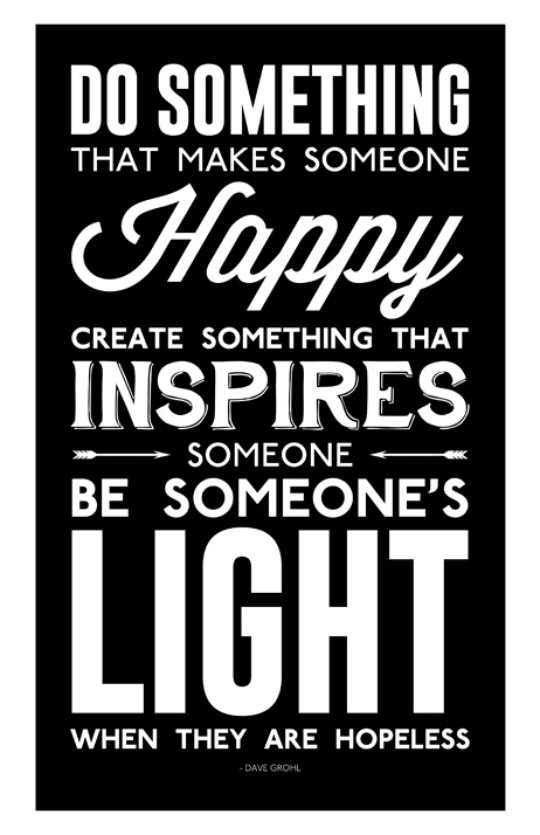
Well, when it came time to find a Christmas gift for him, we didn’t even check his wish list. I started wondering what a 13-year-old guitar-playing Dave Grohl fan might enjoy. After some online searches, we stumbled across a print of a great Dave Grohl quote. We bought it and framed it and wrapped it for our nephew’s gift.
At our family Christmas gathering last week, we were going around the circle watching each person open a gift. When my nephew’s turn came, my wife and I watched eagerly as he unwrapped our present. He held up the print and began reading the quote, with a bit of a quizzical, “What is this?” kind of expression on his face, as if he was bracing himself to summon a polite response to a random, cheesy, unwished-for gift. Then, when he read to the bottom of the quote and saw “Dave Grohl”, his expression transformed, and his face lit up with what clearly was surprise and delight.
He smiled at us and said something about Grohl being a hero. He kept that unforced grin for a moment, and we knew we had done it. Success! Surprise and delight. And we were as delighted at the giving of a thoughtful gift as he was in receiving it. Probably more so.
It could have bombed and left us and him wishing we had just gotten him a DVD or an iTunes card. But it was the moment of the season for us so far.
Trying to put yourself inside someone else and divine what might delight is hard work and has low-percentage success. Most people don’t know what would delight themselves, even. Henry Ford famously said that if he asked people what they wanted they would have said “A faster horse.”
Apple is the behemoth it is now for its market-defying commitment to create products that trump conventional wisdom and delight in their details. They do not poll customers or rely on market consultants to determine what to make next. They don’t ask for a “wish list” from the market. They aim for awesome. What would delight them to make? And what would put smiles on the faces of their customers?
Whether it’s in giving gifts to family and friends or creating products and experiences in your work, aiming for surprise and delight will pay off and reward the effort required. Or not. You could crash and burn.
But aim for awesome, people. And cheer on those who forsake their caution in the attempt to create a remarkable moment and give a gift worth talking about.
I’ve been eyeing an American Giant hoodie for more than a year, and my in-laws gave me this one yesterday at our family Christmas gathering. I read about the company and its best hoodie ever last year and had been intrigued ever since. But I just couldn’t click through and purchase it myself, thinking it was a bit too self-indulgent to splurge on a simple, but pricey, hoodie. So, thanks, in-laws, for your generous gift!
I already love it. Yes, it’s just a hooded sweatshirt with a zipper. But it is a hefty, meticulously well-crafted, glorious sweatshirt. It feels like it will last a lifetime. It is a great thing, and there is a grace in great things that adds delight and makes your days a little better having them in your life. Quality things endure and add value long after most average things have been discarded.
Putting this American Giant hoodie on feels like suiting up in modern, hipster armor. And I don’t even know what “hipster” means exactly. But this is the kind of sweatshirt I imagine coders and designers and writers wearing to work. Me, I’ll wear it on walks around the neighborhood and running Saturday morning errands. And maybe when I sit at my computer trying to express myself.
Some things just make you feel stronger or better, like when you got new shoes as a kid and felt like you could run faster and jump higher. I love using excellent tools that are thoughtfully imagined and well made. True craftsmanship is rare, but it enriches both the maker and the user.
I gave my new hoodie a test run today as I took the day off with my daughters to do some gift shopping. It was a hoodie kind of day, cool and misty. All three of us had on our hoodies, and we made some memories as we explored ways to delight my wife this week, which is her birthday week as well as Christmas week.
No one stopped me on the sidewalk to comment on the greatness of my hoodie. But I felt great wearing it. Things are just things and can’t compare to meaningful moments like the day I had with my kids today. But great things are a unique pleasure, and I’m grateful for those who make the effort to create remarkably impressive things and add a little extra pleasure to our lives.
If you can cut yourself—your mind—free of what other people do and say, of what you’ve said or done, of the things that you’re afraid will happen, the impositions of the body that contains you and the breath within, and what the whirling chaos sweeps in from outside, so that the mind is freed from fate, brought to clarity, and lives life on its own recognizance—doing what’s right, accepting what happens, and speaking the truth—
If you can cut free of impressions that cling to the mind, free of the future and the past—can make yourself, as Empedocles says, “a sphere rejoicing in its perfect stillness,” and concentrate on living what can be lived (which means the present) … then you can spend the time you have left in tranquillity. And in kindness. And at peace with the spirit within you.
“…doing what’s right, accepting what happens, and speaking the truth.” Simple and clear, if not easy.
Marcus keeps reminding himself that life is in the present. See through the illusion of past and future and just do what’s right, right now.
“Living, loving, being natural or sincere—all these are
spontaneous forms of behavior: they happen ‘of themselves’ like
digesting food or growing hair. As soon as they are forced they acquire that unnatural, contrived, and phony atmosphere which everyone deplores—weak and scentless like forced flowers and tasteless like forced fruit. Life and love generate effort, but effort will not generate them. Faith—in life, in other people, and in oneself—is the attitude of allowing the spontaneous to be spontaneous, in its own way and in its own time.”
Improv wisdom. The authentic, the most real things flow naturally without being forced or contrived. Go with the flow. Don’t resist. The spontaneous action is filled with energy that’s missing from most actions which are overthought.
I first saw the TV series, Joseph Campbell and the Power of Myth with Bill Moyers, when it was first broadcast on PBS in 1988. I was a young Congressional staff member living in D.C., trying to figure out adult life. That series changed the way I think about my place in the universe. It came at a great time to help me make sense of what it meant to be the hero of my own life.
Campbell is a captivating storyteller, and as a prolific scholar of mythology and world religions he drew from a deep well of human wisdom.
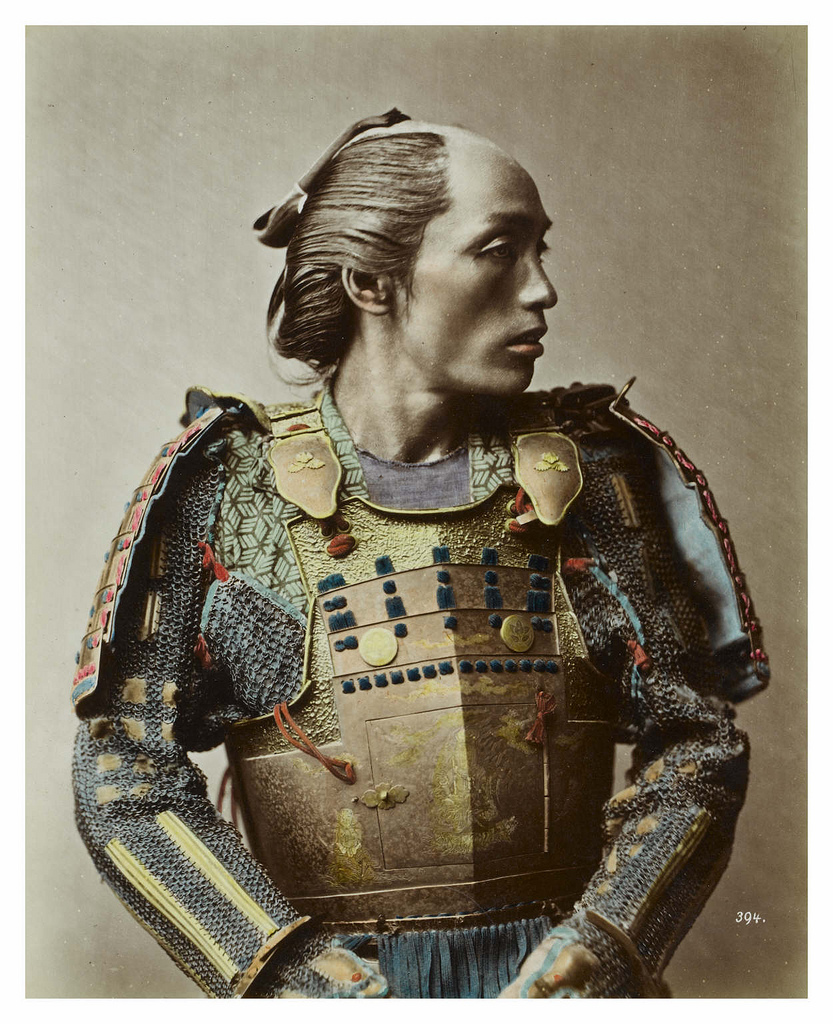
One of my favorite stories he tells is of a samurai warrior on a quest to kill his overlord’s murderer. This is from the transcript of that episode:
JOSEPH CAMPBELL: I will participate in the game. It’s a wonderful, wonderful opera, except that it hurts. And that wonderful Irish saying, you know, “Is this a private fight, or can anybody get into it?” This is the way life is, and the hero is the one who can participate in it decently, in the way of nature, not in the way of personal rancor, revenge or anything of the kind.
Let me tell you one story here, of a samurai warrior, a Japanese warrior, who had the duty to avenge the murder of his overlord. And he actually, after some time, found and cornered the man who had murdered his overlord. And he was about to deal with him with his samurai sword, when this man in the corner, in the passion of terror, spat in his face. And the samurai sheathed the sword and walked away. Why did he do that?
BILL MOYERS: Why?
JOSEPH CAMPBELL: Because he was made angry, and if he had killed that man then, it would have been a personal act, of another kind of act, that’s not what he had come to do.
The samurai’s mission was not simply to kill the murderer, but to honor his master and fulfill his duty. Killing the murderer out of anger would not have fulfilled the intrinsic call of his duty. To an observer, whether he killed the culprit motivated by honor or anger, it wouldn’t have mattered. The murderer would be dead either way.
But to the samurai, his own motivation made all the difference. He needed a crystal clear answer for why he was taking action, and a reactive response out of anger would not only be dishonorable, it would negate the reason for his quest.
You can choose your response. You can observe an unhelpful emotion take hold, but you don’t have to react. You always can choose to act in a way that honors the vision of the person you truly want to be.
Nothing is just a means to an end. Every action is an end in itself. The path is the destination, right? It’s the journey that matters.
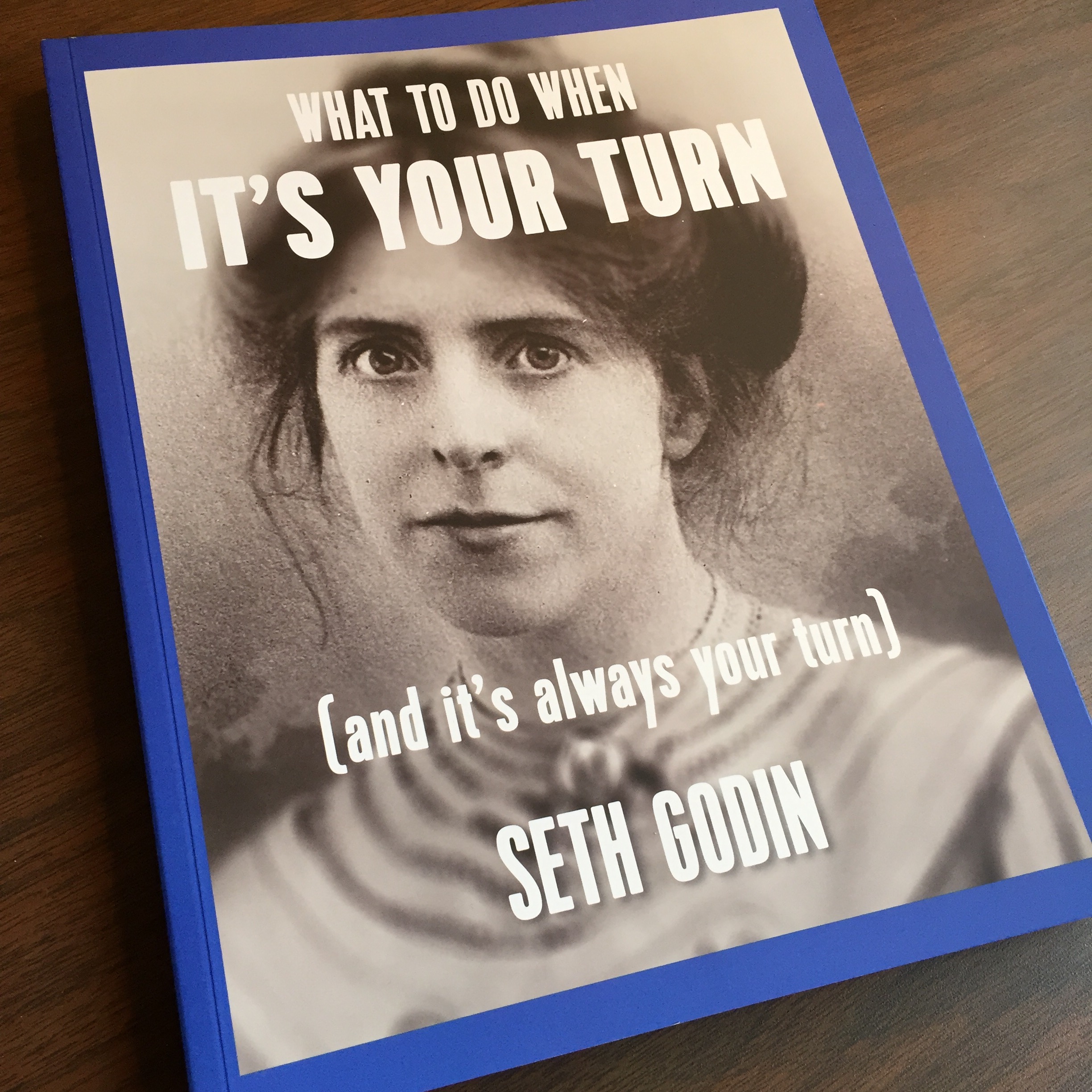
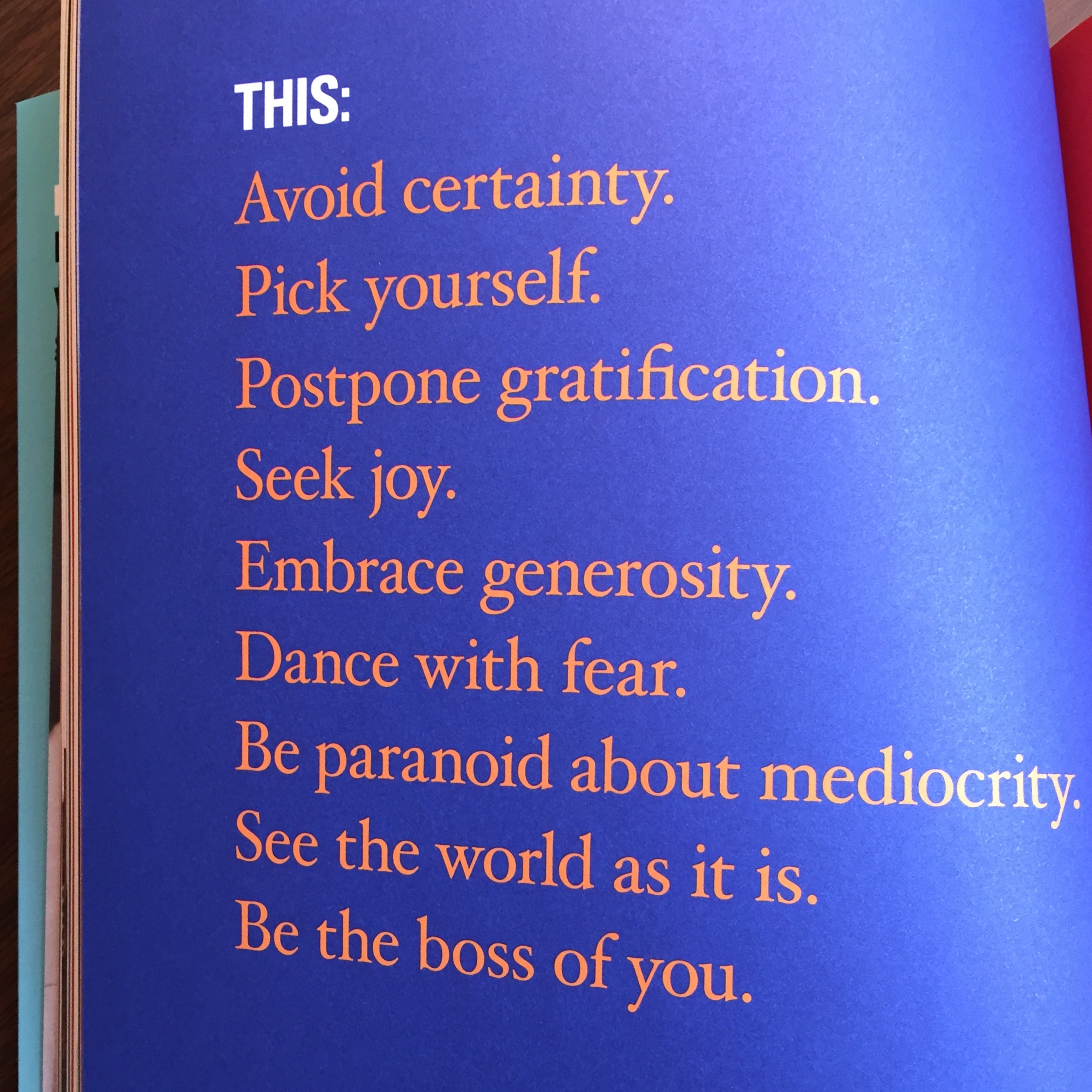
Yesterday I received Seth Godin’s new book, What To Do When It’s Your Turn. I haven’t read it yet, but it’s a delight to hold and thumb through. The design is rich, colorful, and compelling, with big photos and pulled quotes and blog-like bursts of wisdom throughout.
It is giving me new hope for the printed word, for books with real pages to turn. If you’re book is going to just be words, I can appreciate it just as well on an iPad or a Kindle. But if it aims to connect beyond just words, if there is a feel to it you hope to convey, an aesthetic quality that moves the reader visually and kinesthetically, then digital bits won’t be enough.
Godin’s new book has a pleasing heft, literal and metaphorical weight that you wouldn’t feel if you were reading it on a device. This is the kind of book that’s a bit like a souvenir for ideas. You’ll want to show it off and pass it around, and that’s his aim. Spread great ideas. Ideas with depth deserve a vehicle, a medium, to match.
As we consider the spread of ideas in the internet age, don’t pour one out for physical books just yet. When you make the whole book a work of art ––not just the art in writing the words, but in crafting the physical container of those words (and images)–– possibilities emerge that take the connection between a creator and an audience to a new level.