Conan O’Brien on creativity and perspective

After listening to the Brian Cox episode of the Nerdist podcast, I came across an older episode featuring a long conversation with Conan O’Brien. So good.

I’ve come to think that most really good comedians also are some of our most insightful philosophers. They actively explore the absurdity of life. Imagine being on a constant search for “What’s funny about this?” And then to regularly stand in front of audiences and try to express those absurdities in an effective way, that must lead to a unique perspective on life.

In this podcast episode, Conan reflects on his experiences creating for a daily television show and how most things miss the mark. But sometimes, it just works. I transcribed this from around the 54:00 mark of the episode:

The really great stuff has to be rare… It’s not just back to back to back…

My only hope is that you’re judged for your best work. If you’re judged by your best work, I’ll be okay.

Someone explained to me once that your creative life is laying down little tiles. And you can’t see what it’s all making, and sometimes it’s a slightly darker tile than the other. Sometimes it’s a really brightly colored tile. Sometimes you’ll lay down seven grey tiles in a row. But you’re making a much bigger piece which when seen when it’s completed, when it’s done, could be quite fantastic, you know, but you’re doing it tile by tile, day by day and you can’t know.

You can’t know. At least not from the zoomed in perspective of this moment. But keep laying down tiles. Then, hopefully, you can zoom out eventually and see a body of work that might be more fantastic than you could have planned in advance.


Standing on the edge of the known

A recent episode of the Nerdist podcast featured physicist Brian Cox, who hosts his own entertaining and enlightening podcast, The Infinite Monkey Cage.

I listened to most of this episode of the Nerdist while walking my dog last night. The podcast was a fascinating conversation between regular humans and a super smart scientist who has a knack for making complex concepts approachable for the rest of us.

It’s a great episode and made me consider possibilities about the nature of the universe that I hadn’t before. And Cox had this poetic comment more than an hour into it that I had to write down:

“I think the key to being a scientist is to delight in not knowing. It’s to stand on the edge of the known and face the unknown with curiosity and delight and not fear.” –Brian Cox

It’s the key to being not just a scientist, though, but a curious, open-minded human no matter your work. This embrace of not-knowing has been a theme in much of what I’ve read recently.

Courage is required, but delight and wonder and new possibilities are the reward for letting go of certainty.

Screen Shot 2014-06-26 at 9.25.17 AM

Tim Cook on Steve Jobs and the values that drive Apple

Fast Company has an exclusive interview with Apple CEO Tim Cook that is filled with quote-worthy insights.

Cook, an Auburn University graduate from Mobile, Alabama, has always come across to me as a genuinely good guy. Very smart and driven and hard-working, of course, but a regular, unassuming nice person who just happens to run the most impressive and wealthiest and coolest company in the world. As a fellow southerner and a delighted Apple customer, I especially enjoy hearing Cook’s southern drawl as the voice of a company that’s changing the world like few others ever have.

Cook earned his reputation at the company for his brilliant corralling of logistics and resources to build a staggeringly robust sytem for manufacturing all those iPods and iPhones and Macs. Steve Jobs was the product visionary and shaper of a uniquely innovative company culture, but it was Cook who was resonsible for making sure those dreams could be made and shipped.

Cook will never match Jobs as a cultural icon. But that doesn’t seem to be his aim.

Here’s Cook on lessons learned from Jobs:

Steve felt that most people live in a small box. They think they can’t influence or change things a lot. I think he would probably call that a limited life. And more than anybody I’ve ever met, Steve never accepted that.

He got each of us [his top executives] to reject that philosophy. If you can do that, then you can change things. If you embrace that the things that you can do are limitless, you can put your ding in the universe. You can change the world.

That was the huge arc of his life, the common thread. That’s what drove him to have big ideas. Through his actions, way more than any preaching, he embedded this nonacceptance of the status quo into the company.

That is great leadership. Clearly, Cook and those who worked with Jobs were infected by his approach, his “nonacceptance of the status quo”, his razor sharp focus on transformational ideas and products, and a relentless commitment to constant improvement.

And, with Apple, as with all great organizations, it keeps coming back to culture.

Here’s Cook’s response when asked about conveying the Apple culture within the company:

I don’t think of it as systematizing, but there are a number of things that we do, starting with employee orientation. Actually, it starts before that, in interviews. You’re trying to pick people that fit into the culture of the company. You want a very diverse group with very diverse life experiences looking at every problem. But you also want people to buy into the philosophy, not just buy in, but to deeply believe in it.

Then there’s employee orientation, which we do throughout the company all over the world. And then there’s Apple U., which takes things that happened in the past and dissects them in a way that helps people understand how decisions were made, why they were made, how successes occurred, and how failures occurred. All of these things help.

Ultimately, though, it’s on the company leaders to set the tone. Not only the CEO, but the leaders across the company. If you select them so carefully that they then hire the right people, it’s a nice self-fulfilling prophecy.

Apple recently has allowed the media more access to it’s top people than I can ever recall. The interview with Cook is thorough and interesting throughout and well worth reading whether you care about technology or not.

The merits of doubt

As I was trying to wake up my 7-year-old for school this morning, I reminded her that today is St. Patrick’s Day. That got her attention, and she asked if I thought leprechauns were real. Apparently, there’s been talk at her school this week about leprechauns making mischief.

Without giving it much thought, I just said, “Of course, leprechauns are NOT real.” I suppose I should have played along, but I was still waking up myself, and I thought I was providing some relief from her being anxious about the thought that leprechauns might be lurking about. I usually smile and nod at the fairy tale wishes of my kids, but I just blurted out my first reaction to the leprechaun musings this morning.

But she shot back that I couldn’t prove they aren’t real. “Ah!” I responded. “The burden of proof is not on me, but on those who say leprechauns are real.”

Her adamance and our brief conversation about “proving” beliefs got me thinking that we tend to overly deprecate doubt and overvalue belief.

I shouldn’t have to prove the non-existence of something. Believers are the ones with the burden to substantiate the thing they say is true if they want others to believe along with them.

“Doubting Thomas” is a term of derision. “Just believe!”, conversely, comes across in our culture as a worthwhile exhortation. But shouldn’t it be the opposite? Shouldn’t doubt be an honorable and logical default for any thinking person? Belief without reason or evidence is hollow.

Later in the day I came across this essay, Teaching Doubt, by the physicist Lawrence Krauss in the online version of The New Yorker. He makes the case that a modern society that values reason and education should make it a priority to “plant the seeds of doubt” in the next generation.

From Krauss’s essay:

Doubt about one’s most cherished beliefs is, of course, central to science: the physicist Richard Feynman stressed that the easiest person to fool is oneself. But doubt is also important to non-scientists. It’s good to be skeptical, especially about ideas you learn from perceived authority figures. Recent studies even suggest that being taught to doubt at a young age could make people better lifelong learners. That, in turn, means that doubters—people who base their views on evidence, rather than faith—are likely to be better citizens.

And he closes with this:

One thing is certain: if our educational system does not honestly and explicitly promote the central tenet of science—that nothing is sacred—then we encourage myth and prejudice to endure. We need to equip our children with tools to avoid the mistakes of the past while constructing a better, and more sustainable, world for themselves and future generations. We won’t do that by dodging inevitable and important questions about facts and faith. Instead of punting on those questions, we owe it to the next generation to plant the seeds of doubt.

I don’t want to steal the wonder and delight of childhood by killing the magic of fairy tales or by pouring cold water on imaginative flights of fancy. But I do want my kids, and you should want yours, to not just take some authority’s word for the way things are. Instead of handing them answers, I need to free them to ask questions, whether I’m confident of what I think the answers are or not.

I’m not envisioning a cynical, “prove-it-to-me”, arms folded, hard-hearted kind of doubt. The posture that seems most promising is an open-minded, skeptical, yet optimistic curiosity. The attitude that responds with “Fascinating” and “Help me understand” and “I wonder why…” and “I might be wrong, but…”

What if the next generation grows up more curious than they are certain, more inclined to seek evidence and understanding than being content with hand-me-down answers? There will still be room for imagination and fantasy and maybe leprechaun stories, but there also will be more possibilities for making sense of the mystery we all are swimming in.

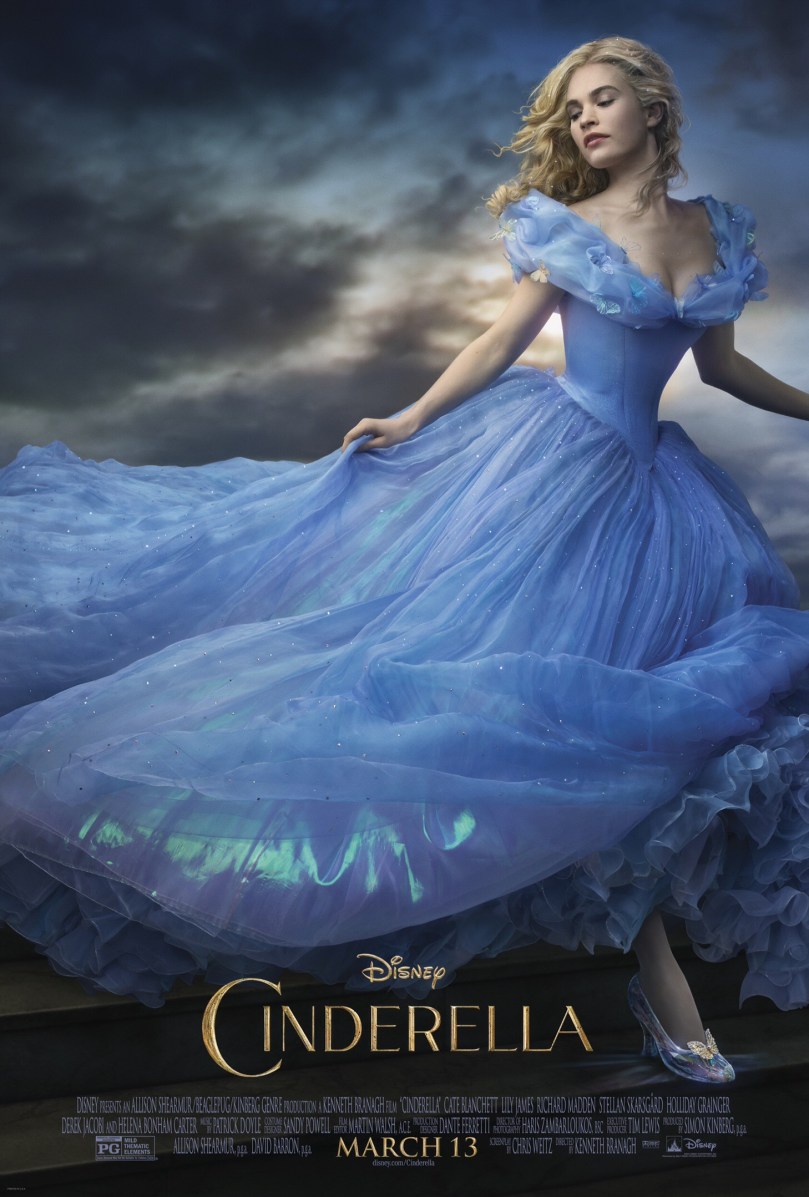
Cinderella’s Stoic virtues: Courage and kindness

I took my wife and daughters to see the new live-action Cinderella movie yesterday. I’m no movie critic, but I thought it was really good.

It’s visually sumptuous. The costume design, the sets, the locations, the sweeping camera movements all were dazzling and crafted on an epic scale.

Kenneth Branagh, the Shakespearean actor, directed and played the story straight and with a classic, elegant style. No clever updates. It’s in essence the same Cinderella story you know from the original Disney animated feature. But it’s done so well.

The acting performances are solid. Lily James as Cinderella lights up the screen. She’s earnest and charming and quietly strong without being sappy sweet. The prince is not a bore or a boor. The ailing king is endearing. The wicked stepmother, Cate Blanchett, is suitably cruel but finishes by coming across as pitiable.

It’s not high art, but it’s a worthwhile story, especially for my young daughters. Early in the story Cinderella’s dying mother exhorts her to always “have courage and be kind.” That mantra gets repeated throughout. It could seem simplistic, but the character solidly embodies those traits.

When Cinderella gets banished to the attic, she could have become a teary-eyed damsel in distress in typical princess fairy tale style. But this Cinderella embraces her fate with a twinkle of optimism and hope and makes the best of it. She deals with her cruel treatment and bad fortune with similar fortitude throughout the story without coming across as weak and woeful. She exhibits Stoic-like acceptance of all that happens outside of her control and remains kind in spite of the cruelty she endures.

“Have courage and be kind”, simple and obvious as it is, is a decent motto for anyone, aspiring princess or not.

No one is fearless, but we can all show courage by taking action in spite of our fears. And life is too short to be short on kindness.

Four thumbs up for Cinderella from me and my three princesses.

David Malham on dying: “Let’s not save our affection”

Yesterday there was an essay on the New York Times opinion page by a retired grief therapist, David Malham, who has been diagnosed with A.L.S. and is facing his imminent death.

It’s a thoughtful and light-hearted reflection by someone well acquainted with the grief of others. It’s a worthwhile read in whole. He highlights the absurdity of coming to grips with your own mortality:

But it’s not that we forget that we will die; it’s that we work hard to not remember it. Yes, we accept the plural “we will die,” but it’s the particular, the “I” that we have trouble with. It’s easier to accept “we” because the “I” believes it can hide when the others in the “we” are taken. When it comes to the particular, we are, each of us, facing death new and uncomprehending. 

Woody Allen wryly said: “I’m not afraid to die. I just don’t want to be there when it happens.”

But it’s coming for each of us. My life is terminal. Yours is, too.

Thinking about your death too obsessively can send you into an existential funk and shadow the light from the life you’re living. But living in denial of your ultimate fate will make meaningfulness elusive.

Malham suggests, though, that it’s the prospect of the deaths of those we love that is more troubling even than accepting our own demise.

My mom would have turned 73 today. (Happy birthday, mom!) She died almost ten years ago. Her absence from our lives still stings, a decade later. Our family has not recovered, and likely will not recover, the bond we once had when she was alive. She was such a joyful, dynamic presence and was the heart of not just our immediate family but even, somewhat, of both extended families. Life goes on, though. Or, the living keep living. For now.

Stoic sages advise periodically envisioning the loss of those you love. Sounds like an unappealing practice, right? It’s meant to be. The point is to face that kind of momentary pain often enough to make you better appreciate your loved ones while they’re with you.

Malham’s closing exhortation is tinged with just such a Stoic perspective:

We want to be (lightly, only lightly) aware of death not because our story will end, but because the stories of those we hold dear will end, perhaps before ours. The awareness of premature or unexpected endings can motivate us to routinely demonstrate our love to those important to us. Let’s not save our affection, as if a rare wine, for special occasions. Give and receive it as essential nourishment.

“Grief, after all, is the price we pay for love.” –David Malham

On wearable technology and the world as it might be

Ben Thompson has a great post today about wearable technology in light of Apple’s upcoming new device: How Apple Will Make the Wearable Market

Thompson lately has been putting out a consistent stream of thoughtful analysis of Apple especially and of the direction of technology in general. In his most recent post about the Apple Watch he points out that most critics base their pessimism on how new technology will fare in the world as it is rather than looking imaginatively at the world as it might be.

He offers this:

For all of the changes that have been wrought by technology, a huge amount of our daily existence really hasn’t changed in a very long time. Consider keys: in my bag I have several pieces of metal, hopefully unique, that unlock doors or start up machines that run on controlled explosions. It’s positively barbaric! Money has improved a bit – cash is certainly a very old concept, although credit cards are more modern – but the idea that we physically hand someone access to a huge amount of money (i.e. our credit cards) without even thinking about it is odd. We operate lights with switches, print disposable tickets for everything from airplanes to concerts, and pack identification from a whole host of authorities, including the government and workplace.

It’s increasingly plausible to envision a future where all of these examples and a whole host of others in our physical environment are fundamentally transformed by software: locks that only unlock for me, payment systems that keep my money under my control, and in general an adaptation to my presence whether that be at home, at the concert hall, or at work.

He then goes on to explore how wearable devices can take a central role in such a future. And Apple is differentiating their device by making it desirable, aesthetically and emotionally, as well as remarkably useful. It’s not just a smart watch, there is also a good bit of art to their watch.

Apple’s focus on fashion is part of the plan to make their watch a cultural hit and not just a geek fetish. And widespread adoption would be necessary for all the parts to come together to make wearable technology more than just a fad for technology enthusiasts.

Reading Thompson’s post reminded me how much my family enjoyed using Disney’s MagicBands when we visited Disney World more than a year ago. These colorful bracelets unlocked our hotel room door, served as our tickets to enter the parks, managed our Fast Passes for rides, and were used to pay for our meals and souvenirs at restaurants and stores throughout the Disney resorts.

As much as I love good technology, I’ve been reluctant to get excited about Apple Watch. I have been imagining its primary function was to enable notifications to work more seamlessly. It seems to be a notification delivery machine. Literally. And I am anti-notifications. The fewer interruptions, the better.

Yet, a watch that would connect with my life in an abundance of helpful ways, the way the Disney MagicBands did, would be one that would earn a central role in my life the way the iPhone has.

There’s a long way to go before the infrastructure is in place to create such a connected and wireless world. But selling lots of Apple Watches would push that vision forward faster.

It’s hard for me to vividly remember the pre-smartphone world. The iPhone was a niche product with no app store, weak processing power, super slow internet, and a high price tag when it was introduced in 2007. Those who, at the time, saw the world as it was, dismissed its chances. But look at the world as it is now.

Consider the world as it might be from this point on. How will wearable technology and the infrastructure interacting with it look five years from now?

Since reading Thompson’s post, I’ve been browsing the Apple Watch options online, the sizes and band choices, and imagining wearing a watch again for the first time since 2008. (My favorite at the moment: Apple Watch Sport, space gray, black band, 38mm.)

It may be a year or two before I pull the trigger. I’m not a knee-jerk early adopter. The sweet spot of form and function and a robust ecosystem for these devices is surely at least a couple of iterations away. But I think it’s coming.
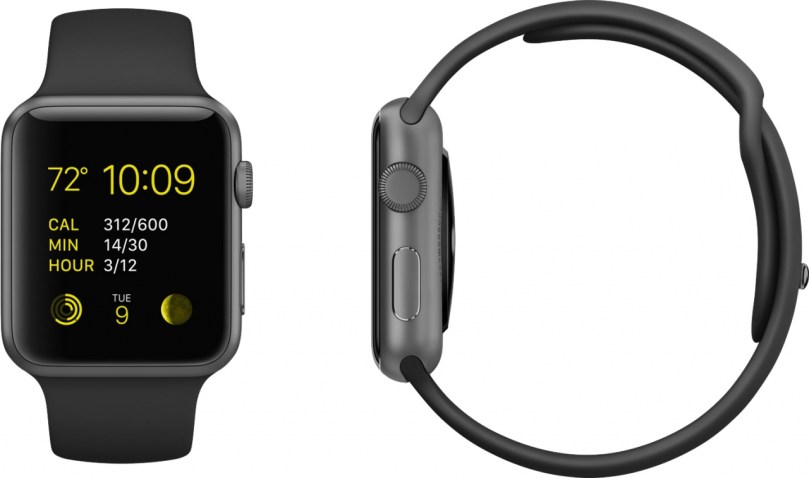
Apple Watch Sport space gray

Alan Watts: Hurry is fatal

I found these thoughts on the @AlanWattsDaily Twitter stream today:

A hurried feeling is a good sign that I need to pause and reflect.

The great (greatest?) coach John Wooden would regularly say to his team: “Be quick, but never hurry.”

Take cues from nature. Let life come. Don’t force. Take it easy.

Be like the amazing Bruce Lee and be water.

Hurry is fatal, at least to any possibility of being awake to the present moment, which is the only place my life ever is.

*I had a set of Alan Watts lectures on cassette tapes that I literally wore out fifteen years ago. Watts was as engaging and as challenging and as entertaining a thinker as any I’ve heard. His books, The Wisdom of Insecurity and The Book on the Taboo Against Knowing Who You Are, are two of the most mind-stretching I’ve ever read.

Apple’s event: MacBook thoughts

I took a day off today. My kids are on spring break, and my wife is out of town for work. Daddy-daughter day included plenty of play time, a trip to the movies (Spongebob… meh), dinner out, and a grocery run. Yet, somehow, I was able to take in the entire live-stream of Apple’s product announcement event this afternoon.

Kind of like wearing a favorite UGA shirt on a football Saturday, I put on my Daring Fireball t-shirt and pulled up the event on my Apple TV to cheer on the possibilities that would be unveiled. Apple is great at these carefully choreographed events, which are filled with sharp product videos and occasionally genuine surprises. I’m a complete sucker for them. As a fan of both great presentation dynamics and Apple products, these events are right in my wheelhouse.

Today’s event was expected to be about the new Apple Watch. And it is a fascinating new product category that may ultimately change the way many of us use technology. I’m in wait-and-see mode as to whether I will ever want one.

But what I’m still thinking about hours after watching is the new MacBook that was unveiled. It’s lighter and thinner than the 11″ MacBook Air (which my wife has and we both love), yet it has a 12″ retina display and all-day battery life. Plus, it includes new engineering for a flatter, more fluid keyboard and something Apple is calling a “Force Touch” trackpad which responds to how hard you tap. There’s a bit of trade-off in that the processing power of this new MacBook is not as robust as what you can get in a MacBook Pro. This is not the machine for those doing regular heavy lifting like video editing and Photoshop.

This new MacBook, though, looks like the ultimate writing machine. The form factor seems like they’ve finally hit the sweet spot for portability and features. Harry Potter author J.K. Rowling famously said a few years back: “The MacBook Air changed my life.” She felt it was the ultimate writing tool because of its size and performance. This new MacBook improves on the Air in many ways, but especially with the HD screen.

And you can see the convergence across product lines for Apple. If an iPad married a MacBook Pro, this is what their offspring would look like. This MacBook is a bit like an iPad that runs Mac OS with a killer keyboard attached.

My personal Mac is an old iMac that’s more than six years old. This new, svelte MacBook has jumped to the top of my wish list. And Space Gray? Yes, please. (Guess I need to start saving. That hot water heater we had to replace today did not help…)

The iMore crew has a good summary of the features and a glowing early assessment from their time giving the new MacBook a go in the hands-on opportunity after today’s event.


Sunday Evening Stoic: Brace Yourself

From the philosopher-emperor:

The art of living is more like wrestling than dancing, in so far as it stands ready against the accidental and the unforeseen, and is not apt to fall. –Marcus Aurelius

And there’s this, from the creator of the Magic Kingdom:

All the adversity I’ve had in my life, all my troubles and obstacles, have strengthened me… You may not realize it when it happens, but a kick in the teeth may be the best thing in the world for you. –Walt Disney

Welcome the occasional kick in the teeth. Brace yourself for difficulty and setbacks and heartbreak. And use them to get stronger. Use your obstacles as fuel.

Jony Ive and the moral purpose of design

It’s Apple Watch week with Monday’s event approaching rapidly and many eager to see just what the final details will be.* And the Jony Ive press tour continues. (Has Apple ever granted this much access to Ive or any of its top people? This is a new era of openness in Tim Cook’s Apple.) Here’s a profile in The Financial Times and a bit about Ive’s view of the big picture of design?

I would hazard a wild guess that 19th-century neogothic ecclesiastical architect and designer Augustus Pugin is not frequently discussed in Cupertino, but Ive invokes his name to discuss the moral purpose of design. He chooses his words carefully. “This is difficult to describe and it could be misinterpreted very easily, but there is a sense of almost serving your fellow humans. While people might not be able to articulate why they care and why they prefer one thing over the other, I really think that most people are very discerning.”

Some may take it as self-serving or hollow or PR, but I take his claims of serving humanity with design and with Apple’s creations as wholly sincere. And refreshing. Of all companies, Apple can most likely claim adherence to a standard beyond mere market economics and pursuit of profits. Maybe it’s easy to proclaim such lofty motivation if you represent the richest company in the history of the world.

It does seem the leadership at Apple are uniquely obsessed with making truly great products, products that offer remarkable value to their customers. And, yes, they make a lot of money by selling those products. But that is likely the key to their success. Focus obsessively on the creation and continual refinement of transformative products and trust that the humans they’re designed for will respond with delight and with a willingness to pay a premium for designs that resonate, whether those humans know exactly why or not.

What’s the gift we can give in our work? How can what we create and the experiences we deliver serve a meaningful purpose beyond putting food on our tables and paying our bills?

If you consider your work as a way to serve humanity, to make life even a little better for someone, you can transform a mere job into a calling. Tasks you previously took for granted, or undertook half-heartedly, become almost sacred and imbued with new energy when you instead see them as part of your gift to the universe, your legacy in the service of humanity. And your work likely will rise to new levels of excellence and accomplishment.

*I haven’t worn a watch since 2008. I’m assuming I don’t want an Apple Watch. But I’m also smitten by delightful technology. I’m a pushover for uniquely great things. I will be intrigued to see how this new device is being pitched to a generation that doesn’t see a watch as a necessity any longer. 

Walt Disney, Steve Jobs, and plussing your life

I’ve been immersed in Walt Disney recently. I’m reading a biography which is giving me a better appreciation of the impact one dynamic person can have on an organization and ultimately on society.

And then today I found this article linked from ToolsAndToys.net. It’s a piece by Rolly Crump, a former Disney Imagineer who worked on Disneyland projects like the original concepts for It’s A Small World and The Enchanted Tiki Room. He shares some great insights about what it was like to work with Walt. (Disney refused to let employees, or anyone, call him “Mr. Disney.” He insisted on being addressed by just his first name.)

In all the stories I’m reading about Walt, he comes across to me as a kinder, gentler Steve Jobs. Both men had charismatic personalities that could bring out the best work in others. No one could out-dream them. Their ideas were bigger and bolder than anyone else’s.

Walt was not actually an artist. (He didn’t even draw the original Mickey Mouse. He just came up with the concept and the personality and the voice and got Ub Iwerks to do the drawing.) And Steve was not a computer engineer or a designer. (It was Woz who made the original Apple computers. Steve just figured out how to sell them.) But both men saw possibilities others didn’t. They asked for more, for better, for the seemingly impossible. And they got it more often than not. With their ideas and their drive and their communication skills, they sold their dreams and impressed their high standards on those who worked with them.

Here’s Crump talking about the way Walt would generate and improve ideas:

In designing for Disneyland you definitely worked more as a conduit for Walt’s ideas. He directed what you were doing, and his direction was far superior to your own personal ideas. His ideas were way ahead of yours—you had to play catch-up on that, and then you had to kind of read subconsciously what it was that he wanted and the direction to take. Walt would come up with an idea, and that idea would explode inside of him. It would get better and better. So when you showed him something, he would take what you did to another level. And when you gave it back, he’d take it to yet another level.

So many Steve Jobs anecdotes sound like that. His ideas were a few steps ahead. Go bigger. Get it done sooner than anyone thinks possible. Give it more “wow”, more “cool”.

Walt called it “plussing”. He would take an idea and “plus it”, make it a little better. And it was constant for him. He was relentless in plussing everything, from a scene in a movie to the way a cast member interacted with a guest at Disneyland. (Here you can listen to a recording of Walt talking about plussing and why he loved Disneyland more than his movies.)

Jobs and Disney must have had a sharply tuned sense of discontent. What most of us would accept as okay, they would ask for better. And the results are what make Apple and Disney the icons they have become in our culture.

Maybe most of us are too timid, too content with good enough. What if you asked for better from yourself and from those you work with. What if you plussed your life as relentlessly as Walt and Steve plussed their creations?

“Of course we might be wrong, but…”

From an interview on TheVerge.com with Brian Cox, the physicist and science superstar and host of the entertaining BBC radio show/podcast, The Infinite Monkey Cage:

Science is often presented as being dogmatic, when actually it’s the opposite of that. I’m just writing a new book actually, with a colleague of mine Jeff Forshaw at Manchester [University], and it’s really about how to think like a scientist. And in it we say that there’s an implicit preface — the start of every scientific book or every theory, the sentence should start “of course we might be wrong, but…” Could you imagine if every other area of human thought began with that? Imagine if the Bible started with “of course we might be wrong. However, in the beginning, God created…” Fantastic!

It’s a delight to fully embrace not-knowing. It takes the pressure off. You don’t have to be right or to have it figured out.

When I was young, I was pretty close to having it all figured out. Somehow, though, I’ve gotten dumber as I’ve aged. That’s normal, right?

Grasping for certainty can lead to bludgeoning others, and yourself, with the so-called right answers, with your application of what’s black and white and with no room for grey. And you’re likely to end up holding tightly to a comfortable fiction.

What if you searched for possibilities instead of certainty? Everything gets bigger with that approach. More possible paths. More possible solutions. More insecurity and uncertainty, yes. But more fun, too.

You look good in grey. Really. It flatters you.

Of course, I might be wrong…

Art & Fear: The ceramics class and quantity before quality

This story from the book Art & Fear by David Bayles and Ted Orland popped up in a favorite technology blog yesterday:

The ceramics teacher announced on opening day that he was dividing the class into two groups. All those on the left side of the studio, he said, would be graded solely on the quantity of work they produced, all those on the right solely on its quality.

His procedure was simple: on the final day of class he would bring in his bathroom scales and weigh the work of the “quantity” group: fifty pound of pots rated an “A”, forty pounds a “B”, and so on. Those being graded on “quality”, however, needed to produce only one pot – albeit a perfect one – to get an “A”.

Well, came grading time and a curious fact emerged: the works of highest quality were all produced by the group being graded for quantity. It seems that while the “quantity” group was busily churning out piles of work – and learning from their mistakes – the “quality” group had sat theorizing about perfection, and in the end had little more to show for their efforts than grandiose theories and a pile of dead clay.

Brilliant. And I’ve been having this lesson delivered to me repeatedly over the past year. Quantity leads to quality. I don’t know if I’m learning it. I still get stuck overthinking, delaying, waiting for inspiration. When what I need to do is just show up. Do work. And keep showing up.

Attempt mediocrity, even. Dare to write one really awful sentence if you have to. It takes the pressure off. And mediocre might just lead to good, which every now and then might get me to awesome. But if I start by expecting to begin with awesome, I might just sit there instead, waiting for lightning to strike. Or, more likely, start scrolling Twitter and RSS feeds.

Quantity. Hammer away at the thing you want to get good at. Not to the point of grooving an easy path or just mailing it in. You need to challenge yourself routinely with hard things, by stretching your skills. But the more you do, the better you’ll be.

Don’t wait for the muse to show up. Your showing up is more likely to summon the muse than the other way around.

The ceramics class story, by the way, has been linked in several places (Cool Tools, Herbert Lui, and Coding Horror are three I found), and then I saw that book recommended today in a Chase Jarvis post, 6 Books Guaranteed to Make You More Creative. I have five of his recommended six books. The one I’m lacking: Art & Fear. The internet, great and powerful, clearly, is telling me to get that book.

Offscreen Magazine: Analog treasures for digital denizens

IMG_6405

After being intrigued by a Shawn Blanc post about it, Offscreen Magazine, Issue 10, arrived in my mailbox yesterday. It’s a delight, a touchable treasure of insights about and for people whose work revolves around the internet. The creator, Kai Branch, decided he wanted to do more than push pixels and digital wares that seemed to have no meaningful shelf life. He wanted to make something real, that you could hold and share tangibly and that might have some staying power. From Offscreen’s “About” page:

Originally a web designer by trade, Kai Brach launched the first issue of Offscreen in early 2012. Feeling disconnected by the fast pace and the ephemeral nature of digital, after ten years of freelance work Kai wanted to create something more tangible. With Offscreen Magazine, he combines both his love for technology and the web, and the unique experience of printed magazines.

In the span of three months, Kai “converted” from a UI designer to an editorial art director, not only publishing and editing Offscreen but also designing the magazine from the ground up. As such, Offscreen is still a one-man operation, and a proudly authentic indie magazine supported by amazing contributors and curious readers. Kai hopes to reinvigorate printed magazines as a choice of media that provides a welcome break from our always-on society.

I’m impressed by the content in this magazine. And that it’s a one-man operation makes it even more impressive. There are insights on seemingly every page. It’s stuffed with meaty interviews with interesting people and is scattered throughout with thoughtful touches like this:

IMG_6406
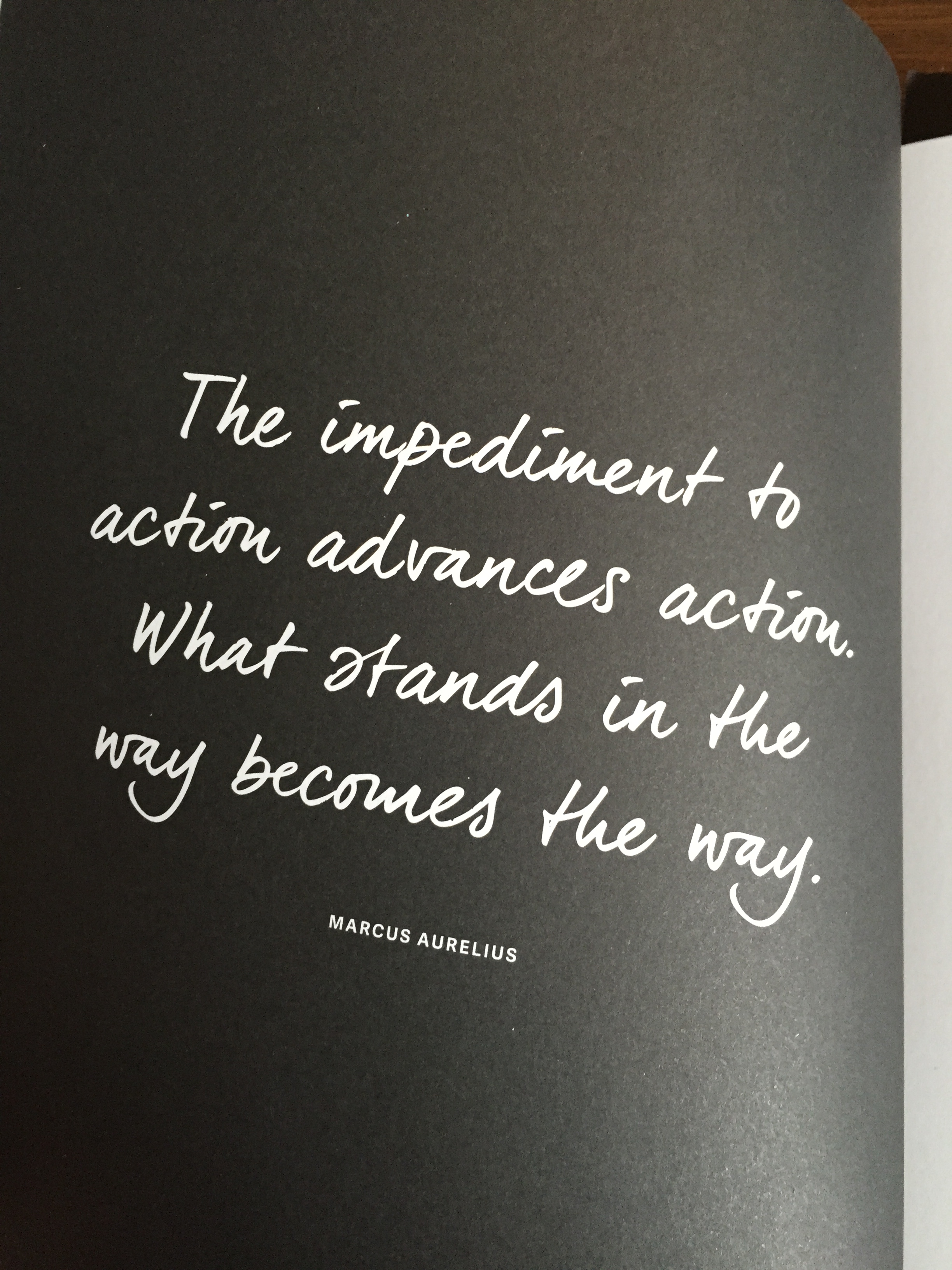
THIS was on the page following the table of contents! (The obstacle is the way.)

And this…

FullSizeRender 2
A wise insight from Slack CEO Stewart Butterfield in the current issue of Offscreen Magazine

And it’s beautifully made and a pleasure to hold. Quality paper, crisp print. The size is just right, too. Clearly, a lot of thought and care has gone into making this magazine.

Those of us who share on the internet are regularly reminded how fleeting our creations are. Of course, there’s poetry in the impermanence. Online creations are like a mandala, a Buddhist sand painting that’s intentionally scattered after being painstakingly created as a reminder of the impermanence of all things.

But there’s a grace in great things, things you can hold and tuck under your arm and put on your shelf to enjoy again and again. A thoughtfully crafted thing has a beauty that endures and offers a distinctive pleasure that a flickering screen cannot adequately match.

What will my web site, for example, have to offer of value to anyone ten or twenty years from now? I suppose I could still be adding to it regularly. I envision making this as long-term a repository of my writing as is possible. And the intrinsic value of notching new posts every day has meaning for me whether anyone else reads or not.

But the web is like a river. You never surf the same web twice. It’s constantly changing. On the internet, everything flows and nothing abides for long. Such is life, of course.

Enjoying this magazine has sparked a bit of curiosity about making more permanent things. I don’t know if “Excellent Journey: The Book” is in my future, but it’s worthwhile to consider what I might create in a more fixed form. Seth Godin’s recent book along with this magazine are great examples reminding me of the value of the touchable and the beauty of old-fashioned words on paper.

The printed word will, I venture, have a much more enduring presence than, say, vinyl records, which seem more of a novelty for a narrow niche of aficionados. No technology is required to use a book. But, I think people eventually will treat paper books more like souvenirs of ideas and memories. Electronic reading will be fine for most occasions. Real books, though, will become more special, for selected experiences and more valued ideas, for gifts that endure, that touch and can be touched.

Pre-ordered: Becoming Steve Jobs

I enjoyed Walter Isaacson’s massive, authorized biography of Steve Jobs. It was a big bestseller when it was published in 2011 so soon after its iconic subject died. The book was filled with sensational stories highlighting Jobs’s infamous temperament, and it was a decent history of the early days of the technology revolution. (Though, the author didn’t always seem to get technology.)

But the book seemed like a missed opportunity. Isaacson was granted access to Jobs in a way no other writer had been, but the “why’s” weren’t explored nearly as well as I had hoped. For such a thick book, it was surprisingly thin on takeaways, other than knowing I didn’t want to be Steve Jobs or to work for anyone like him.

I was hoping to see more into the day-to-day life of one of the key business innovators of our time. How did he structure his day? How did he spend his time? Why did he think so differently? How did he grow from such an idiosyncratic and often childishly cruel young entrepreneur into arguably the most dynamic and successful CEO and technology visionary of our generation?

My favorite writer on all things related to Apple, John Gruber, just posted on Daring Fireball about a new biography coming out later this month: Becoming Steve Jobs by Brent Schlender and Rick Tetzeli. It looks like exactly what I was hoping for in a Steve Jobs biography. From the book’s description on Amazon.com:

Becoming Steve Jobs answers the central question about the life and career of the Apple cofounder and CEO: How did a young man so reckless and arrogant that he was exiled from the company he founded become the most effective visionary business leader of our time, ultimately transforming the daily life of billions of people?

The authors interviewed key people from Steve’s life, including his wife. Gruber read an advanced copy and raves about the quality of the book while calling it “an essential reference for decades to come”.

Pre-ordered. Hardcover. (That shows how high my expectations are. I’m thinking it’s a keeper, one my kids might want eventually.)

becoming-steve-jobs-cover

Sunday evening Stoic: Do good, expect nothing in return

Meditations 5.6:

“Some people, when they do someone a favor, are always looking for a chance to call it in. And some aren’t, but they’re still aware of it—still regard it as a debt. But others don’t even do that. They’re like a vine that produces grapes without looking for anything in return.

A horse at the end of the race …

A dog when the hunt is over …

A bee with its honey stored …

And a human being after helping others.

They don’t make a fuss about it. They just go on to something else, as the vine looks forward to bearing fruit again in season.

We should be like that. Acting almost unconsciously.”