Bonfire within

20130629-211703.jpg

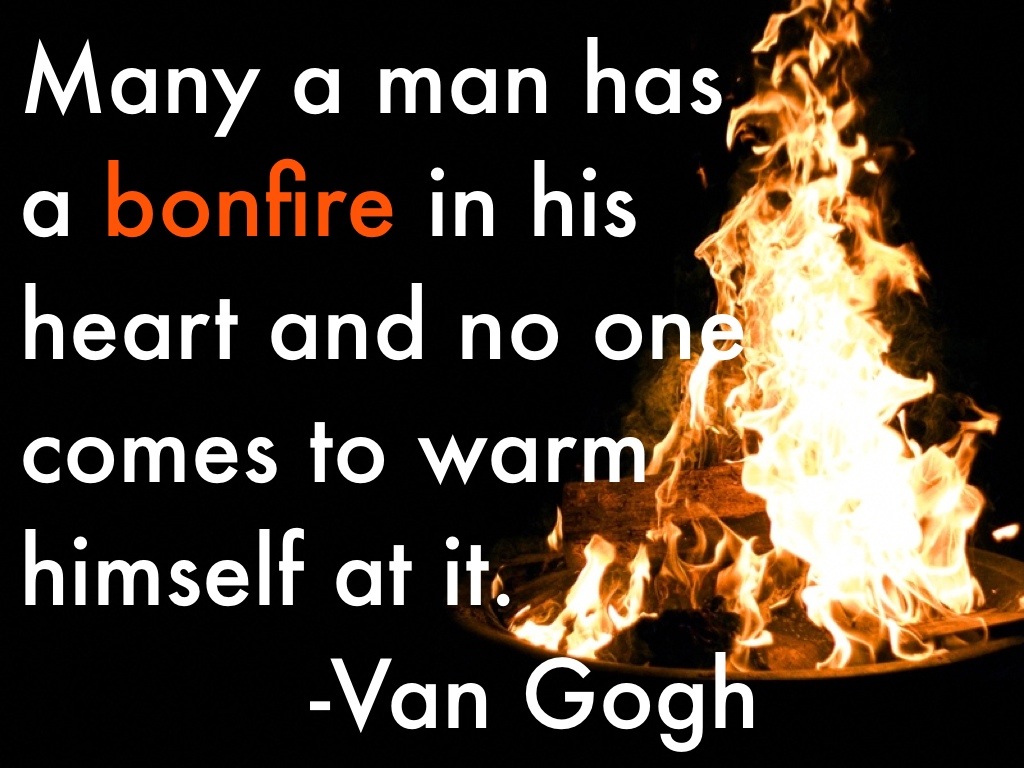
Whose fire can you warm yourself at who would benefit from a listening ear and genuine interest? Even those who don’t seem to be generating much smoke have a fire within that might just need a little tending, a bit of compassion and connection, to spark into a powerful flame.

In praise of ebooks

It’s great living in the future. The world’s information is in our pockets. We have no end of things to read and watch and play. Consequently, there also is no end of empty, worthless, even harmful diversions that can consume our time and attention.

Just as you should be mindful of what you put in your mouth, take care to put worthwhile things in your mind. Be a good curator of what merits your attention. Life is short. Use your very limited time and attention to consume books, articles, music, and other art that will make you better and happier.

I’m now a reader of ebooks. I have always been a book reader. I’ve collected and read books since I was old enough to read. Just picking up certain books in my collection can cause a rush of memories associated with reading them. But I’m not particularly nostalgic about the demise of paper books and newspapers and magazines. Paper is just a vehicle for the content. It’s the content that matters.

Ebooks ensure that you can easily access your entire collection of books from anywhere. John Adams advised his son, John Quincy, to “Always have a poet in your pocket”, to carry a book with you constantly to make good use of any down time. Now, there is no excuse not to have a good book or other reading material constantly available to you.

Ebooks make reading a pleasure for me. You can change the font and adjust the font size as well as the background. You can sync your books across multiple devices. You can highlight passages and make your own notes. I use both iBooks and Kindle. I prefer the iBooks reading experience. iBooks has a more pleasing page layout, including a ragged right edge, and offers a scroll option in addition to the conventional page turns. Kindle has a bigger selection of books to offer, though.

When people see my bookshelves, they often ask, “Have you read all of these?” Of course not. I have read some of most and all of some. I have no shame about stockpiling books. Ebooks make that even easier. Just a click on my iPad or my Mac, and the book is instantly downloaded. How cool is that? And now I don’t have to worry about having enough shelf space.

I do want a more disciplined reading routine, and this is one area where ebooks cause problems. I open my iPad and see dozens of books I might want to read or re-read. I plunge into one, and if my mind goes on a tangent, I can easily open another or go check Twitter. Paper books are much better at focusing my attention.

20130628-191712.jpg

Books have greatly affected my life and continue to do so. Choose your inputs wisely. Read classics. They are classics for a reason. Read the works of great writers and smart thinkers. Find an author that speaks to you and read everything she’s written. It’s the best way to really get an author. Ask friends and mentors what books have meant the most to them. This question alone can fill a dinner with great conversation. Challenge yourself to read at least one book each month. Some people read a book a week. Imagine going through 52 books every year. Make a wish list. Ask for iBooks or Amazon gift cards for holiday or birthday gifts. Start a reading group with kindred spirits.

Establish a reading habit. Family life makes it hard for me to disappear into a book regularly at home, so my daily lunch break works well for me.

Next time you find yourself channel surfing, flipping through the dismal array of reality shows on TV, grab a good book and get lost in the life of the mind that a book can create. Our culture is committed to extending literacy universally in the hopes there will be no one who can’t read. But the sad reality is that so many who can read actually do not.

In praise of email

Email gets a bad rap. But I like it.

I would rather receive or send an email about a task than receive or make a phone call or go to a meeting about a task. Email allows you to respond in your own time. A phone call does not. Email allows a person to assess and look into something, to build a potentially thoughtful, worthwhile gap between the stimulus and the response. Problems certainly arise when people don’t utilize that gap and instead respond thoughtlessly or too hastily. But email respects the time and attention of others better than conventional communication methods.

Most people need a couple of hours of uninterrupted time to get into a flow of productive work. Phone calls, especially, but meetings, too, have a skewed sense of urgency that does not respect the time and need for the deep focus of others. Certainly, some things have to be talked out or are best handled in person. But I appreciate someone who emails asking me to suggest a day and time when a call or face-to-face would be convenient. I have even set my phone’s voicemail message to encourage the caller to send an email instead of leaving a voicemail if possible.

Yes, email can be overwhelming if your email inbox is your de facto task list, especially if you don’t tend to your inbox consistently. But I’m an inbox zero guy. I process through my inbox every day and empty it almost every time I open my email app.

That doesn’t mean I respond to every email, and it doesn’t mean I respond quickly to every message. I just do triage. I decide which emails need a response from me and which can be deleted or archived. If an email needs a response, I do it right away if it will take less than a couple of minutes. If it will require more thought and take longer than two minutes, I file it in an “Action” folder in my Mail app for review at another time. Also, I only open my email app two or three times each day, ideally.

A good email should have a clear subject line, nothing cryptic, and the body of the email should be as short as possible. You’re more likely to get effective responses if you keep your emails clear, direct, and simple. Don’t cc unnecessarily, and there are very few cases where you need to bcc.

Tone is always important. Some people allow the impersonal nature of email or social media to enable bad manners. Be impeccable with your words, always. Read over everything you send or publish to check for errors, of course, but also to check your tone. Imagine anything you send being published for all to see. Don’t email anything you would regret becoming public. 

Email is just a tool, but used effectively it can help you work smarter and better.

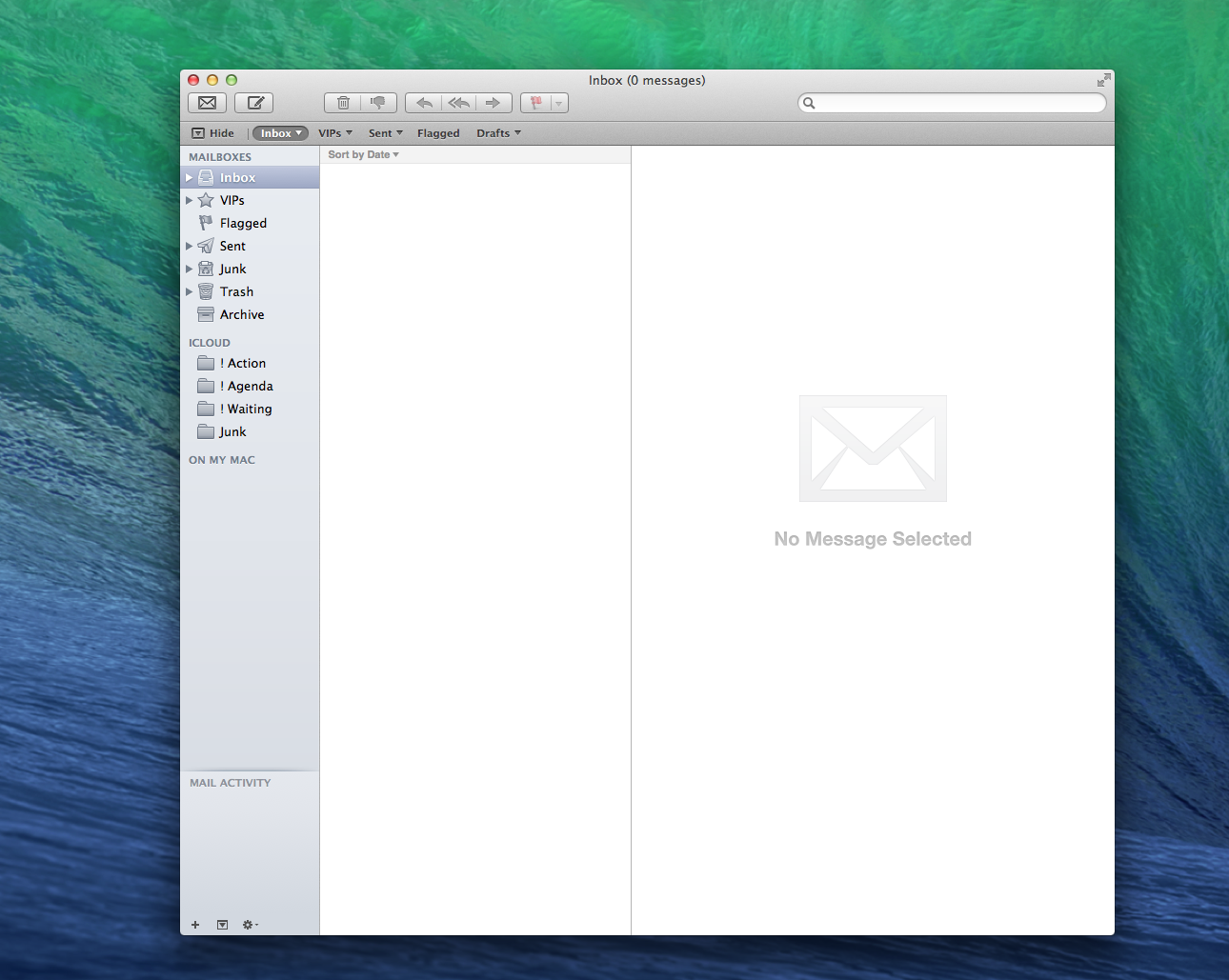
My email inbox just minutes before this post was published


Peter Attia: Rethinking healthy eating

Peter Attia is a surgeon who struggled with being overweight even though he was active and fit. But he was eating a conventionally approved low-fat diet which was high in refined grains and carbohydrates. Once he flipped his diet to high-fat/low-carb, he dropped forty pounds. Now he has devoted his career to discovering answers to the most challenging questions about how to live a healthy life and spreading that knowledge to give others better lives.

This moving TED Talk tells a bit about his journey, but it focuses primarily on the probability that our assumed understanding of the roots of the obesity epidemic are completely wrong.

Astonishing facts from Dr. Attia’s web site:

  • 34% of Americans are obese and two thirds are overweight.  This represents more than a 200% increase from 1970.

  • Over 8% of Americans are diabetic, and if you include those undiagnosed, an additional 26% of Americans are pre-diabetic.  This represents more than a 400% increase from 1970.

  • Every 7 seconds someone in the world dies from a diabetic complication (this is not a typo).

  • Diabetes is also the leading cause of stroke, blindness, kidney failure requiring transplantation, all amputations combined, and many other medical problems.

  • According to McKinsey & Company, reducing the U.S. obesity rate to 15% (that of 1970) would save approximately $150 billion per year in Medicare spending alone, and close to $500 billion per year in overall U.S. healthcare spending.

  • A recent study in Obesity estimates that by 2030, 50% of Americans will be obese and 79% will be overweight.

  • The U.S. spends over $2.7 trillion per year on healthcare – nearly 19% of our GDP, and more than any other country.  Even if no other aspect of our spending increases in the next 20 years, the cost of healthcare alone will bankrupt us as a country.

As I’m being more mindful of what I eat this summer, Dr. Attia’s perspective just strengthens my resolve.

Doing hard things

I get to work each morning and regularly write down (in Day One) my MITs (Most Important Tasks). These are tasks that typically are important but not necessarily urgent, and getting them done will move my work forward in a meaningful way.

Yesterday I wrote down four tasks that had been nagging at me, none of which would take much time to complete. But each of them had enough friction or resistance to keep me from getting started on them. I did none of them yesterday. How could I get through the day and not start on even one of the tasks I had deemed most important?

I went home with those tasks still tugging at me, draining some mental energy that could have been better spent elsewhere. So, today, I just started, even though I didn’t feel inspired, and got three of the four done.

While the tasks weren’t complex, they each required some creativity, some thoughtfulness about how to express myself. And that can seem hard.

I often wait for inspiration to strike on those kinds of projects. Haven’t I learned that starting usually comes before inspiration? I may think, “I’ve got nothing”, but once I start I tend to come up with something. That something may be terrible, but it often primes my brain for another something that’s at least a little better.

I recently read about the McDonald’s Theory. You know what it’s like when friends can’t decide where to go to lunch together and everyone seems stymied? Just say, “Let’s go to McDonald’s!” Then, everyone suddenly comes up with lots of great lunch ideas because no one (usually) wants to go to McDonald’s.

Starting with something terrible gets you over the hump of having nothing, and then you can move on to something better than terrible.

Mary Oliver: West Wind #2

This is so good:

WEST WIND #2

By Mary Oliver

You are young. So you know everything. You leap into the boat and begin rowing. But listen to me. Without fanfare, without embarrassment, without any doubt, I talk directly to your soul. Listen to me. Lift the oars from the water, let your arms rest, and your heart, and heart’s little intelligence, and listen to me. There is life without love. It is not worth a bent penny, or a scuffed shoe. It is not worth the body of a dead dog nine days unburied. When you hear, a mile away and still out of sight, the churn of the water as it begins to swirl and roil, fretting around the sharp rocks – when you hear that unmistakable pounding – when you feel the mist on your mouth and sense ahead the embattlement, the long falls plunging and steaming – then row, row for your life toward it.

Girl power, word power, and charisma

This is a great presentation at TED by young Sarah Kay. She discovered spoken word poetry as a high school student and wow, did it make her come alive.

She delivers this on one of the most imposing stages imaginable with quite the intimidatingly impressive audience, and she flat out shines:

As the father of two young daughters, I especially admire what a powerful presence she has as a young woman. She is confident and charismatic and gets a standing ovation deservedly. Go girl, indeed. I want my girls to be able to plant their feet as firmly and connect with others as strongly as this young woman does.

She’s also spreading the good news of the power of expression, the magic of words.

“I write poems to figure things out.” -Sarah Kay

We all are artists with points of view and experiences that are unique in the universe. It’s a pity how many go to their graves having never truly expressed themselves or pursued a better understanding of their place in this universe by examining their life through art and self-expression.

Sarah Kay certainly does shine and commands the room like someone who’s been on stage for years. It’s easy to say she is just naturally charismatic, but I believe anyone can develop charisma. Charisma simply is caring deeply about something and having the courage to uncork some passion and share it with others. I love this thought from the speech coach Nick Morgan:

20130623-183910.jpg

I regularly assign Sarah Kay’s TED Talk to my student staff during training. She is (or was at the time) their age. I want them to see that they don’t need permission or seniority or a degree or years of paying their dues to be awesome. You don’t need permission, either. Express yourself. Be charismatic. Be awesome.

Cook your own food

I enjoy cooking. After I transformed my diet, I began caring a lot more about how our food is prepared. So, I’ve become the primary cook in our house, mostly to my wife’s delight. She still does the baking. The precision and linear nature of baking appeals to her, and I love the improvisation and intuitive approach of cooking. We are a good match.

My mom could whip up a great dinner almost effortlessly, putting a hearty home made meal on the table without much planning. I took for granted that everyone’s home was regularly filled with the aromas of home cooked meals. I realize now that most people do not cook. I suppose it seems hard or mysterious or just not worth the effort. But I’ve found it to be simple and satisfying.

It is nice to know exactly what you are eating and that is was prepared by a human you know and love and not by a corporation. You will eat healthier if you cook for yourself. The unhealthiest food is hard to make on your own. Deep frying? Hard. Twinkies? Give that a go in your kitchen. You want some cookies? Baking a batch from scratch takes a lot more time and effort than opening a pack of Oreos and will make eating cookies a rare splurge instead of a daily treat. Ice cream? Homemade is such a delight, but also not something you would do every day.

“Cooking is probably the most important thing you can do to improve your diet. What matters most is not any particular nutrient, or even any particular food: it’s the act of cooking itself. People who cook eat a healthier diet without giving it a thought. It’s the collapse of home cooking that led directly to the obesity epidemic.” –Michael Pollan

Yes, cooking is healthier, but it also can be a joyful, soul-satisfying daily task. I don’t often have much to show for a day’s work at the office. The output is hard to see, hard to measure, as it is for most of us today. Working with ideas and people has its merits, but working with your hands and making something tangible is primally satisfying. So, instead of seeing cooking as a chore when I get home, I get excited to make something, to use sharp knives and fresh ingredients and make a meal that delights and satisfies. I don’t even mind cleaning up after the meal.

I don’t do anything too complicated. I’m no chef, and you don’t have to go to culinary school to make good food. It’s so easy to sautee a pork chop in a skillet and lay some fresh green beans in a sheet pan for roasting. A whole roast chicken coming out of the oven on a cold winter night is a sensory pleasure that takes very little skill or effort. Baked sweet potato fries with coconut oil… so good and so simple to make.

If you’re not cooking at all now, just try cooking one or two dinners a week to get started. And, instead of cereal or a bagel for breakfast, try scrambling some eggs. It only takes a couple of minutes more to have a hot breakfast.

20130622-105302.jpg
My treasured cutting board

You just need a decent knife and some basic tools to get started. When you go to the grocery store, shop the perimeter of the store, where the fresh produce and meat are, and avoid the center aisles which are filled mostly with packaged, processed foods. Search online for recipe ideas. Ask your family and friends for favorite recipes. Watch cooking shows. I’ve learned a lot from watching America’s Test Kitchen, especially. Here are some great tips from Becoming Minimalist on how to enjoy cooking.

The more you cook, the better you’ll get at it and the more your friends and family who don’t cook will think you’re some sort of fantastic culinary wizard.

Cook your own food, for your health and for your happiness. Enjoy the making as well as the eating.

Update on my charity: water project

I gave up my birthday for charity: water, and, so far, 36 contributions have been made totaling more than $1,600. That’s enough to bring clean water to 25 people. Even though my birthday has passed already, donations can still go toward my campaign until August 9.

I am amazed at how many of my friends and family have donated. When I started my campaign I was asked to list a goal. I put down $1,000, thinking that was high enough to be a real challenge. There aren’t that many people in my life who would normally give me a birthday gift, so I didn’t expect much of a response. When donations started rolling in pretty quickly I realized I needed a bigger goal. I would rather aim high and fall short than aim low and reach it. I wrote down $2,000 and divided that by 49, the amount I was asking for my 49th birthday. That’s almost 41, so I decided to just multiply 49 by 49 and reset my goal to $2,401.

Several who donated to my campaign have already created their own birthday campaign. Looks like I’ll be giving back again, and gladly, when all these other birthdays roll around. Seeing my friends get excited enough about this charity to donate their birthdays, too, is as gratifying as them donating to my campaign.

Last week I came across the Charity Navigator web site which provides an independent, objective evaluation of charities. It’s an interesting site and well worth exploring to find out how they rate any charities you support or are considering. I was pleased to see charity: water was rated as one of the top overall charities in the nation.

And, just this morning I received an email from charity: water with this great new 3-minute video telling the founder’s story:

If you’re looking for a charity to support that you can be proud of, one that’s taking on a big problem and doing it in a transparent and awesome way, please check out charity: water.

Two words

Two words are enough to convey meaning and mission, to inspire and guide.

I came across Benjamin Zander’s fabulous TED Talk years ago. It is a must watch, and I require it of all our new student employees before their first training session. There is usually a bit of pause when they see it’s a talk about classical music. Classical music? How fascinating and relevant could this be? Watch and see:

Near the end of the talk Zander says he realized that while his occupation is a symphony conductor, his calling was to “awaken possibility” in others. When he said that I realized those two words speak for my calling as well. That’s what drives and delights me, awakening possibility in myself and others. And, as he said, you know you’ve done it when you see “shining eyes” looking back at you. I live for those moments.

In my work in higher education I tell our campus tour leaders their mission is to awaken possibility, too, as they introduce high school students to the wonders of college life. We want high school students to leave excited about new possibilities about what education could be for them no matter where they choose to enroll. We are not selling our brand. We are aiming higher and offering a gift they can take with them anywhere.

Too many organizations have committee-created mission statements that don’t resonate and can’t be recited by anyone except maybe those who were on the committee. But what if, instead of a mission statement, you had a mantra, even just two simple words, two words that articulate simply and powerfully why you do what you do, what you are about?

If being awesome is the goal, clarity and simplicity of purpose are crucial for an organization, a family, and, especially, an individual.

Steve Jobs returned to rescue Apple in 1997. The company was on the verge of bankruptcy. The products were not great and the employees were demoralized. One of his first and most important actions was the creation of the famous “Think different” campaign. Just those two words alongside the Apple logo overlaid on the image of an iconic, world-changing personality appeared on billboards and the back cover of magazines, reminding the world why Apple was special. Those two words reconnected Apple employees with its core values and reminded everyone why Apple became great originally. That two word campaign was the turning point for Apple, which continues to rock the world with its different approach to technology.

Can you sum up your organization’s purpose in a couple of words? What about your own work? What is your calling? Can you narrow it to a couple of meaningful words?

Do you…
spread love
create beauty
solve problems
connect people
generate ideas
serve selflessly
explore frontiers
research mysteries
make art
educate children
nurture health
empower underdogs
enlighten minds
arouse hearts
provoke action

You get the idea. Give this some thought and explore how to get to the essence of what’s most important for you or your organization. Then clarify and simplify and point yourself and your people in that direction with as few as two simple words.

Jim-Henson-Muppets-Think-Different

Life before death

Life after death? I have no solid information. Who does? (“Solid” being the key word.)

We can speculate, hope, imagine, doubt. Of course, the faithful can offer great certainty on this topic.

We all, however, have solid information about life before death. We are alive in the most amazing time in human history. Opportunities abound. Perils abound, too. The greatest peril for most of us is the threat of mis-living our one precious life, of getting to the end of it and looking back with regret.

“What is it you plan to do with your one wild and precious life?” -Mary Oliver

What if our highest art, our greatest work was crafting the quality of each day? What if we went to bed more days than not to the satisfying slumber only a day well spent can provide?

What makes for such a day for you? Here are some things that can make my day: genuine connection with the people I love, laughing with my wife and kids, authentic smiles and moments of kindness shared with friends and strangers, work that fully engages my imagination, making something, learning something, improving a skill even slightly, awakening possibilities in myself and in others, physical exertion, play, a delightful book, the pleasure of good food and thoughtful conversation, small sensory joys like the feel of grass on bare feet and the sound of rain falling on the roof and the taste of chocolate – dark, dark chocolate

The list could go on, but even having one or two great moments in a day can make it worthwhile. It’s remarkable how simple the elements of a good day are for most of us. Maybe just paying attention to what makes for a good day and being intentional about living those kinds of days is the simple secret to a good life.

String enough good days together you’ll have a good week, a good month, a good year. String good years together and you will have a good life.

I heard Joseph Campbell say in an interview that people claim they are searching for the meaning of life, but what they really want, he said, is a full, satisfying “experience of being alive”. That rings true. It’s the feel of a thing, not the think of it, right?

One day at a time, one step at a time on the journey that becomes a life well lived.

20130618-155452.jpg

Doing vs. trying

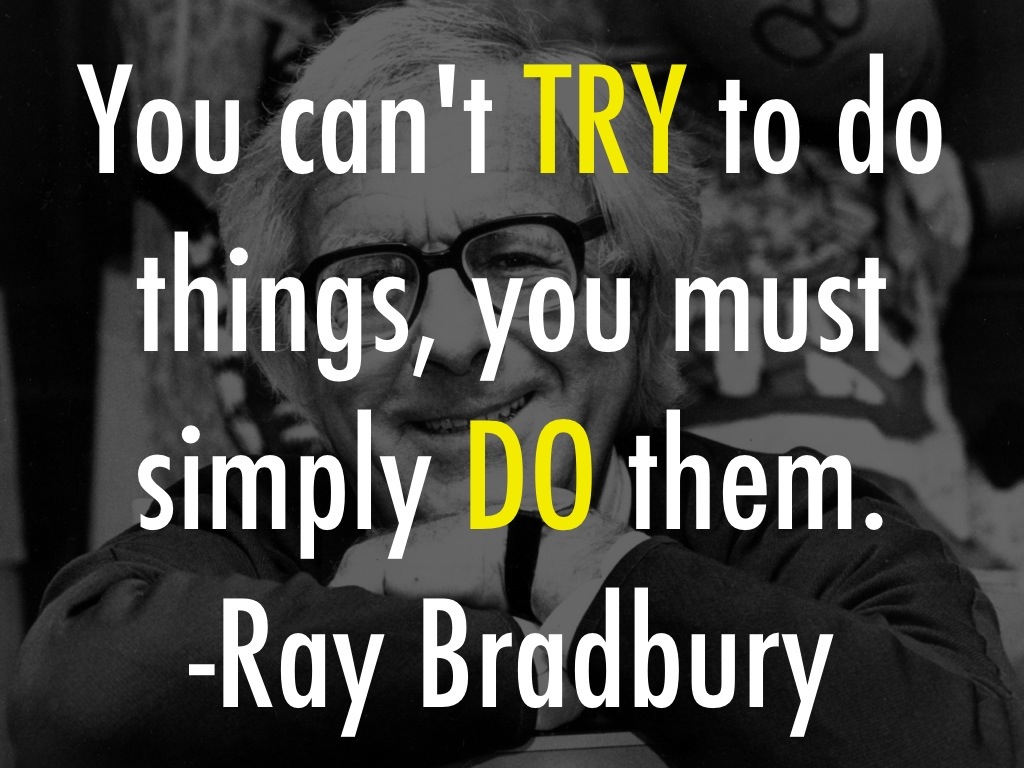
I can try to eat better, or I can eat better. I can try to write something every day, or I can write every day. I can try to get started on that big project at work that’s scary exciting, or I can just start. I can try to be a better listener and try to be a more attentive, present parent. Or I can just do it.

I find myself couching my commitments in the safety of “try”, giving myself room to not actually follow through. Dropping the “try”, though, takes away the net and calls my bluff. Will I do it or not? No points for just trying.

Where do you need to drop “try” and just do it?

20130617-140335.jpg

20130617-140350.jpg

Fathers, be good to their mothers, too

Years ago I was sitting with a group of student leaders going through a training session about university services. The head of the counseling department was explaining all the programs his office offered, and he mentioned they even provide relationship counseling. He asked our group, “How many of you want a relationship like your parents have?” I raised my hand immediately and then found everyone staring at me. There were no other raised hands in the room. The counseling director was trying to make the point that no one wants a relationship like their parents, and he was mostly right.

I, however, didn’t even have to ponder the question. My parents had a beautiful relationship that had always been my standard of what a marriage should be. Maybe that’s why I was a bachelor late into my thirties. I was not willing to settle for a typical relationship when my parents had shown me all my life how awesome a marriage could be.

The way my dad loved my mom was even more instructive than the way he loved me and my sister. And he was, and is, an amazing, inspiring, kind-hearted father and grandfather. But I’ve never known anyone who loved another as much as my dad loves my mom. I never heard him utter a sharp word to her. He put her first in everything. His highest aim was to delight her.

My parents modeled love in a powerful way, and dad doesn’t hesitate to let me know he expects the best from me, too. Shortly after I got married, my wife and I visited my parents’ home. They stood on the porch as we got in the car to drive away. Minutes later I got a phone call from my dad. “Son, I saw that you didn’t open the car door for Shanna as you left. Even though you’re married now, especially now that you’re married, you need to keep treating her like you did when you were dating.”

Thanks, dad, for continuing to remind me in word and deed to love my wife and kids with no ordinary love, and to show my own kids what they need to expect and create in their relationships.

On Father’s Day we are supposed to acknowledge the role that dad’s play in the lives of their children. It’s not enough to just be there for your kids, though, dads. Be awesome for the moms, too. The John Mayer song implores “fathers be good to your daughters”, yes, but being good to the mother of your daughters and sons is just as important.

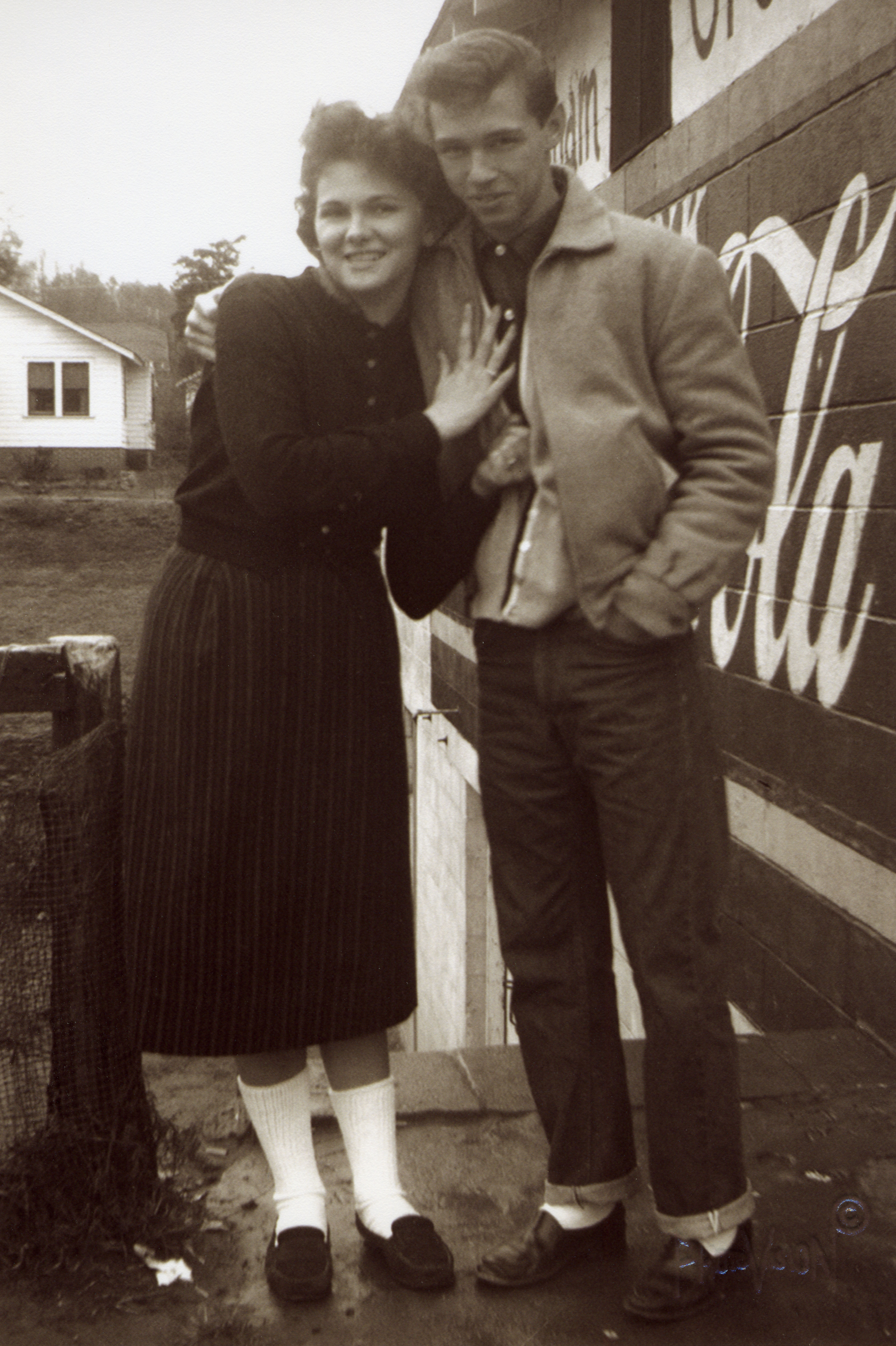
Mom & Dad, 1958
Mom & Dad, 1958


Primal summer

I’m an older dad. My first child was born when I was forty. Being a dad is the most important role in my life. I need to live a long time and stay healthy for my daughters and my much-younger-than-me wife. I want to be at full speed for races in the yard and tag and piggyback rides. I need to be able to pick my kids up and carry them for a few more years. And I want to be around to my see girls grow into women and be fully there for them for as long as possible.

Four-and-a-half years ago, I weighed thirty pounds more than I do now. I was just under 200 pounds. For a 5’9″ guy, that’s not good. In January of 2009, probably having made yet another New Year’s resolution to get healthy, I stumbled across a web site that changed my life: Mark’s Daily Apple.

This very fit looking Californian with impressive surfer-dude hair laid out a compelling case for a whole new way (a very old way, actually) to eat and live. The human species has been around for possibly two million years, but we’ve only been eating processed foods and copious amounts of added sugar for a mere century. And agriculture is only about 10,000-12,000 years old, so even grains were not a regular part of the human diet for the vast, vast majority of our existence.

The original humans were hunter-gatherers. And if we eat more like hunter-gatherers instead of the zoo humans we have become we are more likely to have optimal health.

This immediately made sense as I read it. After years of trying to eat better with nothing to show for it, just this shift in perspective about how we are wired as humans changed everything for me. I immediately dropped pasta and bread and soft drinks and sweet tea from my diet. It was easier than I expected. Within a couple of months, and without even exercising, I had lost twenty pounds. My weight continued to drop effortlessly and leveled off in the 160’s and stayed there while I was only about 75 percent strict with this primal way of eating.

Recently, though, that 75 percent commitment has drifted down to closer to 50 percent. And my pants have gotten a little tighter. Not awesome. So, this summer I am going primal. 100 percent. (Well, I’m going to allow some deviations for Sunday lunches when my kids like to go out for fun food. If I’m 100 percent awesome six days a week, I won’t feel bad about a weekly Sunday lunch splurge.)

This means my meals will consist of real foods – meat, vegetables, fruits, nuts and good fats like olive oil and coconut oil. Hunter-gatherer food. I will avoid grains and vegetable oils (they’re bad) and added sugar* and processed, packaged food in general.

I’ve scheduled my annual physical with my doctor for August 15, two months from now. There’s nothing quite like a publicly announced deadline to focus my attention.

Interestingly, I was worried after my first year of primal eating that my doctor would not approve of my new lifestyle, even with the weight loss, if my cholesterol was crazy. I was eating eggs for breakfast every morning and plenty of meat and butter each week. Conventional wisdom says that stuff will kill you. However, at the first physical after my primal transformation my good cholesterol was better than it had ever been. My doctor let me know that total cholesterol is not a helpful number. The HDL/LDL ratio is what’s important, and my new way of eating had now put me into the lowest risk category for heart disease. Saturated fat for the win!

Good health is everything if you don’t have it. Your health is easy to take for granted, especially when you’re young and bulletproof. All else in life – relationships, work, play – are diminished, though, when your health is diminished.

I have control over what I put in my mouth. I get to decide to be healthy, to act and think like a vigorous, strong, healthy human, just like our ancestors. I’m going to use my primal summer to reestablish good eating habits, get moving and get outside more often, and be a more fully authentic, better version of myself by the time the season begins to wane.

*Sugar is poison. Tasty, tasty poison.

How to find work you love

Some of my students and former students may have read my “Follow your passion” is not helpful advice post, and they’re saying to the screen: “But EJ [they call me EJ], what about Howard Thurman?”

I have shared this Howard Thurman quotation with thousands of college students over the past fifteen years:

“Don’t ask yourself what the world needs. Ask yourself what makes you come alive and then go do that. Because what the world needs is people who have come alive.”

I stand by this quote as great advice for a college student and anyone trying to pick a career path. Sounds a lot like the misguided follow your passion advice, I know. “Follow your passion” is just not helpful as a stand-alone, magic bullet for a happy career. While skills trump passion in your quest for satisfying work, you still need to choose a path that offers delight and interest, that makes you come alive. What kind of work would be a good enough fit for you to spend years getting good at it? That’s a much less overwhelming, paralyzing question than asking you to figure out your lifetime passion.

If you’re trying to just “follow your passion”, you’re likely to get stuck searching for that one elusive match. If, instead, you explore all the things that make you come alive, you will focus on a direction rather than a destination, on a set of skills that you can begin refining. Be intentional about asking what it is that you love to do, not for the extrinsic rewards, but for the joy of the thing itself.

“You must cultivate activities that you love. You must discover work that you do, not for its utility, but for itself. Think of something that you love to do for itself, whether it succeeds or not, whether you are praised for it or not, whether you are loved and rewarded for it or not, whether people know about it and are grateful to you for it or not. How many activities can you count in your life that you engage in simply because they delight you and grip your soul? Find them out. Cultivate them, for they are your passport to freedom and to love.” -Anthony DeMello

I challenge university students to leverage their time here to ask these kinds of questions. If they don’t ask the “what makes you come alive” question while they’re in college, when will they in the rest of their busy adult lives? In answering that question, look for patterns – skills that keep recurring, interests that intrigue more than most, problems that you enjoy solving.

Gretchen was a student orientation leader with wisdom beyond her years. When confronted with incoming freshmen in angst over choosing an academic major, she told them how she picked a major. She was undecided when she arrived as a freshman, so she read every course description in the college catalog. Each time she read a course description that seemed remotely appealing, that looked like a class that was interesting or fun, she circled the class. When she finished reading every course description and circling only those that grabbed her attention, she went back and counted which major had the most courses circled. And that became her major.

Brilliant, no? And so simple. She was figuring out what made her come alive. But then she got on that path and worked hard at getting good. She was good enough to go on to an Ivy League graduate program and great success in her career and family life.

The “don’t ask yourself what the world needs” quote is especially crucial for new students to hear. Many arrive on campus with their parents’ expectations setting their own. We get a lot of “pre-wealth” majors at freshman orientation. I had a student whose father required her to be pre-med. She didn’t like science so much, and when, after a rough freshman year in the classroom, she pleaded with him to let her change her major, he relented only if she would then choose business instead.

I heard a commencement speaker last year say that your parents do not want what is best for you. They want what is good for you. They want you to be safe, secure, successful, and have all your needs met. But what’s best for you might be risk and struggle and failure, key components on any path to mastery and awesomeness. Respect your parents, but lead your own life. And know that one day you might be that parent wanting what is just good for your child. And that’s okay. Parents are wired by evolution to protect their babies. Of course, the way you live your life will inform your children more than anything you say to them.

If you’re struggling with finding a career, use the “come alive” question to help you find a general direction, a path to follow. You don’t have to know the one thing you need to be doing, your life calling. You just need to know enough to start moving in a direction that works for you. You need a place or a profession that you don’t dislike and where you can start building skills and getting good enough to truly love what you do and come alive in the process.
“Follow your passion” is not helpful advice

When I was in school my dream job was not to one day run a university visitors center and be a campus tour guru. It’s not exactly an obvious dream career. My first career dream when I was a kid was to be an astronaut. (I came of age when NASA was the coolest thing in the world, and we were sending men to the moon.) Then later I imagined I would be a politician or a TV news guy.

I stumbled into a job in higher education a few years after graduating from college after a stint working on Capitol Hill. I thought I would stick around in my university job just until I figured out what I really wanted to do. Twenty-one years later, I’m still here. And I’m passionate about my work. It’s not because I lucked into work that is a perfect “fit” for my passions. I do care about education, and I really like being on a campus and working with college students every day. But I wouldn’t be here if the twenty-something version of myself had insisted on discovering some innate passion that I was born to follow.

So many people struggle to answer that question: “What is my passion?” We’ve all been told to do “what you love” and “follow your passion”, but how do we figure out what that is? The pursuit of this perfect career-passion match ends up paralyzing and frustrating more than it results in blissful job nirvana.

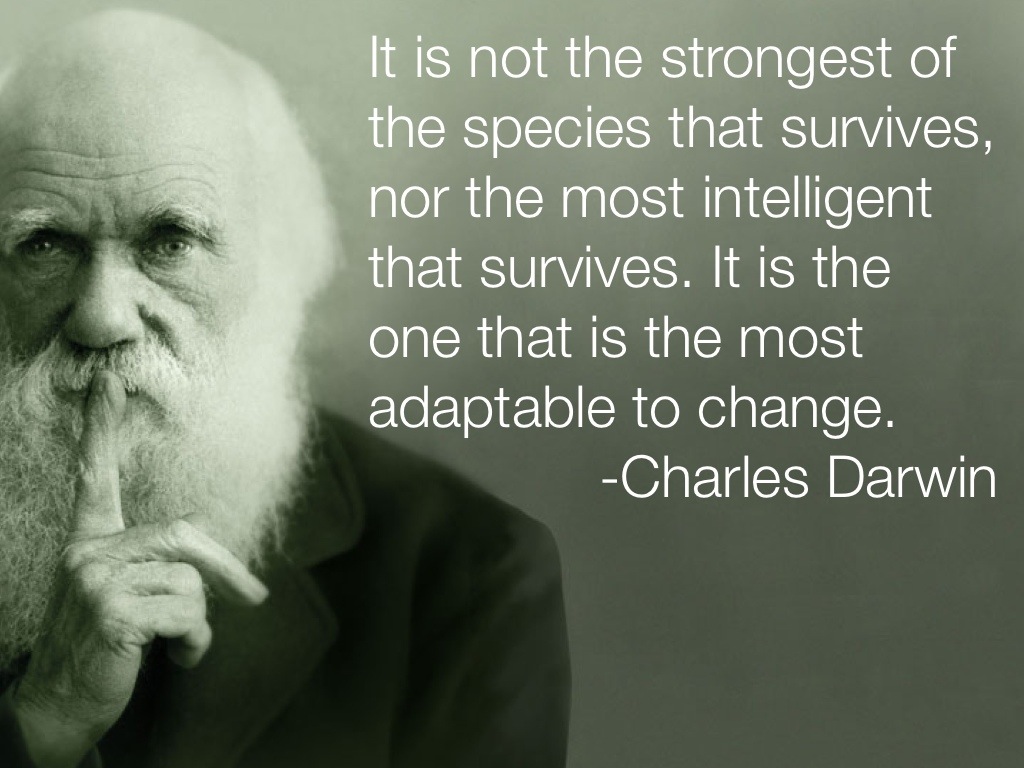
Earlier this year I read Cal Newport’s book, So Good They Can’t Ignore You. Newport makes a compelling case that “follow your passion” is not particularly helpful advice. After looking closely at those who had found genuine career satisfaction, he realized that it wasn’t because they followed some inborn passion. Instead, career passion seems to come from getting really good at something and sticking with it. Passion follows excellence.

In a recent post on his blog, Newport offers this advice on choosing a career:

Pick something that you wouldn’t mind investing years in mastering. If you already have some skills, then it might make sense (though is by no means necessary) to start there, as you already have a head start on mastery, but you should still expect years of deliberate improvement before deep passion can blossom for your work.

The key thing, in other words, is to direct expectations away from match theory — which says passion depends primarily on making the right job choice — and toward career capital theory — which says passion will grow along with your skill.

This has been true for me. I chose work that seemed like fun, then I invested years in getting good at it. Passion for it bloomed naturally as I kept getting better and more knowledgable and more valuable to my employer. My continuing pursuit of excellence and the increased autonomy that comes with it have created genuine job satisfaction.

It’s not so much what you do as how well you do it. Certainly, pick a path that seems interesting or fun or meaningful, a career where you could see yourself spending a decade or so. Then throw yourself into mastering your work. Don’t wait till you find your passion. Just focus on being awesome at whatever path you choose, and passion and joy will find you.

So Good They Can't Ignore You

The honest waiter

My wife and I were at a favorite local restaurant for a rare date night. We were scanning the familiar menu, and she found an item she’d never tried. She mentioned it to the waiter, and he said, “Have you ever had that here?” When she said she hadn’t, the waiter crouched down, got close, and said quietly, “It’s not good.” He then went on to recommend several items on the menu he felt were outstanding.

We trusted that waiter for the rest of the night. We deferred to his recommendations on appetizers and dessert as well. And we had a delightful, memorable evening and left a generous tip.

He easily could have just smiled and nodded and let us order whatever. But he was honest, at some peril of being seen as disloyal to his employer. His tactful frankness (he wasn’t snarky or disrespectful toward the chef) endeared him to us and gave him credibility. This waiter cared about our experience and was willing to take a bit of a risk in the effort to delight us. He wanted us to have the best of what the restaurant offered.

We often feel we have to tow a party line in our work. Our public face has to look perfect, and our eagerness to simply meet a customer’s expectation can preclude exceeding those expectations. There’s great value in honesty and authenticity, even when, especially when, it pulls back the curtain a bit to reveal some flaws.

You can earn credibility and trust by letting your guard down and giving your guests or your customers the inside scoop, the real deal on how to make the most of what you have to offer. We’re still talking about that honest waiter and enthusiastically recommending that restaurant. Be honest. Be real. Be remarkable.

Making ideas happen

I was talking with my dad this week about the conference I just went to, and he reminisced about attending photography conferences. He said that he, too, would leave conferences with lots of new ideas and enthusiasm. But if he didn’t take action immediately when he returned, those big ideas were never realized.

making ideas happen

In the spirit of showing my work and forcing myself to take action, here’s my plan for making some of these new ideas I’ve collected happen. My office has a “fall kick off” staff retreat set for August 24. That is my ship deadline. I plan to have something remarkable ready to show our team by that date. Some are small projects that we’ve discussed for years but just never got around to doing. Others are big and can’t be completed in two months. However, it’s worthwhile to show them the progress we’ve made on longer term goals and begin to include the whole team in the next steps on bigger projects.

Watching Apple’s keynote yesterday, I was inspired by the way Apple announces new products and reminds its customers and its own employees of their mission. Apple keeps coming back to why they do what they do, and that makes the how and the what more meaningful. I’m envisioning allocating at least a portion of our staff retreat for an Apple-like keynote where we will unveil all the cool new stuff we’ve been working on while reinforcing the why’s of our work.

Having a fixed deadline will focus our efforts this summer. We can’t get away with just talking about these projects. If you’re ever frustrated about never getting around to that project that’s important but not necessarily urgent, give yourself a deadline. Make it public if you can. Magic happens when you’re working against the clock.

“To achieve great things, two things are needed; a plan, and not quite enough time.” -Leonard Bernstein

I’ve created a Keynote document that may or may not be the starting point for an actual presentation at the August 24 retreat. But I’m beginning with the end in mind and imagining now what would be ideal to present on that day. And then we will begin taking action to make these ideas happen. Keynote’s “Light Table” view (in Powerpoint it’s “Slide Sorter” view, I think) is a great place to brainstorm a project. I treat each slide like an index card with one separate thought or possibility per slide. They’re easy to see at a glance and simple to sort and rearrange (or delete) as the ideas evolve.

Real artists ship. If our work is our art, we need to make like a real artist and get busy making our ideas happen.

Screen Shot 2013-06-11 at 11.29.57 AM   Tuesday, June 11

It’s the feel of a thing, not the think of it

I spent my lunch break watching Apple’s WWDC keynote presentation which highlighted their newest products, including a dramatic rethinking of iOS. I can sit mesmerized for two hours by an Apple keynote. Not only do they make “insanely great” products, they know how to put on a good show. Steve Jobs is at the top of his presentation game, for example, in this historic 2007 introduction of the first iPhone.

Clearly, I’m an Apple fan. I got my first Mac, the Pixar-lamp-like white iMac, ten years ago, and I bought the 3rd-generation iPod that same year. I’ve been hooked ever since. Apple creates beautifully designed, brilliantly engineered products that make work and play more of a pleasure. They don’t hit everything out of the park, but no company has a higher batting average over the past decade than Apple.

Apple’s focus is clear. They want to make the best products in the world, if not necessarily the best-selling. (Though iPod and iPad dominate their markets, and iPhone is the most profitable in its category. And the Mac is still growing significantly compared to all other PC makers.) Unlike so many of the technology giants, Apple’s business plan does not revolve around getting their customers to click on ads. They want to make devices that make their customers’ lives better. This is their approach from the CEO down to the retail employees in Apple Stores.

20130610-200450.jpg

My computers and phone are just tools, but I appreciate that the quality of my tools has had an impact on the way I work and play. I’m all in on Apple. If the quality I’ve grown accustomed to with their products starts fading, I’ll reassess. (I was “all in” on Palm once, and now they don’t exist.) Today’s keynote shows Apple is still going strong, still innovating and polishing and polarizing critics and fans.

The key to Apple’s success is their commitment to the experience customers have with their products. Apple products often will lose a features checklist or specs comparison with competing products. But they win, often by a rout, on the feel of their products, on the delight of using them. Apple makes the hardware and the software and controls the entire user experience.

They revealed this brilliant campaign today that tells their values in a compelling way. Making consumer products and designing experiences can be poetic and artful. We are emotional creatures, moved to action less by logic and more by feeling.

What if your company, your organization, your family was as committed to excellence and the quality of experiences, the feel of things, as much as Apple is?

20130610-183811.jpg