Want a wonderful, wonder-filled life? Don’t stop learning. Keep searching. Keep growing. More knowledge will make you more uncertain and more humble. And more in awe of the mystery of being alive in the universe.
If you keep pushing out into the sea of mystery, expect discomfort and disillusion and maybe long periods of feeling lost. The alternative, though, is a safe, secure, and numb sleepwalk of a journey to nowhere.
How much better are you today than you were a year ago? Not better off. Better as a human, regardless of any change in circumstances beyond your control. I should be embarrassed to be virtually the same man I was even a few months ago. Principles should remain. Performance should improve.
Don’t look with envy at what others are doing. Don’t let the pace others set determine your pace. Don’t try to win some competition that doesn’t even exist. Live your life as excellently as you can.
The only competition that matters is the one between who you want to become and who you are. Comparison with others will distract or discourage and put you off course. The you of one year from now should be able to kick the ass (in overall awesomeness and, maybe, physically as well) of the you from today.
Seek not that the things which happen should happen as you wish; but wish the things which happen to be as they are, and you will have a tranquil flow of life. –Epictetus
This is some serious mental jujitsu. There’s a fine line between passiveness and acceptance. One is weak. The other is strong.
Take action to make your plan happen, but accept whatever does happen as though it’s part of the plan.
Wanting to reform the world without discovering one’s true self is like trying to cover the world with leather to avoid the pain of walking on stones and thorns. It is much simpler to wear shoes. -Ramana Maharshi
A very Stoic-like thought from an Eastern sage. There is much overlap in the wisdom of the East and the insights of Stoicism.
It’s nice to want the world to be better and to work to fix its problems, but you’re only truly in control of your actions and your responses. Instead of complaining about external problems, make sure your internal armor, your “Inner Citadel” as the Stoics would say, is in place.
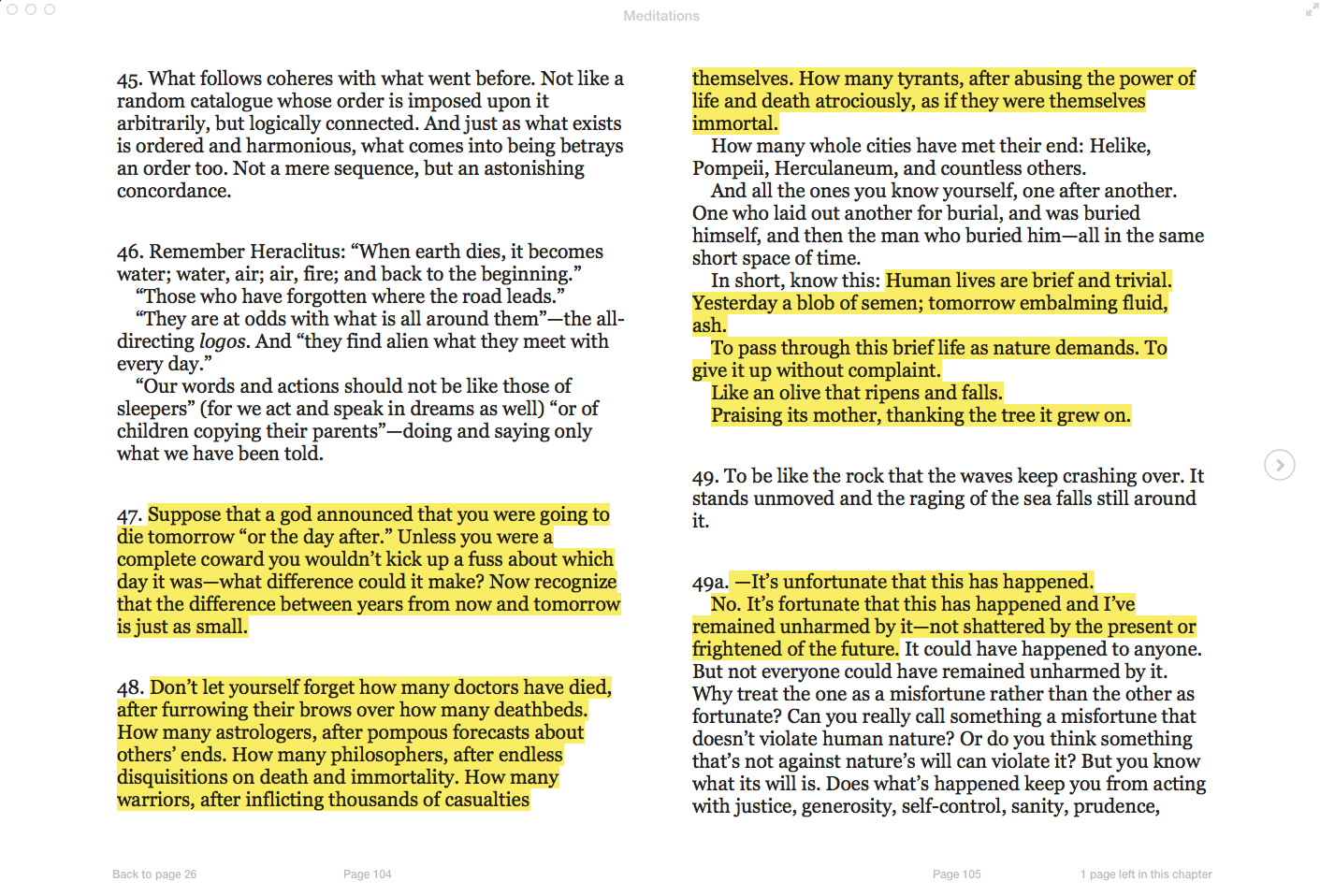
I’m rereading Marcus Aurelius’s Meditations. It’s the kind of book that you can open anywhere and find something worthwhile to ponder. My copy is filled with yellow highlights, and I marvel at his prolifically quote-worthy (and tweet-worthy) insights into the challenges of living an excellent human life.
What makes this book so remarkable, I think, is that he was not writing it for anyone but himself. He had no intent to publish what was the private diary of the most powerful man in the world. Instead of filling this journal, though, with the people and events of his life, which certainly would have been of great historical value, he instead wrote of his efforts to master his own mind and live in a virtuous, excellent way. The philosophical value more than makes up for what was lost to history.
Meditations is a sort of extended “note to self” wherein he is clearly talking only to Marcus Aurelius and chiding and encouraging and reminding himself of what should be his focus. There are sentence fragments galore. Some make no sense to me, and others are as starkly profound as anything I’ve read.
Uninhibited by what others might think, Aurelius was free to write with a remarkable rawness and candor that would be unlikely if he were writing for an audience.
This site is my attempt to somehow publicly share a sort of note-to-self journal. I keep a private journal (using Day One), and I find my writing there is not nearly as well thought out as what I post here. Being aware that someone else might read this (hello, lone reader) forces me to craft my thoughts with more care and intention.
Just as inviting people over forces you to clean up your apartment, writing something that other people will read forces you to think well. -Paul Graham
But I don’t want to come across as some pretentious expert with answers and solutions for all. I’m far from it. Yet I want the kind of candor and directness that Marcus has in writing to himself.
How to balance the authenticity a note-to-self approach with the benefits of writing for others? It’s a worthwhile challenge to attempt. Squelch the self-consciousness of being observed yet write with enough awareness of an audience to focus my thinking more sharply.
My imperative sentences are addressed to myself. “Do this…” “Think in this way…” Those are directed at me, and if a reader finds some value as well, excellent. But if I am the only person who derives any benefit from sharing my notes-to-self online, if this effort moves me just a little further along the path toward living a better life, that is excellent, too.
I have no problem asking the unanswerable questions, or in asking the as-yet-unanswerable questions. I have no problem with asking them, and I certainly have no issue with how we get through those dark nights of the soul by answering them. I would never presume to tell anyone how to answer them for themselves, not even my own children. I wouldn’t even think of it. I can only speak for myself when I say, “Yeah, asking questions – the more the better.” It’s just that if you come up with answers that make no adjustment to the scale of space and time that we find ourselves in, we see a failure of the imagination.
I happen to be surprisingly okay with uncertainty, but I’m not interested in intentionally rocking the world of someone who is not. All of our fellow humans are on their own, unique journey and traveling, presumably, as excellently as they think they can.
Keep asking questions and don’t settle for easy answers or answers that happen to work for someone else and have been handed to you in a tidy package. And have the courage to move on from the comfort of answers that were once cherished, or even sacred, but now don’t hold up to reason and have no compelling evidence to sustain them. The boat that got me across the river is no longer useful to me as I try to cross the mountain now in front of me. It’s okay to put the boat down and keep going.
Byron Howard, one of our directors at Disney, told me that when he was learning to play the guitar, a teacher taught him the phrase, “If you think, you stink.” The idea resonated with him—and it informs his work as a director to this day. “The goal is to get so comfortable and relaxed with your instrument, or process, that you can just get Zen with it and let the music flow without thinking,” he told me. “I notice the same thing when I storyboard. I do my best work when I’m zipping through the scene, not overthinking, not worrying if every drawing is perfect, but just flowing with and connecting to the scene—sort of doing it by the seat of my pants.”
Too much thinking will mess things up. When I’m struggling or discouraged or anxious and uptight, it’s my mind that’s getting in the way. Instead of try hard, I should try easy, right? Or, just skip trying and simplydo.
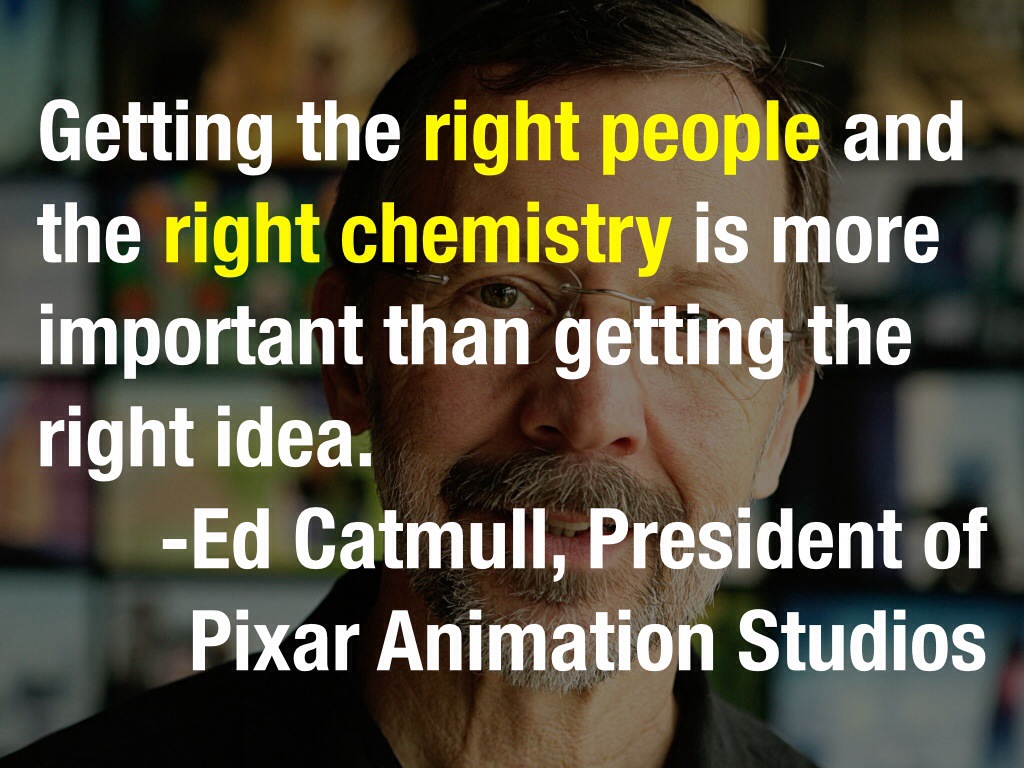
I have been reading Ed Catmull’s excellent book, Creativity, Inc. Catmull is one of Pixar’s founders and now leads both Pixar and Disney Animation. He knows plenty about running a successful organization, and his book is refreshingly unlike the typical business book. It’s humble and candid and authentic in ways most business insider books are not.
I will post later with more that I gleaned from Catmull’s compelling stories and heartfelt advice, but I completely connect with this insight about centering your priorities around people:
This is in sync with all I’ve experienced about strong organizations and great teams. Find people who fit the vision and the culture, and then tend the culture gently, get the heck out of the way, and allow your people the freedom to be awesome.
The excellent public speaking coach and author, Nick Morgan, encourages speakers to do as actors do and master the offstage beat before beginning a presentation.
Actors are trained to get the emotion and perspective of their character fully in mind before walking on stage. If your character is angry in a scene, feel that emotion before you appear. If you’re supposed to be amused or confused or delighted or sad, find that state just before facing the audience. (Some actors have been known to inhabit their character’s personality for long periods off stage or throughout the filming of a movie. Heath Ledger’s Joker is a notable, maybe infamous, example.)
As someone who speaks regularly, I’ve sort of accidentally done this kind of mental preparation without being particularly intentional about it. However, since reading Morgan’s post, I have begun making a tiny ritual of capturing my offstage beat just before beginning a presentation. Before I go on I find a quiet place to be alone and put in mind just who I want to be when I begin my talk. I put my body in the posture I want to have and breathe deeply and smile and feel the emotion that is right for the occasion. I fill my mind with the happiest of thoughts and envision a deep connection with the audience. Then I can go on and hopefully begin with the energy and emotion I desire.
Doing this helps calm pre-talk jitters, too. If you’re focusing on the state you want to be in, it’s harder to dwell on your fears. Filling your mind with emotions you choose makes less room for unwanted anxiousness.
This is a good strategy for other situations as well. Before asking someone on a date or walking in to a job interview it would be wise to get yourself mentally and emotionally where you want to be.
I can even see myself doing this before working on a creative project or tackling a challenging task. What have my most productive flow states felt like, and what if I just acted like I was in such a state before sitting down at my computer? This would be the no-audience, no-stage offstage beat. 🙂
“All the world’s a stage”, right, so don’t feel there’s anything insincere about mastering your role in life’s grand play. Act like you are who you want to be, or need to be, and you just might become the character, the person you’ve only imagined yourself to be.
All the chasing we do after stuff and to please others and to build what we think is security for a comfortable life…
What if the greatest comfort, though, is the deep, satisfying happiness that comes from getting lost in something you love just for the thing itself? What generates genuine enthusiasm in you, not for any extrinsic rewards but for the simple joy of the pursuit, for the intrinsic rewards?
Enthusiasm in some people can seem trivial or insincere or even silly, especially when it comes across as contrived emotion worked up artificially on command like a salesman trying to make his quota or a manager in a dysfunctional bureaucracy trying vainly to rally her demoralized charges. But the real thing, genuine enthusiasm, delightful absorption, is an obvious marker that someone embarking on an excellent journey should heed. Go in that direction.
Tony Hsieh, Zappos CEO, is a visionary business leader and a crusader for the primacy of organizational culture. His excellent book, Delivering Happiness, tells the story of the creation of Zappos, a company with one of the most lauded customer service operations anywhere. Zappos has a reputation for being one of the happiest places to work, and Hsieh’s books goes into great detail about how they have cultivated the unique culture responsible for their public success and their rewarding work environment.
How would you describe the culture of your organization? Most organizations have some official mission statement posted on a corner of their web site and maybe even a statement of values, but the true culture of a place defies artificial attempts to mandate it from a PR document.
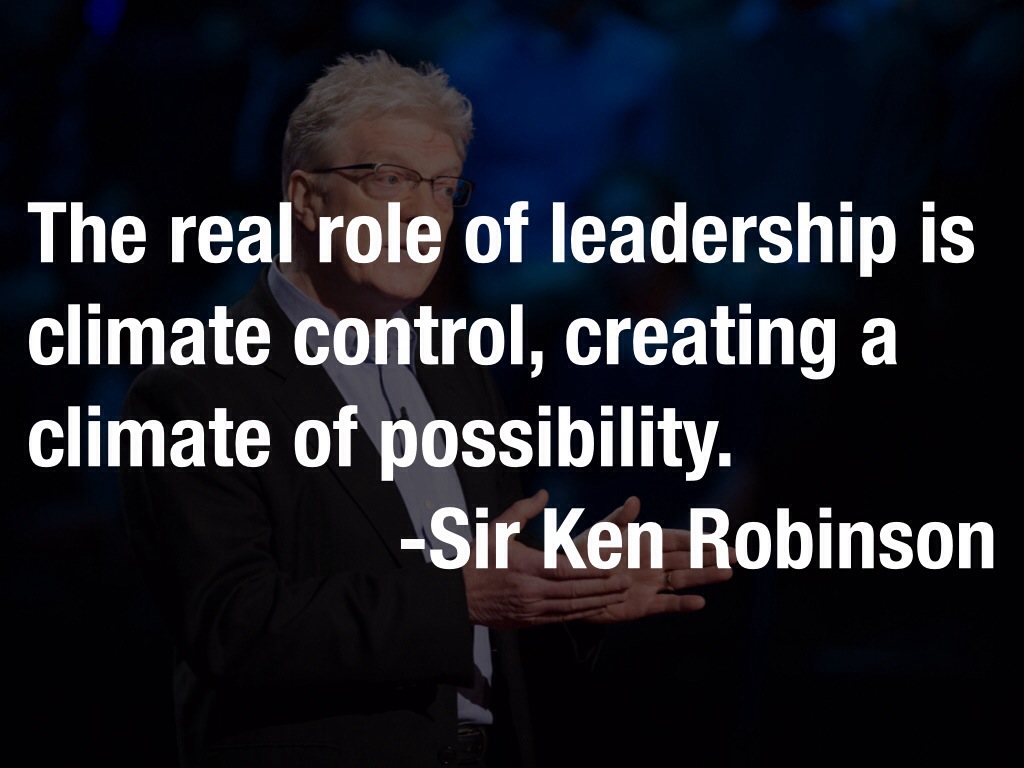
Effective leaders know that culture should be their primary focus. Create and nurture an environment that provides vision and frees each person to unleash their best work. Create a climate of possibility.
“It never ceases to amaze me: we all love ourselves more than other people, but care more about their opinion than our own. If a god appeared to us—or a wise human being, even—and prohibited us from concealing our thoughts or imagining anything without immediately shouting it out, we wouldn’t make it through a single day. That’s how much we value other people’s opinions—instead of our own.” -Marcus Aurelius, Meditations
We all are a bit crazy. Our minds are so occupied with what others may think of us, how something we do or how we look is being judged by other people. Of course, the reality is others aren’t thinking of us much at all. They are thinking of themselves and how they are being perceived by others. What a ridiculous cycle and what a waste of mental and emotional energy.
The freest people are those who have enough control of their own minds to either block out or be relatively unphased by the imagined opinions of others. Imagine what would be possible if we could free up all that space in our minds that is otherwise occupied by our concern for what other people think.
Speaking of great things, Apple recently announced their annual Apple Design Award winners. They honor developers and designers whose apps stood out from a very crowded field in the ever expanding Apple App Store.
I was especially happy to see Day One win for its Mac app. It won previously for its great iOS app. Day One, the ultimate journal, is one of my most used apps. It’s beautiful and smart and has become a daily part of my attempt to chronicle and reflect on my life.
I use some of the other award winning apps, too. Sky Guide is magical. Just hold your device to the sky, and it shows you which stars or planets or constellations you’re seeing. (Or point your device at the ground and see the stars visible from the other side of the Earth!) At the beach this week we’ve used Sky Guide a few times to identify the planets appearing in the sunset sky.
Monument Valley is a beautiful, frustratingly challenging, and ultimately satisfyingly delightful iPad game. My 9-year-old went from near tears to fist-pumping triumph and back again trying to play her way through the many levels of puzzles. She’s playing it through again as I write this.
Threes is a fun and engrossing game with charming little details throughout.
There are a lot of poorly executed apps out there, apps that don’t delight. Too many developers are looking for a quick and easy buck, hoping to be the next Instagram or Angry Birds. I appreciate creators who disdain the “quick and easy” approach, and instead put in the effort to make beautifully designed and smartly executed apps that solve problems and add value to my life.
I’m amused by friends who flinch when I recommend an app that costs $3, or, heaven forbid, $5. (These same friends think nothing of dropping that much or more on a cup of coffee that’s gone in a few minutes.) I’m actually a bit leery of free apps. Is this free app going to target ads at me or set me up for in-app purchases or mine my information for some other service? I would rather pay directly to the makers of products I value and know I’m getting my money’s worth.
Go for quality in the things you possess, including the apps you use. Kudos to the makers who bring such wonderful tools to our devices.
I have a notion of someday becoming what might be called a minimalist. I’m far from it at the moment. My family has plenty of unnecessary stuff and clusters of clutter scattered mostly out of sight. My wife and I have not yet committed to a truly deep and wholesale purge, just brief sorties here and there to minimize the spill-over of our typical, maximized American life.
However, I think I would make a fine minimalist. I proudly travel very lightly. My product consumption is mostly of the digital sort, e-books and apps being the primary targets of acquisition. I’m no clotheshorse. I have no desire to collect anything that takes up space or needs some sort of shelf of honor. Shopping is my least favorite past time. I’m quick to edit objects out of my life without regret. I’m not particularly nostalgic for memorabilia and am almost cold-hearted in my lack of attachment to sentimental stuff.
But I do appreciate the grace of great things.
A great thing can spark delight and wonder and enhance experiences in meaningful ways.
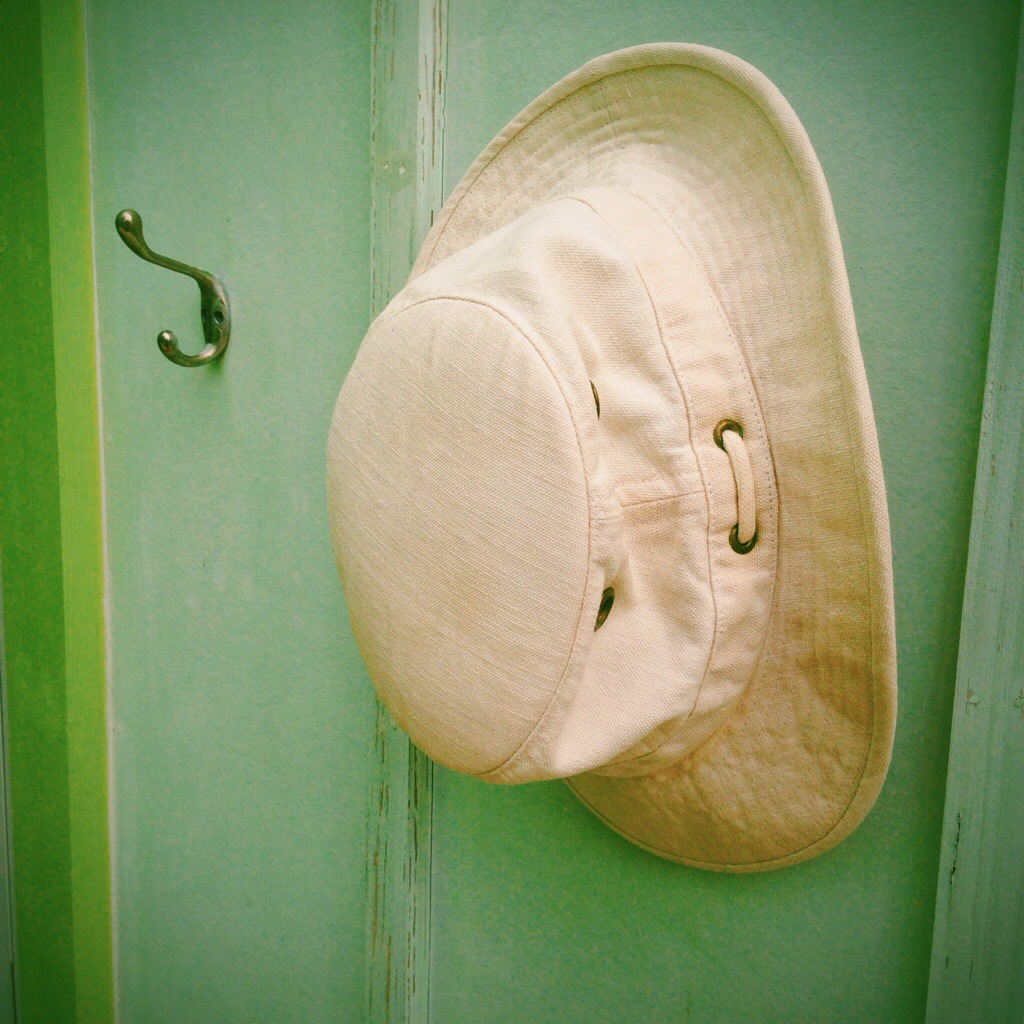
I am fond of this hat. I bought it five years or so ago for a beach trip, and I wear it regularly when I’m going to be outside in the sun or rain for long stretches. It is comfortable and rugged, made of hemp and quick drying after a dunk in the ocean or pool. And it’s got just a dash of style. I think I look good in it, whether anyone else thinks so or not. Just putting it on resets my default to play mode. If the wind snatched it from my head and cast it to the waves, I wouldn’t be sad. But I would order another one. I am grateful to whoever designed and made this excellently crafted hat. It is a great thing that adds an extra bit of joy to my adventures.
And there’s this tea cup. Beautiful to admire, a pleasure to hold. The double-walled glass is ideal for hot tea. I can wrap my hands around the warm brew as well as see the rich color of the tea. The infuser fits perfectly inside. (The infuser that comes with it is fine, but I upgraded to an even better infuser that prevents even the smallest debris of the tea leaves from getting into the cup.) This tea cup is a delightful part of my morning routine. The tea would taste the same from any old mug, but this great cup makes drinking tea a more wonderful experience.
Beautiful form and effective function make for an excellent design and a great thing.
I don’t want a great quantity of things. I do, however, want the things I choose to have around me to be of great quality. I like the declutterer’s sage advice: Surround yourself only with things you find either useful or beautiful. And it’s truly a great thing if it is both useful and beautiful.
May we all produce beautifully useful things in whatever we do.
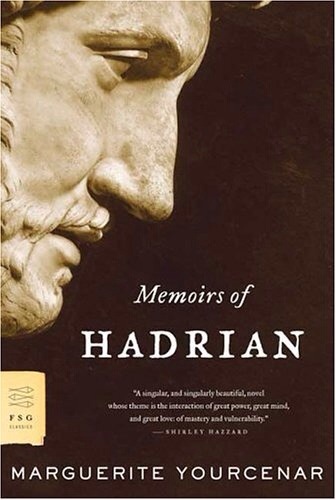
I’m reading Marguerite Yourcenar’s 1951 novel, Memoirs of Hadrian, about the Roman emperor and written as though it was his own journal as he is facing the end of his life. It’s addressed to the future emperor, Marcus Aurelius. I could only find a paperback copy but was eager to have it. A book like this dealing with Roman history and Stoicism and Marcus Aurelius is right in my wheelhouse. I, Claudius remains the most delightful novel I’ve read and helped spark my fascination with ancient Rome.
Memoirs of Hadrian is no I, Claudius, though. It’s not the exhilarating, page-turning romp through Roman scandal and political intrigue. Yourcenar’s book is a quiet, reflective review of a notable life as our protagonist is facing his final days.
I came across this remarkable passage yesterday. It’s Hadrian looking back on his years as a young army officer:
I determined to make the best of whatever situation I was in; during my years of dependence my subjection lost its portion of bitterness, and even ignominy, if I learned to accept it as a useful exercise. Whatever I had I chose to have, obliging myself only to possess it totally, and to taste the experience to the full. Thus the most dreary tasks were accomplished with ease as long as I was willing to give myself to them. Whenever an object repelled me, I made it a subject of study, ingeniously compelling myself to extract from it a motive for enjoyment. If faced with something unforeseen or near cause for despair, like an ambush or a storm at sea, after all measures for the safety of others had been taken, I strove to welcome this hazard, to rejoice in whatever it brought me of the new and unexpected, and thus without shock the ambush or the tempest was incorporated into my plans, or my thoughts. Even in the throes of my worst disaster, I have seen a moment when sheer exhaustion reduced some part of the horror of the experience, and when I made the defeat a thing of my own in being willing to accept it. … And it is in such a way, with a mixture of reserve and of daring, of submission and revolt carefully concerted, of extreme demand and prudent concession, that I have finally learned to accept myself. –Memoirs of Hadrian, pp. 44-45
This is life-changing insight explained with profound clarity. “Whatever I had I chose to have…” Consider some unpleasant circumstance or event, from something as trivial as having to wash dishes to something as potentially catastrophic as facing a tragic loss. If you welcomed this thing you have no control over and accepted it fully, embracing, even, something that seems unembraceable, imagine the transformation in your psychology. Accept what is and use it to learn and grow and find unforeseen opportunities. Fling yourself fully into even the worst circumstances that befall you. Don’t resist. Welcome whatever comes your way and grow your character and peace of mind in the process.
A little bit of summer is what the whole year’s all about. -John Mayer, Wildfire
There’s January 1 and the beginning of the school year and the always exciting turning of the fiscal year. But I also love the beginning of summer as a time to dream new dreams and make new plans.
I know I come more alive with the warm weather and my kids’ long break from school. I’m outside significantly more often. Shoes are less necessary. I play more and eat better and generally feel healthier than any other time of year.
Why not use this season as a time for new adventures and grand ideas? What can we do to change our routines and make the most of the season? What healthy habit can you adopt? What new skill can you learn? How can you better connect with the people you love most?
Play and work and love and create like you’ve got a fresh, new start on life, and let this sunny season inspire you to be even more awesome and make some history and some memories worth talking about for many summers to come.
A little bit of summer makes a lot of history. -John Mayer, Wildfire
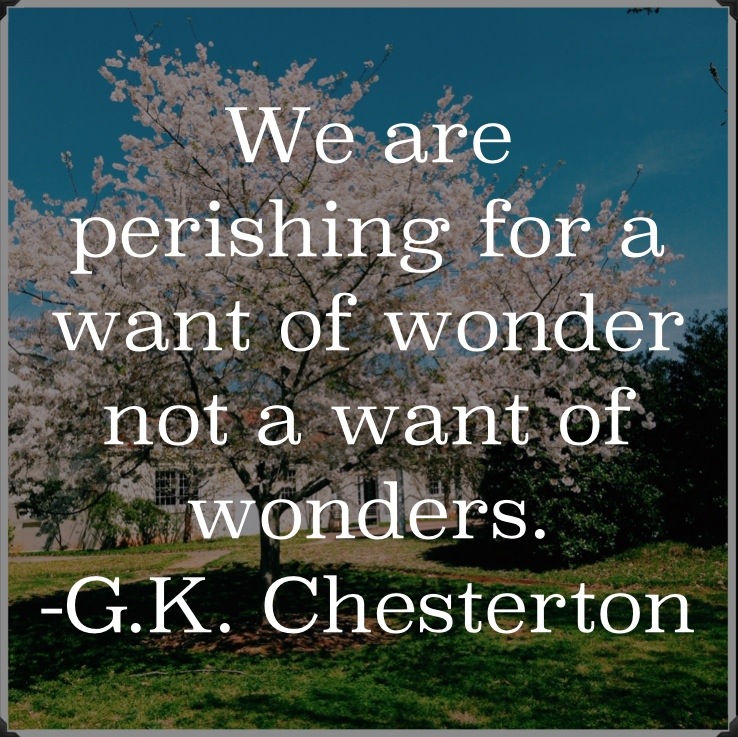
May your world be rocked every day by a moment or two of wonder, when you catch yourself fully in the present moment in awe of the beauty and mystery we all are swimming in.









 Excellent Journey