It’s a wonderful life

Screen Shot 2015-12-24 at 10.27.31 AM

One of the few movie moments to ever give me a lump in my throat is the finale of It’s A Wonderful Life. George Bailey, the main character, is shown just how wonderful his life is, even though he had not lived the life he had dreamed of.

But George’s life is wonderful because of kindness—the kindness he gave and the kindness he received.

No matter how bleak or harsh or dark the world may seem, kindness shines through.

Kindness is invincible.

It only seems that meanness and snark are ascendant. But they evaporate in the light of kindness.

And it’s a delusion to think that happiness is just ahead once you accomplish this or become that or somehow win at life.

Happiness is right here, right now. You can choose it.

Just be kind in this moment—to yourself and to the person in front of you or across the internet from you.

Today is a good day to be aggressively kind, to go out of your way to be more than superficially pleasant.

Message that friend. Send a note. Call a disconnected relative. Smile at strangers. Support a worthy cause. Actually listen when you ask how someone is doing.

It’s a wonder to be alive and aware in this magnificent and perplexing universe.

And life is more wonderful when kindness shines through your days.


Sunday night Stoic: On dealing with annoying people this week

Meditations 2.1:

“When you wake up in the morning, tell yourself: The people I deal with today will be meddling, ungrateful, arrogant, dishonest, jealous, and surly. They are like this because they can’t tell good from evil. But I have seen the beauty of good, and the ugliness of evil, and have recognized that the wrongdoer has a nature related to my own—not of the same blood or birth, but the same mind, and possessing a share of the divine. And so none of them can hurt me. No one can implicate me in ugliness. Nor can I feel angry at my relative, or hate him. We were born to work together like feet, hands, and eyes, like the two rows of teeth, upper and lower. To obstruct each other is unnatural. To feel anger at someone, to turn your back on him: these are obstructions.”

Humbug? No. Reality check

Use the potential stress and annoyances of this week as opportunities to grow in patience and understanding and self control.

That trying relative, the rude store clerk, the reckless driver… they’re giving you a chance to get a little better as a human as you choose your response to whatever may come this week.

This is not the gift you would ask for, but accept every little thing that happens as a gift that moves you further along toward the person you aim to be.

Happy holidays!

Why are we punting?

My friend Alec knows I’m intrigued by the Arkansas high school football coach whose team doesn’t punt and always kicks an onside kick for every kickoff. He tweeted me a link to this new ESPN video about Coach Kevin Kelley and his remakable success going against the grain of conventional football wisdom.

This short, 11-minute film is worth watching whether you’re a football fan or not. It’s an inside-the-locker-room/on-the-sidelines look at a key moment in this high school team’s season.

In the film Coach Kelley tells why he defies accepted doctrine and takes risks no other coach will and wins big in the process.

Kelley explains that when he took over the coaching job the team had a history of being good, but never great. So, he began questioning everything. Here’s Coach Kelley talking about the mindset that changed the team’s outcomes from good to great:

“We started asking ‘Why?’ about everything. Though ‘Why are we punting the ball?’ came up, and it just sounded silly at the time.”

Just questioning something that seemed silly to question led to a big epiphany and ultimately to success beyond anyone’s expectation.

Watch the film and ask yourself what assumptions in your work or your life seem “silly” to question. Then ask “Why?” anyway.

How fragile we are

  All life is sorrowful, or ultimately unsatisfactory.

Heartbreak is coming your way, no matter how good life may seem at the moment.

The deeper you get into life and the more you experience, the more you realize—whether you allow yourself to acknowledge it consciously or not—pain is inevitable.

You will lose those you love dearly.

You will hurt and be hurt.

That bright, shiny dream will either elude you, or possibly worse, will be realized yet end up falling short of truly satisfying you.

Discontent.

Disillusion.

Disappointment.

But if you’re heartbroken right now, hang on a bit. Keep moving forward.

Joy is on the horizon.

So is sorrow.

You can’t have one without the other. They define each other.

We break most easily when we expect only joy.

Cynical as it seems, the secret to happiness is low expectations. Or seeing reality as it is.

Expect heartbreak. Anticipate cruelty and pain and disappointment. Steel yourself for the impersonal rhythm of reality.

But don’t give in to despair and cynicism. 

Life sucks sometimes, but not all the time—not even most of the time. It’s filled with wonders and light and hope.

We are fragile creatures. 

Be kind to everyone. Everyone is breakable, no matter how strong they may seem. 

Be kind to everyone, even those who seem undeserving. Who knows what they’ve gone through, what burden they may be bearing?

Be strong for others. You will eventually need someone to be strong for you.


The only interesting people

It turns out that people I consider great conversationalists don’t actually say very much in conversations. 

They ask good questions and listen intently. 

They are curious and present and authentic. 

And interesting. 

Billy Collins on finding your voice

The poet Billy Collins was speaking at a White House poetry student workshop and was asked about “finding your voice”. Here’s a portion of his response as shared by Austin Kleon:

Your voice has an external source. It is not lying within you. It is lying in other people’s poetry. It is lying on the shelves of the library. To find your voice, you need to read deeply. You need to look inside yourself, of course, for material, because poetry is something that honors subjectivity. It honors your interiority. It honors what’s inside. But to find a way to express that, you have to look outside yourself.

Read widely, read all the poetry you can get your hands on. And in your reading, you’re searching for something. Not so much your voice. You’re searching for poets that make you jealous. Professors of writing call this “literary influence.” It’s jealousy. And it’s with every art, whether you play the saxophone, or do charcoal drawings. You’re looking to get influenced by people who make you furiously jealous.

Read widely. Find poets that make you envious. And then copy them. Try to get like them.

This is so good and rings true for me, not just for poetry but for any creative endeavor.

Consume everything you can about what grabs you. Be voracious. Read and explore and scour every curiosity.

Find the very best people in the field you want to be in and soak up their insight and their style. Follow them on Twitter. Read what influenced them. Act as if you were a peer of your creative heroes.

And don’t wait to get busy making your own stuff, even if at first it seems like a derivative copy of those you’re aspiring to emulate.

Your voice will come only from using it.

Sunday night Stoic: There is a limit to the time assigned you

Meditations 2.4:

“Remember how long you’ve been putting this off, how many extensions the gods gave you, and you didn’t use them. At some point you have to recognize what world it is that you belong to; what power rules it and from what source you spring; that there is a limit to the time assigned you, and if you don’t use it to free yourself it will be gone and will never return.”

It is final exams week for college students, and I still remember procrastinating like it was my job when I was a student facing a tough upcoming test.

My dorm room was never cleaner than when I had a deadline looming.

It was fear. The fear of doing hard things, the fear of failing, the fear of being exposed as the fallible mortal I am.

Procrastination is giving in to the resistance.

Most of us spend our lives putting off the big questions and the excrutiatingly hard tasks of making sense of our existence and doing something meaningful with our time on the planet.

So, tomorrow morning is going to be a “big rocks” morning for me. (If you don’t put the big rocks—the most significant priorities of your life—in the jar first, they’ll never get in. The trivial inessentials—the sand and gravel—will fill up your life and leave no room for what matters most.)

I’m going to use a jumbo sized blank page (or maybe even the jumbo whiteboard in my office) and some markers and start mapping what’s important and what needs to be done.

What is most important? Who is most important? What really matters that I have been putting off?

Damn the resistance, just start.

You don’t know when your time will be up.

On coconut pie and numbering your remaining days

This Wait But Why post is enlightening and sobering. Tim Urban charts his life expectancy and the frequency with which he is likely to experience various things if he lives to 90.

Seeing all the weeks or days you have left laid out in a grid makes for a unique perspective.

I’m 51. If I’m lucky enough to live to 90, I’ve got fewer than 40 Christamases left to experience. Same for the seasons. Less than 40 summers remain.

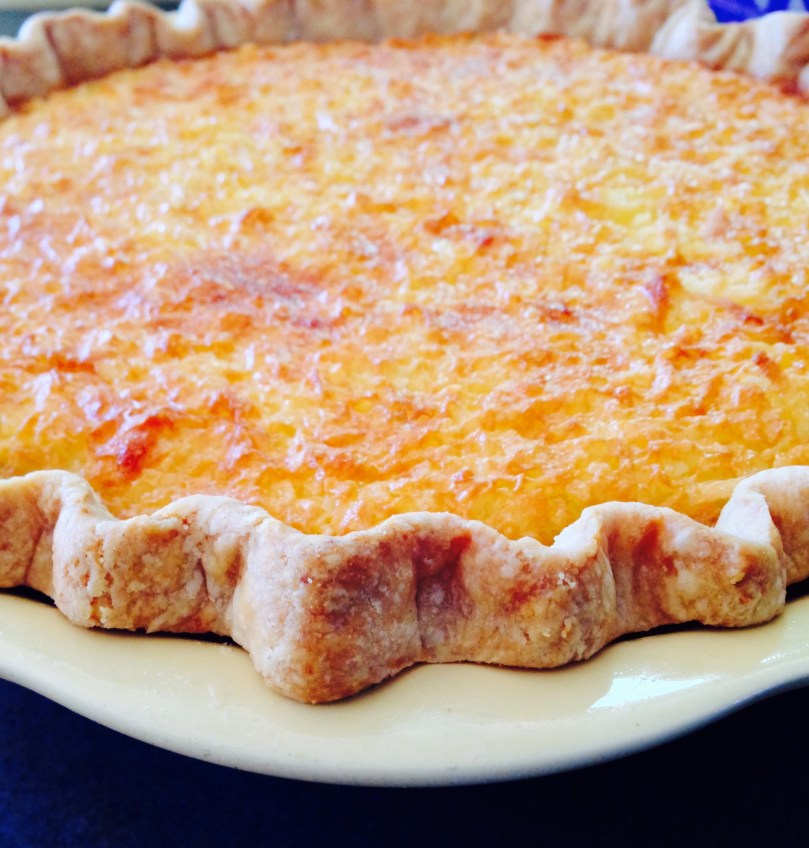
And if I eat coconut pie only three times each year, I’m down to just 120 or so moments of coconut pie bliss. (Note to self and to my lovely wife who bakes the world’s best coconut pies: Create more coconut pie eating opportunities.)

The relationship insights of seeing your remaining life laid out like this are more striking. Urban shares this observation about his time with his family:

It turns out that when I graduated from high school, I had already used up 93% of my in-person parent time. I’m now enjoying the last 5% of that time. We’re in the tail end.

It’s a similar story with my two sisters. After living in a house with them for 10 and 13 years respectively, I now live across the country from both of them and spend maybe 15 days with each of them a year. Hopefully, that leaves us with about 15% of our total hangout time left.

This is painfully true and a bit disheartening to contemplate. My parents and my sister were my world until I moved out for college. Once we lived in different towns, contact with them plummeted to just a few face-to-face encounters each year.

It’s going to happen with my kids, too. They are at the center of my life right now, and my wife and I are everything to them. But in a few years, their mom and I will just be peripheral characters in their ongoing stories.

The awareness of the finite nature of everything we do and experience can make those things shine with meaning more than our usual obliviousness allows.

Especially in this holiday season it’s helpful to remember to savor the fleeting moments you have with the people you love most.

Regularly focusing on the brevity of life will compel you to add more meaningful moments to the days remaining on your grid.

And you might just eat coconut pie a little more often.

ht ToolsAndToys.net 

IMG_4400

What is the best gift you’ve ever received?

I enjoyed this feature on Quartz about the best gifts people have received. It’s not exactly a gift guide. It’s a collection of stories about gifts that have staying power and are worth remembering and talking about long after they’ve been given.

I immediately thought about what my answer would be if asked about the best gift I’ve received. Getting set up with the woman who became my wife was the ultimate gift. (Thanks, Gloria, for sending me her name and contact information on the back of that photo. Best gift ever.) And, of course, my two daughters continue to give us joy every day.

But if I’m considering just tangible gifts, I immediately think of the camera my parents gave me when I was in ninth grade. They ran a camera shop and portrait studio, and I worked there myself occassionally. I joined the high school yearbook staff and wanted to be a photographer on the staff, but I didn’t have a good camera.

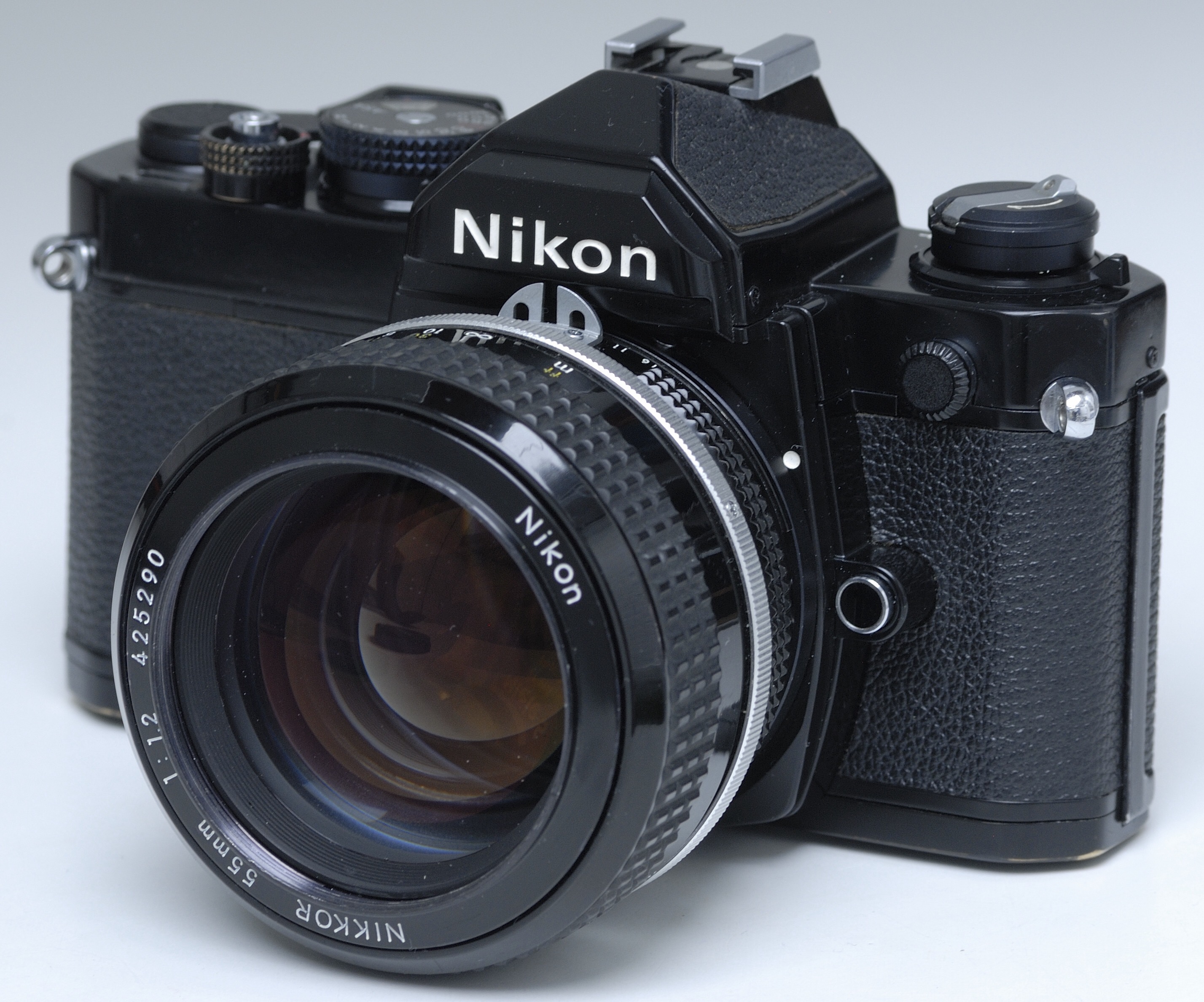
In my dad’s shop I would play with the 35 mm SLRs that were in the display case, and as Christmas approached my dream was to get the Nikon FM. I knew it was the best, but it was so expensive. My parents were facing lean times as they were trying to keep their store in business. I was sure the best camera I could hope for was the much less expensive Pentax K1000. But I was still dreaming of the Nikon.

On Christmas morning I picked a present under the tree with my name on it, and my heart sunk. From working in their shop I could tell that the box I was holding was a match for the Pentax’s camera case. I was resigned to getting the Pentax. 

It was indeed the box for the Pentax camera case, but inside was another present altogether. Socks, I think. My mom had just repurposed a discarded case box from the store.  

The next present I opened… the Nikon. This was my Red Rider BB gun moment. I was so happy. I can still recall the feel of the Nikon in my hands, the smell of the metal and plastic, wearing the strap around my neck, and eagerly taking pictures (on film, of course) of almost anything remotely interesting on that glorious Christmas morning.

That camera was a beautiful thing. It was this sophisticated and solid device made for grown-ups, professionals even, and I was honored my parents thought me worthy of it. I used it for years and still have it, though it is now a nostalgic relic of a lost era of film photography.

It’s probably that camera and that Christmas memory that cemented my already burgeoning love for cutting edge gadgets and great things in general. 

And it’s the feeling of that moment that I hope to occassionally spark for my wife and kids and other family members as I search for gifts for them.

What are the best gifts you’ve received? 

As you search for gifts for others, are you content to just go through the motions and check gifts off your to-do list? Or do you want to go on a quest to find a gift that surprises and delights and makes a memory worth talking about even years later?


The only people for me

“…the only people for me are the mad ones, the ones who are mad to live, mad to talk, mad to be saved, desirous of everything at the same time, the ones who never yawn or say a commonplace thing, but burn, burn, burn like fabulous yellow roman candles exploding like spiders across the stars…” –Jack Kerouac

Who can be like this? 

I know I’ve got this touch of glorious madness in me. You do, too. 

But I do yawn and say commonplace things not infrequently. 

Sometimes, though, as if a switch gets flipped, I come alive and burn a little brighter. 

We need to switch to madness mode more often and override the default yawn state most of us have grooved into our daily lives. 

Your public display of madness just might infect and transform, even if just momentarily, a yawner or two. 

Shine, friends. 

Thermapen deal, 48 hours only

The newest version of one of my favorite kitchen tools, the Thermapen digital thermometer, is on sale until 11:59 on December 9. (Thanks, Alton Brown!)

It’s still expensive, but it’s so worth it if you cook regularly. To heck with guessing whether the meat is done. I don’t have much confidence in people who gauge doneness by the way the meat feels when poked or pressed. With this thermometer, you can know if it’s done. 

For the cook or grill master in your life, this would make a great gift. 


Paul Graham on good procrastination

“Unless you’re working on the biggest thing you could be working on, you’re procrastinating.” –Paul Graham

via Mikael Cho

Damn.

But, right on.

That quote is from a Paul Graham essay from ten years ago—Good and Bad Procrastination.

Graham makes a solid and sobering case that most people occupy their time with “small stuff” at the expense of work that really matters:

There are three variants of procrastination, depending on what you do instead of working on something: you could work on (a) nothing, (b) something less important, or (c) something more important. That last type, I’d argue, is good procrastination.

That’s the “absent-minded professor,” who forgets to shave, or eat, or even perhaps look where he’s going while he’s thinking about some interesting question. His mind is absent from the everyday world because it’s hard at work in another.

That’s the sense in which the most impressive people I know are all procrastinators. They’re type-C procrastinators: they put off working on small stuff to work on big stuff.

What’s “small stuff?” Roughly, work that has zero chance of being mentioned in your obituary. [Emphasis added] It’s hard to say at the time what will turn out to be your best work (will it be your magnum opus on Sumerian temple architecture, or the detective thriller you wrote under a pseudonym?), but there’s a whole class of tasks you can safely rule out: shaving, doing your laundry, cleaning the house, writing thank-you notes—anything that might be called an errand.

Good procrastination is avoiding errands to do real work.

Would the work you spend most of your time on be something that merits a mention in your obituary or at your memorial service?

But, “small” doesn’t always mean “small”. Just being fully present with and kind to a colleague or friend or child or stranger is actually big stuff, and if those small moments shine throughout your life, they will indeed shine in your obituary.

However, most of us do spend our days focused on very small stuff. I know it’s satisfying to “get things done” and go to bed with a completed to-do list for the day. But a collection of checked off to-do lists doesn’t lead to a meaningful legacy if those to-do’s were just a lot of small stuff.

I keep putting off big stuff that I know I want to do eventually. The big stuff is the hardest stuff, with the most at stake and the potential for the most satisfaction and meaning. Yet there’s a fear factor that ratchets up the resistance when I try to tackle the big stuff—a fear of coming up short or revealing my inadequacy or just the fear of the pain that comes with doing hard things.

I regularly feel like I need a certain mood or the right conditions or a vast expanse of unscheduled time to get started on truly important work. That’s the resistance whispering to me, though. It’s sneaky clever like that. But just starting on something big, even if it’s a tiny action, can reveal the resistance as the hollow fraud it really is.

So, put off the superficial, inconsequential work. Procrastinate if you have to on things that ultimately matter least. Figure out what the big stuff is for you and then get busy taking action on what will matter most. 

The only holiday music you need

I love the holiday season, really I do. But most Christmas music wears pretty thin really quickly for me. 

However, the only Christmas music you need is Vince Guaraldi’s soundtrack for A Charlie Brown Christmas. You can put it on repeat for the whole month and never wear it out. It’s a truly great jazz album, not just a great holiday album. 

Here it is on YouTube. Or go buy it on iTunes

Also, Bruce Springsteen’s version of Santa Claus Is Coming To Town is as joyful and hip as any Christmas song I know. My kids know I’ll sing my heart out whenever this one comes on. 

Fiction therapy

There’s been something missing from my life lately. 

Fiction. 

My reading has been sporadic and mostly non-fiction over the last couple of months. 

My wife and I haven’t even made time for television or movies. 

And I can feel that something is off. 

Maybe we need regular doses of story and mental escape. Too much reality (and online news and social media especially) dulls the imagination. All work and no play is not a good recipe for a creative mind. 

Regular doses of fiction stoke the imagination and spark more wonder and delight. 

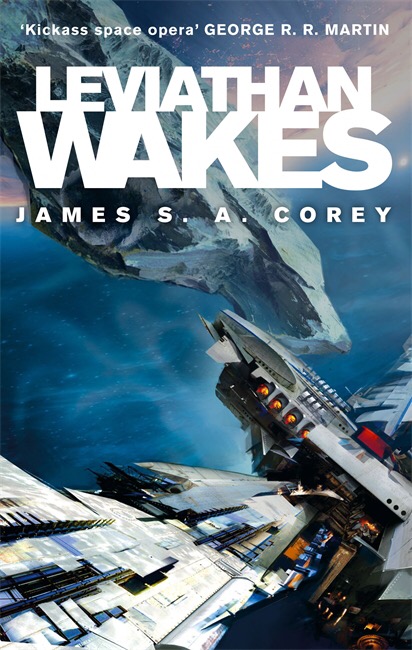
So,  after seeing it mentioned again by Jason Snell, I’m giving this well-reviewed science fiction series a go. 


Sunday night Stoic: Seize the day

Meditations 6.32:

“I am composed of a body and a soul. Things that happen to the body are meaningless. It cannot discriminate among them.

Nothing has meaning to my mind except its own actions. Which are within its own control. And it’s only the immediate ones that matter. Its past and future actions too are meaningless.”

This is hard stuff. This is graduate-level “sticks and stones may break my bones, but words will never hurt me.”

You control your mind and how it responds to whatever happens.

Between stimulus and response there is a gap. In that gap is your ability to choose your response. It’s not easy to mind the gap, so to speak, but we get to try again and again all day long every day.

But only the present moment matters. Only the present moment is real. Past and future are phantoms.

This moment is where life is.

Your mind is the portal and the instrument for living.

Right here. Right now.

Live now in the full power of your ability to choose—to choose your attitude, your actions, your thoughts.

You have little control over how long your body will keep your mind in the game. (Eat well. Do your pushups. Don’t sit too much. Don’t drink and drive or text and drive. Avoid doing stupid things.)

Live while you can. And live wisely, in sync with your nature.

Seize the day.

Road-trip audiobooks

IMG_7782

This is a good week to load up an audiobook or three for road-tripping.

I just added SPQR and Stumbling on Happiness to my Audible queue.

SPQR is Mary Beard’s new history of ancient Rome, and it’s gotten strong reviews. And I can’t seem to get enough of Roman history.

Daniel Gilbert’s Stumbling on Happiness has been on my wish list for a while.

Audiobooks can pick up the slack when I’m finding it hard to squeeze in all that I want to read.

I also downloaded a couple of favorite audiobooks to listen to again: Tim Kreider’s We Learn Nothing and Steve Martin’s Born Standing Up. Both are excellent, and both are read by the authors. You can’t go wrong with either if you want a good listen.

And I just saw that the whole Harry Potter series is now available on Audible. (It previously had been available only through J.K. Rowling’s Pottermore web site.) This audio series has been acclaimed not just for the phenomenon that Harry Potter is, but for the performance of the narrator, Jim Dale. Maybe this will give my kids a nice change of pace from playing games and watching movies on iPads in the car.

If hours-long books seem daunting, listen to podcasts instead. We are in a golden age of podcasting. There are so many amazing choices. Start with the Overcast podcast app, and use its recommendation feature if you don’t know where to start. Or ask me, and I can send you a long list of great podcasts.

Feed your mind and your imagination as you’re traveling this week. Happy travels. Happy listening.