Author: Eric Johnson
"The best way to know the truth or beauty is to try to express it."
Open conversations
Today I shared this old Seth Godin post with my staff. It’s about open conversations where authentic dialogue is encouraged. Here’s the hook:
A guy walks into a shop that sells ties. He’s opened the conversation by walking in.
Salesman says, “can I help you?”
The conversation is now closed. The prospect can politely say, “no thanks, just looking.”
Consider the alternative: “That’s a [insert adjective here] tie you’re wearing, sir. Where did you buy it?”
Conversation is now open. Attention has been paid, a rapport can be built. They can talk about ties. And good taste.
A guest told me yesterday our students offered the best experience of any campus tour she’s been on. I could have been happy with just that, thanked her, and moved on.
But I responded, “Why?”
“Why was ours the best? What did we do that you appreciated, that made our tour stand out?”
And then we had a good conversation, and I learned something from her insight.
I’m a bit of an introvert, and I’m a little too content too often with getting easy outs for conversation.
But meaningful conversations are rare and valuable and can make a day worthwhile like few other activities can. And they offer a chance to learn and grow. And, even better, they let you truly see and acknowledge others in the most primal, human way.
My wife is great at asking conversation-opening questions of our daughters. She’s not content with hearing they’ve had a good day. She wants to know exactly what was good about it and what were the highlights and lowlights and the best stories.
Avoid simple yes/no questions and cliched greetings. Safe and boring and superficial.
Make an art of opening conversations and sparking genuine connection and understanding.
Time machine
Consider what life was like 100 years ago.
World War I was engulfing Europe. It was the first “modern” war, and it was ultimately tragically pointless and horrifying. (Go listen to the epic podcast series, Blueprint for Armageddon, in Dan Carlin’s Hardcore History.)
The U.S. population in 1915 was one-third what it is now. The world population was one-fourth what it is now.
Women in the U.S. did not have the right to vote. Racial segregation was entrenched in the south. The Civil Rights Act was almost fifty years away.
There were few rights for workers and not much of a safety net for anyone for health care or retirement.
Air travel was for daredevils. Space travel was just a sci-fi dream. More vehicles were powered by animals than by engines. Radio was the chief source of home entertainment, and silent films were the only option at theaters.
If you had a time machine and brought someone from 1915 to 2015, imagine how astounded they would be by our world—our technology and medicine; the discoveries about the universe that have shown us just how incomprehensibly massive it is and how small we are; and how far we have progressed in human rights in a century.
And how are we worse off now compared to then? There was no obesity epidemic, no addiction to electronic devices, and no chance for nuclear disaster. I’m sure there are many ways life was better a century ago, but I wouldn’t want to swap places with that generation.
Now, imagine you could go in a time machine to the year 2115. How backwards might our current generation look one hundred years from now? What have we got completely wrong? How inhumane and small-minded will we look to our great-grandchildren? What assumptions are we taking for granted now that will seem laughable in the very near future?
We can’t assume a positive trajectory of progress. There is certainly a chance that we could very well end up going backwards and falling into another “dark ages” if we survive for another century, but let’s be optimistic.
How can taking the long view open us to possibilities and ways of thinking that make an even brighter future more likely? What would be an ideal world in 2115, and what can we do in 2015 to point in that direction?
That idea of yours that seems daring right now, or a little too farfetched to take seriously, might just seem so obvious a generation from now. It’s the crazy ones who craft the future the rest of us can’t even imagine.
Dream big. Dream far.
See for yourself
“Place no head above your own.” –The Buddha
Don’t believe something because someone says to believe.
Use your own head.
See for yourself.
Follow reason.
Discard what doesn’t hold up to honest inquiry.
Pursue truth, no matter the cost.
Sunday night Stoic: How to act
Remember, Meditations was written by Marcus Aurelius as a sort of ongoing “note to self” while he was the Roman emperor, essentially the most powerful and influential person in the western world at the time.
He’s not lecturing someone else. He’s exhorting himself, calling for his own best, reminding himself of the kind of man he aspired to be. He could have gotten away with murder, much less selfish and boorish behavior.
Which makes passages like this (3.5) so remarkable:
“How to act:
Never under compulsion, out of selfishness, without forethought, with misgivings.
Don’t gussy up your thoughts.
No surplus words or unnecessary actions.
Let the spirit in you represent a man, an adult, a citizen, a Roman, a ruler. Taking up his post like a soldier and patiently awaiting his recall from life. Needing no oath or witness.
Cheerfulness. Without requiring other people’s help. Or serenity supplied by others.
To stand up straight—not straightened.”
Offscreen, on dock
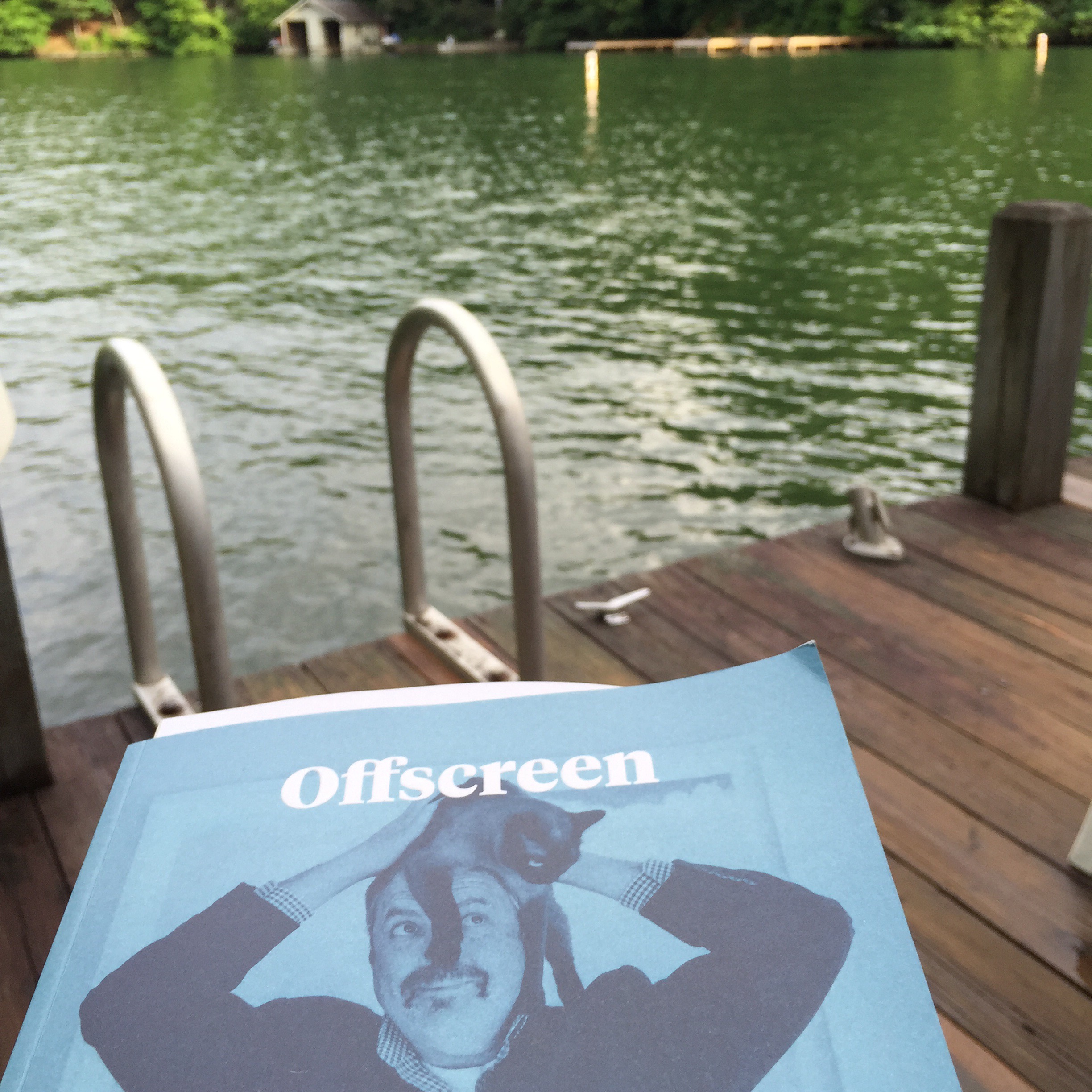
Get off the grid for a bit.
Go jump in the lake.
Cook with fire.
Read something not on a screen.
Inhabit your body.
Be where you are.
When you understand someone
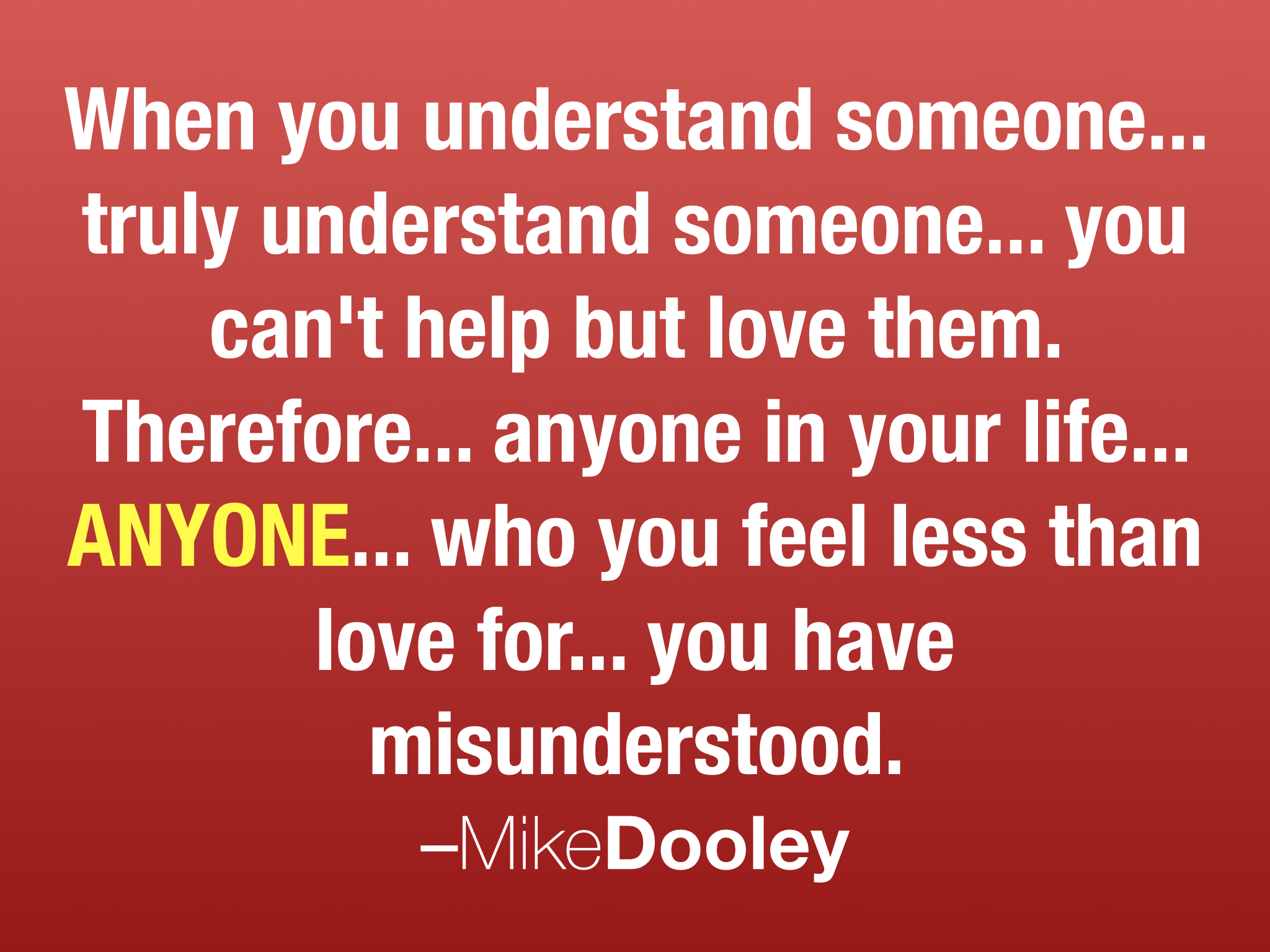
Profound, but so straightforward and simple.
When you feel inclined to judge, try instead to understand.
Unsatisfactory
From Sam Harris’s book, Waking Up:
“The Buddha taught mindfulness as the appropriate response to the truth of dukkha, usually translated from the Pali, somewhat misleadingly, as ‘suffering.’ A better translation would be ‘unsatisfactoriness.’ Suffering may not be inherent in life, but unsatisfactoriness is. We crave lasting happiness in the midst of change: Our bodies age, cherished objects break, pleasures fade, relationships fail. Our attachment to the good things in life and our aversion to the bad amount to a denial of these realities, and this inevitably leads to feelings of dissatisfaction. Mindfulness is a technique for achieving equanimity amid the flux, allowing us to simply be aware of the quality of experience in each moment, whether pleasant or unpleasant. This may seem like a recipe for apathy, but it needn’t be. It is actually possible to be mindful—and, therefore, to be at peace with the present moment—even while working to change the world for the better.”
Heroes don’t need villains
My family went to see the new Pixar movie, Inside Out, on its opening day last weekend. It was a hit with kids and parents and showed a depth of story telling that most movies never attempt.
My friend, Calli, sent me this article about the movie.
The article highlights the film’s lack of a villain and how novel that is.
Finding Nemo is one of my favorite Pixar films, and it, too, does not rely on a villain.
I am partial to stories without obvious villains. It’s too easy to put a hero in a story doing battle against an “evil” nemesis. But that’s not reality.
The obstacles most of us face are not from an arch enemy. Most of our battles are within. We all face resistance, but I know for me that resistance is usually of my own making. Self-doubt, fear, laziness…
That’s why Inside Out really shines. It asks the audience for more than most films do and succeeds without a bad guy to root against.
History’s biggest fraud
A passage from the book, Sapiens, contrasting the lives of our hunter-gatherer ancestors with the consequences of the Agricultural Revolution:
“Foragers knew the secrets of nature long before the Agricultural Revolution, since their survival depended on an intimate knowledge of the animals they hunted and the plants they gathered. Rather than heralding a new era of easy living, the Agricultural Revolution left farmers with lives generally more difficult and less satisfying than those of foragers. Hunter-gatherers spent their time in more stimulating and varied ways, and were less in danger of starvation and disease. The Agricultural Revolution certainly enlarged the sum total of food at the disposal of humankind, but the extra food did not translate into a better diet or more leisure. Rather, it translated into population explosions and pampered elites. The average farmer worked harder than the average forager, and got a worse diet in return. The Agricultural Revolution was history’s biggest fraud.”
Fascinating. This book is filled with insights about the human experience and how we’ve come to be where we are now.
Just to be alive
“The meaning of life is just to be alive. It is so plain and so obvious and so simple. And yet, everybody rushes around in a great panic as if it were necessary to achieve something beyond themselves.” –Alan Watts
Super Dad and the hero quest of fatherhood
The college dorm room I shared with my best friend was at the center of the hall and, for that reason or not, became a gathering space for many of the guys.
At some point guys on the hall began using our door frame to mark their heights, like little kids do to measure their growth.
Then it got silly, and marks for fictional characters started appearing on the door frame with, eventually, Batman at the very top.
I don’t remember the conversation that prompted it, but one night my friend Porter took his pencil, went to the door frame, and wrote “Eric’s Dad” at the top of the list of heights, above even Batman.
My dad is not tall, but Porter wasn’t being snarky. He was marveling at, and maybe a little jealous of, how much I respected and admired my dad. All my college friends, even those who had never met him, knew my dad was my hero.
I used to take for granted that I had a father who was engaged in my life in the best way and who was truly a role model and friend even through my teenage years and into adult life. But then I began to realize that was not the norm.
Years ago I was taking my student staff through a training session at our campus counseling center. The facilitator was talking about the relationship counseling services his office provided and asked my group of a dozen college students: “How many of you would like to have a relationship like your parents?”
I immediately raised my hand without having to think about it.
But I looked around the room and realized I was the only one with my hand up. And everyone was looking at me like I was odd, including the facilitator who was trying to make the point that most people need better training on relationships than what they learned watching their parents.
It’s sad that I was the odd one and that too few had the good fortune I had in having parents that I genuinely admire and who sent me into my adult life relatively unscarred.
Now that I’m a dad I realize how hard this is. But it’s the most important job in my life.
Maybe becoming a father later in life, at age 40, has been a blessing. I’m less interested in career accomplishments and life adventures than I was in my 20s and 30s. I just want to be a good husband and a good dad.
I don’t always come up with the right answer or a wise insight or respond with compassion and calm. I worry I could be doing so much more to be a better parent. But my daughters know they are at the center of my life.
I don’t know if I’ll ever make it onto either of my daughters’ dorm room door frames someday in a superhero showdown. But I hope to be the kind of father they look back on with appreciation and affection.
Mothers typically just get it done, with or without or in spite of the dad. Mothers deserve a holiday more than once a year.
Dads, sadly, there’s a low bar to cross in our culture for us to be considered exceptional. You’ve just got to show up and keep showing up. At least do that.
If you’re a dad, realize you will have no more important job. Ever.
If you have a dad, even if he isn’t always a superhero for you, let him know you appreciate him.
It’s never too late to start being the person you know you want to be and need to be for the people you love.
Making that attempt is the only hero quest that matters.
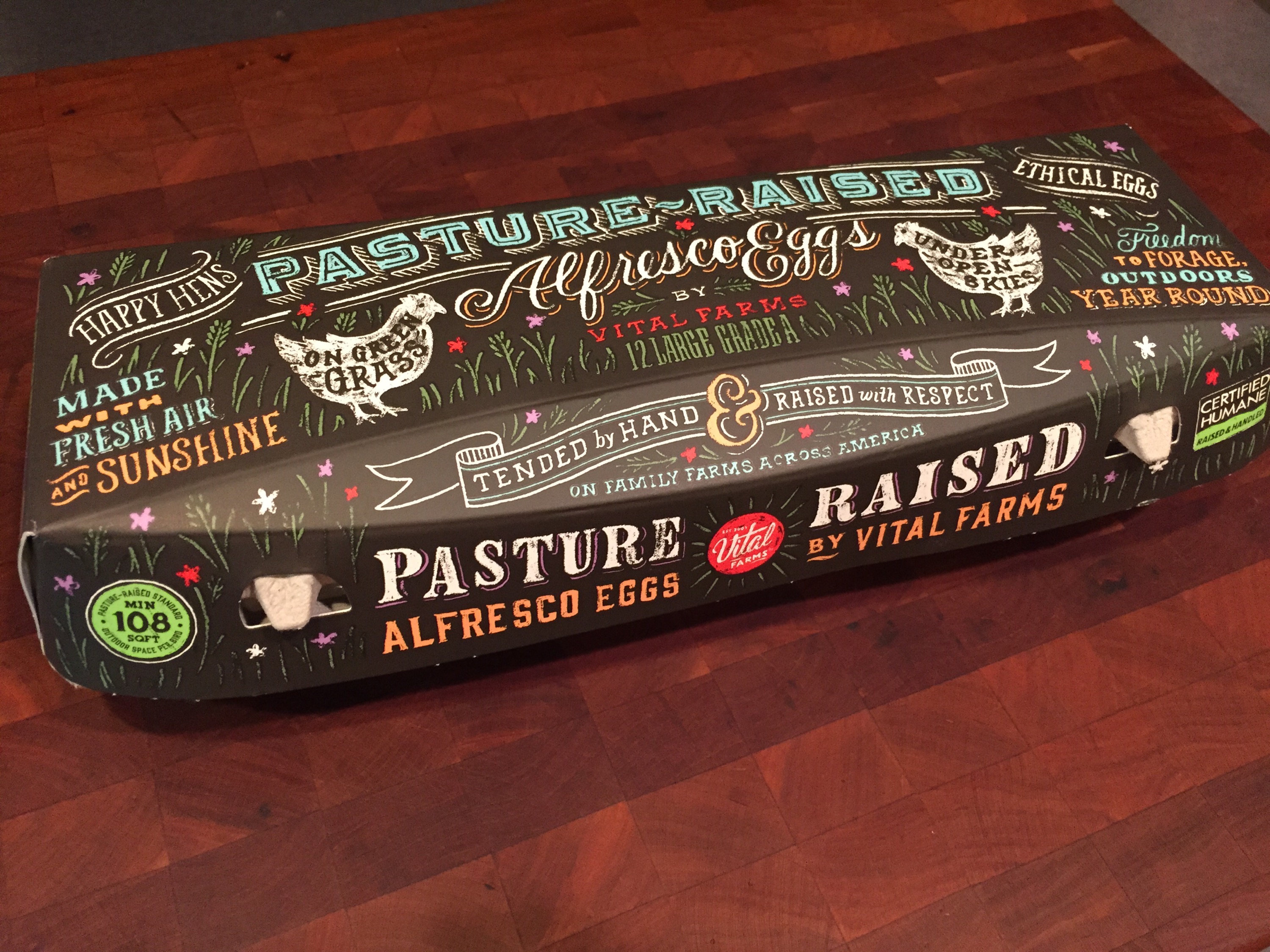
The omnivore omelet: Vegetarian chickens and bad eggs
In the egg section of the grocery store you’ll see egg cartons prominently touting that the chickens laying those eggs had “100 percent vegetarian feed”. That should actually be nothing to crow about. (I had to.)
From The Washington Post:
Chickens on an unsupplemented vegetarian diet typically fall short of an essential protein-based amino acid known as methionine, and without it, they fall ill. Worse, the birds will also turn on each other, pecking at each other in search of nutrients, and these incidents can escalate into a henhouse bloodbath, farmers say.
“They’re really like little raptors – they want meat,” said Blake Alexandre, the owner of a 30,000 chicken operation in far northern California that keeps its birds on pasture. “The idea that they ought to be vegetarians is ridiculous.”
Nature should be our default. It’s in the nature of a chicken, thanks to millions of years of evolution, to roam and forage for food and to be an omnivore, to eat bugs and other small critters. When we take a chicken out of nature and force our notion of a healthy chicken diet on it, it seems obvious that things can go awry, for the chicken and for those eating its eggs.
I eat eggs almost every morning —scrambled, usually, occasionally fried or in omelets and sometimes, when I’m feeling fancy, in a fritata. And then there are deviled eggs which, in my opinion, rue their name and are one of the more heavenly food treats. (Use this delicious and nutritious avacado oil mayo, though, instead of the lousy industrial-oil-laden conventional mayo.)
Eggs are tasty and filling and are potentially a potent source of wholesome nutrition.
It turns out, though, that eggs from chickens that are pastured are a lot better for you as well as offering a better life for the chickens.
Pastured eggs certainly cost more than the factory farmed conventional standard. But I don’t mind paying $6 for a dozen instead of a dollar. At 50 cents per egg, that doesn’t seem unreasonable for a healthier meal for me and a better life for the chicken.
Arrogance masks cowardice
Fiction as fuel for the imagination
Author Neil Gaiman from his lecture on the power of books and libraries:
I was in China in 2007, at the first party-approved science fiction and fantasy convention in Chinese history. And at one point I took a top official aside and asked him Why? SF had been disapproved of for a long time. What had changed?
It’s simple, he told me. The Chinese were brilliant at making things if other people brought them the plans. But they did not innovate and they did not invent. They did not imagine. So they sent a delegation to the US, to Apple, to Microsoft, to Google, and they asked the people there who were inventing the future about themselves. And they found that all of them had read science fiction when they were boys or girls.
Fiction can show you a different world. It can take you somewhere you’ve never been. Once you’ve visited other worlds, like those who ate fairy fruit, you can never be entirely content with the world that you grew up in. Discontent is a good thing: discontented people can modify and improve their worlds, leave them better, leave them different.
And he closes with this reference to Einstein:
Albert Einstein was asked once how we could make our children intelligent. His reply was both simple and wise. “If you want your children to be intelligent,” he said, “read them fairy tales. If you want them to be more intelligent, read them more fairy tales.” He understood the value of reading, and of imagining. I hope we can give our children a world in which they will read, and be read to, and imagine, and understand.
Laser-like focus
Humans of Earth
I’ve started two new books this week – Sapiens: A Brief History of Humankind by Yuval Noah Harari and Seveneves, a new novel by Neal Stephenson.
I like to balance non-fiction and fiction, usually reading a novel at night and the non-fiction earlier in the day. Non-fiction tends to spark ideas, and I don’t need that right before going to sleep.
These two new books I’m reading make for a particularly interesting balance of ideas. Sapiens is a surprisingly readable and fascinating history of the origins of our species. While Seveneves is a novel about the near future and the end of the world as we know it and how humans adapt and persist through a cataclysm.
I’m appreciating even more what good fortune it is to be a human on this planet in this time. The triumph of our species was not inevitable, and there’s no guarantee we are not going to screw things up epically.
On a cosmic scale our time in the sun has been incredibly brief. Dinosaurs roamed the earth significantly longer than we have so far.
Knowing where we came from can make us better appreciate what we have now and just where we might go from here.
The gift of a blank brain
Author Michael Harris on living in the Internet age and the prevalent tendency to check your phone as soon as you wake up:
“When you wake up, you have this gift of a blank brain. You could fill it with anything. But for most of us, we have this kind of panic. Instead of wondering what should I do, we wonder what did I miss. It’s almost like our unconsciousness is a kind of failure and we can’t believe we’ve been offline for eight hours,” he says. It is habits like this that are insidious, not the internet itself. It is a personal thing.
This is not exclusive to the Internet era. Many of us used to wake up and immediately trudge to the front door to retrieve the daily newspaper to start our day.
But it’s exponentially easier to distract ourselves now, and content is infinite. The newspaper only took so long to thumb through.
I typically do a quick scan of a handful of apps when I wake up. A morning routine devoid of external inputs, though, at least in those first minutes of consciousness, could build some space for my brain to embrace a bit of blankness, to allow possibilities to percolate that would otherwise be swamped by those external inputs.
Those days where I make time for even ten minutes of meditation first thing in the morning are marked by a calmer, more solid beginning.
Embrace the gift of a blank brain more often. Sit with the quiet. Be patient. Listen, not to the noise piped in from the connected world, but to your own inner voice or just to your breath.
Primal summer, redux
Summer is on. It’s time to make the most of the sunshine and warmth and green grass.
In my house we are committing to getting back to basics, to living more primal lives, to simplifying and culling and embracing the essential.
The days are long. Make an art of crafting days worth remembering this summer.
Walk barefoot in the grass. Jump into the water. Eat real food. Dream in a hammock. Read books. Take walks. Gaze at the stars.
Have real conversations where you listen deeply without even considering what you might say.
Get stronger and leaner. Physically and mentally. Shed your shoes and discard your clutter.
Embrace a crazy idea. Encourage a discouraged friend. Start something audacious.
Shine in the sun. Live now. Have a story worth telling when the chill of autumn blows in.
“‘Cause a little bit of summer’s what the whole year’s all about.” –John Mayer
Staying beginners
Tony Fadell, the former Apple employee who led the original iPod team, talks about the importance of “noticing” in this TED Talk about design.
He refers to his old boss, Steve Jobs, and his continual exhortation to his staff on “staying beginners”, to constantly try to see the world with fresh eyes and as the customer might see things.
“In the beginner’s mind there are many possibilities. In the expert’s mind there are few.” –Shunryu Suzuki

