Be the CEO of your life

IMG_1251.PNG
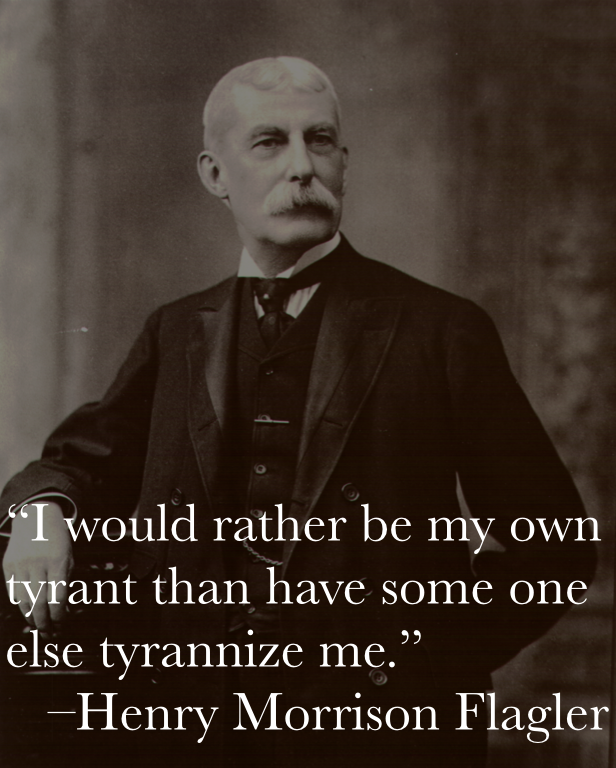
You may not be anyone’s boss. You might have a whole corporate ladder of bosses above you. But you are your own boss whether you’re self-employed or not.

You might just have only a puny little cubicle from which to stake your claim on great work. But make the most of where you are. Fully inhabit that cubicle like it’s the corner executive suite. Be awesome right there.

Own your job. Master your roles. Work like a boss. Be the CEO of your life.

Putting the work in

Screen Shot 2014-10-14 at 4.44.19 PM

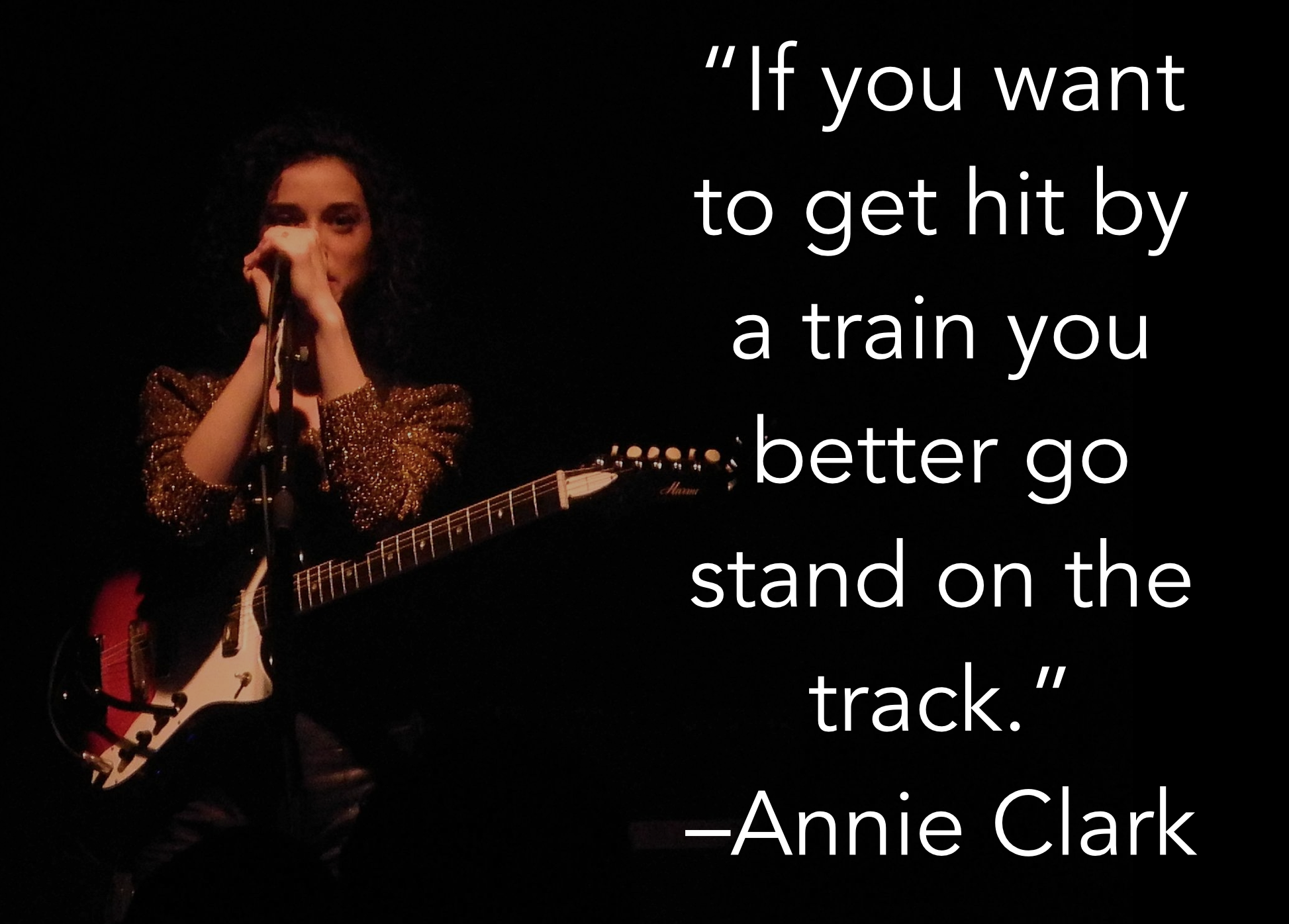
“When writing, I adhere to the old adage that if you want to get hit by a train you better go stand on the track. There’s no substitute for just putting the work in and writing with a very concerted, focused effort. At the end of the day it all comes down to synthesizing a whole host of ideas, so you better have a lot of ideas at the ready when it comes time to put the little Frankenstein monster together.” –St. Vincent’s Annie Clark

An Austin Kleon tweet pointed to this excellent interview with the musician Annie Clark, a.k.a. St. Vincent, about her creative process.

This jibes with everything I’m finding lately about creative people. Inspiration is for amateurs. Pros just do work. They show up and get busy whether they feel like it or not.

Aim to peak at 60

IMG_1247.PNGI was telling a group of college students last night they should aim to peak at age 60. They stared blankly at me. I’m not sure if they were processing the thought or erasing it as ludicrous. When you’re 19, 25 seems old. And 30+ is even hard to imagine.

“But hear me out”, I said. If the decisions you make today are guided by the long game, by the intent to improve consistently over a long period of time, imagine the perspective that will offer you. Instead of attempting to rule the world by age 30, you can slow down and focus on being the best you can be in this moment. No pressure. No need to compare yourself to others and measure your worth by the fleeting and fickle whims of our culture and what “success” means superficially.

Put some blinders on and just focus on getting a little better each week. Use your 20’s to just start figuring out what it means to be an adult, to start mastering something valuable in your work life and in your quest to be fully human in your intellectual and emotional growth.

Build a solid base in your 20’s and you’ll be in a good place for the opportunities bound to come in your 30’s and 40’s and 50’s. Imagine the kind of person you hope to be when you’re 60. Live your way into that vision slowly and surely.


Hero Quest

Screen Shot 2014-10-08 at 4.21.26 PM

I’m tweaking the slides for a presentation I’m giving tonight to a group of business students. This is my “HeroQuest” talk.

If I had to tweet the purpose of this talk, it would be this:

Screen Shot 2014-10-08 at 5.06.10 PM


I want these college students to walk away tonight with new possibilities for the future and knowing it is in their power to craft a remarkable and meaningful life, a life worth talking about.

I welcome these speaking invitations. Preparing a talk for a group compels me to think in ways I wouldn’t otherwise have to. And the best way to understand truth or beauty or what it means to live a good life is to try to express it. Even if my talk tonight connects with no one in the audience, it’s been worthwhile to think through these ideas and try to understand them myself.


The elevator pitch, the tweet, and clarity of purpose

Screen Shot 2014-10-01 at 4.08.29 PM

Can you pitch your idea or make your point in the length of an elevator ride? That’s been a long-standing and effective thought experiment to help determine if you’ve thought clearly enough about your plan and can articulate it simply and quickly.

So, if you’re working on a speech or a business idea or a movie script or trying to start a movement to change the world, consider the elevator test.

Imagine you’re giving a talk at a conference. A fellow attendee gets on the elevator with you and sees the “Presenter” ribbon on your name badge. He lets you know he’s tempted to escape the conference during your session and go play golf or take a nap and asks what he would miss from your talk. What would be your response? What will your talk accomplish that would be of value to this wayward golfer? What will offer him enough value to make him delay his escape and stay for your presentation?

If you can’t come up with a short simple statement of your intended purpose and one that offers something of value to the prospective audience member, you need to go back to the beginning and rethink just why it is you’re doing this presentation. Or starting a business. Or writing a screenplay. Or starting a movement.

Or, instead of an elevator pitch, my 21st-century, connected friends, consider the challenge of tweeting, in 140 characters or less, your purpose, your mission, your goal. Can you say in just a few words, within the constraints of a tweet, what you hope to accomplish? If not, get busy asking “Why?” and hone and sharpen your thinking to come up with as clear and simple a statement as you can.

Here, for example, in tweet form (and exactly 140 characters thanks to the added hashtag and a stray space, because I’m just OCD enough), is my aim for a talk I’m giving this week to a couple of college classes:
Screen Shot 2014-10-01 at 4.08.54 PM

So many companies and organizations have some committee created mission statement that is either unknown and ignored or is so unwieldy as to be meaningless. What if your mission statement was tweetable and so direct and clear that everyone in the organization knew it and connected with it?

Imagine tweeting your own life’s purpose or the values and goals of your family. Not that you need to actually get on Twitter and post these things, but the effort to zero in on a crystal clear statement on the key “Why’s” in your life potentially can lead you to unparalleled clarity and action.

Five C’s of leadership

Kevin and Melissa, two of the university students I work with, are taking a leadership class and were assigned to ask questions about leadership. They both had this question for me: “What are the characteristics of an effective leader?”

“Effective” is subject to interpretation. Gengis Khan was effective… in conquering, destroying, and subjugating, but he was a heck of a leader, as were many violent tyrants throughout history.

For this purpose, however, let’s assume effective has a threshold of moral propiety that makes no room for obvious bad behavior or world domination.

Leadership is not a topic I’ve explored with much intention. I’ve always felt like I’ve known it when I’ve seen it, and, more commonly, been very aware where it’s lacking. As I pondered this question from my students, though, some key attributes came to mind. (And after I thought of the first couple, I couldn’t resist continuing with alliteration. Hence, five “C’s”.)

Here’s what I see or hope to see in the most honorable and effective leaders:

Clarity – Effective leaders have a clear vision of the big picture and can communicate with clarity the “why” of an organization or business or movement. “Why?” comes first, and if a leader hasn’t asked and can’t answer that question about the endeavor they’re hoping to lead, they still may be leading effectively but in a completely wrong direction.

Caring – A good leader cares deeply about the mission and the people involved and all the “how’s” and “what’s” necessary for excellence. The leader cares about even small details, about the process as much as (if not more than) the outcome. The intrinsic rewards of a job well done, of creating something of value and quality, outweigh any extrinsic rewards.

Competence – Mastery inspires confidence. We will follow someone who is clearly competent in their abilities, who knows their stuff. Teammates will rally around someone who is committed to excellence and demonstrates extraordinary competence, even if that person has not been entrusted with any official leadership role.

Character – The authentic person of integrity, who treats everyone with fairness and is impeccable with their actions, that person is a leader I want to follow. A leader of character will be wholly themselves regardless of the circumstances or the people around them. And trust is the most valuable asset an effective leader has to offer.

Compassion – A leader I admire is one who is kind and compassionate and who treats everyone with respect regardless of position or title. She is quick to forgive, eager to reconcile, and open to listening to and understanding even, or especially, divergent viewpoints.

My favorite description of a master leader comes from the Tao te Ching, one of the most profound books of wisdom:

When the Master governs, the people
are hardly aware that he exists.
Next best is a leader who is loved.
Next, one who is feared.
The worst is one who is despised.

If you don’t trust the people,
you make them untrustworthy.

The Master doesn’t talk, he acts.
When his work is done,
the people say, “Amazing:
we did it, all by ourselves!”

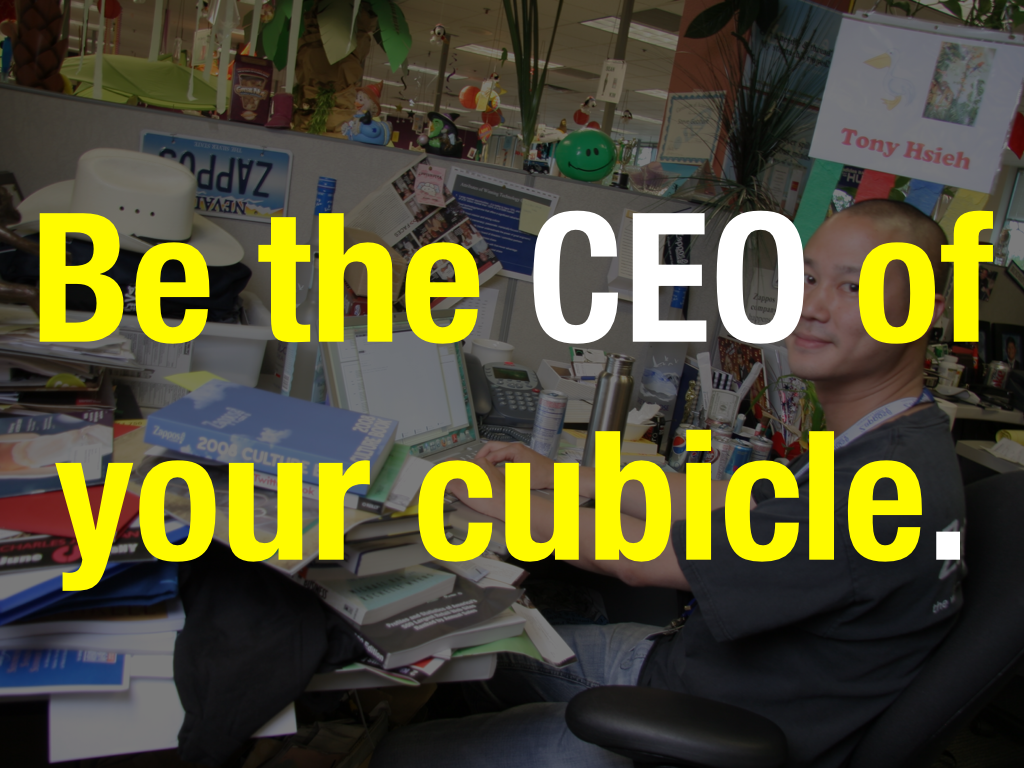
You don’t need to be offered a promotion or run for office to be a leader. Be the CEO of your cubicle or your desk. Lead yourself. Act like you are who you want to be and embody the attributes that lead to an excellent life well lived.
Mesmerized by routine

Mason Currey’s fascinating book, Daily Rituals, is filled with details of how prolifically creative people structure their days. Here’s the opening paragraph on novelist Haruki Murakami’s daily rituals:

When he is writing a novel, Murakami wakes at 4:00 A.M. and works for five to six hours straight. In the afternoons he runs or swims (or does both), runs errands, reads, and listens to music; bedtime is 9:00. “I keep to this routine every day without variation,” he told The Paris Review in 2004. “The repetition itself becomes the important thing; it’s a form of mesmerism. I mesmerize myself to reach a deeper state of mind.”

A repetitive daily routine seems monotonous, but consistently flipping the switch on a work mode will eventually let the muse know you are in it for the long haul. And the muse will be expected to show up, too. The sameness can lull your inner critic, that voice of caution that kills your creative fight. Mesmerized by routine, you can summon more consistently the creative force that may never otherwise appear randomly.

Style + substance

IMG_1104.PNG

Form AND function. Both should be remarkable. Quality content can get lost in poor delivery. Details matter. Presentation matters.

I love how Apple cares as much about the package design as they do about the hardware and software engineering of their products.

Tweaking the details of a design often leads to new insights in the content for me. And if I care enough about the content, I want to present it as beautifully as I can.

Make excellence a habit

Screen Shot 2014-08-26 at 4.49.24 PM

What do you do repeatedly, consistently, every day? Is that who you want to be?

Make excellence a habit. Determine the actions that are most meaningful to you. Writing? Speaking? Reading? Art? Service? Work skills? Giving quality attention to your family and friends? Taking care of your health?

Whatever you want to master, make a habit out of the skills required. In the short term, repeated action may have little to show for the effort. But it’s the long game that matters. Patience and consistency will eventually sneak up on excellence.

Do the thing you want to do with intention. Build routines around it. Craft your habits and inch your way to a remarkable life.

A small daily task, if it be really daily, will beat the labours of a spasmodic Hercules. –Anthony Trollope

Get out of bed and go to work

At dawn, when you have trouble getting out of bed, tell yourself: “I have to go to work—as a human being. What do I have to complain of, if I’m going to do what I was born for—the things I was brought into the world to do? Or is this what I was created for? To huddle under the blankets and stay warm?”
—But it’s nicer here.…
So you were born to feel “nice”? Instead of doing things and experiencing them? Don’t you see the plants, the birds, the ants and spiders and bees going about their individual tasks, putting the world in order, as best they can? And you’re not willing to do your job as a human being? Why aren’t you running to do what your nature demands?
—But we have to sleep sometime.…
Agreed. But nature set a limit on that—as it did on eating and drinking. And you’re over the limit. You’ve had more than enough of that. But not of working. There you’re still below your quota.

From Meditations by Marcus Aurelius

Hustle

Screen Shot 2014-08-19 at 4.16.24 PM

I was clicking through interesting links last night and tunneled my way through the internet to this great Art of Manliness post: The World Belongs to Those Who Hustle. It’s worth reading if you need a kick in the pants to get going or feel you are lacking in talent. Talent is overrated.

Excellence is yours if you’re willing to put in the effort. In fact, the odds of doing something extraordinary are in your favor because most people are content with ordinary, with safe and secure but not remarkable.

There’s actually more competition for average than there is for awesome, because awesome takes effort and persistence and courage. And only the few will choose that path.

No excuse will suffice if the only thing keeping you from being the person you dream to be is  your commitment to hustle.

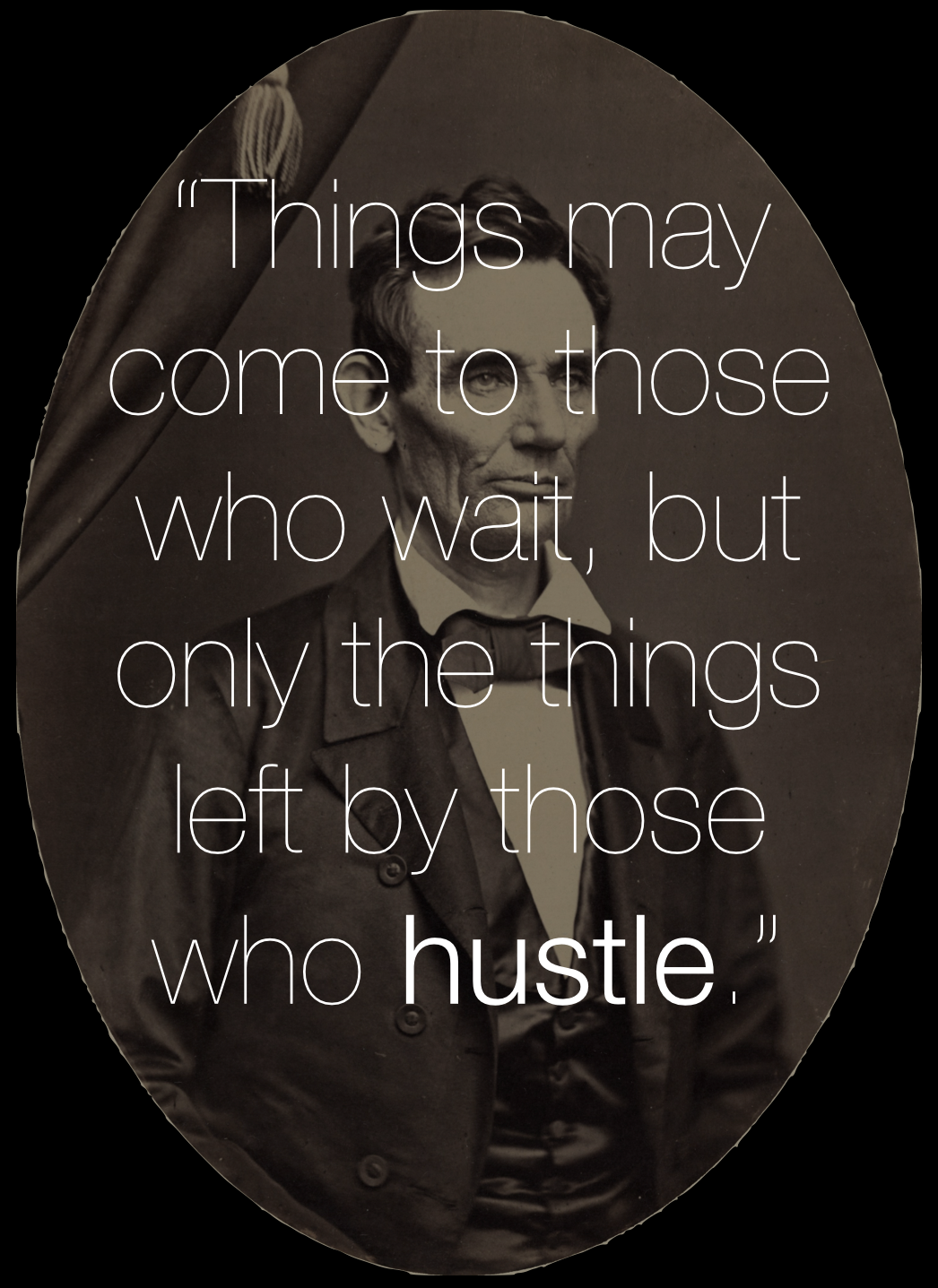
*The quotation above could very well be misattributed to Lincoln. Not sure if the word “hustle” had this connotation in the mid-19th century. But the sentiment of this thought certainly seems to fit what we know of Lincoln’s character and his rise to prominence from a poor, illiterate family.


Slow down and do it right

Daring Fireball linked to this article by a former Apple design leader, Mark Kawano. Deadlines are a big deal inside Apple. They never publicize far in advance when they are releasing a product, but internally they are driven by deadlines.

BUT, if their product is not satisfactory by the deadline, they don’t just ship it anyway. They are not opposed to moving deadlines to better serve the creation of a product that meets their high standards.

Many tech start-ups especially seem to prefer the opposite approach. Just ship something and then iterate to make it better later. But as a customer or user, I don’t want a half-baked product. I don’t want to be a beta tester providing useful feedback for the next iteration.

Kawano refers to Facebook beginning to change their approach to product development:

Take Facebook, which recently killed its famous internal mantra: “Move fast and break things.”

Mark Zuckerberg, the CEO of Facebook, told a crowd of developers earlier this year that he had made a decision to kill the motto after learning that speed does not equal success. “What we realized over time is that it wasn’t helping us to move faster, because we had to slow down to fix these bugs and it wasn’t improving our speed,” Zuckerberg said.

Instead, Zuckerberg said, Facebook was going to slow down and do it right.

Having a due date will force action. Circle a date on the calendar you plan to have something done. Make an appointment with your team or friend or spouse to show them your creation on that date. Then, if it’s not good enough, set another deadline to perfect it.

Set a deadline. Take action. But slow down and do it right.

“Details matter. It’s worth waiting to get it right.”
-Steve Jobs


Chris Hadfield: “Don’t let life randomly kick you into the adult you don’t want to become.”

Everyone’s favorite Canadian Astronaut, Chris Hadfield, has written a really good book, The Astronaut’s Guide to Life on Earth. He tells the improbable story of how a kid from Canada grew up dreaming of going to space and ended up as the most well known astronaut of his era. The book is filled with lessons he learned on his quest but that are relevant to those of us who will only be astronauts in our imagination. Hadfield has been a prominent and relatable voice for space exploration and science education. And he just seems like such a good guy.

ZenPencils created a great illustration of this response from Hadfield in a Reddit “Ask Me Anything”, which he did while orbiting the Earth in the International Space Station:

Decide in your heart of hearts what really excites and challenges you, and start moving your life in that direction. Every decision you make, from what you eat to what you do with your time tonight, turns you into who you are tomorrow, and the day after that. Look at who you want to be, and start sculpting yourself into that person. You may not get exactly where you thought you’d be, but you will be doing things that suit you in a profession you believe in. Don’t let life randomly kick you into the adult you don’t want to become. –Chris Hadfield

Act like you are who you want to be. Do the things that the ideal version of you would do. Live the life you have imagined.

The best things

Steve Jobs once was asked which product he was most proud of. He said it was not the Mac or the iPhone, it was Apple, the company. He hoped to leave a legacy with the company and its culture that outlived him and any single product. So far, so good.

How did he plan to keep that going, even after he was gone? There’s an article in the New York Times about Apple’s secretive training program for employees that is designed to perpetuate Apple’s philosophy and culture and continue their run of success.

Culture is everything for an organization. A great company or non-profit or family, even, has to be intentional about connecting its people with what it considers its essential values and principles, and doing it continually and effectively. Don’t take anything for granted about what your people know about your whys and hows. Be relentless in telling the story of what made your organization what it is, but also in searching for opportunities to grow and rethink and shed what no longer resonates. Keep skating to where the puck is going, not where it is.

And consider this quote from Jobs in the article:

“Expose yourself to the best things that humans have done, and then try to bring those things into what you’re doing.” –Steve Jobs

That’s good advice for all of us. Seek out the best of what’s around (DMB reference for the win). Read the best writing and see the best movies. The classics are classics because their quality stands the test of time. Follow those at the top of your field. Be a connoisseur  of quality in the things you surround yourself with. Appreciate the grace of great things and use those things to bring out the best in you.

Mike Rowe: “Become indispensable”

Mike Rowe of Dirty Jobs fame was asked by a fan for career advice. His response is frank and direct and awesome. And he closes with timeless advice for anyone trying to find their way in the world of work:

“Stop looking for the “right” career, and start looking for a job. Any job. Forget about what you like. Focus on what’s available. Get yourself hired. Show up early. Stay late. Volunteer for the scut work. Become indispensable. You can always quit later, and be no worse off than you are today. But don’t waste another year looking for a career that doesn’t exist. And most of all, stop worrying about your happiness. Happiness does not come from a job. It comes from knowing what you truly value, and behaving in a way that’s consistent with those beliefs.” -Mike Rowe

This is consistent with the advice I shared for those facing life after college. You don’t have to figure out your career. Pick a job where you can get picked, and then go be awesome. If you don’t like it, try something else. But stick with something long enough to get good at it, and at least learn what it means to truly work.

Craft a routine for creative spontaneity

I’ve often taken pride in a seat-of-the-pants approach. With Indiana Jones as a model – “I’m making this up as I go!”winging it seemed a virtue.

With age, though, I’ve developed an appreciation for order and structure and routine. And I’m far from disciplined in actually applying order to my daily life.

We expect creativity to be mysterious and ecstatic, and we wait for it, hoping it will grab hold of us. We delay, waiting to be inspired.

But it’s been my experience that waiting for inspiration leads to a lot of doing nothing. What if it’s the other way around? What if routine and structure, showing up and taking action regardless of your emotional state, were what summoned the muse?

Here is William James as quoted in the excellent book, Daily Rituals, by Mason Curry:

“The more of the details of our daily life we can hand over to the effortless custody of automatism, the more our higher powers of mind will be set free for their own proper work. There is no more miserable human being than one in whom nothing is habitual but indecision, and for whom the lighting of every cigar, the drinking of every cup, the time of rising and going to bed every day, and the beginning of every bit of work, are subjects of express volitional deliberation.”

Interestingly, at the time James wrote this he was struggling with the misery of indecision he describes.

As a new school year is beginning, it’s a great time to craft a fresh, new routine for your days. Create a structure of when to arise and exercise and work and eat and read and play and when to turn the lights out. Stick to the schedule. Automate easy decisions, taking them out of your brain and opening space there for more challenging, creative endeavors.

Routine can spark spontaneity. Make a plan, show up consistently, and see if inspiration notices your pattern and begins showing up, too.

Just getting started

Kevin Kelly has a post on Medium today that is a terrific kick in the pants for anyone who’s thinking all the good ideas have already been taken.

I’ve pondered before that things are just now getting good, that we are just getting started on our greatness.

Kelly posits the same thought, especially related to the internet and the snowball of technology our generation is starting to get rolling:

So, the truth: Right now, today, in 2014 is the best time to start something on the internet. There has never been a better time in the whole history of the world to invent something. There has never been a better time with more opportunities, more openings, lower barriers, higher benefit/risk ratios, better returns, greater upside, than now. Right now, this minute. This is the time that folks in the future will look back at and say, “Oh to have been alive and well back then!”

We are living in a golden age of human history. It’s easy to be distracted by bad news and worries about the future. But we’ve got it so good compared to every generation prior to this one. The challenge before us is to imagine without limits the possibilities of what we can do and who we can become?

If not now, when? If not you, who?

Be audacious. Dream big. And take action. Let’s get something started that will make the wonders of this moment seem like a mere stepping stone to the glorious age to come.