Monday rocks!

“Monday rocks!”

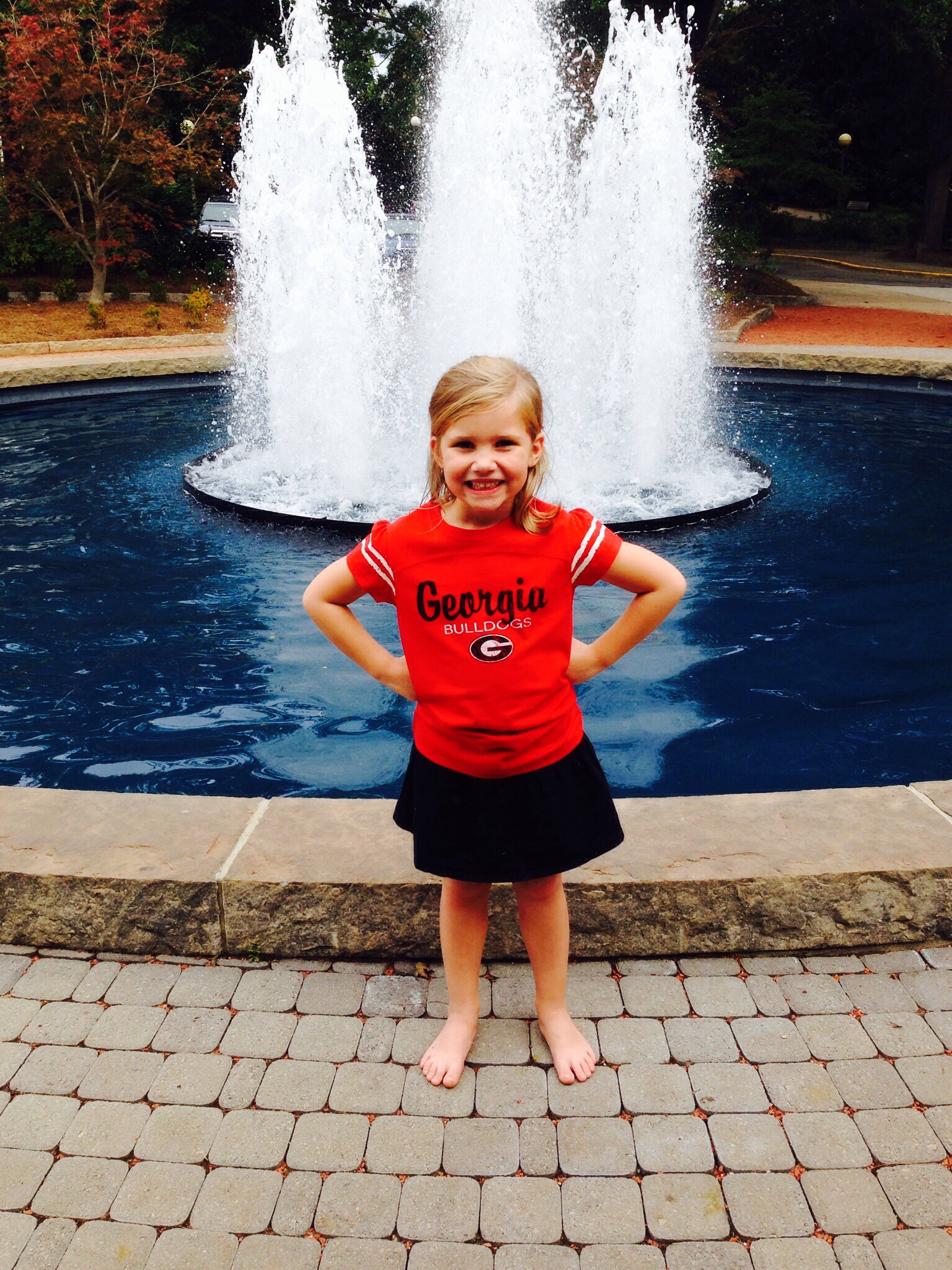
I heard this from my first-grader early this Sunday evening. She was busy doing something creative in the living room, and my wife was talking with her about the week ahead.

Her words surprised me, and I had to step in and make sure I heard her correctly. She reiterated her fondness for Monday and explained that she gets to go to music on Monday, and she loves her music class at school. Plus, she gets to see Calli, who is a terrifically fun college student who babysits my girls every Monday.

This 6-year-old is unapologetic about her enthusiasm for the start of a new week. What if everyone took on the week with such gusto?

Rock on, Monday.

20130929-230604.jpg

On not knowing

A neuroscientist offers a compelling case for the value of ignorance, of knowing that you don’t know:

Reminds me of a quote from Joseph Campbell that continues to resonate with me:

He who thinks he knows, doesn’t know. He who knows he doesn’t know, knows.

Instead of being sure of answers, it’s better to know the next questions to ask.

Our first responsibility

Maria Popova is prolific with her regular output of curated wisdom on brainpickings.org. I recently read an interview with her on The Great Discontent (another great site). She has an interesting story. Here’s a bit of wisdom from the interview:

I truly, truly believe that our first responsibility is to ourselves—to be true to our sense of right and wrong, our sense of purpose and meaning. That’s how we contribute to the world. Anyone who is able to do that for him or herself is already contributing a great deal of human potential into our collective, shared pool of humanity.

Don’t let other people’s ideas of success and good or meaningful work filter your perception of what you want to do. Listen to your heart and mind’s purpose; keep listening to that and even when the “shoulds” get really loud, try to stay in touch with what you hear within yourself. -Maria Popova

The opinions and expectations of others can be instructive as well as destructive. To be your best and do your best means first being true to your own vision of what that means for you.

Getting stronger

This is another great TED Talk*. Here, psychologist Kelly McGonigal shares research showing that facing stress head on rather than avoiding it or being crushed by it has beneficial effects:

Adversity and responding effectively to it generate growth. I’ve been learning that masters get great at something because they keep doing hard things, bumping up against their limits, and persevering to get better.

“No pain, no gain” is a real thing. But I’ve prided myself on avoiding stress when I can. This talk lets me know I should throw myself into the fray regularly and embrace difficulty and challenge more often.

Next time I get the panicky, tight feeling inside about a hard thing approaching, I should welcome it as an opportunity to get stronger.

*HT Getting Stronger blog

Begin again

The joy of Monday. A new week. A chance to begin again, to rethink and give it another go.

It’s the delight of an empty sheet of paper, a blank screen, a freshly erased whiteboard. The possibilities are unlimited, right?

T.G.I.M.

The greatness of kindness

From an interview with Stephen Fry where he discussed what he wished he had known at age 18:

“I suppose the thing I’d most would have like to have known or be reassured about is that in the world is what counts more than talent, what counts more than energy or concentration or commitment or anything else is kindness. And the more in the world you encounter kindness, and cheerfulness (which is kind of its amiable uncle or aunt), just the better the world always is – and all the big words: virtue, justice, truth, are dwarfed by the greatness of kindness.”

Kindness just keeps surfacing as a primary theme when pondering what makes for an excellent life. All the striving for achievement and wealth and happiness… Just being kind can change a moment, your day, your life and the lives of those you meet.

IMG_0149

Caring enough to be awesome

“But I do think that we sense when somebody has cared. And one thing that is incontrovertible is how much we’ve cared.” -Jony Ive, Apple’s design visionary on the Apple way.

It certainly seems that those people and organizations that really care are the ones worth talking about.

Most encounters are marked by the kind of caring that is just enough to not get someone in trouble or to avoid awkwardness. How remarkable when the level of caring is striking, when someone sweats the details and puts in extraordinary effort, even if there’s no obvious extrinsic reward.

Care more. Be more awesome.

Stand and deliver then sit and rest

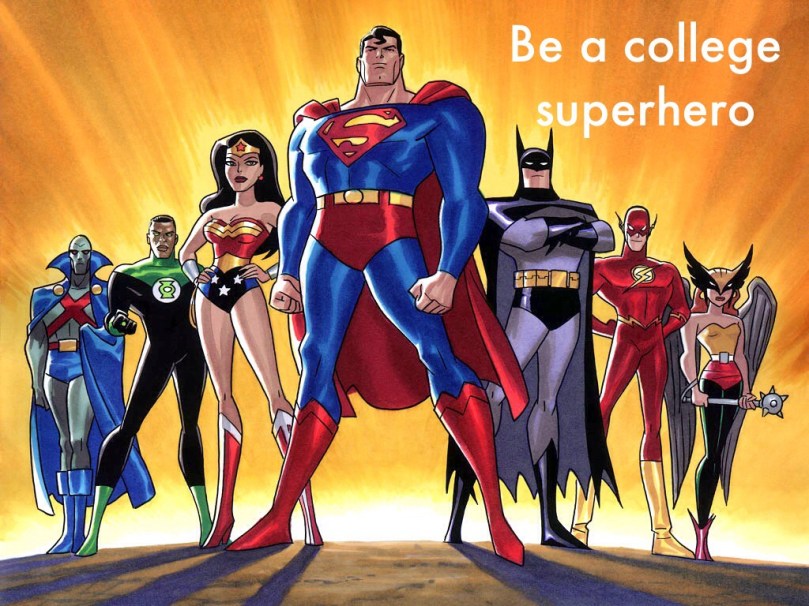
I spoke to a group of college students tonight. My message: “Be a college superhero”

It’s a version of a talk I’ve done several times to various student groups, sharing wisdom I’ve learned from the many amazing students I’ve known over my twenty-one years working in higher education.

Tonight’s audience was a delight, very attentive, engaged, and encouraging. They did their part to make the experience more of a dialogue than a monologue. And I was tired at the end of my 30 minutes.

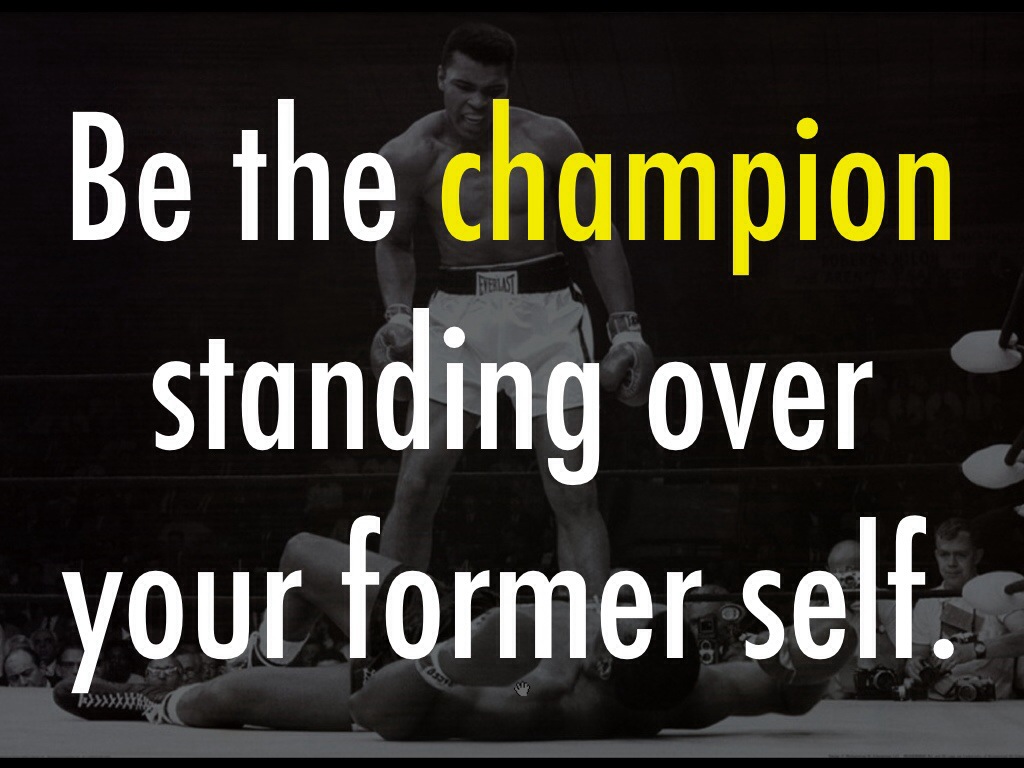
If I’m not exhausted at the end of a presentation, I know I have not given enough energy to the audience. I read that Tom Peters, the prolific business speaker, said that if you don’t need to take a seat after a speech you have let the audience down.

An effective speech is the transfer of emotion from the speaker to the audience. When you stand before fellow human beings, raise your energy level and give them all you have. Otherwise, why even show up?

20130918-224502.jpg

Wildness

Two things on this TED Talk:

1. Our modern world could use some rewilding. We are so disconnected from nature and have done so much damage to the real world. But nature is resilient. And even if we can’t bring the Serengeti to our back yard, we can be more intentional about building some wildness into our lives.

2. What a great presentation style by this speaker. He goes without notes and slides and commands his time on the stage. He tells stories and is completely engaging. And he’s obviously passionate about his topic. He knows his stuff, and I’m guessing he prepared thoroughly for this moment because it looks almost effortless.

“In wildness is the preservation of the world.” -Henry David Thoreau

Wired for story

There’s an interesting story in The Atlantic about the evolutionary advantages of story telling. Humans have been sharing stories for possibly a million years. Story tellers thrived and survived.

We long to be pulled along by a narrative. Even a poorly told story is more compelling than just disconnected facts. We are wired for story from generations of story tellers binding us together and guiding us as a culture.

And now stories are filling up even more of our attention each day. From The Atlantic article:

Thanks to Gutenberg and the inventions of film and television, we immerse ourselves in more narratives than our ancestors could have imagined, which means we’re cutting back, along the way, on real-life experience.

This means our choice of which stories to consume is more crucial than ever. They need to be as useful as lived experience, or more so, or we’re putting ourselves at a disadvantage.

Mediocrity abounds in popular culture. Seek out quality. Time-wasting entertainment is like junk food. Fill your time with real life and meaningful experiences. Make a great story of your own life. And when you do seek to get lost in someone else’s narrative, choose wisely. The classics are classics for a reason. They’ve stood the test of time and are probably worthy of your attention.

Seek out the greatest authors and filmmakers. And when you find an artist that connects with you, go feast on everything they’ve produced rather than sampling lightly and bouncing around to other creators. Do a deep dive into an artist’s work. If War and Peace grabs you, don’t stop there. Go read all of Tolstoy. Loved 2001? Make time to watch all of Kubrick’s films.

Our story is a million years in the making. Fill your life with stories worth your attention.

Risking failure

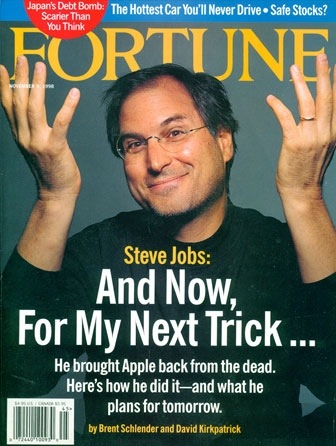
“One of my role models is Bob Dylan. As I grew up, I learned the lyrics to all his songs and watched him never stand still. If you look at the artists, if they get really good, it always occurs to them at some point that they can do this one thing for the rest of their lives, and they can be really successful to the outside world but not really be successful to themselves. That’s the moment that an artist really decides who he or she is. If they keep on risking failure, they’re still artists. Dylan and Picasso were always risking failure. This Apple thing is that way for me. I don’t want to fail, of course. But even though I didn’t know how bad things really were, I still had a lot to think about before I said yes. I had to consider the implications for Pixar, for my family, for my reputation. I decided that I didn’t really care, because this is what I want to do. If I try my best and fail, well, I’ve tried my best.” -Steve Jobs in 1998 discussing his return to Apple

Never stand still. The greats keep pushing, experimenting, reaching further. And risking failure.

20130912-233934.jpg

The Bear Bryant way

ESPN has a terrific Ivan Maisel story on their web site about the late, great Alabama football coach Bear Bryant.

Coach Bryant was born on this date 100 years ago and is easily the most iconic college football coach ever. The houndstooth hat, the affably gruff toughness, and all those championships make him stand out from his peers in the profession.

He was famous for pushing his players hard, for demanding more than was thought possible. But his high expectations and relentless pursuit of excellence paid off with six national titles for his teams. David Cutcliffe, Duke’s current head coach, worked for Coach Bryant:

Cutcliffe said what sticks in his mind is Bryant’s reasoning for pushing his coaches and players so hard.

“He used to say, ‘You can’t tell how a mule will pull until you hook it up to a heavy load,'” Cutcliffe said.

Championships are won in practice, and mastery and excellence are forged by taking on hard things, refining and tweaking, pushing to failure, and overcoming.

Bryant didn’t win his first national title until his sixteenth season as a head coach. You can bet the fifteen years before were filled with hard work and disappointment and discarded strategies and incremental improvements that didn’t make headlines. All of that made him into the championship coach he became.

John Wooden, the iconic basketball coach who is just as legendary for his attention to detail and commitment to continuous improvement, didn’t win the first of his ten national titles until his seventeenth season as a head coach.

Being awesome is not typically an overnight endeavor.


1101800929_400

Impermanence

Jason Silva’s latest short video, a bittersweet meditation on transience:

Everything changes. Motion is constant. You never step into the same river twice. This moment is gone already.

How do we live with impermanence? How do we make sense of knowing that we are unique, once in a universe creatures who will be gone soon? All that we love and hold dear will escape our grasp.

I was at my aunt’s funeral last week. Our family has lost her, but the universe keeps spinning. We have memories of happy times and moments shared, and we have the sadness that we will not look her in the eyes ever again. And all of us know that one day we will be the ones that our family and friends mourn.

What a world.

We are the only animals that live in the light of our own mortality. Yet we also are the only ones who can experience the awe of just being alive.

Do not go gentle into that good night. Rage, rage against the dying of the light. -Dylan Thomas

Kiss your brain, and get moving

Here’s a fascinating TED Talk explaining that our brains developed primarily to facilitate movement:

Wolpert points out that computers can “outthink” a human chess master, but that even a five-year-old has dexterity that blows away anything the most sophisticated robot can do.

Physical movement is our primal and primary strength. Regrettably, we as a culture seem to be living more in our heads and on our butts than fully maximizing our amazing physical gifts.

Go take a walk, and make it a mindful, fully present experience. Learn to juggle. Swim. Play catch. Ride a bike. Balance on a curb. Enjoy, glory in, your remarkable dexterity and physical skills.

I have a teacher friend who regularly tells her kids, “Kiss your brain.” Be smart, certainly. Challenge yourself mentally. But also embrace your physical nature and kiss your brain by moving like a human.

Via Movnat

20130909-214228.jpg

Neil DeGrasse Tyson on what it takes to be a visionary

“If everyone had the luxury to pursue a life of exactly what they love, we would all be ranked as visionary and brilliant. … If you got to spend every day of your life doing what you love, you can’t help but be the best in the world at that. And you get to smile every day for doing so. And you’ll be working at it almost to the exclusion of personal hygiene, and your friends are knocking on your door, saying, ‘Don’t you need a vacation?!,’ and you don’t even know what the word ‘vacation’ means because what you’re doing is what you want to do and a vacation from that is anything but a vacation — that’s the state of mind of somebody who’s doing what others might call visionary and brilliant.” -Neil DeGrasse Tyson

via Brain Pickings

“Happiness is absorption.”

Another lovely video from Jason Silva, this one about creative absorption and flow:

Love the intro quotation:

“Happiness is absorption.” -T.E. Lawrence

Getting lost in a video game or a movie or a novel is delightful, but getting lost in creative imaginings and work that compels and pulls you along to the point where all else falls away, where time is compressed, that’s transcendent. And blissful.

It’s easy to assume you’ve got to wait for those moments of flow to somehow strike. But my experience is that you’ve got to do your part to meet flow along the path.

Just start, even if you’re not feeling it, especially if you’re not feeling it. Tackle the blank page with words, even awkward, awful ones.

Terrible is better than nothing, and opening the door of possibility just a bit can be enough to get something better flowing.

Fill your work with love

“Not enough love.” That was the response from Frank Chimero’s design professor after looking through some of his work.

“My work was flat, because it was missing the spark that comes from creating something you believe in for someone you care about. This is the source of the highest craft, because an affection for the audience produces the care necessary to make the work well.”

“The work has enough love when enthusiasm transfers from the maker to the audience and bonds them.”

This is from Chimero’s excellent book, The Shape of Design. The passage above reminds me of Tolstoy’s claim that “Art is infection.” An artist, a teacher, a maker of any sort, has an idea or feeling and wants to share it. It’s effective, it’s art, when the audience gets that very same feeling or sees that idea just as the maker did.

You’ve got to care enough about your work and those you serve – an audience, a customer, a student – that you fill your work with all the love you can, with care and attention to detail and enthusiasm.

When I write, I often imagine my audience to be my young daughters reading this many years from now, maybe even after I’m gone. Don’t you know that informs my efforts. When I lose sight of my ultimate audience, it’s easy to lapse into just going through the motions. Then flatness abounds.

What if we examined all our work in this light? What gift can we offer to our audiences? Our colleagues or customers? Our families? Are we putting enough love into our labors?

20130903-220319.jpg

Neil Gaiman’s main rule of writing

From Neil Gaiman’s 8 Rules of Writing:

“The main rule of writing is that if you do it with enough assurance and confidence, you’re allowed to do whatever you like. (That may be a rule for life as well as for writing. But it’s definitely true for writing.) So write your story as it needs to be written. Write it ­honestly, and tell it as best you can. I’m not sure that there are any other rules. Not ones that matter.” -Neil Gaiman

Sunday evening Epictetus

“Whoever then wishes to be free let him neither wish for anything nor avoid anything which depends on others” –Epictetus: The Essential Writings

The only sport I now follow with any real interest is college football. This reminder to put our happiness in our own hands is much needed as the season begins. Our happiness in the hands of 20-year-old football players is a silly thought.

Why waste any worry or frustration over things that we have no control over?