Empty desk, clear mind

FullSizeRender

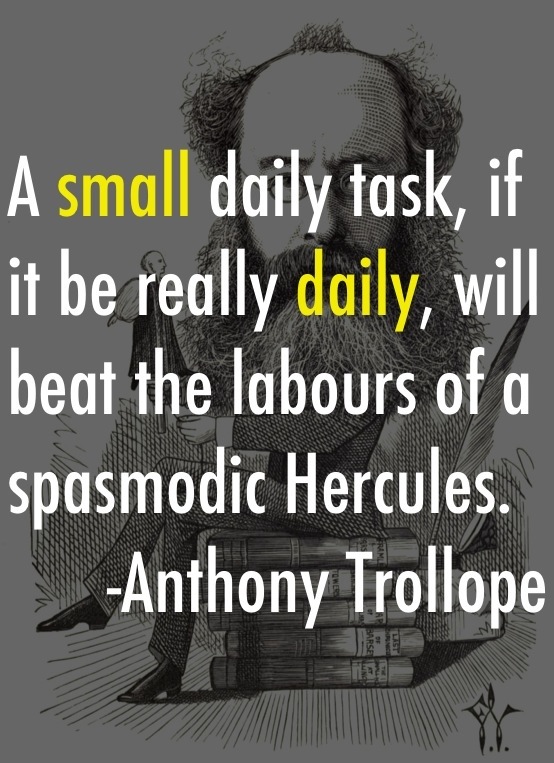
I used to be a messy-desk guy, and proud of it. I wanted to be like Indiana Jones and project cool amidst chaos, as if “I’m making this up as I go” like any other superhero. As my work responsibilities grew and family life began to take priority, though, I found I was juggling too much in my head too often, and looking at piles wasn’t helping. I got things done, but probably not as well as I could have and at some cost to my peace of mind.

So, I converted. I went over to the clean-desk side. David Allen’s Getting Things Done (GTD) became my bible for organizing my life. I completely changed my approach to work and personal tasks. Lessons from that epic book still resonate. I’m wired now to keep defaulting to an empty desk and empty email in-box. I can stray for a while but then find a nagging unease underlying my mood. “What’s off?” I wonder. Ah. Disorder has crept in, and piles on my desk or working too often from my email in-box are the cues to take action and impose order again.

I used to do a weekly Friday review as suggested in the GTD philosophy. I would put it on my calendar each week. That made sure I regularly corralled loose ends and kept order. I’ve gotten away from that habit and need a revival. Friday is a great day for a weekly review. You can then go into the weekend having dumped and processed the mental load of the work week and be more open to the rest of your life.

Daily and weekly rituals for tidying your life can give you clarity and allow you focus on what is most essential. Cut the clutter. Eliminate the inessential. Clean your desk. Point your life toward what matters most, which may be obscured if there are piles in the way, literally or in your mind.

The courage of humility

Screen Shot 2014-12-08 at 3.56.09 PM

via BrainPickings.org

Accepting uncertainty and your own ignorance is the way – the way to being an authentic human and living a true and courageous life.

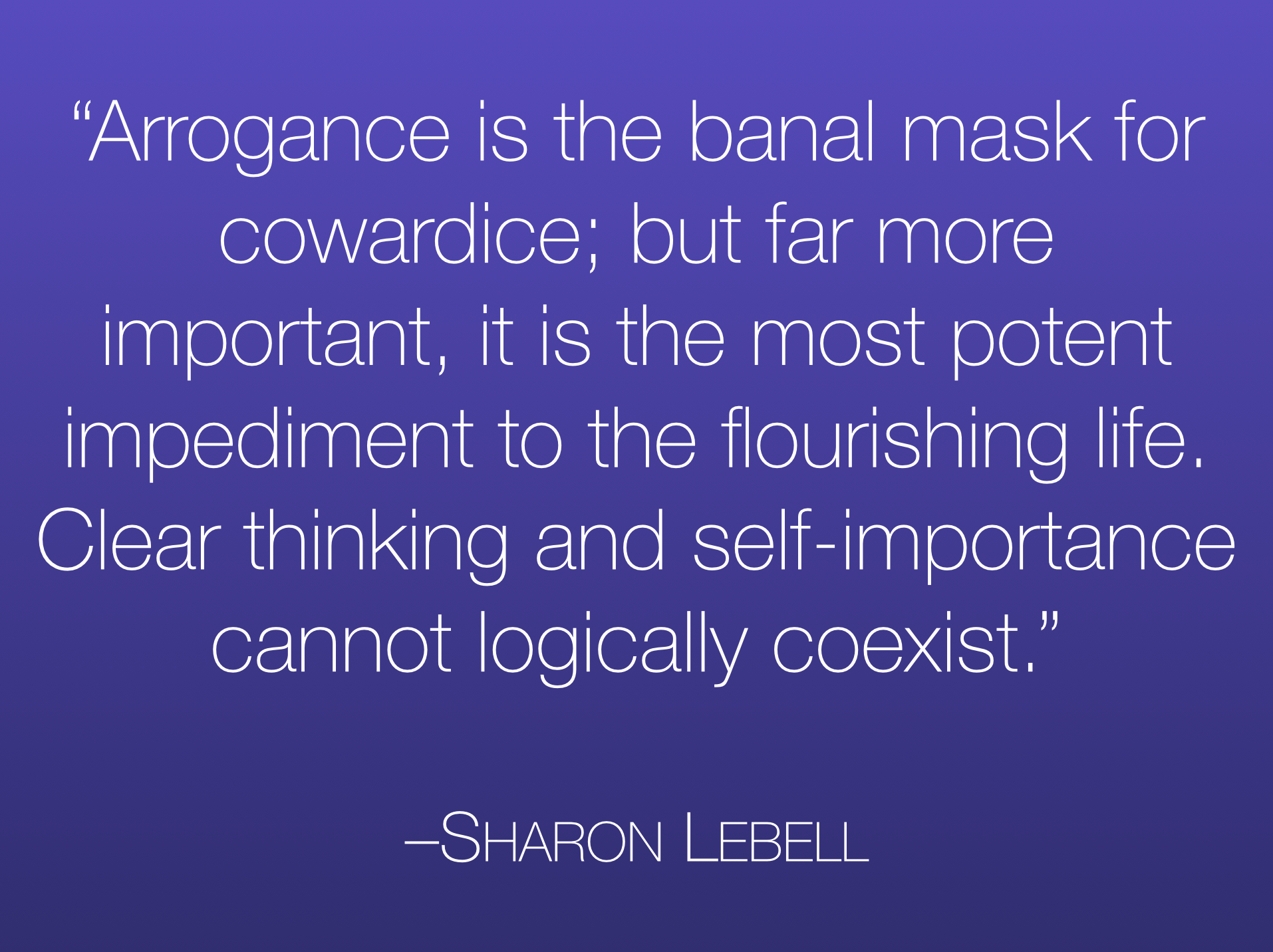
Those who seem to have it all together are probably just faking it, wearing that mask of certitude to hide their fear. It takes courage to be humble and acknowledge your real place in the grand scheme, in the really big picture.

Know that you don’t know and clear your mind of the clutter of your fixed opinions and prefab answers. Make your way to the beginner’s mind where there are many possibilities.


Blue sky every day

IMG_1267.JPG

I have been following Andy Puddicombe’s Headspace meditation program for two weeks now, and I can see how beneficial this practice is. Andy regular refers to meditation as “training the mind”, and I’m getting that sense of it, of training and practice and skill development, from just my two week habit.

I have already found myself occasionally directing my attention during daily activities to what I experience when I meditate, noticing the busy-ness and distraction of my mind and bringing the focus back to my body and my breath.

Mindfulness teachers talk about the blue sky always being there even when obstructed by clouds. If you were in a plane you could fly above the clouds and see that the blue sky is there and unaffected by whatever clouds are below it.

Even when your mind is full or anxious or clouded with discouraging thoughts, the blue sky is still there. Wait and watch. The clouds will pass, if even for a moment, and you can see the blue sky. There it is, every day.

Kindness is invincible

Screen Shot 2014-12-06 at 9.42.00 AM

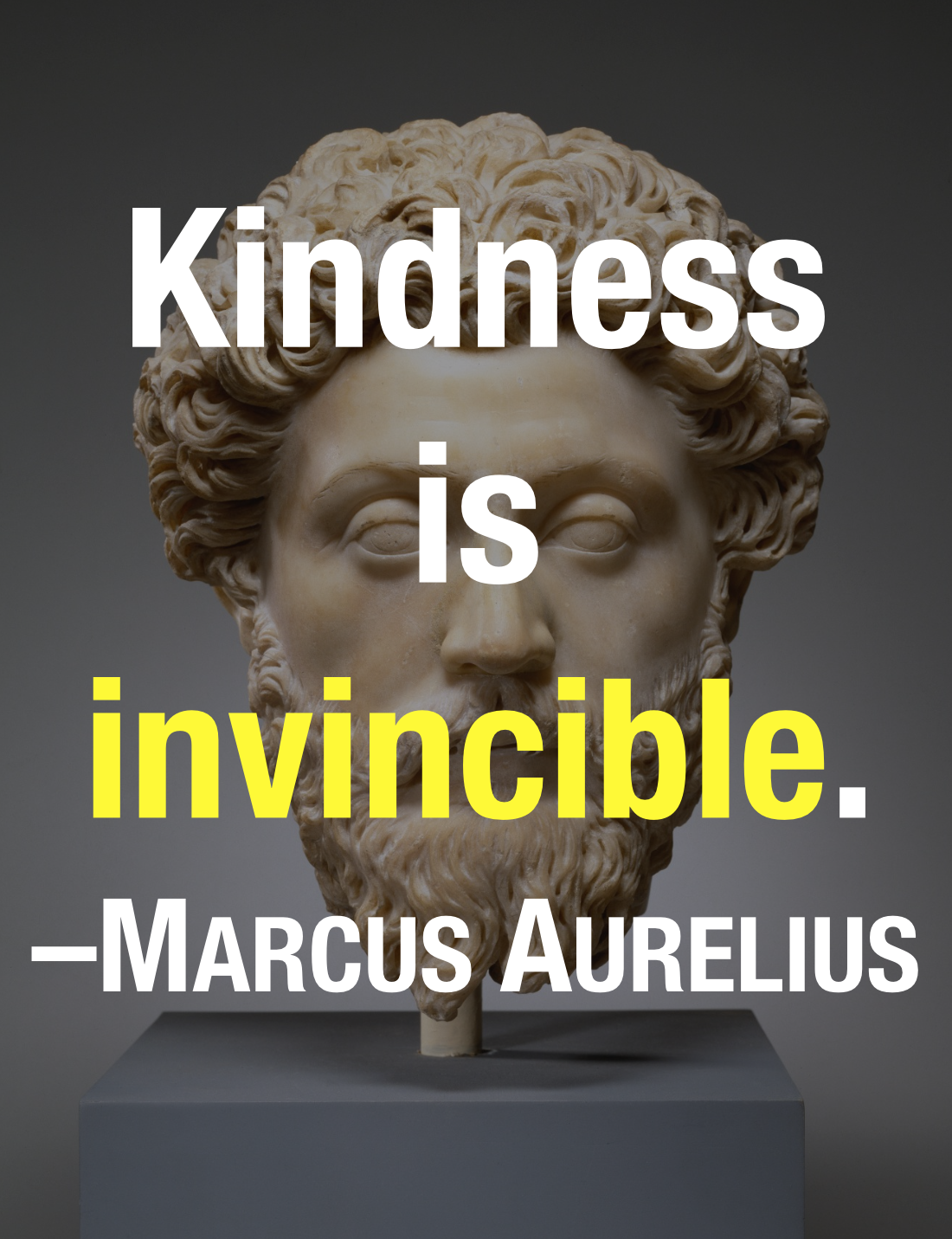
Meditations 11.18 ix

This from a man who had more power than anyone alive at the time, the emperor of Rome with armies and riches and total authority. Easy for him to say, I suppose. Of course, this was written in his private journal for no one’s benefit but his own. Marcus was the man.

Sincere kindness, not for show or put on in some way, is strong and resilient and ultimately persuasive and even healing. Marcus goes on to say this about kindness:

“What can even the most vicious person do if you keep treating him with kindness and gently set him straight—if you get the chance—correcting him cheerfully at the exact moment that he’s trying to do you harm. “No, no, my friend. That isn’t what we’re here for. It isn’t me who’s harmed by that. It’s you.” And show him, gently and without pointing fingers, that it’s so. That bees don’t behave like this—or any other animals with a sense of community. Don’t do it sardonically or meanly, but affectionately—with no hatred in your heart. And not ex cathedra or to impress third parties, but speaking directly. Even if there are other people around.”

I am not impressed with those who try to exert their authority or express righteous indignation or intimidate their way into getting their way. Give me authentic, wholehearted kindness above all.

Showing my work: Mind map for the win

In the regular attempt to show my work and be transparent about the imperfect and messy nature of creation, here’s a peek into my planning for our new staff kickoff this weekend.

We will spend four hours on Sunday brainwashing our new staff about our mission and values and the way we do our work. And we will begin getting to know each other and begin building a sense of community. I’ve done this kind of event many times, and it’s one of my favorite things to do every year.

FullSizeRender

I went to the big whiteboard in my office (the bigger the whiteboard the more room for possibilities, right?) to draft out the agenda and got stuck right away. I know in general what we’re going to do, but I was trying to assign start times to each part of the agenda. So, I just stared blankly for a while. Then, I remembered that a linear approach regularly stymies me, and I erased what I had and started over with a mind map. Mind maps allow you to ditch lists and hierarchies and let ideas flow more freely, unconstrained by any external sense of order.

Once I started over on my agenda by mind-mapping it first, the ideas came quickly and easily, and possibilities I hadn’t considered before suddenly appeared. And once the ideas were all out there and easy to visualize, I could then begin putting the ideas into some order.

If you’re stuck planning a project or an event or a night out, even, try mind-mapping it. Go crazy, with no restraints on the ideas. This method can help you see connections and possibilities that a conventional outline or list might never lead you to.


Showing my work: Connecting a new team to the mission

We just selected nineteen college students to join our work team, and I’m getting ready for their first training session on Sunday. We always begin with a big picture focus. I feel strongly that Why comes before How. If you want a sense of purpose and a clear mission for everyone on your team (and you do), then begin with the big picture and hone in, as precisely as you can, on what’s the point, why you do what you do.

It seems every organization has a mission statement, but if you’re in an organization, do you know what yours is? Most are filled with P.R. jargon that seems far removed from the reality of your work. If you can’t clearly state your team’s purpose in a sentence or two, there is a lack of focus and clarity at the top.

So, when we bring on new team members we begin with an examination of our primary purpose as an organization. And it’s healthy for us to revisit this each year with returning staff as well and keep reminding ourselves of the big picture and the compelling reasons why we do what we do.

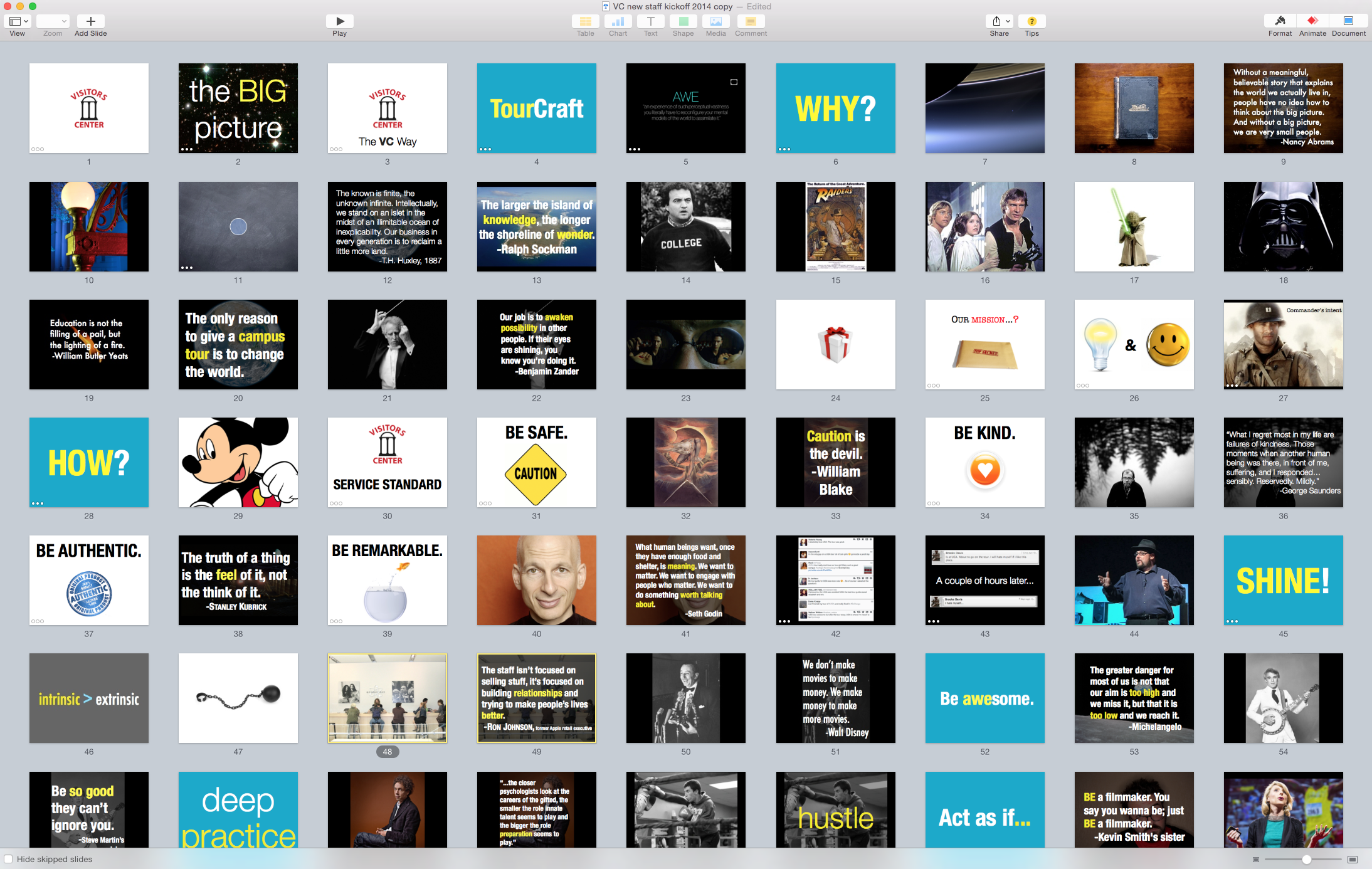
I’m working on slides for this weekend’s kickoff meeting for the new staff. I’m showing my work in progress here to remind myself that I can’t just repeat what I’ve done before. I’ve been tweaking the design and in the process rethinking the ideas and the flow. And it’s so worthwhile to take something you think you’ve got down and take a fresh look at it and be willing to discard and edit and redo. Every organization could benefit from regular revivals and periodic rethinks of just why you do what you do.

Screen Shot 2014-12-04 at 3.25.55 PM

Four weeks left in 2014: Meditation

december-31st

December 31 is four weeks from today. I’ve been counting down toward a strong finish to the year. I was tired of writing off the last weeks of the year and digging myself into a hole that I then need to New-Years-resolution my way out off.

I’ve been establishing some habits, because, of course, systems are better than goals. The Habit List app has played a big role in my commitment to these new habits. It’s compelling me to not break the string. I get out of bed early and start my day checking the list and making sure I can check off each habit – push-ups, walking a mile, writing, and meditation – before the day is done.

The newest habit I added is daily meditation. I’m using the Headspace app, which guides your meditation and makes it easy for a beginner to get going. It’s been a delight, and I’ve moved past the ten free sessions and subscribed for the year. It costs a little more than $6 per month to have access to the full program. The first ten days sold me, and I’m counting on sticking with it.

With just four weeks left in the year, I’m feeling both physically and emotionally stronger than I did at the beginning of the year. And that’s with me just getting started a few weeks ago.

Leverage these last few weeks of 2014 to get better at something. Don’t muddle through the holiday season postponing your attempt at awesomeness till January.

2014 books

I’ve seen a couple of book lists pop up as the year-end and holiday shopping and reading seasons are upon us.

Here’s Maria Popova’s list of 2014’s Best Books on Psychology, Philosophy, and How to Live Meaningfully.

The New York Times has a list of 100 Notable Books of 2014.

The books I’ve read this year that I finished and that I recommend:

Non-fiction –

Meditations: A New Translation by Marcus Aurelius, translated by Gregory Hays – Yes, I’m reading from this at least weekly if not daily.

Dying Every Day: Seneca at the Court of Nero by James Romm

The Obstacle is the Way by Ryan Holiday

Show Your Work by Austin Kleon

The Antidote: Happiness for People Who Can’t Stand Positive Thinking by Oliver Burkeman

Daily Rituals by Mason Currey

Destiny of the Republic by Candice Millard

Fiction –

Ready Player One by Ernest Cline

The Martian by Andy Weir

The Sisters Brothers by Patrick deWitt

The Signature of All Things by Elizabeth Gilbert

Beautiful Ruins by Jess Walter

The Way of Kings by Brandon Sanderson

Words of Radiance by Brandon Sanderson


Imagining a future on the frontier beyond Earth

This gorgeous short film by Erik Wernquist imagines humans exploring deep into our solar system. The images are stunning in their beauty and in the vision they offer of humans venturing to the frontier beyond our own planet. And there’s Carl Sagan’s voice and poetic words. So good.


Why should we even dream of such ventures? Because we are human, and we’ve been wandering and searching and exploring from the beginning. We journey. It’s what we do, and it’s how we are wired. And in journeying we find ourselves and attempt to make sense of our place.

The sedentary life has left us edgy, unfulfilled… The open road still softly calls. –Carl Sagan

Imagine what it would take for even a small portion of this filmmaker’s vision to become a reality. Epic, gargantuan investments of brainpower and resources and will, right? But, remember, the previous generation sent men to the moon. That was back when computers filled rooms. They fit in our pockets now.

Can’t we fit dreams like this into our future and honor our nature as wanderers? If our physical survival doesn’t depend on it (and it might), at least the survival of our questing spirit and restless curiosity ultimately may be at stake.

This may be centuries away, but it’s on us to point ourselves in that direction.

via Kottke

Sunday morning Stoic: It’s time to stop being vague

From Epictetus, in Sharon Lebell’s excellent collection of his sayings, The Art of Living:

IMG_5926.JPG

I spend a lot time with college students, and many of them invest a disproportionate amount of mental and emotional energy worrying about what they want to be.

What if, instead, they focused more on who they want to be, on the kind of character and disposition they want to mark their lives?

People of my generation, though, are mostly resigned to what they do. (It’s never too late to rethink that, however.) Yet, who you are matters much more than your job or your career path.

You have the power to make yourself into the person you want to become. Be clear about the kind of person that is. Envision your ideal self in as much detail as you can – habits, demeanor, character. Write down a description of that person. Keep it in a journal or in your computer or on your phone.

Read about people you admire. Seek out mentors and kindred spirits. Fill your mind with what you’re aiming for.

And start acting like you already are who you want to become. Live your way into the person you deserve to be.

A vast glowing empty page

IMG_1266.PNG

That emptiness of the life potential ahead of you can glow with possibility. Or it can unmoor you and have you grasping for the comfort of certainty and safety.

But the glow only comes when you see the unknown and undone as the glorious swath of possibility it is. Dive in to your life. Make it what you want it to be.

How we spend our days

IMG_1265.PNG
We wake up to a gift every morning. No matter the worry and heartache, here we stand each day, surrounded by wonder and found joys and mystery enough to fill a life of days.

I want a good life, a life I can look back on with gratitude and satisfaction. A good life, though, is crafted day by day, one morning after another.

What does it take for you to put your head on the pillow for a night of satisfied sleep? What makes for a good day for you? When you think back on really good days in your life, days that were wholeheartedly satisfying, what was it about those days that made them good? How can you be intentional about building the elements of satisfying days into every one of your days?

Some days are just going to suck, I know. And much of what happens to you is out of your control. But you can control your actions and your responses and your attitude. Why not be the artist of your days, taking the initiative to build your days around what you know to be good and worthwhile?

Your daily habits and daily rituals and routines will over time shape your life and make you into who you become, whether those actions are mindful and intentional or not. Act now like you are who you want to become and choose to live your way into the kind of of life you aspire to have, one day at a time.

Five weeks left in 2014: Don’t break the string

december-31st

Today is the halfway point of my ten-week countdown to the end of the year. There are now only five weeks left till December 31. I’ve not missed on any of my chosen habits. I’m keeping the string unbroken, and I’m finding it satisfying to check off each habit in the Habit List app each day.

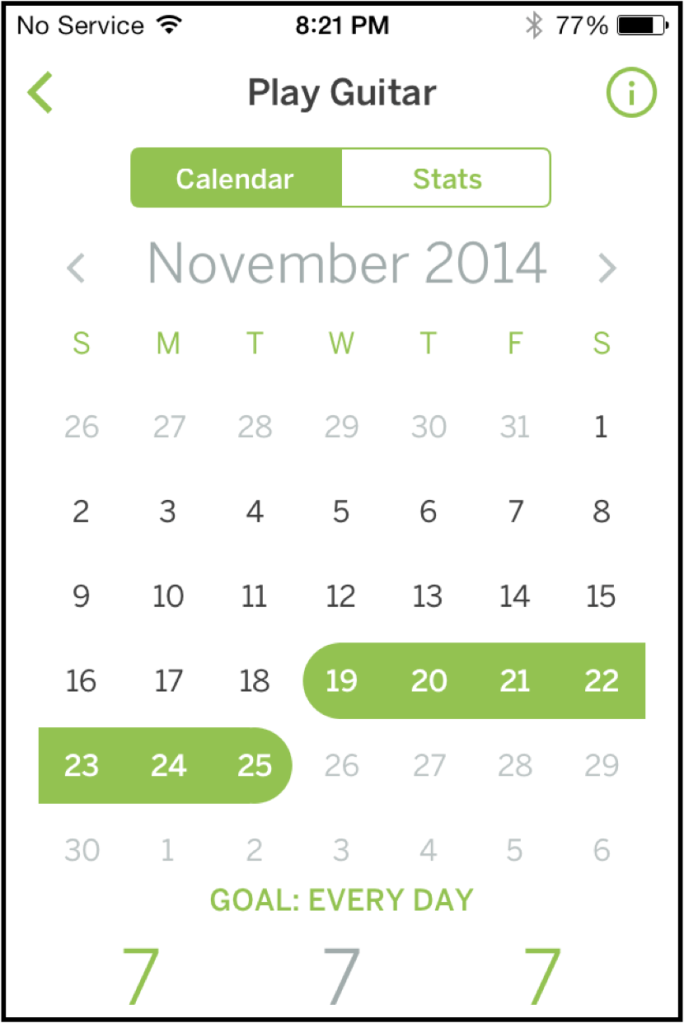
My ten-year-old committed herself to playing guitar every day with the goal of being able to play “Here Comes The Sun” by New Year’s Eve. She was eager to use the Habit List app on her device, and she has now got a 7-day string going. This is the most consistently she’s ever played the guitar since starting lessons more than a year ago. It seems more like a game to not break the string. Sticking with a habit just feels easier when it’s monitored this way, with the pressure to keep the streak alive.

Screen Shot 2014-11-26 at 3.00.50 PM

While consistency is key, those sessions still need to be high quality to bring about real improvement. They need to involve deep practice, the kind of effort that keeps bumping up against limits and stretching and refining skills. If I just do enough push-ups to check the box without actually feeling any pain, I won’t get stronger. The key is to go to failure and then try to go a bit further; that’s what leads to progress and makes the difference.

But first you’ve got to just show up, get the quantity in so you can eventually get to quality.

What habit can you lock in in the next five weeks to finish the year on a roll?


Crafting conversations

As you prepare for holiday gatherings with family and friends, think back on leaving previous gatherings and how you felt about your interactions with those closest to you.

I often leave those gatherings and realize I somewhat went through the motions of being affable and interested without actually having many substantive conversations. What if we were intentional especially this week about crafting excellent conversations and made a bit of an art of asking good questions and listening intently?

Ask couples to tell you the story of their relationship, how they met and courted. Ask older people about their greatest life adventures and any wisdom they want to pass on. Ask teenagers what music they’re listening to.

If you’re hosting, consider setting some guidelines and expectations for the conversation around the table. What if there were only one conversation at a time that everyone at the table was a part of, instead of people carrying on a lot of conversations separately? Or maybe you can use place cards to seat guests in combinations that might spark better conversations. Separate those who know each other well or spend plenty of time together already.

Avoid polarizing topics. Who wants to argue about opinions that most people are not willing to reconsider?

Here are some challenging, fun questions to spark memorable discussions:

  • What did you want to be when you were a kid?
  • What has been your greatest adventure?
  • Best vacation ever? Dream vacation?
  • If money were not a concern, what would be your dream career?
  • If you could spend a day with anyone on the planet, who would you choose?
  • What books have truly impacted you in a meaningful way?
  • Describe in detail what you imagine your ideal day would be.
  • What important truth do very few people agree with you on? (Potentially polarizing, though.)

Coming up with fun questions could be a group effort as well. You don’t need to treat a conversation like a job interview, though. One good, authentic question can start an organic flow of ideas that doesn’t need to be forced and can lead to a remarkable encounter.  The key is active listening and following up and probing for better understanding.

My wife is great at giving quality attention at family gatherings to her 90+-year-old grandmother. It’s a delight to see them engaged in a discussion. And too often the oldest people, the ones who have lived the most life and have the most stories, tend to be talked around rather than talked with.

My recent weeks of interviews at work reminded me how interesting it can be to just sit and inquire thoughtfully and listen carefully. In those 30-minute interviews I had more interesting discussions with complete strangers than I’ve had recently in many hours of gatherings with my closest family members.

Everyone wants to be heard, and there is so much untapped wisdom and insight we miss out on by just failing to have genuine conversations with the people who are most meaningful in our lives.

The truth is you don’t have to be particularly suave or charismatic or interesting to be known as a great conversationalist. You just need to care enough to make the effort to be interested in others and to listen intently.


A great podcast: Dan Carlin’s Hardcore History

Podcasts have almost completely replaced the radio for occupying my driving time, and I often listen to podcasts on my daily walk. There are so many good podcasts to recommend – TED Radio Hour, Serial, The Tim Ferriss Show, Jeff Garlin’s By The Way.

But the most impressive and engrossing podcast I’ve encountered is Dan Carlin’s Hardcore History. Carlin goes deep and produces what are in essence audiobooks about each historical topic he takes on. But he delivers these amazingly well researched stories in a conversational tone that makes you feel like you’re sitting with a really interesting friend who knows everything about history AND who can tell a great tale.

His latest series on World War I is stunning for its detail and for its effectiveness in conveying the staggering tragedy of the first modern war. He doesn’t gloss over or minimize the stark, often shocking realities of what humans have done to each other throughout history, hence the name “Hardcore History”. His podcasts are not light entertainment. But they are remarkably good.

It’s easy to make a podcast now. You just need a microphone and a computer and you can talk your heart out and post it on iTunes. But what Carlin and the best podcasters create are works of art, carefully, painstakingly crafted with strong content and excellent production values.

Carlin goes deep into his subject, reading voluminously on the topic and laying out his narrative carefully before recording. What he delivers ends up sounding effortless. This level of commitment to quality content and production, though, makes a show like Hardcore History shine.

If you’ve got some time in the car ahead of you this holiday week, Hardcore History or any of the other podcasts I listed above are a great way to fill a few hours.

*My podcast app of choice, by the way, is Overcast for iOS.

Sunday morning Stoic: Stop complaining

Meditations 10.3:

“Everything that happens is either endurable or not.
If it’s endurable, then endure it. Stop complaining.
If it’s unendurable … then stop complaining. Your destruction will mean its end as well.
Just remember: you can endure anything your mind can make endurable, by treating it as in your interest to do so.
In your interest, or in your nature.”

So, Marcus, you’re saying there’s never any excuse to complain about anything. Where’s the fun in that?

Actually, I’ve got the complain-out-loud habit mostly under control. I have my moments, like while watching a football game or while driving or while venting to my wife or colleagues. Yes, so under control. But, mostly, my complaining takes place silently in my mind. It’s just as unproductive, though, even if unspoken.

“you can endure anything your mind can make endurable, by treating it as in your interest to do so.”

That last point though: “you can endure anything your mind can make endurable, by treating it as in your interest to do so.”

This thought has challenged and delighted me since first reading a passage in the novel Memoirs of Hadrian this summer where the emperor Hadrian, one of Marcus’s predecessors, explained that as a young man he treated anything difficult that happened as though he had chosen it to happen. He embraced trials and hardships and setbacks as something to accept and use for his benefit, not resist.

It is in your interest to make the best of what is, even if it’s repellant or tragic or just annoying. Instead of complaining, what if you accepted what is as if it was somehow part of your master plan for refining and perfecting your character?

Mindfulness in ten minutes: Andy Puddicombe’s TED Talk and meditation app

My friend Jill came by my office yesterday. She reads this site and often sends me an encouraging message. I’m kind of freaked out when anyone lets me know they read this. It’s still in my head that I’m writing this just for my own benefit. Thanks to anyone who spares a moment for anything I’ve shared here.

Jill was telling me that she’s been using Andy Puddicombe’s Headspace app for a daily meditation practice. (And there, over on that Headspace link, you’ll find Hermione herself giving it a thumbs up. Brilliant!)

I’ve downloaded the app, and it’s impressively designed. I’m going to give it a go. Meditation has been on my to-do list for a while, but I just haven’t made it a habit. I’ve even got a couple of mindfulness books lined up in iBooks waiting on me. But this app just might be the tipping point for me. It literally talks you through the practice. I might have room for one more daily habit to track.

And here is Andy Puddicombe’s TED Talk advocating taking just ten minutes each day for intentional mindfulness (and there’s juggling, which is a fun bonus).

Sam Smith: Do it for the love

Screen Shot 2014-11-21 at 11.00.39 AM
I spent the last two weeks interviewing college students for openings on our staff. My colleague regularly asks students in the interviews what music they’re listening to now. It sparks some good discussions, but it also enlightens me about the current music scene. Otherwise, I’m pretty oblivious to new music.

Every year after interview season I go get some of the music the students recommend. This year, Sam Smith was the most mentioned name. One student described him as the male version of Adele. That sold me. I’m not a streaming service fan (yet) because I just don’t need that much music in my life, so I went to iTunes and downloaded Sam Smith’s album, In The Lonely Hour. And it’s really good. He’s got a powerful, soulful voice for such a young guy.

The first track, though, Money On My Mind, has this line: “I don’t have money on my mind. I do it for the love.”

Intrinsic rewards for the win. Put your focus on the thing itself and honing and fine-tuning it for your delight. Don’t be distracted by any potential extrinsic reward.

We don’t make movies to make money. We make money so we can make more movies. –Walt Disney

Find those things you do just for the love, not for the money or the recognition. Even if you can’t make a living from the things you do for love, do them anyway. Make them hobbies and side-hustles. Your best work comes from that place, and it’s the path to a more authentic, more alive kind of life.


End-of-year resolutions and a report from the 4th-grade

I’ve been advocating end-of-year resolutions lately. The New Year’s resolution bandwagon is always too crowded, right? Why not beat the goal-setting rush and finish the year with momentum instead of letting it fizzle in a haze of holiday distraction and carb overload.

So, I was invited to talk with my daughter’s 4th-grade class yesterday morning to discuss their goals for the end of the year. I was delighted by these kids and their genuine interest in coming up with worthwhile personal goals and plans to make them happen.

I told the students this story about Herschel Walker, the greatest college football player ever, and how the habits he developed as a kid transformed his life:

He says that he was an overweight kid who got bullied by others and was just an afterthought on his school team. When he asked his coach how to get better, the coach said, “Do pushups and sit-ups and sprints.” So, Herschel did just that. And then some. 

He loved watching TV, and every time a commercial came on he would do pushups until the show came back on. The next commercials would have him switch to sit-ups. He would do thousands of reps every night, and he would go in his yard and race his sister, who went on to be a track star at UGA. 

And that’s all he did. He didn’t lift weights and work with a trainer. Just pushups, sit-ups, and sprints. Over and over and over. And he became the athlete we now know.

While his goal was to get strong and become a better football player, it was his obsession with his daily push-ups and sit-ups and sprinting habit that made the difference and transformed him into maximizing his physical potential. Even today, at 50+-years-old, Herschel continues to do thousands of push-ups and sit-ups each day.

So, after sharing Herschel’s story with my 10-year-old friends yesterday, we talked about the importance of building habits and routines in order to reach their goals.

I was not expecting these 4th-graders to be so interested in this discussion, but they came strong with a variety of ideas and genuine enthusiasm for accomplishing something meaningful by the end of this year. They were not shy about raising their hands and sharing the goals that got them excited. From learning to play “Here Comes The Sun” on the guitar to a plan to high-five everyone in the school, our conversation yesterday yielded a wide array of December 31 goals.

I told them about Jerry Seinfeld marking out days on a calendar to motivate him to stick to his routine. Their teacher, Ms. Davis, distributed index cards for the kids to write their goals, and she’s giving them each a calendar to track their habits and routines over the next six weeks. Our neighbor let my wife know that her daughter came home yesterday committed to doing push-ups now. And my daughter asked me to load the Habit List app on her device so she could keep track of the habits she wants maintain to reach her goal. So proud.

I promised to come back to visit the class in January so everyone could report back on how it went. Now I’ve got a class full of 4th-graders holding me accountable. Stick with it, man. Finish strong.