Sunday morning Stoic

Marcus Aurelius:

“If you do the job in a principled way, with diligence, energy and patience, if you keep yourself free of distractions, and keep the spirit inside you undamaged, as if you might have to give it back at any moment—
If you can embrace this without fear or expectation—can find fulfillment in what you’re doing now, as Nature intended, and in superhuman truthfulness (every word, every utterance)—then your life will be happy.”

It’s hard to open Meditations without finding something worth highlighting.

“Superhuman truthfulness”, now that’s a worthy aspiration.

Who are we?

Who are we, if not measured by our impact on others? That’s who we are! We’re not who we say we are, we’re not who we want to be — we are the sum of the influence and impact that we have, in our lives, on others. -Neil deGrasse Tyson speaking in tribute to the great Carl Sagan
via Brain Pickings

On a night when I sat with my 9-year-old to watch the new version of the Cosmos TV series, I was reminded just how overwhelmingly vast and dark and inexplicable our universe is. And how awesome it is to be alive and aware of how very little we know.

If we can shine a little light as we journey, light that just might illuminate the path of a fellow traveler, even for a mere moment, we have done something noble, something heroic.

Humans are so new to the universe and so alone as far as we can see. Our significance is not much in relation to the cosmos. But in relation to each other, we are all we have to share meaning and kindness and to make this journey worthwhile.

20140309-231621.jpg

This brief instant

More wisdom from the philosopher-king, Marcus Aurelius, in his Meditations:

“Forget everything else. Keep hold of this alone and remember it: Each of us lives only now, this brief instant. The rest has been lived already, or is impossible to see. The span we live is small—small as the corner of the earth in which we live it.”

Here and now. That’s all we have. But how often do we give our attention to the present moment?

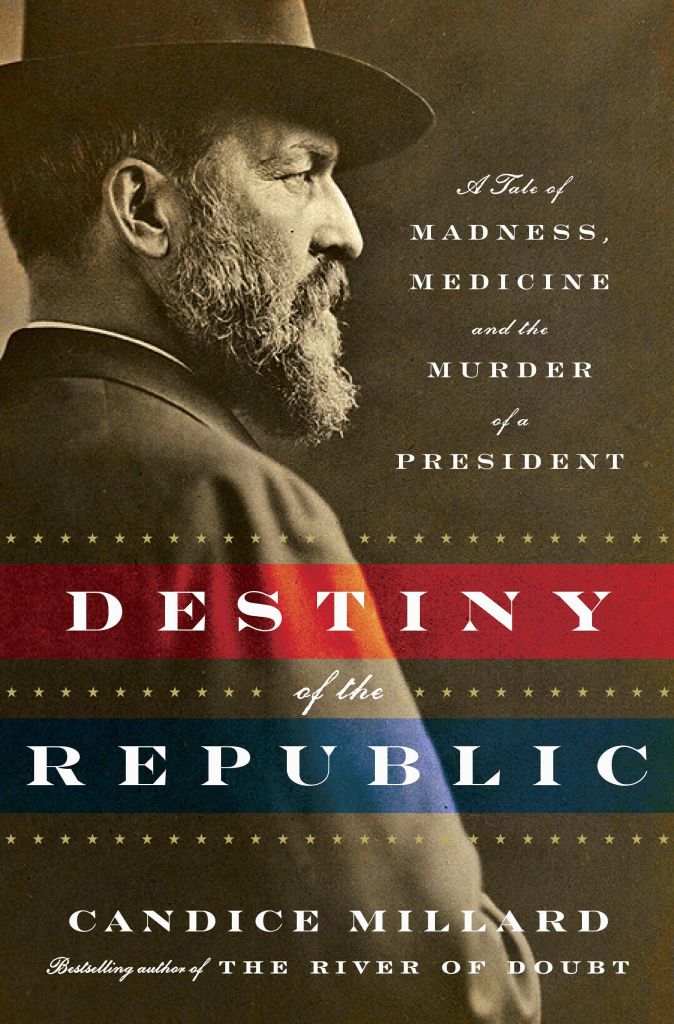
Destiny of the Republic

I recently read Destiny of the Republic by Candice Millard. It’s the story of the assassination of President Garfield in 1881, and it is beautifully written and heartbreaking.

Yes, a history book can be a page-turner. I previously knew very little about Garfield or late 19th-century American politics. And I wasn’t particularly compelled to know more until I saw this book recommended and read some terrific reviews. I’m willing to take a chance on a topic if I can expect remarkable writing from an author. I know a great writer can take a marginally interesting topic and make it fascinating, while a poor writer can ruin even the most promising material. (I’ve joked before that I would rather take an accounting class taught by a skilled and enthusiastic professor than sit through a sex ed class taught by someone who’s an uninspired and poor communicator. Same principle.)

Well, Millard’s writing delivered. She weaves story lines together masterfully. Politics, medicine, technology, and lunacy take their places in a narrative centered on the biography of a man who could have been a truly great president. But he’s no more than a footnote in history because of the delusions of one deranged man and the failings of late 19th-century medicine.

Garfield would easily have survived had medicine been about twenty years more advanced at the time. It wasn’t the assassin’s bullet that killed him. It was the infection caused by the ignorance of the doctors who treated him.

Garfield was a notable scholar and a leader of great character and immense talent. You can’t read this book and not have admiration for him. And that makes the story so much more wrenching, knowing what potential was lost and to such a combination of lunacy and medical incompetence.

This book is a great read for students of history and politics, of course, but also for those interested in medicine and technology. Alexander Graham Bell’s story is woven into Garfield’s as he rushes to perfect a device to help locate the bullet lodged inside the President. Bell at the time was weary of the acclaim and stress his invention of the telephone had brought him, and his quest to help save Garfield plunged him into work he thought would be of more lasting value than his most famous invention.

This book is a good story well told and is a reminder that non-fiction in the hands of an excellent writer can be just as compelling as a novel.

Destiny of the Republic

My bookshelf

I’ve gone to iBooks as my primary reading app. Books just look better in iBooks compared to the Kindle app. iBooks allows for a natural ragged right margin, which is so much more appealing than the jarring full justification of Kindle titles. And I’m kind of digging the scrolling option that iBooks offers rather than standard page turns.

I received a generous iTunes gift card for Christmas from my in-laws. When my wife asked me what my favorite gift was, I said it was the iTunes card. It was a pleasure to ponder and explore book recommendations for a couple of weeks, and I was emboldened to be more adventurous with my acquisitions.

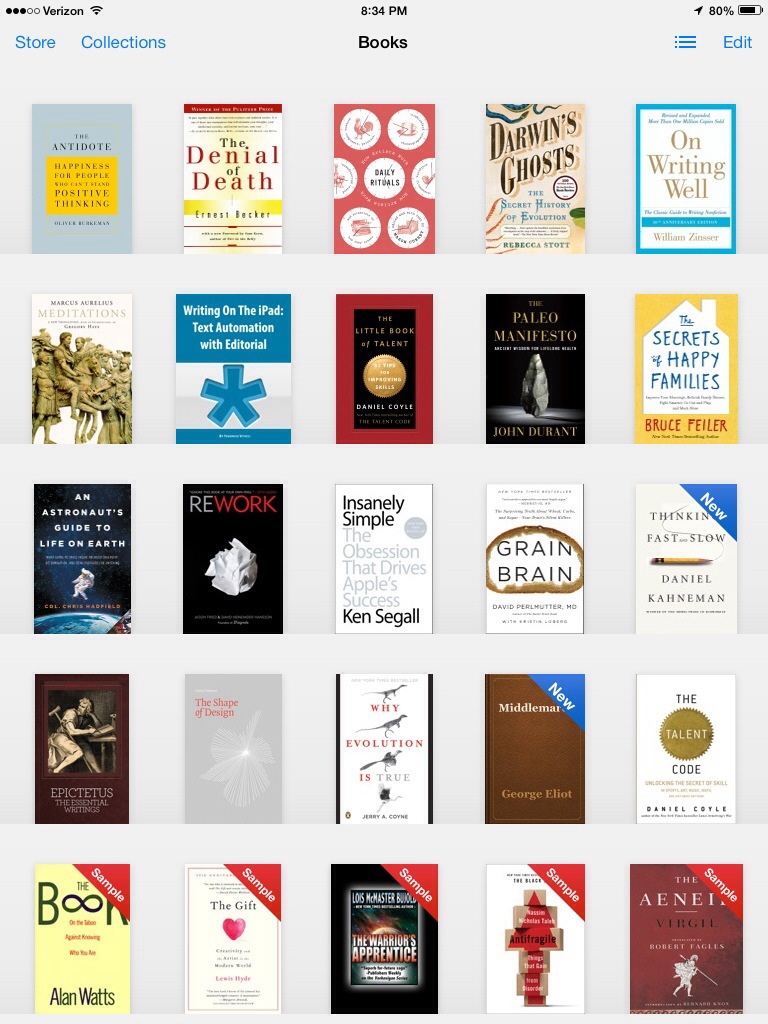
Below is a screenshot of the top of my bookshelf on my iPad. I’m especially enjoying Oliver Burkeman’s The Antidote, a wry look at the positive benefits of negative thinking. It’s a nice complement to my recent readings in the Stoic philosophers.

I recently finished Candice Millard’s excellent Destiny of the Republic, a page-turner of a history book. I’ll post some thoughts on it soon.

I tend to dip in and out of books until one grabs hold and compels me to commit to it. Burkeman’s book is pulling me in now. Looking forward to working my way through this stack.

20140210-232525.jpg

Fascinating

On the original Star Trek television series, Spock would regularly respond to unpleasant or surprising circumstances with a one-word response: “Fascinating.”

Instead of judging or taking something personally or lashing out emotionally, he sought to understand.

What a healthy way to manage your responses. We all have the ability to choose our response in any circumstance. But I know I often default to an automatic, self-centered reaction instead, as if everything is all about me and as if I have no control over my feelings. And I feel like I’ve been more prone to emotional, knee-jerk reactions recently. I’m rapidly approaching 50. I should be getting wiser and more disciplined, right? (I should be fascinated rather than disturbed by that.)

Imagine, though, using the gap between stimulus and response to choose to be curious.

To ask, “I wonder why…?”, will completely reframe your response to something that otherwise might cause anger or frustration.

Next time I get cut off in traffic or receive bad news or deal with a difficult person, I’m going to give my inner Vulcan a try and get curious rather than getting mad.

“Men are disturbed not by the things that happen, but by their opinion of the things that happen.” -Epictetus

star-trek-spock-leonard-nimoy-desktop-wallpaper-other-626603849

Marcus Aurelius: Human life

From Marcus Aurelius’s “Meditations

“Human life.
Duration: momentary. Nature: changeable. Perception: dim. Condition of Body: decaying. Soul: spinning around. Fortune: unpredictable. Lasting Fame: uncertain. Sum Up: The body and its parts are a river, the soul a dream and mist, life is warfare and a journey far from home, lasting reputation is oblivion.
Then what can guide us?
Only philosophy.
Which means making sure that the power within stays safe and free from assault, superior to pleasure and pain, doing nothing randomly or dishonestly and with imposture, not dependent on anyone else’s doing something or not doing it. And making sure that it accepts what happens and what it is dealt as coming from the same place it came from. And above all, that it accepts death in a cheerful spirit, as nothing but the dissolution of the elements from which each living thing is composed. If it doesn’t hurt the individual elements to change continually into one another, why are people afraid of all of them changing and separating? It’s a natural thing. And nothing natural is evil.”

And this is from a Roman emperor, an actual, and rare, philosopher-king.

20140204-223614.jpg

Earthrise

Any image of the earth from space is powerful. That we can take a photo of our planet, the ultimate self-portrait, is remarkable. And seeing our lovely blue, green, and white home set against the blackness of space reminds us how amazingly fortunate we are to be here.

The most famous image of the Earth, and one of the most famous photographs ever, is the “Earthrise” photo the Apollo 8 astronauts took when they were on the first mission to orbit the moon in 1968. This delightful video recreates that moment and captures the excitement those astronauts had when they first saw it.

What if that photo or any other of the beautiful images of Earth from space was in every classroom and in homes and workplaces?* Would seeing the big picture regularly make us even a little more mindful of our fragile, noble place in the universe and make us even a little more kind and big-hearted?

*I’ve just set this image as the desktop wallpaper on my Mac.53858-earthrise

Procrastinator’s guide to awesome gifts

These gifts are awesome and can be given instantly online:

Born Standing Up by Steve Martin – $17.95. This audiobook is narrated by the author, making it even more awesome. Martin strums the banjo between chapters and you hear his story and his jokes in his own voice. Very nice way to spend four hours, especially if you’re traveling during the holidays.

Disney Animated iPad app – $9.99. Was just named iPad app of the year. Perfect for the Disney fan in your life.

Day One app – $3.99. My favorite iPhone app and an awesome way to chronicle your days.

Mastery by Robert Greene – $9.99. One of the three best books I read this year. Greene explores what sets the greatest masters in history apart. How did they become great, and what can we learn from them?

So Good They Can’t Ignore You by Cal Newport – $11.99. Perfect for anyone in your life who is pondering career decisions. I’ve posted about Newport’s provocative approach to building a career around skill and not passion.

The Talent Code by Daniel Coyle – $13.99. This book completes the theme forwarded by the previous two. Coyle investigates talent hotbeds and what their formula is for producing the most skilled people in their fields. Neuroscience ends up offering the key to what it takes to be awesome at something.

Harry Potter HD bundle – $59.99. All eight Harry Potter movies in HD, downloadable in iTunes to play on your iPad or Mac or on Apple TV. That’s $7.50 per movie. Limited time on this discount.

If you’ve got time to ship something, here are some excellent gifts:

Apple TV – $99. My family’s entertainment centers around this tiny device. If you’ve got an iPad or iPhone or Mac, the AirPlay feature is like magic and makes the Apple TV more compelling than a Roku.

Aeropress coffee maker – $26.17. Considered by many coffee nerds to be the best at-home single cup maker. Here’s a lovely little video paying tribute to this plastic contraption and its simplicity. I’m not a coffee drinker, but I use an Aeropress to make my wife’s coffee each morning.

Bodum YoYo Personal Tea Set – $34.95. This is how I brew my tea each morning. It is beautifully designed and an elegant, simple way to enjoy a hot cup of tea.

Things that are beautifully and thoughtfully designed are delightful and offer too rare a pleasure in our culture. There is a grace in great things. The art of a skilled maker – an author or designer or creator of any sort – transfers emotion and gives a gift to the recipient beyond the monetary value of the thing itself. Enjoy finding ways to delight those you love this holiday season.

Ken Robinson: Creating a climate of possibility

Sir Ken Robinson has the most viewed TED Talk ever, and his latest talk on education is a must-watch as well:

Notice his presentation style. He uses no slides, no video. He stands in one place and holds the audience’s attention with his wry humor and short stories and wise insight. His humor charms the audience throughout. The man has terrific stage presence without seeming to try hard. He’s just chatting, in a rather low-key manner, as though he’s talking to a small group of friends. He seems authentic and approachable, and, therefore, very persuasive.

His message, though, is dynamic and powerful. We must do better at educating children. We must free teachers to connect with kids where they are. We must honor and nurture creativity. We must create an expectation and an environment where these young humans can come alive, each in their own way.

Robinson’s final story about Death Valley provides a terrific metaphor and a strong finish for his talk. Flowers blooming in Death Valley proves that it’s not dead, just dormant. So, too, our failing students, or rather students being failed by our education system, have life in them and need only a change in climate and conditions to blossom as well.

The real role of leadership is climate control, creating a climate of possibility. -Sir Ken Robinson

Any great organization, whether a school or business or family, is great primarily because of its culture, its climate. If you’re in charge of something, if you’re a leader or want to be, the most important task is to create and nurture a culture that informs and empowers the people you serve.

And culture revolves around the “why” questions. Ask “why” before worrying about the “how’s”. “Why are we here?” “What’s our purpose?” “Why do we what we do?” Compelling answers to these questions can build and sustain a culture and create possibilities previously unimagined.

via PresentationZen.com

Truthful AND helpful

If it is not truthful and not helpful, don’t say it.

If it is truthful and not helpful, don’t say it.

If it is helpful and not truthful, don’t say it.

If it is truthful and helpful, wait for the right time.

This is attributed to the Buddha. Whoever said it was wise.

I remember sharing this with a group of student leaders who were stuck working together for more than forty hours a week for two months in the summer. Tension and frustrations would mount occasionally, and it seemed noble to want to communicate forthrightly, honestly. But just telling it like it is was not always helpful.

I’ve seen too many people hurt by friends, coworkers, and family members simply “speaking the truth” or “telling you how I feel”.

The truth can hurt, and not always in a constructive way. If the truth is not also helpful, keep it to yourself. Making that judgment call can be tricky at times, but aiming for helpful should take priority over just speaking what you think is true.

Courageous, not fearless

I recently heard someone say they wanted to be “fearless”. Then I heard it again the next night in a movie. A character was admired for being “fearless”.

Imagine never being afraid. Sounds like what Superman must feel like most of the time, minus those occasional encounters with Kryptonite. But, really, how little courage would it take to do awesome things if almost nothing could hurt you and your chances of success are literally sky high?

It’s normal to be afraid and experience fear regularly. I don’t know any sane person who is truly fearless. Being fearless is not the same as being courageous.

Fear is a friend, a friend who’s trying to keep us alive. Our ancestors are the ones who felt fear and responded to it. The long-ago humans who were without fear are the ones who don’t have descendants. Those humans were some creature’s lunch or ended up falling off the cliff our ancestors avoided.

The trick now is to understand our wiring, the inherited proclivities that enabled us to survive, and discern which fears are reasonable and helpful and which are keeping us from being awesome.

To be great at something and to have a remarkable life, you do need to be courageous, not fearless. Courage is not the absence of fear. It’s the willingness to take action in spite of the fear.

Some fears are there to keep you alive. Respect those fears and avoid doing stupid things. Other fears will keep you from coming alive. Consider the resistance you feel when you want to begin some great project or speak up for something meaningful or connect deeply with a fellow human being.

You know that voice that tells you to lie low, to keep your head down, don’t make waves, don’t risk failure? That’s the fear that should summon your courage.

The best way I know to respond to this kind of fear is action. Courage is like a muscle. It needs exercise to get stronger. Take on small moments of fear regularly. Even facing little awkward social fears, like smiling at a stranger or speaking up in a meeting, can strengthen your courage.

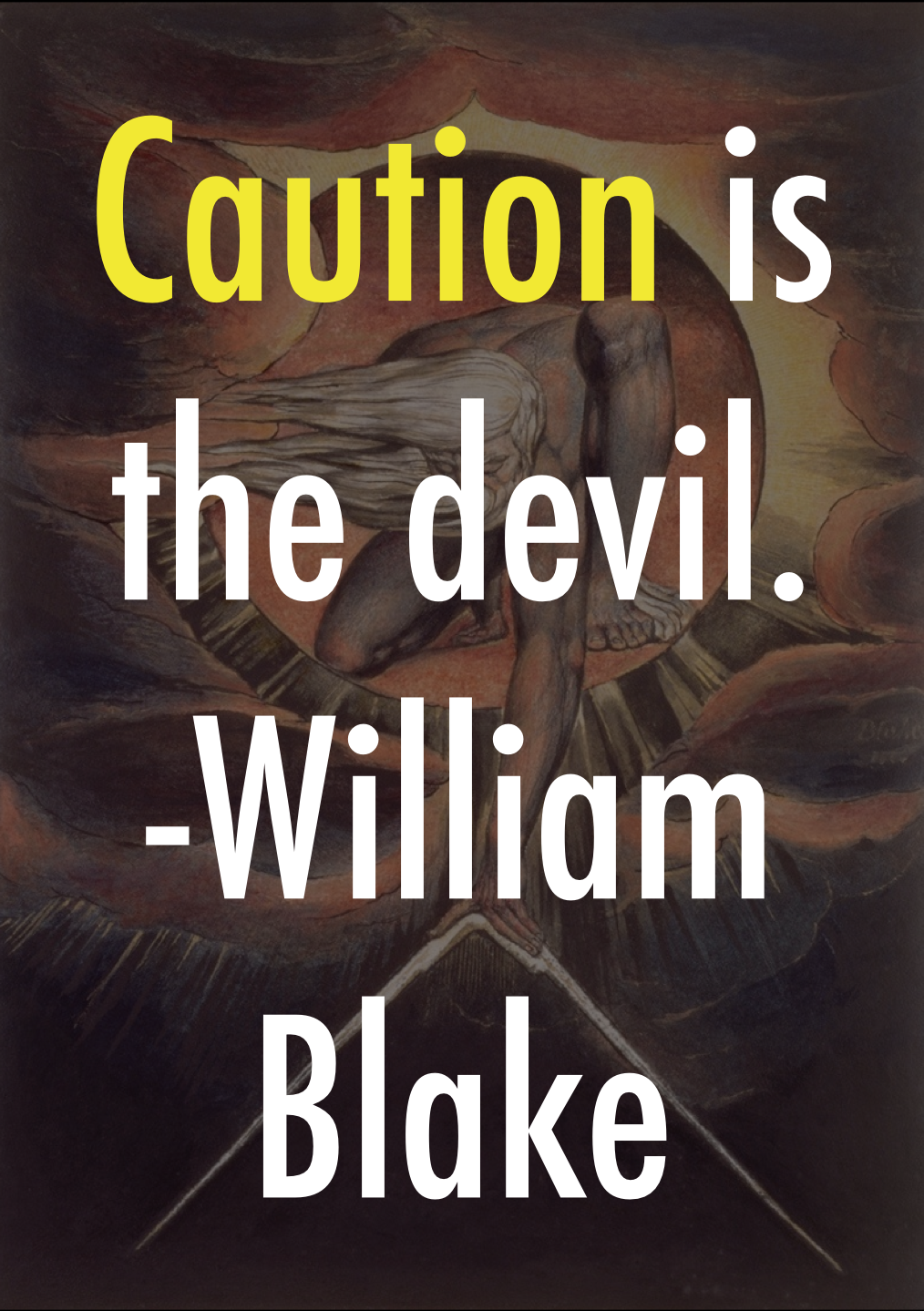
We have to be consistently courageous to overcome our predisposition for safety. I want to have courage. I have too often, though, skirted around hard things for fear of failure or embarrassment. I know my greatest obstacle to being the best I can be is the failure to confront caution — the spirit-suppressing, mediocrity-loving kind of caution — with courage.

Screen Shot 2013-11-26 at 11.49.40 AM

What movies teach kids

I enjoyed this TED Talk by Colin Stokes about the way movies are affecting his young children. He makes some great points about the role of female characters, but his key point is what movies are teaching boys.

As the dad of two young daughters, I want my girls regularly to see strong and smart female characters in movies. (And they love movies.) But I want boys to see that, too. I want the boys and men who will be in my daughters’s lives to see women as just as strong and smart as my girls do.

Certainly, my kids are informed about their possibilities more from their family and the people around them in their actual life, but there’s no doubt the stories they consume affect them.

But it goes beyond just having more female lead characters. The stories need to be smart regardless of the gender of the characters. Some of the Barbie shows I’ve seen my kids watch are filled with girl characters, but they don’t model a level of thoughtfulness and intelligence that make the viewer better for the experience.

The quality of the stories we consume can shape the stories we tell with our lives. I want my girls to get lost in books and movies and comics that inspire wonder and delight and challenge them to live a great story themselves.

Showing my work: Utah

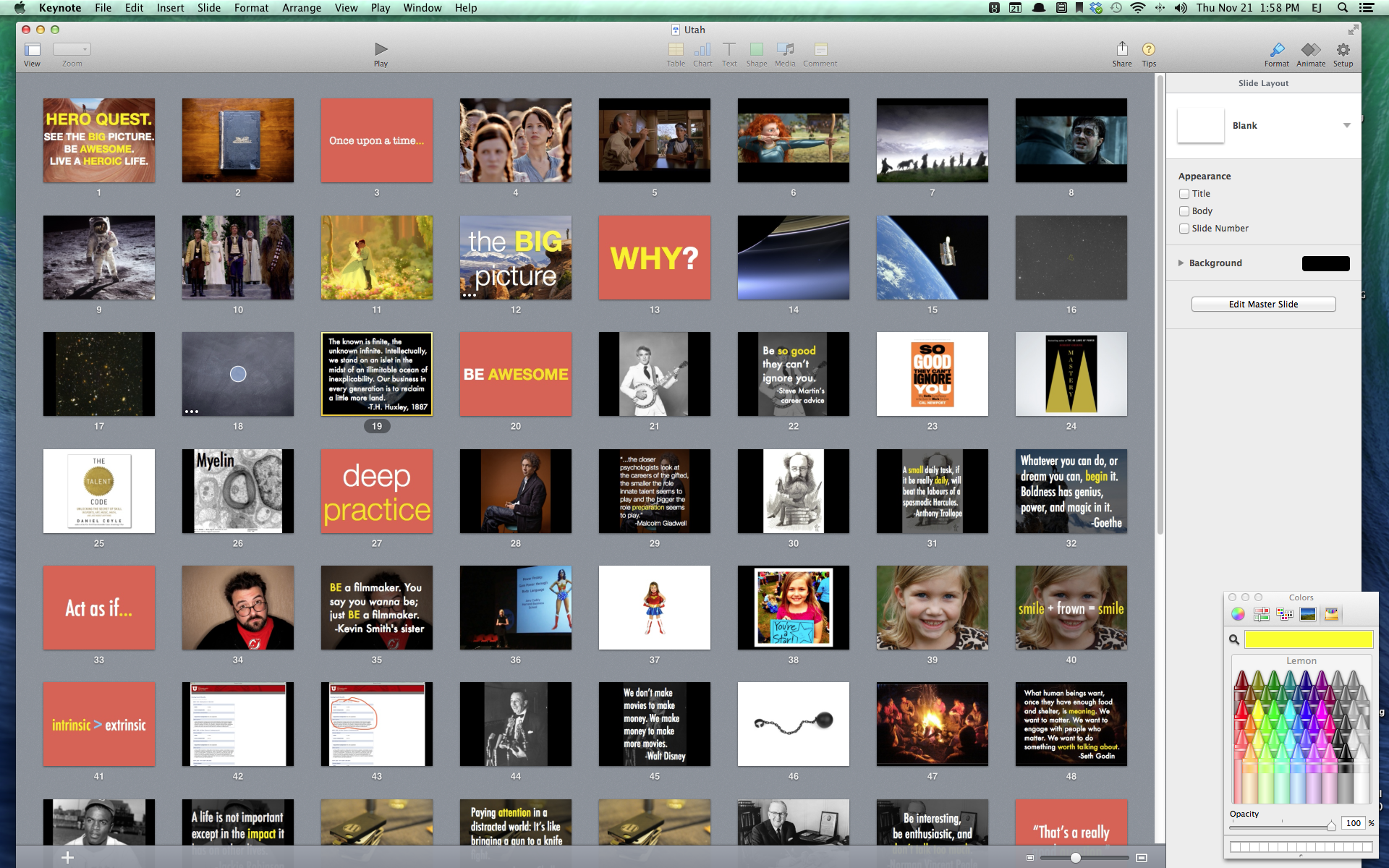
I’m finishing up work on a keynote presentation I’m giving at a student leadership conference in Utah on Saturday. As I’ve done previously, I’m showing my work in progress. Here’s a screenshot of my Keynote app in “Light Table” view, which I think is a magical mode for thinking through ideas and putting together a narrative arc:

Screen Shot 2013-11-21 at 1.58.43 PM

I’ve already discarded and rearranged significantly in the past few days. And with less than two days till my talk, I’m still not satisfied. I take a bit of a kitchen sink approach, throwing everything in, and then I try to pare back to what I hope is a core message for the audience and the occasion. I’m rehearsing today and tomorrow (standing in front of my computer giving the talk to an empty room), and I expect this arrangement of slides and ideas to look somewhat different by the time I get to Saturday. Talking out a presentation shines a light on problems and possibilities that would never appear otherwise.

I asked some of my students this week what college students ought to hear in a talk like this, and they kept mentioning points they’ve gotten from my talks that were connected to specific images on the screen. “Remember that picture of the band on your slide…” This reaffirms my delight in using slides in general, and powerful images especially. I go acoustic and speak without slides occasionally, but I keep coming back to using images for their impact on emotion and on recall.

I keep searching for a way to take these talks to another level, to string together a cohesive narrative rather than just listing interesting, related points. I want the whole talk to tell a story, not just tell a bunch of stories. The more stories, the better, of course. But stories and anecdotes and images should all serve to support the primary narrative. This quote from Kubrick continues to challenge me:

“If you really want to communicate something, even if it’s just an emotion or an attitude, let alone an idea, the least effective and least enjoyable way is directly. It only goes in about half an inch. But if you can get people to the point where they have to think a moment what it is you’re getting at, and then discover it … the thrill of discovery goes right through the heart.” -Stanley Kubrick

The “thrill of discovery”. That’s what I’ll be searching to build into this before standing before the students I’m privileged to address in Utah this weekend. If they’ve got to sit and listen to me for 45 minutes, I want to awaken possibility and give them something worth thinking about and talking about. Okay, back to work, back to the quest.

Hackschooling: 13-year-old explains how he’s remixing his education

This kid is so impressive as he tells his story about hacking his education:

What great poise and stage presence from someone so young. And I admire what he and his family are doing by choosing an unconventional approach to education. I know so little about alternatives to conventional schools, but seeing stories like this one makes me want to explore how best to educate my own kids rather than just defaulting to what almost everyone else does.

via Unschoolery

Carbs are ruining your brain

I just downloaded Grain Brain on iBooks today. It’s a potentially game changing book by a prominent board-certified neurologist, David Perlmutter, who also happens to be a Fellow of the American College of Nutrition.

The basic point of the book: carbohydrates are toxic for your brain. Seriously. Even so-called healthy whole grains and most fruit.

He’s even got traditionally conventional low-fat/whole grain-touting Dr. Oz turning around on this. Here’s Perlmutter on Oz’s show discussing how carbohydrate consumption may be a key culprit in the rise of Alzheimer’s.

Conventional wisdom has been stubborn, but I’m seeing more mainstream acceptance recently of the merits of a low-carb/high-fat diet. Usually, it’s related to fighting obesity and diabetes. This focus on brain health, though, is startling and may make for a double-whammy that begins to change our culture’s attachment to the old, failed emphasis on cutting fat and eating more whole grains.

I know just reading the first few pages of this book has me recommitting to a low-carb approach. Both my brain and my waistline will thank me.

Grain Brain cover

The only competition that matters

The only competition that matters is the one between who you want to become and who you are.

(Can I quote myself?)

Some weeks, I fall short of the week before. But just being aware is enough to make me want to do better the next week. No need to kick myself and make it worse. Just know that funks happen. And then they pass. And then take action to be more awesome next week.

20131005-094459.jpg

Inspiration is for amateurs

An Austin Kleon interview led me to this Brain Pickings post with this from painter Chuck Close:

“Inspiration is for amateurs — the rest of us just show up and get to work. And the belief that things will grow out of the activity itself and that you will — through work — bump into other possibilities and kick open other doors that you would never have dreamt of if you were just sitting around looking for a great ‘art idea.’ And the belief that process, in a sense, is liberating and that you don’t have to reinvent the wheel every day. Today, you know what you’ll do, you could be doing what you were doing yesterday, and tomorrow you are gonna do what you did today, and at least for a certain period of time you can just work. If you hang in there, you will get somewhere.” -Chuck Close

I’m still trying to learn this. Too often I’m waiting for the right mood, for an idea to grab me before getting busy making something.

I need to “just show up and get to work” every day and maybe working will lead to me grabbing an idea rather than the other way around. And if I do nothing but bad work, it’s better than no work. And bad work just might lead to something that’s kind of good. You can’t get to great without starting somewhere. Starting is the essential thing.

I keep coming back to Gretchen Rubin‘s starkly simple reminder from the potent little book on work habits, Manage Your Day-to-Day:

20131001-112815.jpg