The infinity of past and future gapes before us

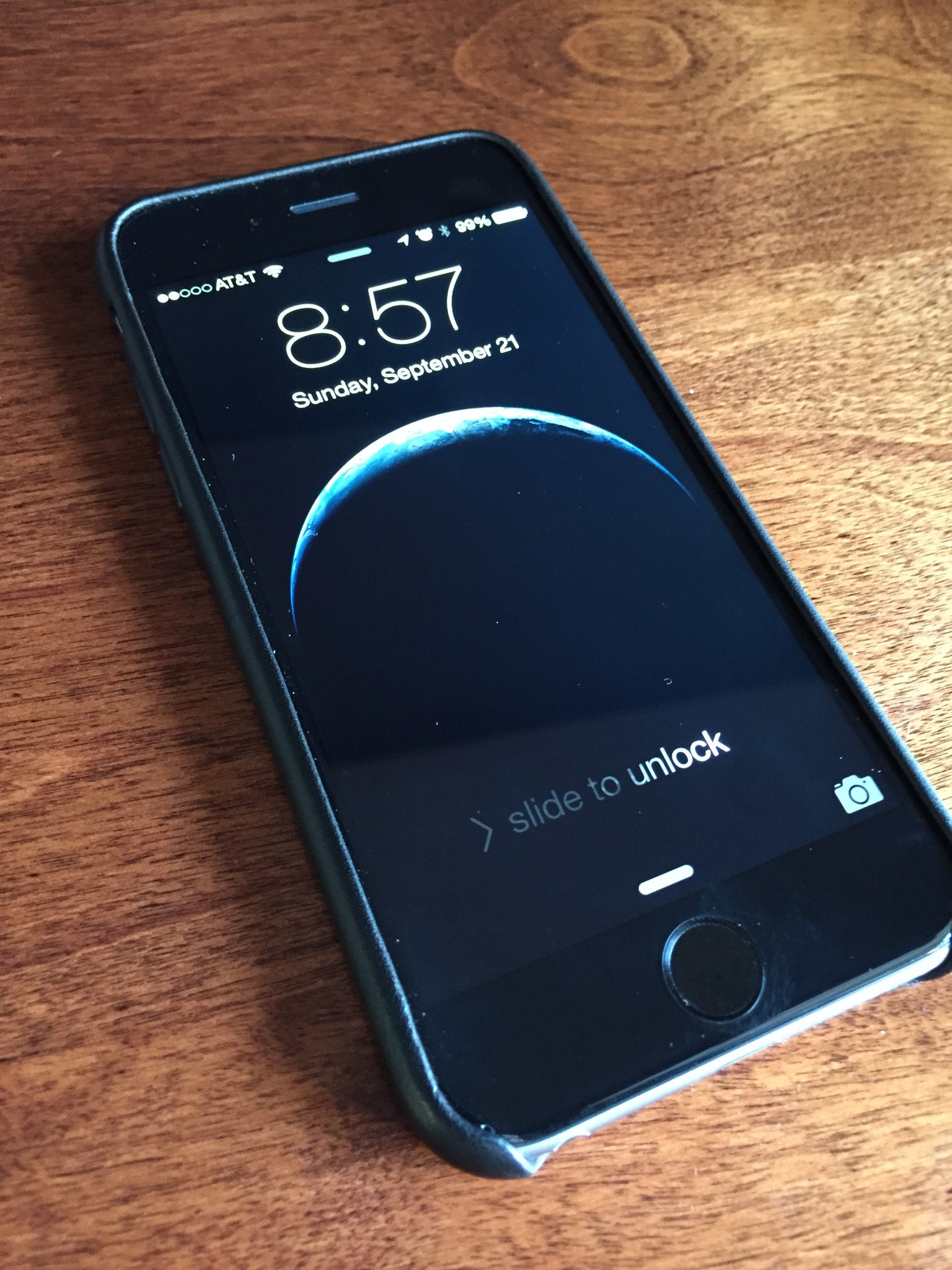
IMG_5648.JPG
Meditations 5.23-24:

23. Keep in mind how fast things pass by and are gone—those that are now, and those to come. Existence flows past us like a river: the “what” is in constant flux, the “why” has a thousand variations. Nothing is stable, not even what’s right here. The infinity of past and future gapes before us—a chasm whose depths we cannot see.
So it would take an idiot to feel self-importance or distress. Or any indignation, either. As if the things that irritate us lasted.
24. Remember:
Matter. How tiny your share of it.
Time. How brief and fleeting your allotment of it.
Fate. How small a role you play in it.

Get back up

Meditations 5.9:

Not to feel exasperated, or defeated, or despondent because your days aren’t packed with wise and moral actions. But to get back up when you fail, to celebrate behaving like a human—however imperfectly—and fully embrace the pursuit that you’ve embarked on.

No need to be down on yourself for failing to be perfect. Accept that you are imperfect. Embrace it, even. But get up and keep aiming for the ideal you have for yourself. Be a human and stand up and try again. This could be the best day of your life.

Maddux and heartbreak and writing with movement

This long feature on SB Nation by Jeremy Collins – Thirteen Ways of Looking at Greg Maddux – is beautifully written and heartbreaking.

Yes, it’s about Greg Maddux, my favorite baseball player and one of the most enigmatic, masterful athletes of our generation. But it’s mostly about the author coming to terms with the tragic loss of his childhood friend, a friend who was obsessed with and inspired by Greg Maddux.

Maddux was not some physical freak who overpowered batters with strength. He just out-thought and out-executed those he faced. He was a mere mortal who through his own will and savvy and plodding discipline became the best in the game. And he approached the game with an apparent detachment that belied the ferocity with which he performed so fully in the present. When he misfired, a loud profanity punctuated the moment. And then an immediate reset. Back to the moment at hand, calm, calculating. His approach was a Stoic one, dealing with only what he could control and shaking off anything out of his hands.

The story Jeremy Collins tells ties this ideal that Maddux represented, control and mastery, to the tragedy of his friend who reached for that ideal as he grasped for hope in reorienting his young, ill-fated life.

Collins’s piece is well worth the time to read it. You know when you’ve read something that was written with both heart and mastery. This bit of writing is Maddux-like in its artistry. It’s a fitting tribute to a lost friend and to an iconic, inspiring hero. Like a pitch from Maddux, it knicks the edges and moves unpredictably and so effectively.

The elevator pitch, the tweet, and clarity of purpose

Screen Shot 2014-10-01 at 4.08.29 PM

Can you pitch your idea or make your point in the length of an elevator ride? That’s been a long-standing and effective thought experiment to help determine if you’ve thought clearly enough about your plan and can articulate it simply and quickly.

So, if you’re working on a speech or a business idea or a movie script or trying to start a movement to change the world, consider the elevator test.

Imagine you’re giving a talk at a conference. A fellow attendee gets on the elevator with you and sees the “Presenter” ribbon on your name badge. He lets you know he’s tempted to escape the conference during your session and go play golf or take a nap and asks what he would miss from your talk. What would be your response? What will your talk accomplish that would be of value to this wayward golfer? What will offer him enough value to make him delay his escape and stay for your presentation?

If you can’t come up with a short simple statement of your intended purpose and one that offers something of value to the prospective audience member, you need to go back to the beginning and rethink just why it is you’re doing this presentation. Or starting a business. Or writing a screenplay. Or starting a movement.

Or, instead of an elevator pitch, my 21st-century, connected friends, consider the challenge of tweeting, in 140 characters or less, your purpose, your mission, your goal. Can you say in just a few words, within the constraints of a tweet, what you hope to accomplish? If not, get busy asking “Why?” and hone and sharpen your thinking to come up with as clear and simple a statement as you can.

Here, for example, in tweet form (and exactly 140 characters thanks to the added hashtag and a stray space, because I’m just OCD enough), is my aim for a talk I’m giving this week to a couple of college classes:
Screen Shot 2014-10-01 at 4.08.54 PM

So many companies and organizations have some committee created mission statement that is either unknown and ignored or is so unwieldy as to be meaningless. What if your mission statement was tweetable and so direct and clear that everyone in the organization knew it and connected with it?

Imagine tweeting your own life’s purpose or the values and goals of your family. Not that you need to actually get on Twitter and post these things, but the effort to zero in on a crystal clear statement on the key “Why’s” in your life potentially can lead you to unparalleled clarity and action.

Talk with, not at

IMG_1244.PNG
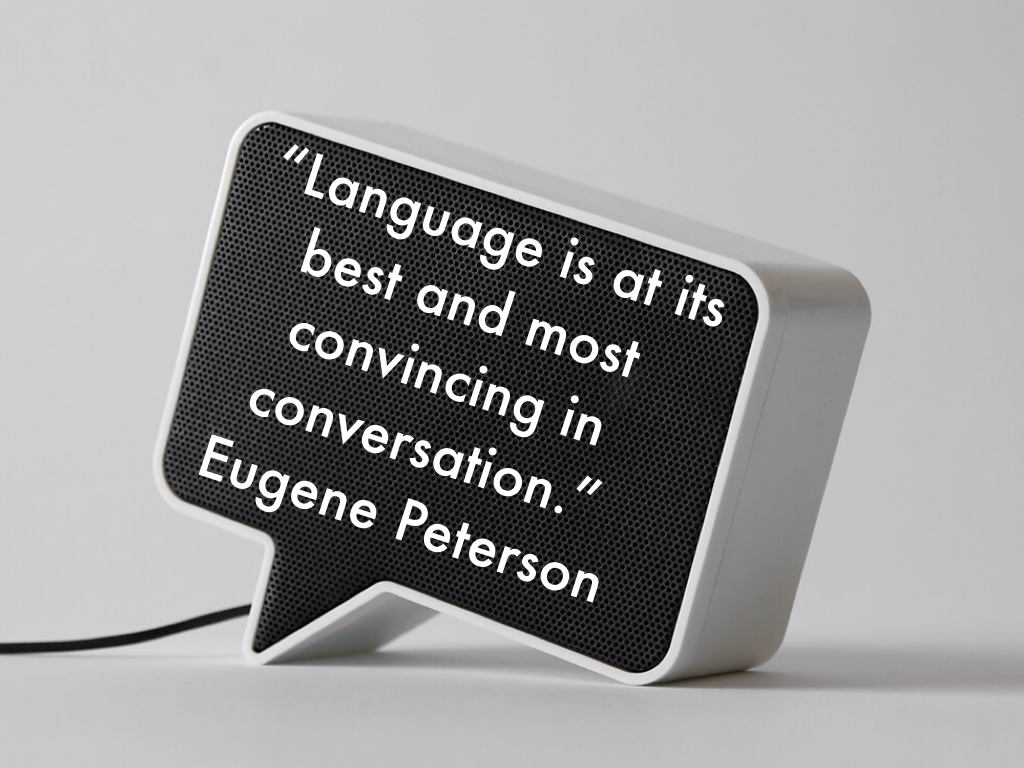
Even when standing before an audience, no matter the size, make it feel like a conversation. Talk with people, not at them. Ask questions. Even rhetorical questions feel conversational without actually needing a response. Make eye contact. Connect and respond to the vibe of the room.

And in interpersonal communication, master the nuance of listening with the intent to understand. Probe and question and clarify. See if you can articulate the other’s perspective effectively. When they get that you get them, they will then be open to getting you.

The best conversationalists I know don’t actually impress with what they say. It’s what they ask and how they listen that makes them shine and makes me value their presence.

Conversations aren’t contests. They are about connection and understanding and shared meaning. Talk with others, not at them.

SpeechCraft: Showing my work

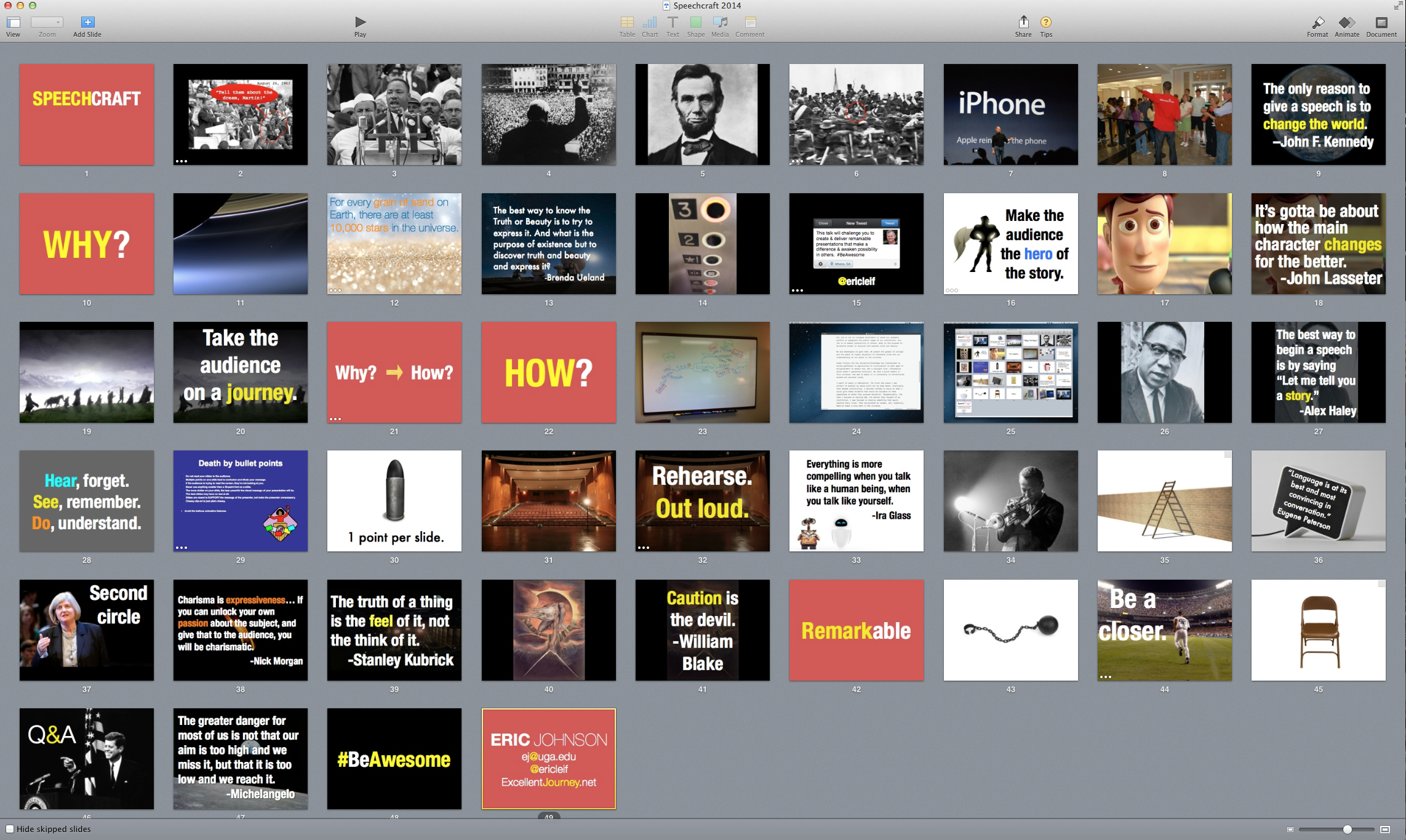
Screen Shot 2014-09-29 at 5.12.44 PM


I’m speaking in a couple of college classes this week about presentation excellence. It’s a favorite topic, but it’s also especially challenging when the audience is expecting excellence by virtue of the topic alone. If you’re giving a talk about how to give talks, you better be good.

I’ve tweaked my slides on this over time. The screenshot above is of my final “light table” view when I shipped off the presentation to the grad student who will load my slides tomorrow.

I was asked to send a Powerpoint version for use in the class. I haven’t used Powerpoint actively in years. When I converted my Keynote to Powerpoint today, I had to go back and clean up format and animation errors due to the conversion. And I was reminded how poor an app Powerpoint is compared to Keynote. Powerpoint just seems like a mess. The design looks amateurish and cluttered. It certainly made me appreciate just how much I enjoy working in Keynote which is simple and clean yet filled with thoughtful, smart touches like its grid system and gorgeous animations.

I rarely say “No” to an invitation to speak. Having a speaking gig out there forces me to engage my creative mind on the search for what to say and how to say it. Few things lead me to regular flow states like getting immersed in preparation to stand in front of an audience. Even if the audience gets nothing from me, I certainly have grown a little from my attempt to engage with them.

All life is an experiment

​​Do not be too timid and squeamish about your actions. All life is an experiment. The more experiments you make, the better. What if they are a little coarse, and you may get your coat soiled or torn? What if you do fail, and get fairly rolled in the dirt once or twice. Up again, you shall never be so afraid of a tumble. –Ralph Waldo Emerson

ht Farnam Street

Give it a go. Try something. Try anything other than the usual, boring and safe path you always take. Experiment a little and see what happens. So what if you make a bit of a mess. At least that would be interesting and a chance to learn. It beats sleepwalking in the rut you know too well.

“The more experiments you make, the better.”

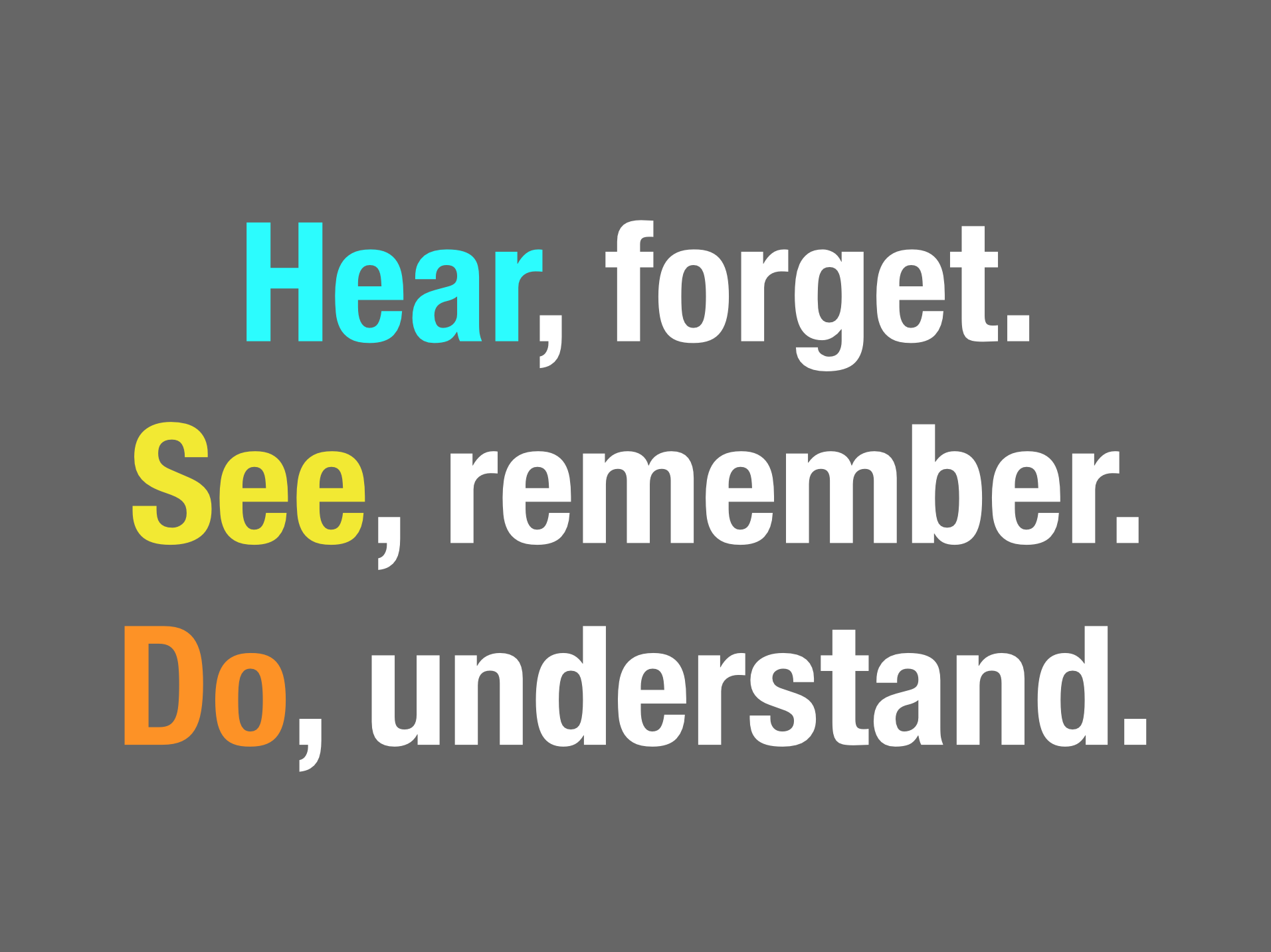
Hear, forget. See, remember. Do, understand.

Screen Shot 2014-09-26 at 11.02.31 AM

If you want something to stick, you’ve got to take action. Thinking about it or learning about it probably won’t be enough to make meaningful change. Doing something, though, could make all the difference.

Listening to a lecture on cooking won’t make you a chef. Watching the Food Network won’t either. But, crack some eggs and add some heat and you’ll at least be taking the first step on the path.

Choose the active over the passive. Action can make magic happen.

And if you’re trying to teach people or spark some kind of change with a presentation, know that what you say will only go in so deep. What you show them will matter more, and what you get them to do or figure out for themselves could lead to true understanding.

Talk like a human being

IMG_1243.PNG
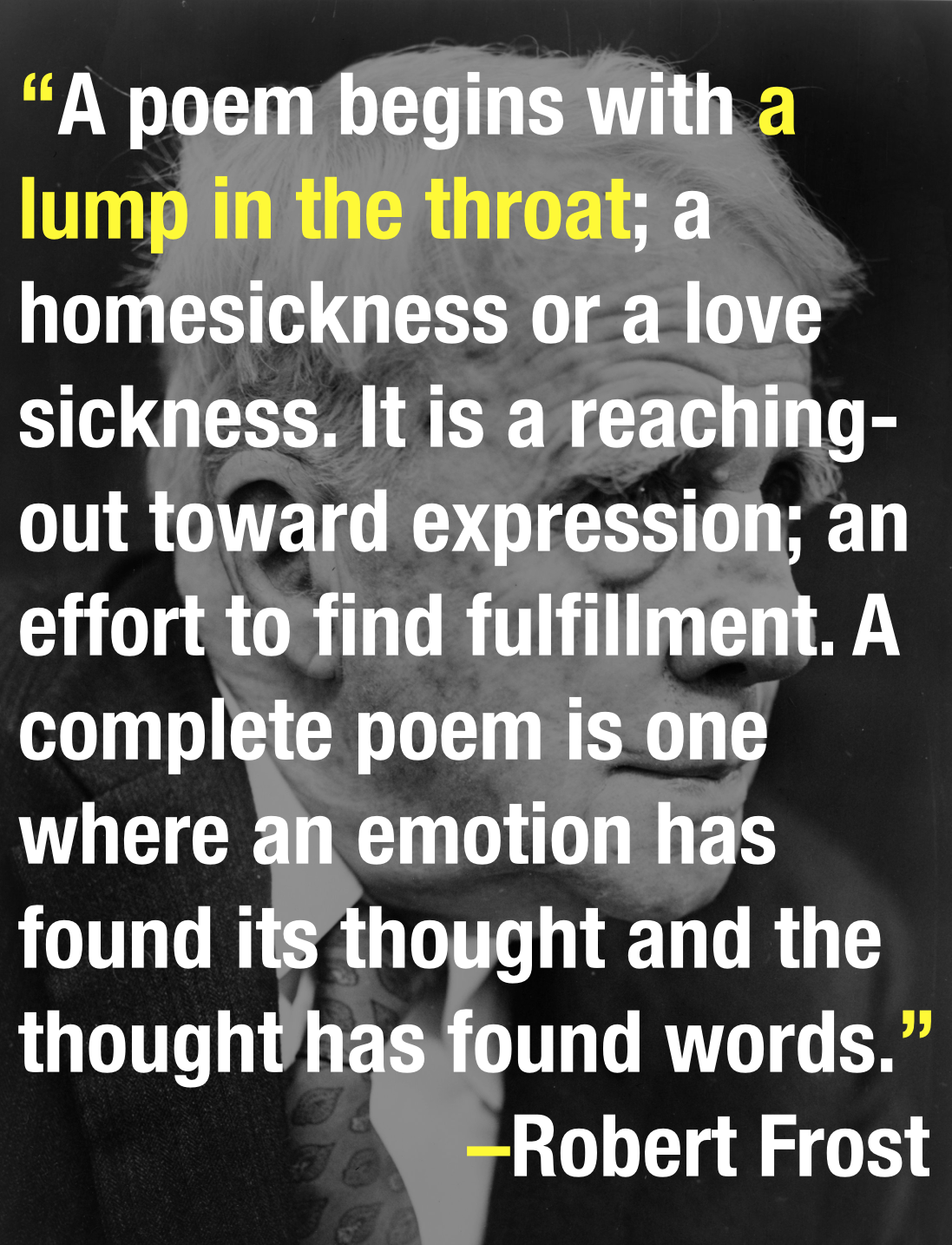
Especially when speaking to an audience it’s tempting to try to put on an authoritative voice, to speak like someone you’ve seen on TV or in a movie. That approach usually comes across as canned or forced and often robotic and soullessly flat.

Just be who you really are. Speak like a human, not like some imagined notion of what someone speaking publicly should sound like.

Picture yourself in the audience. Don’t you appreciate a speaker who seems comfortable and authentic and even a little vulnerable? You don’t have to be perfect or fake being perfect. Talk about what you care about and what is true for you and connect with the audience with passion and compassion. Tell stories because that’s what humans do.

And have the courage to uncork some emotion as you stand before your fellow humans. We all are leaning in, at least on the inside if not physically, hoping you will awaken something wonderful in us.

Do everything as if it were the last thing you were doing in your life

Meditations 2.5:

Concentrate every minute like a Roman—like a man—on doing what’s in front of you with precise and genuine seriousness, tenderly, willingly, with justice. And on freeing yourself from all other distractions. Yes, you can—if you do everything as if it were the last thing you were doing in your life, and stop being aimless, stop letting your emotions override what your mind tells you, stop being hypocritical, self-centered, irritable. You see how few things you have to do to live a satisfying and reverent life? –Marcus Aurelius

iPhone 6 first impressions

IMG_5542.JPG

I received the new iPhone 6 on Friday and have been impressed with this latest and greatest iteration of the iPhone. The hardware design and build quality are as solid as any device I’ve used. It’s a delight to hold this phone. I much prefer the rounded edges of the 6 to the sharp corners of the 4 and 5. And it’s incredibly thin without making it feel fragile.

I’m loving the new screen size. 4.7″ is not too big. And the display quality is phenomenal! I’ve been ignoring my iPad mini, preferring for now to read on this device instead.

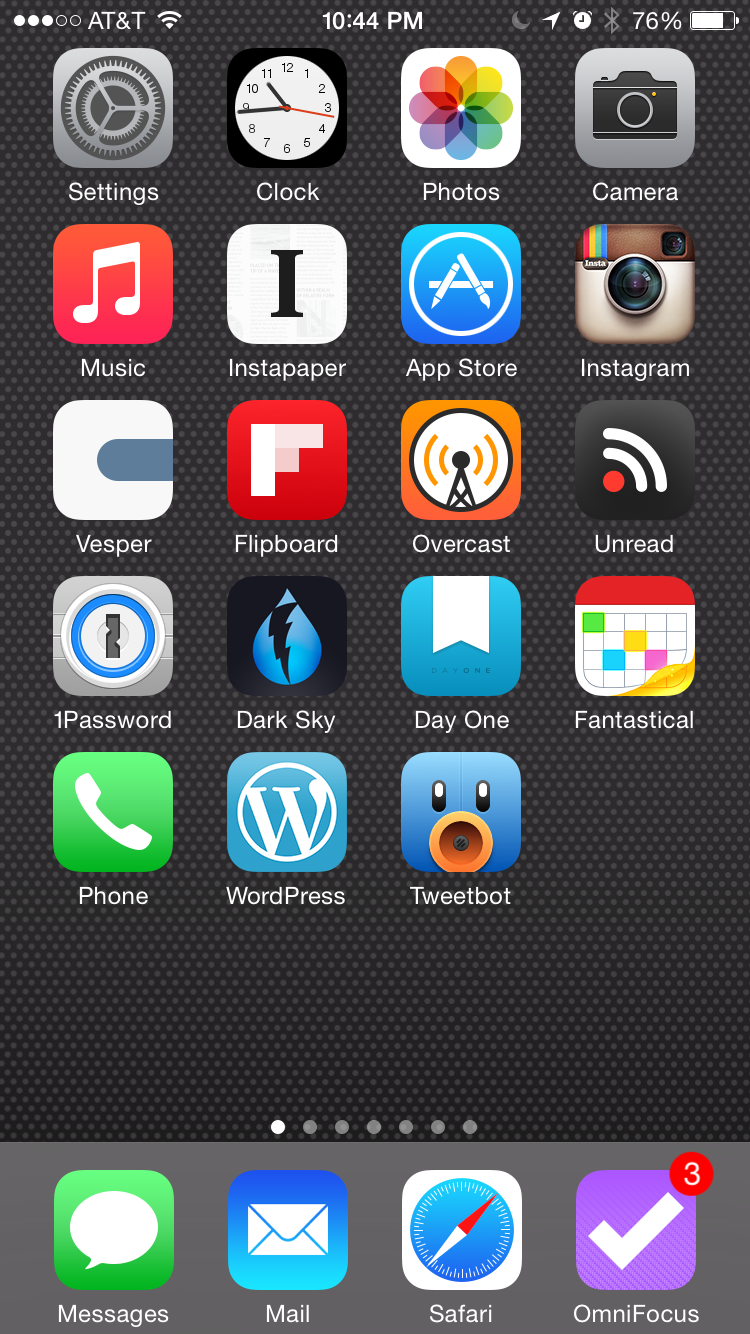
My old eyes are appreciating the new zoomed view option which shows less content, but it’s larger. Here’s my home screen:

IMG_5549.PNG

My wife prefers the standard view which shows more content a little smaller:

IMG_5550-0.PNG

This device is fast. Every task seems snappier. I haven’t experimented much with the camera yet, but it’s getting rave reviews.

I’m really liking Apple’s leather case. It’s sleek and adds very little heft but provides a good sense of grip. And it just feels nice. We will see how it holds up. I was anti case for my 3G and 4, but I’ve come to appreciate having a case just for improved grip.

IMG_5541.JPG

So far this new iPhone is exceeding my already high expectations. I composed this post on the phone instead of the iPad. I’m curious if the slightly larger and strikingly sharper display will continue to have me ignoring my non-retina iPad mini more often.

Be enthusiastic

Screen Shot 2014-09-19 at 4.46.30 PM

If you’ve got a choice – and you do – choose to care and have the courage to uncork some emotion.

We walk numbly through most days, oblivious to the wonders around and within.

Don’t wait until you feel inspired to act with enthusiasm. Inspiration needs to be summoned by action. Act like you do care, and the emotions just might follow. Speak with energy. Work with purpose, as if what you are doing is a meaningfully sacred act that could make someone else’s life better, too, and even ripple into generations to come.


Beyond not knowing

Any line of questioning leads to the ultimate: “I don’t know”. –Adam Savage, Mythbusters

The latest episode of the TED Radio Hour includes the line above from the Mythbusters guy.

Curiosity moves us forward. Some questions may be unanswerable, for now. But keep asking.

“Why is the sky blue?” Centuries ago the answer would be a guess or something way off course handed down with misplaced certainty but no evidence.

Now, science can tell us the sky is blue because of Rayleigh scattering. (I have to Google that question periodically, and I still struggle trying to explain it to my kids.) But that answer is now a jumping off point for even more questions, which will lead ultimately to “nobody knows”.

Scientists seem pretty sure of the big bang, but what was before that? No one knows.

Pushing towards uncertainty and not-knowing can be scary and frustrating and exhilarating. My level of certainty on so many things is much shakier now than it was twenty years ago. And it’s certainly made life more interesting.

The path of honesty and curiosity and courage regularly will lead to “I don’t know”. And that is where possibility comes alive as we push a little further beyond comfort and past not-knowing.
 

Dancing animals

Merlin Mann just posted this fabulous quote from a Kurt Vonnegut interview:

“[When Vonnegut tells his wife he’s going out to buy an envelope] Oh, she says, well, you’re not a poor man. You know, why don’t you go online and buy a hundred envelopes and put them in the closet? And so I pretend not to hear her. And go out to get an envelope because I’m going to have a hell of a good time in the process of buying one envelope. I meet a lot of people. And, see some great looking babes. And a fire engine goes by. And I give them the thumbs up. And, and ask a woman what kind of dog that is. And, and I don’t know. The moral of the story is, is we’re here on Earth to fart around. And, of course, the computers will do us out of that. And, what the computer people don’t realize, or they don’t care, is we’re dancing animals. You know, we love to move around. And, we’re not supposed to dance at all anymore.”

“We’re here on earth to fart around.” Delightful, right?

And I’m okay with this less than grand view of our role in the universe. Actually, “farting around” is a good description of what fills some of the best parts of our days. Even what we consider serious pursuits don’t amount to much in the really big picture of the vastness of space and time.

I wake up on a Saturday morning with no agenda, nowhere I have to be, and I get restless. I want to just go somewhere and have a mission or errand to occupy my morning. I want to be in motion.

We all are born to move and do and act and dance. No big deal. Life is not a race or a contest or even a quest. Life is like music. It’s our job to dance.

iPhone week and the fleeting allure of great gadgets

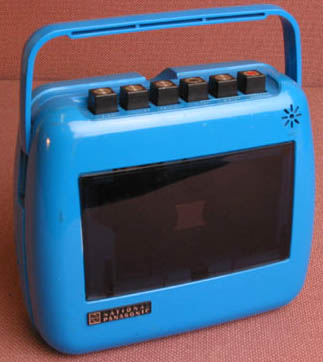
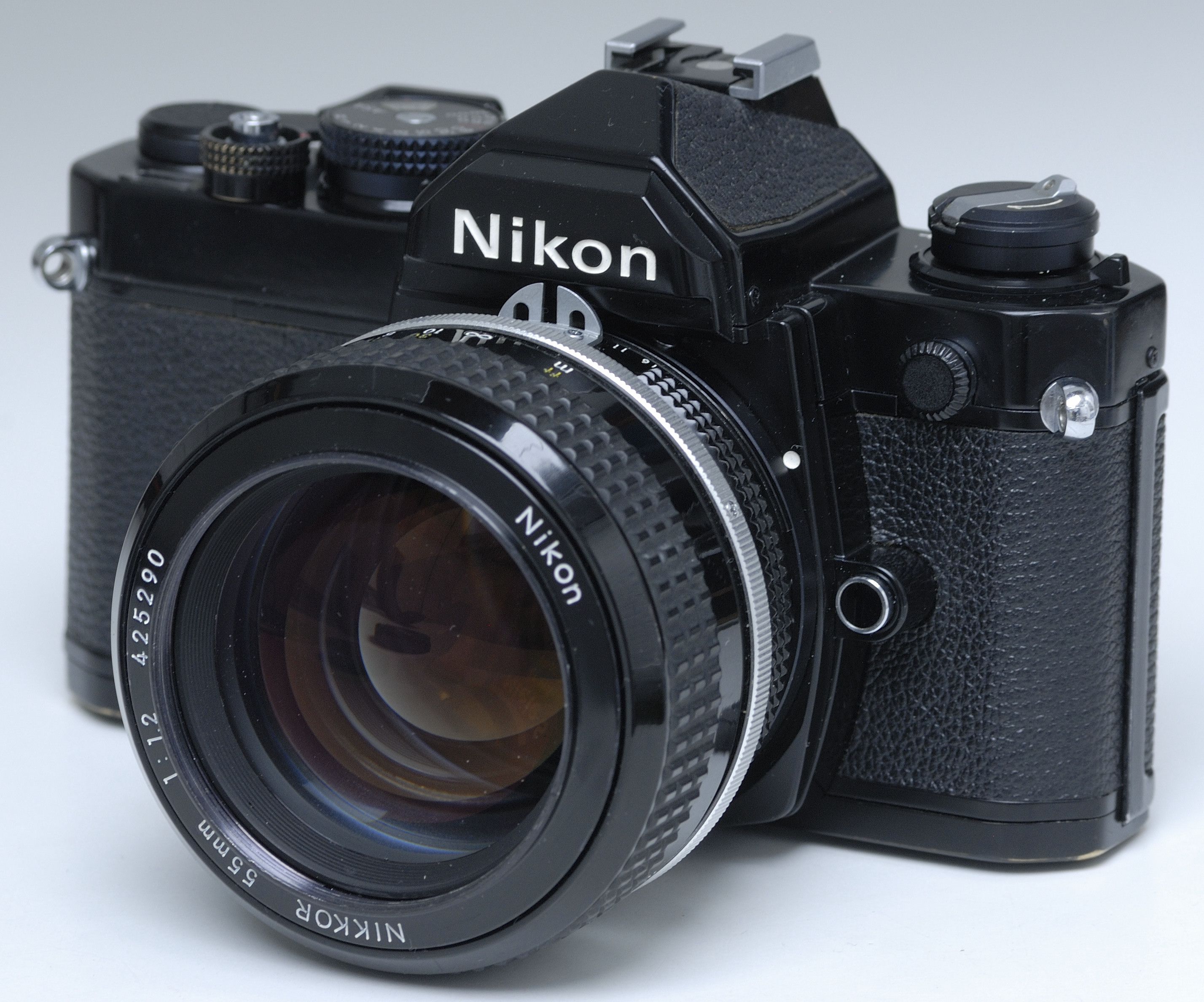
I’ve loved gadgets since I was a kid. There was my blue plastic cassette recorder I played with in the car on the way to Disney World. I remember recording McCartney’s Live and Let Die from the car radio. I also as a kid had a nifty solar-powered calculator and a classic record player and some excellent film cameras including a Polaroid and a Kodak “pocket camera”. I received a Nikon FM SLR for Christmas in 9th-grade and spent the rest of high school roaming the halls and sidelines as the yearbook photographer. I’ve got that camera packed away in a closet somewhere. And it still works great, but film seems ancient now.

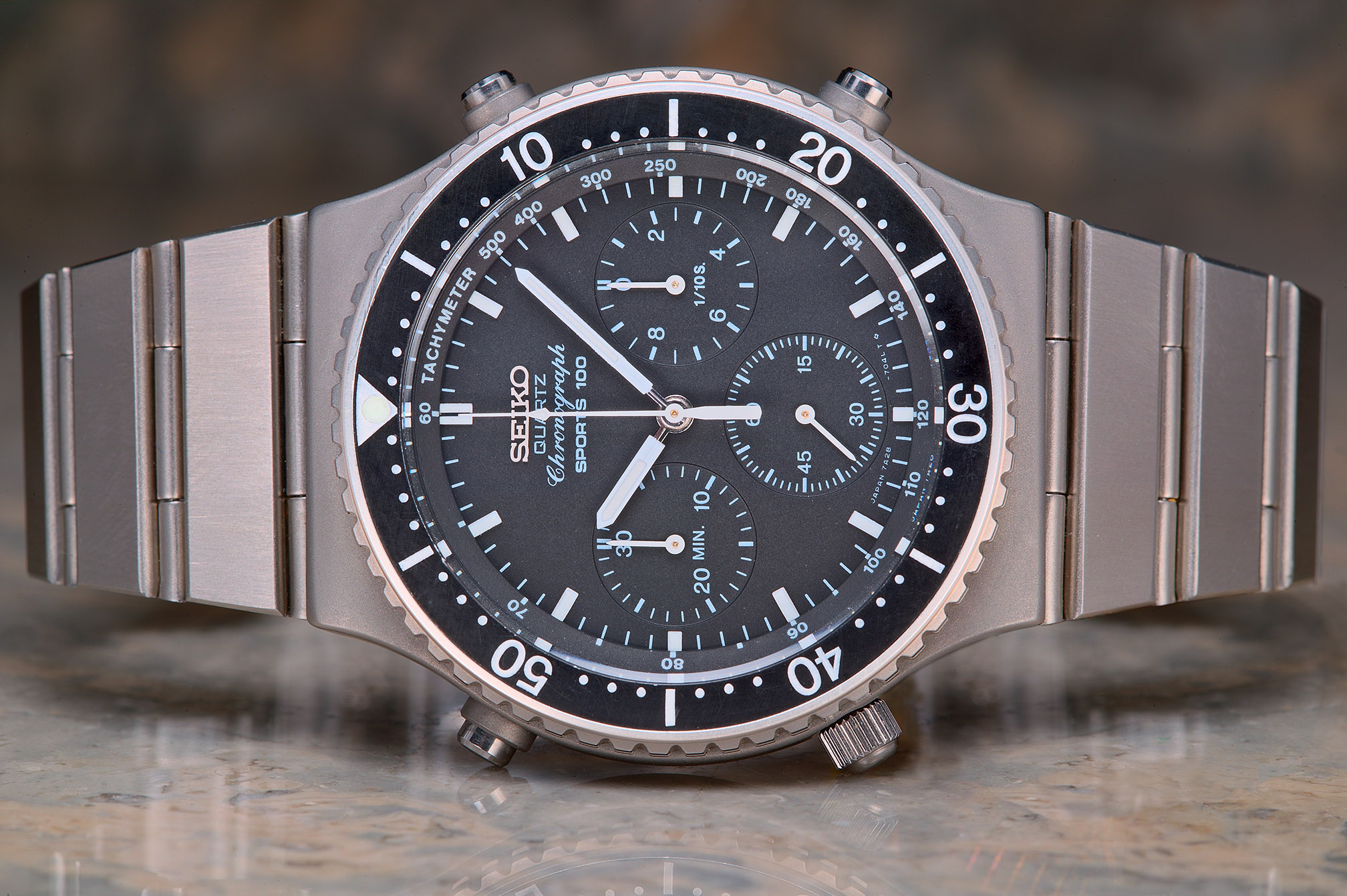
For high school graduation my parents gave me a gorgeous Seiko watch that I had first eyed in a full page magazine ad. That watch was with me throughout college. I lost it somehow a few years later when I was working in D.C. I last remember having it as I was taking my parents and grandmother on a White House tour. Later, after coming up empty with the lost-and-found desk at the White House, I couldn’t help but imagine President Reagan wearing it, proudly admiring my Seiko on his wrist, claiming finders keepers.

One of my favorite gadgets of the pre-iPhone era was the Palm V. It was a svelte little electronic organizer with lovely lines that just felt great to use. I went through a few different Palm devices until the iPhone appeared.

My first Apple device, though, was the distinctive iMac G4 with the white base and the screen on a movable arm. It’s such an appealing design we still keep it on a desk in our home even though it’s not been turned on in years. That Mac led us to the iPod (3rd generation) which eventually put us on the iPhone path.

I’ve been an iPhone user since 2008. I stood in line for hours during the opening week of the 3G release. Bless my sweet wife who waited patiently in the mall with our two young kids. She had no idea it would take so long or cost so much. I loved that phone. I was in awe of what it could do, especially compared to any other device I had ever owned. It did feel magical.

I’ve upgraded every couple of years since then. The iPhone 4 supplanted the 3G as my favorite device ever, and my iPhone 5 has been a solid improvement over the 4.

And now I’ve already preordered the iPhone 6. I went with the 4.7” screen with 64 GB of storage in “space gray”. The 6 Plus is way too big for my tastes. I’m even leery of the screen size of the smaller 6 and worried that it may be too unwieldy compared to the 5. My wife, especially, was fond of the size of the iPhone 5.

I think we’re both going to be fine with the new size, and we will probably wonder why we were even hesitant about it. I’m thrilled with the increase in storage, though. My wife’s 32 GB iPhone 5 stays full with photos and videos. My current phone only has 16 GB, not nearly enough. Fortunately, Dropbox and iCloud have enabled me to keep most of my stuff in the cloud and off my device until I need it.

I realize these devices are frivolous and inessential and have incredibly short reigns as our most cutting edge gadgets. And yet they’re amazing. My phone is one of the few things I have with me almost all the time. It’s in my pocket or on my desk or in my hand or on my nightstand while I sleep. It’s my window to the world and to the people I love. It’s my journal and calendar and to-do list and the first thing I reach for when a creative spark strikes. And it’s an amazing camera that’s helping me chronicle and remember my family’s big and small moments.

I’m not obsessed with my phone, and I don’t let it distract me from being present with the real live people I’m around every day. I keep it on mute and keep it out of sight when I’m in conversation.

I don’t have many material desires. But I do appreciate the grace of great things, and I do love having the most current computer technology. As brilliantly designed as these devices are, though, it’s stunning how fleeting their utility is. My old-school safety razor, for example, will be just as handsome and useful fifty years from now. My chef’s knife and cast iron skillet could be used someday by my future grandchildren. But the new iPhone that’s arriving at my door on Friday will be out of date a year from now when the next one is released.

I don’t mind, though. Such is the way of technology. The allure of having the best right now, especially for something that has such a prominent role in everyday routines, is worth it for me. This pocketable, best-in-its-class gadget regularly, consistently provides moments of delight and utility in a way that no other thing could. A mere thing, thoughtfully designed and well executed, can add genuine value and enhance the enjoyment of my days. I’m looking forward to seeing the UPS truck on Friday.
Coach Wooden: Make the best of the way things work out

“Things work out best for those who make the best of the way things work out.” –John Wooden

Coach Wooden would have made a good Stoic. He focused his attention and his team’s on what was in their control. He didn’t focus on the opponent. He didn’t focus on winning. He focused on maximizing his team’s potential, on bringing out their best.

No matter the circumstances, you can still control how you respond. There’s no use in resisting what is. Put up a fight, sure. But fight to make the best of whatever circumstances you’re facing.

Holy curiosity

Don’t think about why you question, simply don’t stop questioning. Don’t worry about what you can’t answer, and don’t try to explain what you can’t know. Curiosity is its own reason. Aren’t you in awe when you contemplate the mysteries of eternity, of life, of the marvelous structure behind reality? And this is the miracle of the human mind—to use its constructions, concepts, and formulas as tools to explain what man sees, feels and touches. Try to comprehend a little more each day. Have holy curiosity. –Albert Einstein

Pursue truth no matter the cost.

Accept whatever happens

Meditations 4.33:

Everything fades so quickly, turns into legend, and soon oblivion covers it.
And those are the ones who shone. The rest—“unknown, unasked-for” a minute after death. What is “eternal” fame? Emptiness.

Then what should we work for?

Only this: proper understanding; unselfish action; truthful speech. A resolve to accept whatever happens as necessary and familiar, flowing like water from that same source and spring.

What if you embraced whatever happens as if you chose it? Even – especially! – if it is something that seems like a setback.

You have so little control over almost everything external to you. But you always have control over how you respond. If you choose to be curious, intrigued, or fascinated instead of perturbed, discouraged, or angry, imagine how everything changes.