Just keep scrolling

Rands in Repose linked to Michael Sippey who linked to Anil Dash’s post from last fall, 15 Lessons From 15 Years of Blogging and this particular insight:

The scroll is your friend. If you write a bad post or something you don’t like, just post again. If you write something great that you’re really proud of and nobody notices, just post again. One foot in front of the other, one word after another, is the only path I’ve found to an overall body of work that I’m proud of. Push posts down the page, and the good and the bad will just scroll away.

Make a home for yourself on the internet. Own your URL. And tend to your site regularly, daily even. Express yourself. Observe. Analyze. Stand for something. Share what you’re learning.

Maybe no one ever reads it. But the practice of expressing yourself in public, where at least there’s the potential for others to read your words or see your art or hear your music or watch your videos, that practice is good for you, for your mind and for your heart.

And the good posts and the bad and the mediocre will line up and will fill your screen with your work and guide you to a better understanding of who you are and where you can go.

Kind of like life, a regular habit of showing up and sharing online will build, bit by bit, a body of work. Some days are better than others. Occasionally, something with truly shine. Just keep scrolling.

The value of sharing your thinking

From Seth Godin today:

There’s a lot to admire about the common-sense advice, “If you don’t have anything worth saying, don’t say anything.”

On the other hand, one reason we often find ourselves with nothing much to say is that we’ve already decided that it’s safer and easier to say nothing.

If you’ve fallen into that trap, then committing to having a point of view and scheduling a time and place to say something is almost certainly going to improve your thinking, your attitude and your trajectory.

Posting on this site every day is a challenge, and most days don’t give birth to art. But expecting myself to come up with at least a small thing to share adds a bit of juice to my days. My brain wakes up each morning scanning for ideas, more eager to learn something new knowing I need to find something to express before the day is over.

And showing up every day with an attempt to express myself moves me to better understand what I do think. “How do I know what I think until I see what I say?”, right?

I recommend this daily discipline. Whether it’s a journal or a blog or a YouTube channel or an Instagram account, find a place to make something worth sharing on a regular schedule. It will frustrate and discourage you regularly, in the best way, as you grapple with the challenge of crafting something worthwhile. But it will enliven your mind and stoke your creativity and mark your days with mystery and with meaning.

Keep typing

Screen Shot 2015-02-13 at 4.24.20 PM
AP Photo/Stephen Chernin

David Carr, the New York Times writer on the media beat, died suddenly last night. He had a distinctive voice, literally, with a gravelly edge and a sharp bite to it. But his voice as a writer was just as distinctive and bold and authentic.

His advice to writers, and creators of any sort, is right on. When he was asked for “his favorite cure for writer’s block”, he responded: “Typing.”

That’s the one word cure and very much the same sentiment as Seth Godin’s take:

Writer’s block isn’t hard to cure.

Just write poorly. Continue to write poorly, in public, until you can write better.

I believe that everyone should write in public. Get a blog. Or use Squidoo or Tumblr or a microblogging site. Use an alias if you like. Turn off comments, certainly–you don’t need more criticism, you need more writing.

Do it every day. Every single day. Not a diary, not fiction, but analysis. Clear, crisp, honest writing about what you see in the world. Or want to see. Or teach (in writing). Tell us how to do something.

If you know you have to write something every single day, even a paragraph, you will improve your writing. If you’re concerned with quality, of course, then not writing is not a problem, because zero is perfect and without defects. Shipping nothing is safe.

The second best thing to zero is something better than bad. So if you know you have to write tomorrow, your brain will start working on something better than bad. And then you’ll inevitably redefine bad and tomorrow will be better than that. And on and on.

Write like you talk. Often.

Just keep typing.

Laura Hillenbrand on using obstacles as fuel

I enjoyed this feature in the New York Times by Wil S. Hylton on author Laura Hillenbrand, who has written two great books, Seabiscuit and Unbroken. Hillenbrand suffers from chronic fatigue syndrome and is mostly homebound with intense episodes of vertigo. She cannot travel to do research or interview her subjects, but she’s turned what seem like obstacles into advantages.

This portion of the article is about Hillenbrand’s research for her book about World War II hero, Louie Zamperini:

“I thought it was actually an advantage to be unable to go to Louie,” she said. Because neither of them had to dress for the interviews and they were in their own homes, their long phone calls enjoyed a warmth and comfort that might otherwise be missing. She could pose the deeply personal questions that even her father had trouble answering. “I would ask a lot of questions about his emotional state,” she said. “ ’What did you feel right in this moment? Were you frightened?’ ” The distance also allowed Hillenbrand to visualize Zamperini in the time period of the book. “He became a 17-year-old runner for me, or a 26-year-old bombardier,” she said. “I wasn’t looking at an old man.”

She goes through periods where her vertigo makes it impossible to read, so she turned to audiobooks and found an advantage:

“It has taught me a lot more about the importance of the rhythm of language,” she said. “Good writing has a musical quality to it, a mathematical quality, a balance and a rhythm. You can feel that much better when it’s read aloud.”

She could easily have given up on trying audacious writing projects. She had a pretty solid excuse. But, instead, she used what should have been disadvantages to produce remarkable work.

And, then, there’s this from near the end of the piece:

“I feel so fully alive when I’m really into a story,” she said. “I feel like all my faculties are engaged, and this is where I’m meant to be. It’s probably what a racehorse feels like when it runs. This is what it’s meant to do, what its body is meant to do.” She paused. “This is what my mind is meant to do.”

To find work, or even a hobby, that produces this kind of flow should be everyone’s aim. When are you most “fully alive”, and what are the circumstances that make you feel like all your faculties are “engaged”? What is your mind meant to do?

Claim your place on the internet

Everyone should claim their place on the internet. Go grab the URL of your choice for just a few bucks a year and own your online identity.* Why not? We are living in the future! The internet offers the chance to express and connect in a way humans have never been able to before. Don’t sit this out.

Of course, I think everyone should write. Even if you create a site that no one other than your mom ever visits, it’s worthwhile for your own benefit to have a platform to build your ideas and share your creations. The attempt to create something, to express yourself, will help you see and understand in ways that just thinking passively never can. And posting something publicly, that anyone in the world might come across, will focus your attention more finely and compel you to hone and craft your ideas with more care. Kind of like how you clean your house so much better when you’re expecting company, writing something with the awareness that others might read it will lead to clearer thinking and better work.

Writing something with the awareness that others might read it will lead to clearer thinking and better work.

Young people, especially, who are just getting started on their careers, should be expected to have a thoughtful online presence. To heck with your resume, show me what you’ve done. If you want to go into marketing or advertising, for example, wouldn’t it be more impressive to show a prospective employer your blog filled with posts analyzing marketing and advertising instead of just your grades in classes. If you’re passionate about public health, why not chronicle what you’re learning about health policy. If you’re an artist, make and share your art.

The college students I work with are getting it. From a design student to a mass media student to a fashion merchandising student, they know that they should go ahead and start acting like and creating like they are who they want to be. Sarah, the fashion merchandising student, was in a college class I spoke to a few weeks ago. After my talk she came up and told me she’d been wanting to create a web site about her interest in fashion. The next week, she sent me a link to her new site, and it’s terrific. And it’s going to help her figure out what she really cares about and what’s worth sharing and how to express her ideas more effectively. And when she’s pursuing career opportunities she will have a tangible body of work to share, not just a resume. Or maybe her web site will become a career. It happens.

Write the internet you want to read.

But don’t see your online presence just as a means to an end, as a sort of obligatory extended resume. The best stuff on the internet is created as an end in itself, for fundamental reasons rather than instrumental reasons. Write the internet you want to read. Craft and share work that delights you intrinsically without any expectation of a payoff and see if you don’t make better work than if you were trying to get some extrinsic reward.

You don’t need permission to do work you find meaningful, nor do you have to wait till you’ve earned a degree to get busy getting better at what you want to do. Even if no one pays you for it, ever, go make something and share it with the world.


*I use WordPress.com and pay them each year for my custom domain name. It’s a hassle-free, low-maintenance option that I’ve been happy with.

Epictetus on choices and living artfully

FullSizeRender

My wife put a lamp by the deeply cushioned chair in our bedroom last night to make a new reading spot in our house, and I gave it a go. I sat down to read from an actual book, made from paper. It was my hardcover copy of The Art of Living, Sharon Lebell’s collection of the best of the wisdom of the first and second century Stoic teacher Epictetus.

Epictetus had been a slave who earned his freedom through his excellence as a student and, eventually, a teacher of Stoic philosophy. Nothing he may have written survives, but his students collected and saved his teachings, which went on to influence everyone’s favorite philosopher king, Marcus Aurelius. (Marcus was an emperor, not a king, of course. Philosopher emperor was beyond even Plato’s imagination.)

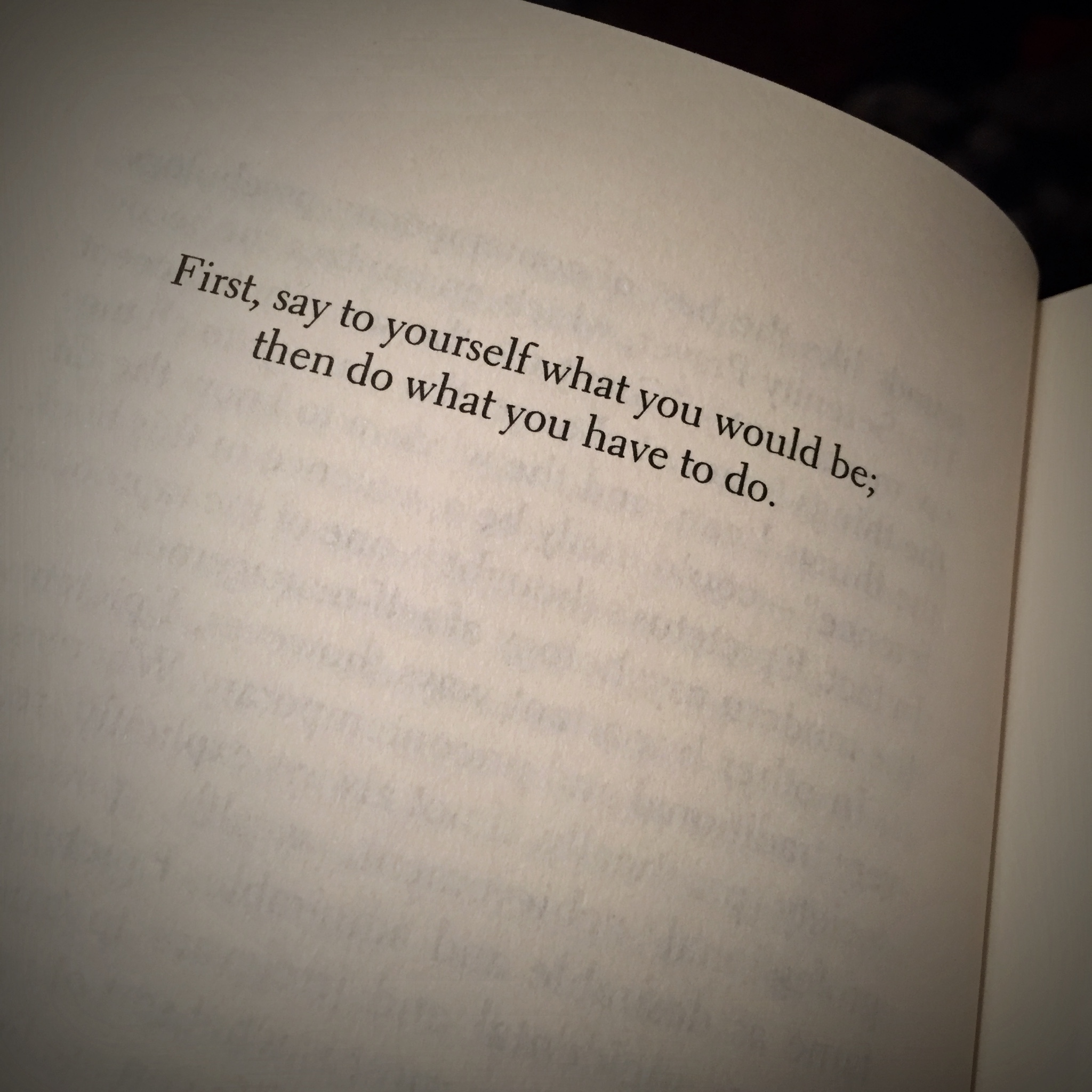
The single sentence on the opening page above is as good an exhortation as anyone could need. But it’s followed on the next page by this jewel of simple yet often neglected common sense:

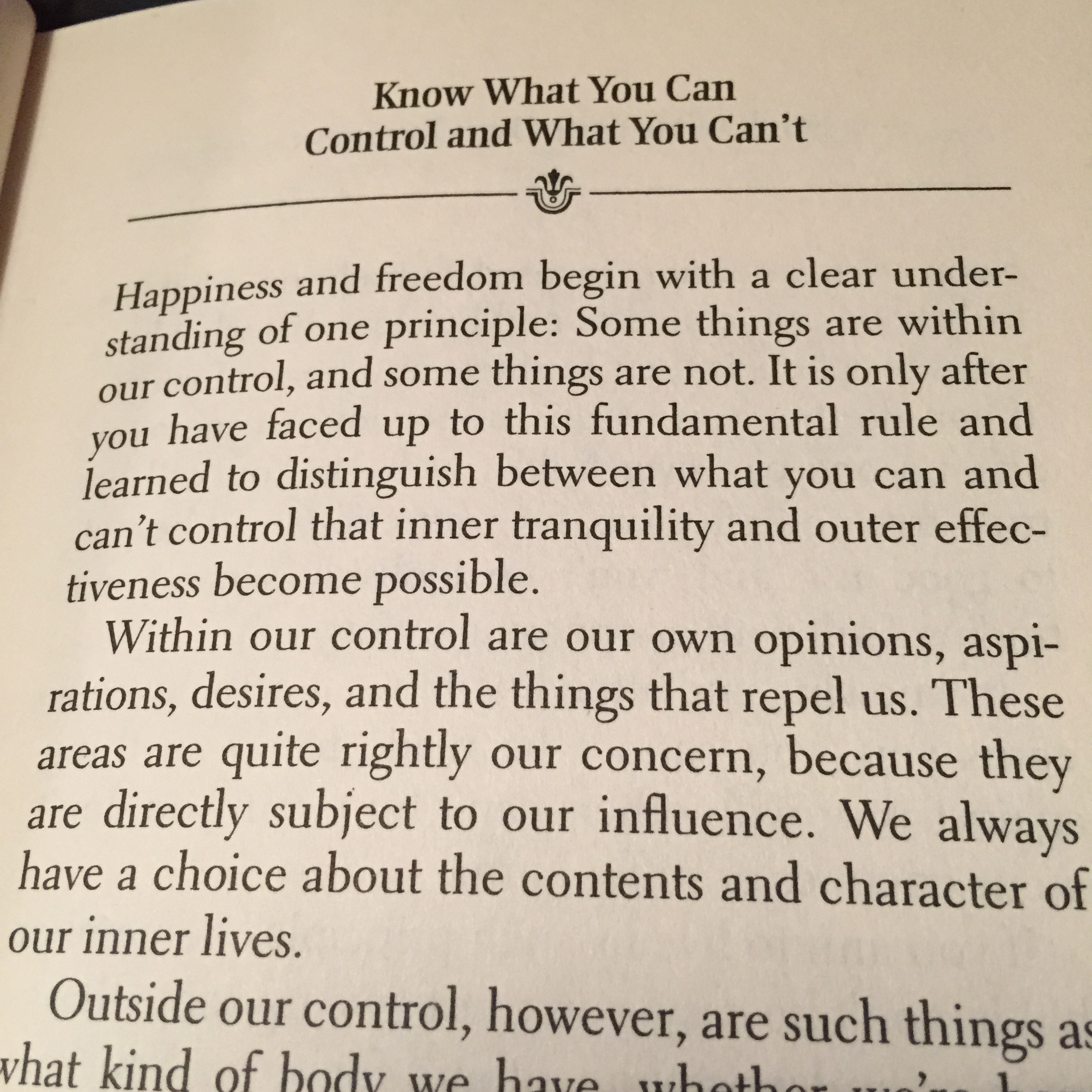
IMG_5765


We always have a choice about the contents and character of our inner lives.

We don’t have much control over what happens around us and to us, but we do get to choose our response. Easy to understand. Hard, though, to own that choice standing in the often very small, poorly lit gap between stimulus and response.

I’ve got to at least be more aware that I am making these choices. I am responsible – able to choose my response – and not made to do or be anything not in my choosing. No one or no thing can make me angry, for example. I may choose to be angry in response, but it’s my choice, whether I own up to it or not.

I need these reminders regularly. Searching to share something insightful every day has been a great way to live a more adventurous inner life and to remind myself to do better, to grow and improve. These notes to self that I share publicly have become a daily discipline that I hope will keep me sharp and curious. I recommend this to anyone looking to make better sense of their own thinking and their place in the universe. Oh, that’s everyone. Of course, everyone should write.

We all are artists creating a unique life, a life that’s never been before and never will be again. Choose to craft yours as though you’re sculpting a masterpiece.

The end (of the year) is near: The ten week challenge

december-31st

The end is near. Ten weeks till December 31. The year is in wind down mode. But how can you gear up for a strong finish, so you can look back on 2014 as a remarkable year in your life?

Ten weeks is enough time to build a habit, to craft a routine, to hone a system.

Me, I’m going back to my hundred pushups plan. It will be rewarding to finish the year physically stronger than I started it. I’m also going to focus on tightening my daily habits for reading and writing. I want to aim for a bigger writing project than posting on this site daily. And I’m going to be intentional about more quality time with my family.

It’s easy to slack off as the holiday season approaches, to defer discipline and hard things to the new year. But imagine how you hope to feel on December 31. What project have you put off that would excite you if you did it? What relationship in your life needs attention? Is there a worthwhile challenge that scares you a bit? Which habit can you form that would make a big difference?

Open a document or grab a marker and some paper and write: “What if…?”

Respond quickly to that question with as many possibilities for the next few weeks as you can imagine. Then go through that list and focus on the possibilities that elicit the most excitement. Now put a plan in place to make them happen and get busy.

Schedule an appointment with yourself for December 31 to review your year and to begin planning your adventures for 2015.

How can this be your best year yet? A lot can be done in ten weeks. It’s not too late to take action and finish strong.

John Gruber tells the Daring Fireball story

Daring Fireball is a daily must-read for me. And John Gruber has one of the most consistently distinctive and quote-worthy takes on Apple and all things tech. I’m a fan and have a couple of Daring Fireball t-shirts I wear proudly. (I’m normally a plain-t kind of guy, so it’s a big deal for me to sport someone’s logo.)

Gruber has a great story about how he made his blog into his full-time career, and he told it on the XOXO Festival stage recently:

If you think you’ve missed the boat, that it’s too late for you to get in on the possibilities created by the internet, you are wrong. It’s still early. We are just at the edge of the frontier. But don’t wait around thinking about it. Claim your stake online now. Buy that domain name. Get started on WordPress or Squarespace or Tumblr. Make something you’re proud to share with the world. And keep doing it. And keep getting better.

Putting the work in

Screen Shot 2014-10-14 at 4.44.19 PM

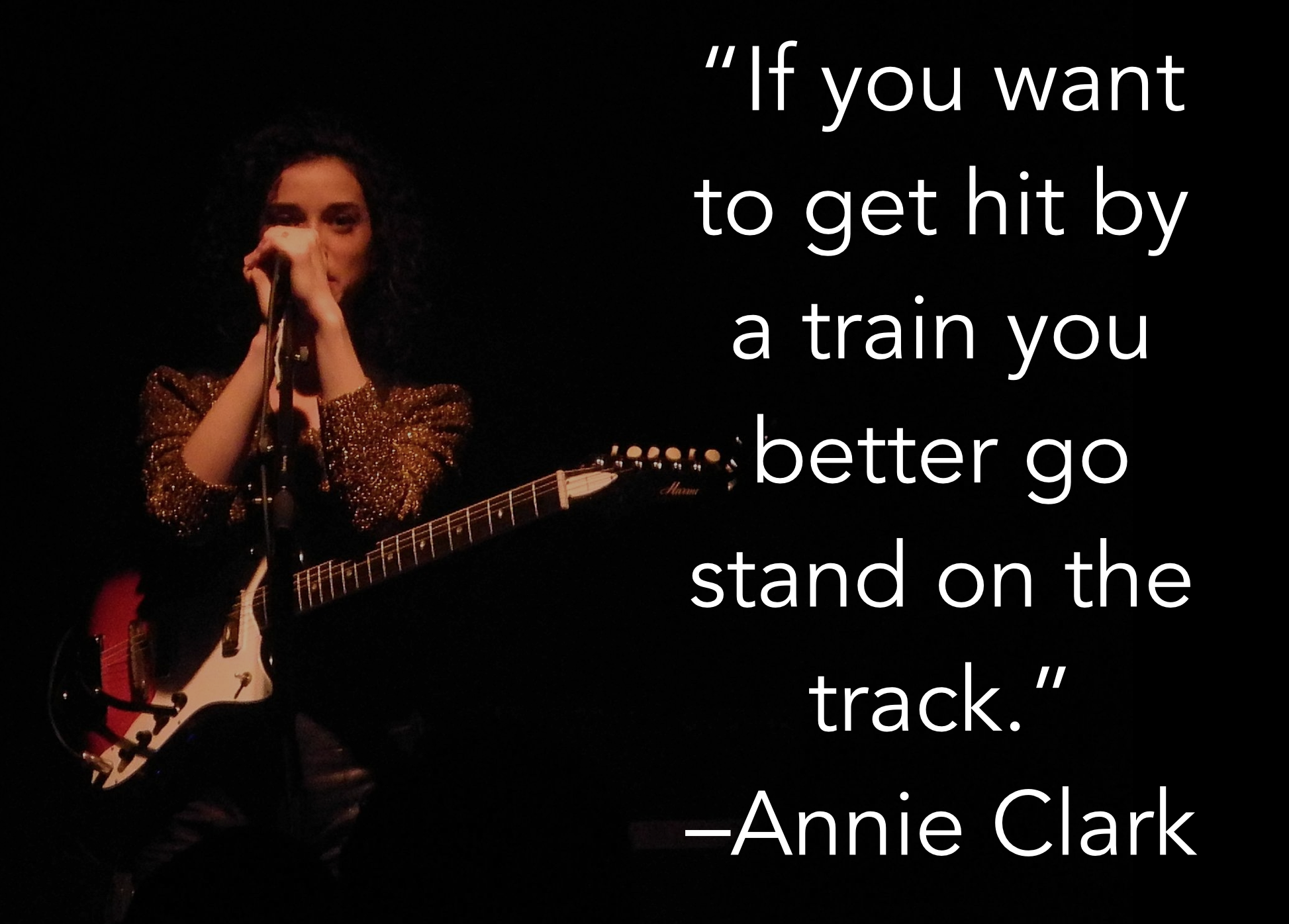
“When writing, I adhere to the old adage that if you want to get hit by a train you better go stand on the track. There’s no substitute for just putting the work in and writing with a very concerted, focused effort. At the end of the day it all comes down to synthesizing a whole host of ideas, so you better have a lot of ideas at the ready when it comes time to put the little Frankenstein monster together.” –St. Vincent’s Annie Clark

An Austin Kleon tweet pointed to this excellent interview with the musician Annie Clark, a.k.a. St. Vincent, about her creative process.

This jibes with everything I’m finding lately about creative people. Inspiration is for amateurs. Pros just do work. They show up and get busy whether they feel like it or not.

You will live more curiously if you write

A great post from a couple of years ago from James Somers that Chris Guillebeau pointed to recently – More people should write – with a challenge to all to take up a creative habit:

That’s the promise: you will live more curiously if you write. You will become a scientist, if not of the natural world then of whatever world you care about. More of that world will pop alive. You will see more when you look at it.

Somers conveys so well what I’ve experienced. When you are intentional about regularly expressing yourself it raises your antennae to life. I’ve challenged myself to post something on this site every day, so I wake up each day knowing I must come up with something worth sharing. And I see the world just a little differently than I did when I wasn’t writing every day. I’m on the hunt for ideas and insight and experiences that I can wrap these keys around.  I’m more curious and primed for searching, for inquiring, for consumption that sparks creation.

It’s how a photographer sees beauty the rest of us miss. His intention to capture images opens his eyes to marvels all around, marvels those not armed with a camera and a desire to tell a story most likely never notice.

(I’m curious, now that most of us have these terrific cameras in our pockets and ways to easily share photos, if this is turning around, if more people are intentionally searching for beautiful moments to capture and share. The Instagramification of our culture could have some unexpected merit if it means more people are opening their eyes to the world around in ways they never did before.)

The intent to express yourself sparks imagination and stokes curiosity. Don’t wait for inspiration to strike before putting the words down. It works the other way around. Just commit to expressing yourself regularly, even if you don’t know where the ideas will come from. Write, draw, speak, make music… whatever delights you, and summon the muse with your action. Start each day with the intent to express yourself, and you will end up inhabiting more mindfully aware and interesting days.


Maddux and heartbreak and writing with movement

This long feature on SB Nation by Jeremy Collins – Thirteen Ways of Looking at Greg Maddux – is beautifully written and heartbreaking.

Yes, it’s about Greg Maddux, my favorite baseball player and one of the most enigmatic, masterful athletes of our generation. But it’s mostly about the author coming to terms with the tragic loss of his childhood friend, a friend who was obsessed with and inspired by Greg Maddux.

Maddux was not some physical freak who overpowered batters with strength. He just out-thought and out-executed those he faced. He was a mere mortal who through his own will and savvy and plodding discipline became the best in the game. And he approached the game with an apparent detachment that belied the ferocity with which he performed so fully in the present. When he misfired, a loud profanity punctuated the moment. And then an immediate reset. Back to the moment at hand, calm, calculating. His approach was a Stoic one, dealing with only what he could control and shaking off anything out of his hands.

The story Jeremy Collins tells ties this ideal that Maddux represented, control and mastery, to the tragedy of his friend who reached for that ideal as he grasped for hope in reorienting his young, ill-fated life.

Collins’s piece is well worth the time to read it. You know when you’ve read something that was written with both heart and mastery. This bit of writing is Maddux-like in its artistry. It’s a fitting tribute to a lost friend and to an iconic, inspiring hero. Like a pitch from Maddux, it knicks the edges and moves unpredictably and so effectively.

Style + substance

IMG_1104.PNG

Form AND function. Both should be remarkable. Quality content can get lost in poor delivery. Details matter. Presentation matters.

I love how Apple cares as much about the package design as they do about the hardware and software engineering of their products.

Tweaking the details of a design often leads to new insights in the content for me. And if I care enough about the content, I want to present it as beautifully as I can.

Try to be alive

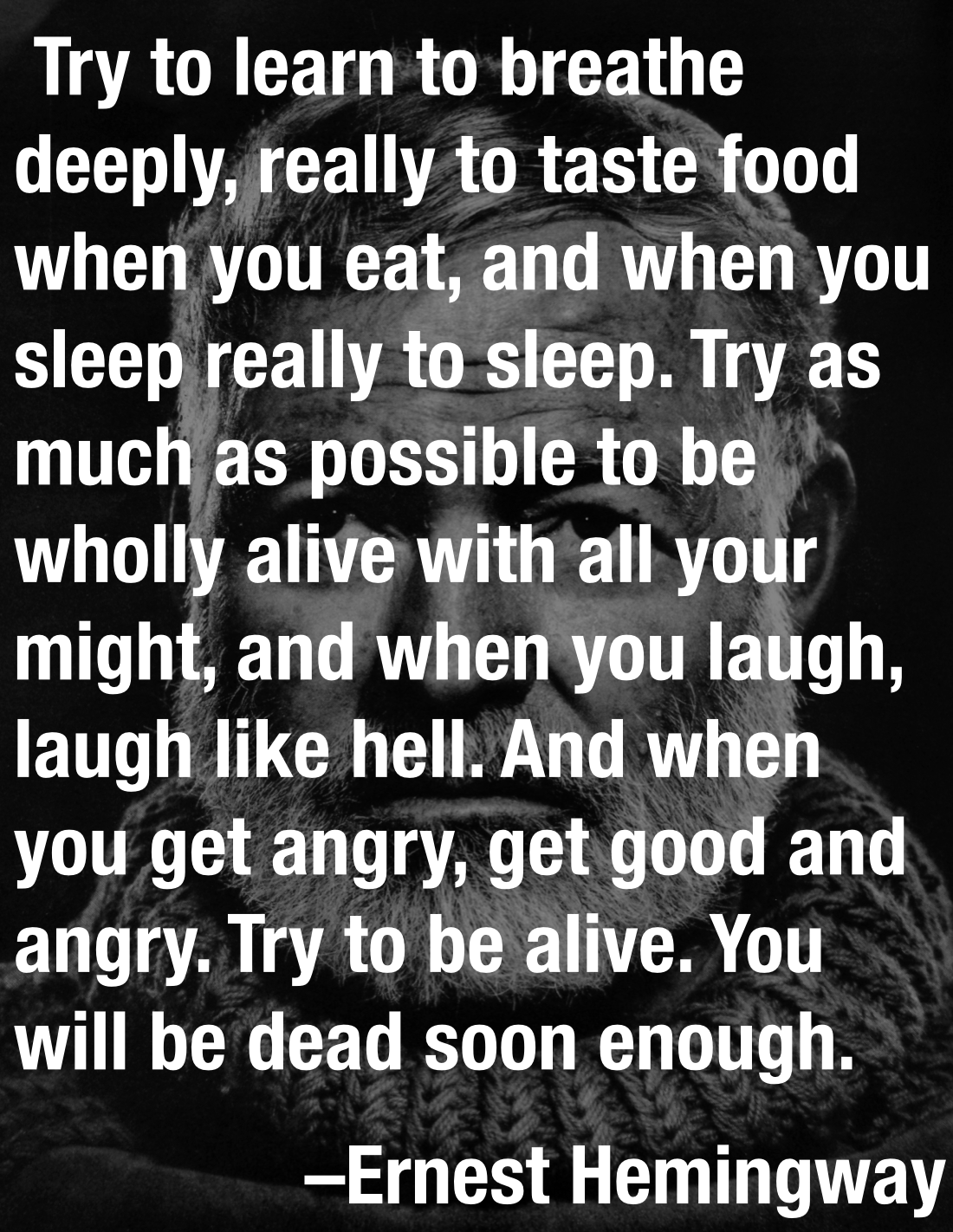
Screen Shot 2014-08-27 at 11.42.42 AM

via @Parislemon

This was Hemingway’s advice on writing, but it works for advice on living an excellent life as well.

I went home for lunch today and had a bite of watermelon while thinking about this quotation. As I was trying to really taste it like Hemingway suggests, I bit my tongue. (I won’t try quite so hard next time.)

Hemingway’s advice is that we should live a more engaged and aware life.

“Try to be alive.”

What does it take to NOT sleepwalk through our days? How is it that we seem to be programmed to be numb and only those who have simply awakened to the full technicolor, surround-sound experience of life shine as artists and enlightened souls? (Young children have this by nature and most of us lose it as if that’s the price to pay for becoming an adult.)

We all fear dying, yet we should be afraid instead of not living while we have the chance. Life after death is a mystery, but life before death… that should be our primary concern every day.

The creative life is a bit of an antidote to the numbness. It’s why people write and make art and sing songs and post thoughts on the internet. Your effort to capture and express your unique human experience is like telling your consciousness to send out scouts to the present and bring back prizes of delight and insight and even pain.

The intention to express yourself can awaken you to see what’s around you so much more clearly. Don’t you know a photographer sees a different world than most of us. He’s looking intentionally at the world, hoping to find something worth expressing. If we all thought of ourselves as artists, even if we never share any creative output, we might all live a more awake and aware life. It’s a good reason to start a creative habit, to begin journaling or painting or learning an instrument or building web sites or making movies.

The challenge is to inhabit the present moment as often as you can, to live deeply while you’re still alive and to taste the sweetness and, sometimes, the bitterness of the now.

But be careful not to bite your tongue.

Everything you need to know about life can be learned from a genuine and ongoing attempt to write.

–Dani Shapiro


Microscopic truthfulness

IMG_1096.PNG

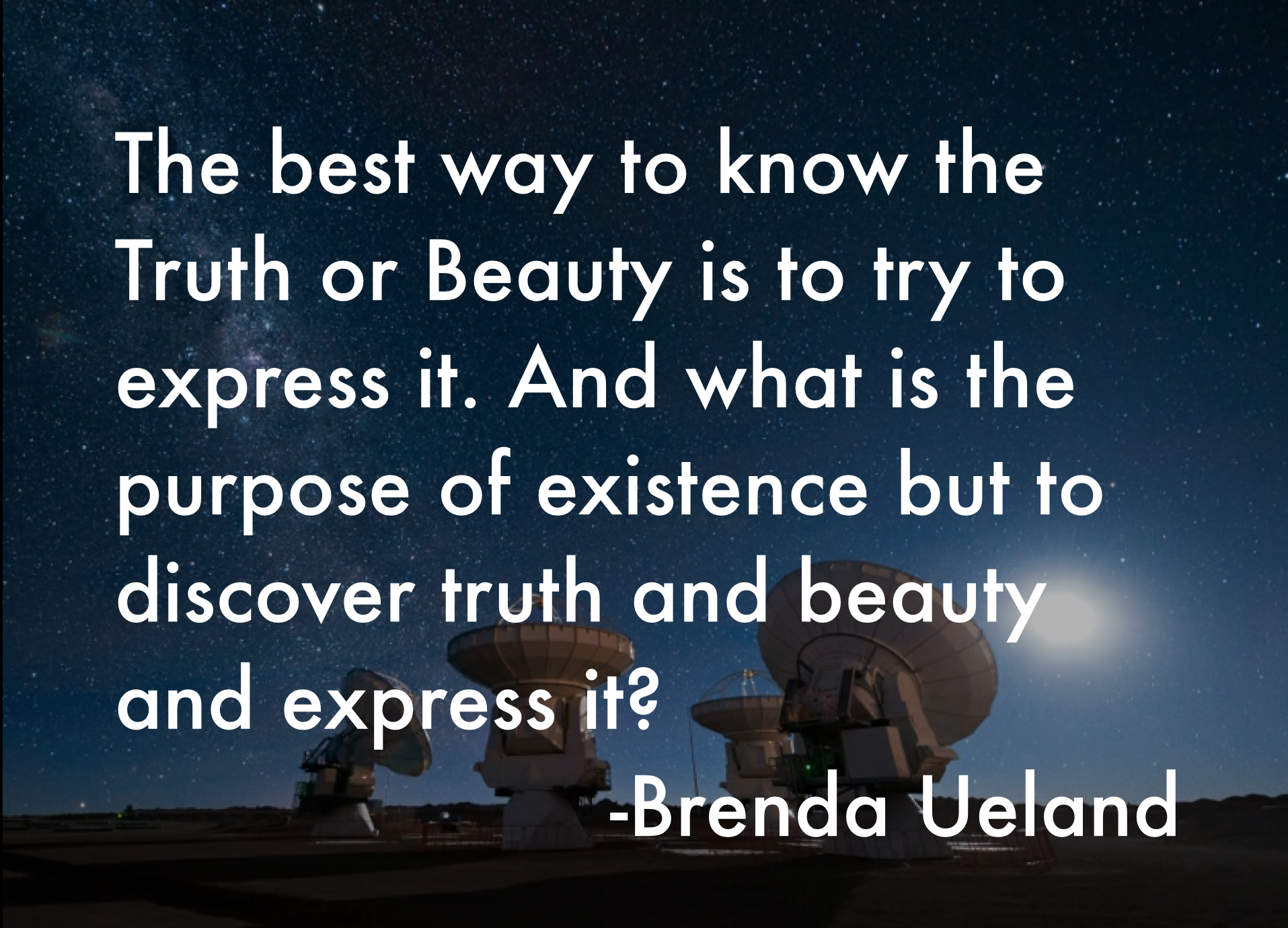
My favorite book is If You Want to Write by Brenda Ueland. I’ve written about this charming, effusively encouraging and insightful book before and was reminded recently of her championing what she called “microscopic truthfulness”.

Good writing or art or communication of any sort should be characterized by a detailed and exacting commitment to accuracy. Details matter. Our brains can absorb so much and have evolved to find patterns and grasp nuance. The effective artist will take advantage of the audience’s ability and eagerness to fully inhabit and imagine sensory and emotional details. We miss opportunities to deeply connect and make our message resonate if we don’t embrace the fine points, if we stick to mere generalizations.

Hemingway gave similar advice about observing intently and communicating in detail:

Find what gave you the emotion; what the action was that gave you the excitement. Then write it down making it clear so the reader will see it too and have the same feeling that you had.

Details matter and give meaning and energy and interest to what would otherwise be forgettable and lost in the wash of information that rolls over us every day.

Craft a routine for creative spontaneity

I’ve often taken pride in a seat-of-the-pants approach. With Indiana Jones as a model – “I’m making this up as I go!”winging it seemed a virtue.

With age, though, I’ve developed an appreciation for order and structure and routine. And I’m far from disciplined in actually applying order to my daily life.

We expect creativity to be mysterious and ecstatic, and we wait for it, hoping it will grab hold of us. We delay, waiting to be inspired.

But it’s been my experience that waiting for inspiration leads to a lot of doing nothing. What if it’s the other way around? What if routine and structure, showing up and taking action regardless of your emotional state, were what summoned the muse?

Here is William James as quoted in the excellent book, Daily Rituals, by Mason Curry:

“The more of the details of our daily life we can hand over to the effortless custody of automatism, the more our higher powers of mind will be set free for their own proper work. There is no more miserable human being than one in whom nothing is habitual but indecision, and for whom the lighting of every cigar, the drinking of every cup, the time of rising and going to bed every day, and the beginning of every bit of work, are subjects of express volitional deliberation.”

Interestingly, at the time James wrote this he was struggling with the misery of indecision he describes.

As a new school year is beginning, it’s a great time to craft a fresh, new routine for your days. Create a structure of when to arise and exercise and work and eat and read and play and when to turn the lights out. Stick to the schedule. Automate easy decisions, taking them out of your brain and opening space there for more challenging, creative endeavors.

Routine can spark spontaneity. Make a plan, show up consistently, and see if inspiration notices your pattern and begins showing up, too.

Inspiration will jilt you. Move on without it.

From Erin Rooney Doland‘s chapter in the excellent book, Manage Your Day-to-Day:

Leigh Michaels, prolific author of more than eighty romance novels, once said that “waiting for inspiration to write is like standing at the airport waiting for a train.” Conditions to produce one’s craft are rarely ideal, and waiting for everything to be perfect is almost always an exercise in procrastination.

Inspiration will leave you in the lurch and repeatedly break your heart. You still will love it and long for it and put up with its philandering ways. And you will wait and postpone good things in hopes that it will arrive any moment now.

The best way to summon it is to ignore it, play hard-to-get, and just start doing your work, whether you feel like it or not.

I aim to write something every day. Some days I wait and wait, longing for even a tiny nudge of inspiration, and the day gets late with no love from the muse. Then I just have to start writing something to keep that daily commitment, even if I’m sure what I write will be lame or trite or completely unoriginal. This is one of those posts.

Inspiration did not arrive, but I did.

Write what you want to read

I’m reading The Way of Kings by Brandon Sanderson now. (Thanks to my friend, Jesse, for the recommendation.) It’s an epic fantasy novel (1,000 pages in this first of a planned ten book series) and not my usual reading fare. But I’m immersed in it and marveling at the compelling narrative and level of detail the author has created. Years ago, before the movies ever came out, I read Tolkien’s Lord of the Rings and felt a similar level of awe at the marvelous world an author can create.

Intrigued by this young author’s career, I found this interview with Sanderson and appreciated his approach:

I can only speak from my own experience, which may be abnormal, but I really feel that the times where I worried too much about the market were the times I wrote my worst fiction. And the times where I wrote: “this is what I want to read — this is what I’m passionate about,” I wrote my best fiction. And so that’s what I would advise.

That being said, I was very steeped in this genre. You can say what I wanted to read was very naturally an outgrowth of what a lot of what the fandom wanted to read because I was one of them. That’s why it worked for me. And I’m sure there are a number of people who are writing to their passion, and it just doesn’t end up catching on. I wrote 13 books before I got published, and at the end of the day I decided I would rather keep writing and never publish than give up writing or go do something else. And if I reached the end of my life and had 70 unpublished novels, I’d still consider myself a successful writer. That decision has driven me ever since and it’s worked out for me. -Brandon Sanderson

He’s writing what he wants to read and seems as if he would be content if he was never published.

That’s a good formula for work in general, not just writing. Make things that will delight you. Do your best, not for the chance for advancement or to impress bosses or to win some sales competition. Be awesome in all that you do whether anyone else notices or not. You will notice. And you will delight in the intrinsic rewards of work that shines regardless of any extrinsic rewards.

And that approach is more likely to produce quality work that does resonate and connect with others in a more meaningful way than trying to figure out what will sell.

Well conceived, clearly said

I saw the quotation below in this article yesterday: Microsoft’s New CEO Needs an Editor.

“Whatever is well conceived is clearly said,
And the words to say it flow with ease.” -Nicolas Boileau

Many words and fancy words do not impress. They communicate, instead, a lack of clarity and likely an ill-conceived idea.

When my sentences keep getting more complex and tangled in paragraphs that need yet another paragraph to explain further, I should stop and rethink what I’m trying to accomplish. Go back to “Why?” and scrap it if I can’t come up with a clear answer.

Tolstoy called for us to be honest and brave and “to act and speak that your motives should be intelligible to an affectionate seven-year-old boy.” (I’ve got a seven-year-old daughter who is mostly affectionate. Tolstoy would nominate her to be my editor.)

Flow is the desired state. I might need to write my way into it and hack through adverbs and jargon to get there, but what I deem inessential should not make it past my Publish button or Print icon.

Share nothing that is not simply stated and easily understood.


“How do I move the needle?”

I enjoyed this video about screenwriter Dustin Lance Black’s writing process shawnblanc.net linked to today:

Black, who wrote the screenplays for J. Edgar and Milk, has a richly complex, yet clear and beautiful process for putting together his screenplays. Watching him lay out all those note cards on that giant table sparked memories, happy memories, of working on a research paper in college. I wrote an honors thesis in a religion class my senior year and used a similar process where I researched like crazy and then sorted my note cards like I was playing a delightfully challenging game of solitaire. I would rearrange and discard and rethink and see it all eventually unfold into a meaningful narrative that flowed logically and came to a satisfying conclusion.

Black has a clear commitment to digging deeply into a subject, doing meticulous, even excruciating work, and taking his time to let the story come to him. And he’s willing to let go of ideas he loves to better serve the story.

I find a similar workflow works for me in light table view in Keynote. It’s the digital equivalent for me of a table full of note cards. Analog or digital, there’s much to value in a process where you can see the big picture of a story or a project or an idea and make connections and rearrange and discard to better serve the narrative arc.

Do the hard work. Dig deep for details. Spend the time necessary to know your stuff. Then zoom out and find the big picture. That zoomed out perspective might show you a completely different direction than you had originally expected.

Of course, the big picture, the point of your work, has to begin and end with “Why?” Black says just this at the beginning of the video:

“That’s where I start, taking an idea, whether it’s fiction or non-fiction, and figuring out why. Not just what you’re going to tell, not that it’s entertaining or interesting. But why are you telling that story? What is the purpose of that story? For me it’s always, How do I move the needle? How do I change the culture? Now.”

We all want to “move the needle”, to do something worth talking about, to make a difference. I’m inspired to invest in a crisp, new stack of note cards and get busy crafting a story worth telling.