Author: Eric Johnson
"The best way to know the truth or beauty is to try to express it."
Wonderful life: Rebooting my college talk again
I get asked to speak on campus to student groups several times each academic year. I’m honored to be invited, and it’s a chance for me to be intentional about thinking through and sharing something that might awaken possibility in college students.
Tonight was my first gig of the semester. Instead of dusting off a talk I did the previous year, I like to start over and rethink and reboot.
I will often include stories and quotations and points I’ve used before but mix them with new ideas and stories and a fresh narrative structure and theme.
There’s a lot of value in regularly starting over, even with—especially with—the tried and true.
Your best work may be buried under the good work you’ve been too content with. Dig it up and and shake it out and get busy making something new.

The formula for greatness
I found this 2006 article, What it takes to be great, in Fortune.com’s archives.
It covers much of the same ground as Daniel Coyle’s book, The Talent Code.
In short, the key to greatness is… wait for it… practice—diligent, consistent, focused, challenging practice.
From the article:
The best people in any field are those who devote the most hours to what the researchers call “deliberate practice.” It’s activity that’s explicitly intended to improve performance, that reaches for objectives just beyond one’s level of competence, provides feedback on results and involves high levels of repetition.
Most of us just go through the motions and simply repeat what we are good at already. It’s easy and feels good. But that kind of practice does nothing to propel you forward.
Masters, however, repeatedly push themselves to failure and focus on steady, incremental improvements.
Simply hitting a bucket of balls is not deliberate practice, which is why most golfers don’t get better. Hitting an eight-iron 300 times with a goal of leaving the ball within 20 feet of the pin 80 percent of the time, continually observing results and making appropriate adjustments, and doing that for hours every day – that’s deliberate practice.
Consistency is crucial. As Ericsson notes, “Elite performers in many diverse domains have been found to practice, on the average, roughly the same amount every day, including weekends.”
Evidence crosses a remarkable range of fields. In a study of 20-year-old violinists by Ericsson and colleagues, the best group (judged by conservatory teachers) averaged 10,000 hours of deliberate practice over their lives; the next-best averaged 7,500 hours; and the next, 5,000. It’s the same story in surgery, insurance sales, and virtually every sport. More deliberate practice equals better performance. Tons of it equals great performance.
What’s encouraging about all this is that greatness isn’t the domain of those born with extraordinary gifts. They may have an advantage, but ultimately it comes down to factors you can control—the quality and quantity of your effort, your willingness to build effective habits and put in the kind of practice that leads to steady but sure improvement.
Determine what you want to be great at, come up with a plan to get there, and then do the work.
Amy Poehler? Yes Please!

I spent more than five hours in the car tonight, driving to a family beach getaway for this holiday weekend.
My wife and I listened to the audiobook of Amy Poehler’s Yes Please.
It doesn’t seem to have much of a narrative arc, but it’s a fun listen. Poehler narrates herself and there are surprise guest voices who add serendipitous fun.
She is candid and occasionally crude, but she is endearing throughout with thoughtful insights and doses of life wisdom. And now I just want to binge watch Parks and Recreation.
By the way, the gold standard of comedy memoir audiobooks is Steve Martin’s Born Standing Up. So, so good.
The guardian
Solid insight from @garrytan:
Steve Jobs was that guardian for Apple. He was ruthlessly protective of the experience Apple products provided for their customers.
Walt Disney was all about “plussing” and relentlessly improving the Disney experience.
This article about Stephen Colbert shows he’s personally overseeing even very small details about his reinvention of The Late Show.
My friend Kevin was telling me today that Taylor Swift is like that with her concerts.
Committees and bureaucracy are more likely to offer safe but unexceptional products and services.
A singular and determined voice is usually generating and guiding the very best work.
Steer into the fear
From Neil Gaiman’s masterful 2012 “Make Good Art” commencement address:
Do the stuff that only you can do.
The urge, starting out, is to copy. And that’s not a bad thing. Most of us only find our own voices after we’ve sounded like a lot of other people. But the one thing that you have that nobody else has is you. Your voice, your mind, your story, your vision. So write and draw and build and play and dance and live as only you can.
The moment that you feel that, just possibly, you’re walking down the street naked, exposing too much of your heart and your mind and what exists on the inside, showing too much of yourself. That’s the moment you may be starting to get it right.
The things I’ve done that worked the best were the things I was the least certain about…
That vulnerable feeling—as if you’re opening yourself too much, exposing more than feels safe—is worth the risk.
The best things—love, art, any act of authentic creation or wholehearted kindness—come from that place which seems so fragile but which is actually your singular source of strength.
“Caution is the devil” said William Blake. The resistance within is powerful.
It takes courage. If there was no fear, courage would be pointless. Fear gives you the opportunity to craft a better version of yourself.
Steer into the fear if that’s what it takes to bring out what is best in you, to produce the kind of love and beauty that only you—the one and only you—can ever make.
Walking man
Imagine being offered a pill that promised you seven extra years of life if you took it daily. There are no negative side effects. And it’s completely free.
The only catch is that it takes 25 minutes each day to take this pill.
A daily 25-minute walk could add seven years to your life.
That’s the headline that got me out the door with my dog after dinner tonight. The summer heat has been my excuse for being less consistent about my daily walk.
But even on a warm evening, I come back from a walk feeling better physically and emotionally.
We are walking animals. It’s what we are wired to do. Our ability to stand upright and walk and run was key to becoming who we are.
But our modern culture is making us into sitting animals. Our prosperity and comfort, relative to almost all of our ancestors, is also making us weaker in many ways.
I’m using modern technology, though, to motivate me to get off my butt more often. I use the Pedometer++ app to track my steps, and I aim for the green confetti that erupts on my phone screen when I cross the 10,000 step threshold each day. It’s silly that this motivates me, but it’s effective.
Our lives could be so much better engineered for walking. If we lived in walking distance of our work and shopping and leisure we would naturally be so much more active.
Urban life offers this advantage. I walked so much more when I lived in Washington, D.C. There was too much friction involved in driving.
If you can’t place yourself in a more walkable place, you can at least build walking into your daily habits.
Take your dog, your friend, your kids, your spouse. Or load up a podcast to listen to or some favorite music or just enjoy a quiet stroll.
But if you walked a little more than a mile each day, you would not only add years to your life, you might add more life to your years.
Sunday morning Stoic: Right now
Meditations 11.7:
“It stares you in the face. No role is so well suited to philosophy as the one you happen to be in right now.”
Nothing is better for your growth and potential improvement than whatever circumstances you find yourself in right now.
Even if those circumstances seem to suck. Especially, actually.
There’s no going back to fix what is.
The only way forward is facing things as they are.
Love, as best you can, what is.
Act, even, as if you had intentionally chosen whatever circumstances you find yourself in. Consider whatever you’re facing to be part of your master plan to bring out the best in you.
Use the materials offered to you by life as it is right now to strengthen your mind and propel you forward.
The transformative power of deep practice
Daniel Coyle’s book, The Talent Code, is one of the best books I’ve read in the last couple of years. He explores “talent hotbeds”, places that produce a disproportionate amount of talented people in various fields—sports, the arts, and academics. And he comes up with key factors that separate the best from all others.
His follow-up book, The Little Book of Talent, condenses the lessons he learned about talent into very direct, transferable and applicable insights.
And this is the key insight:
“If I had to sum up the difference between people in the talent hotbeds and people everywhere else in one sentence, it would be this:
People in the hotbeds have a different
relationship with practicing.
Many of us view practice as necessary drudgery, the equivalent of being forced to eat your vegetables, far less important or interesting than the big game or the big performance. But in the talent hotbeds I visited, practice was the big game, the center of their world, the main focus of their daily lives. This approach succeeds because over time, practice is transformative, if it’s the right kind of practice. Deep practice.
The key to deep practice is to reach. This means to stretch yourself slightly beyond your current ability, spending time in the zone of difficulty called the sweet spot. It means embracing the power of repetition, so the action becomes fast and automatic. It means creating a practice space that enables you to reach and repeat, stay engaged, and improve your skills over time.”
Everything changes when you see practice as not just a means to an end, but a worthy end in itself.
This applies to all of life, actually. Every moment is a chance to practice intention and focus and mindfulness.
Practice, then, is not merely preparation for something else, but is rather the act of honoring the only place your life ever is—here and now.
Work alone
From Susan Cain’s book, Quiet: The Power of Introverts in a World That Can’t Stop Talking, there’s this excerpt from the memoir of Steve Wozniak, the quieter and lesser known of the two Steves who founded Apple:
“Most inventors and engineers I’ve met are like me—they’re shy and they live in their heads. They’re almost like artists. In fact, the very best of them are artists. And artists work best alone where they can control an invention’s design without a lot of other people designing it for marketing or some other committee. I don’t believe anything really revolutionary has been invented by committee. If you’re that rare engineer who’s an inventor and also an artist, I’m going to give you some advice that might be hard to take. That advice is: Work alone. You’re going to be best able to design revolutionary products and features if you’re working on your own. Not on a committee. Not on a team.”
I do think that group work is overrated. Group brainstorming, even, has been shown to actually come up with fewer ideas than when individuals work on idea generation alone.
A team possibly can improve your ideas and offer feedback and new possibilities and enact plans to execute ideas, but the fundamental work is likely done on your own, in your zone.
In a gentle way
“In a gentle way, you can shake the world.”
–Mahatma Gandhi
Fuming and stomping around and violence and outrageous behavior may get headlines and clicks.
But the most profound ideas and rapturous creations and the big-hearted movements that actually propelled our species forward all emerged originally from a quiet place and came in a gentle way.
The ambivert advantage
I’m currently reading Quiet: The Power of Introverts in a World That Can’t Stop Talking. It’s making me realize my personality is a fairly even split of introversion and extroversion; I suppose that makes me an “ambivert”, and I’m sure most people are more split than they assume.
Most people who know me wouldn’t hesitate to label me an extrovert. I’m sure I come across publicly as gregarious and not at all spotlight-averse.
But I prefer alone time over group time. A great lunch for me is lunch by myself with something good to read. I tend to choose staying in over going out and one-on-one conversation rather than a dinner party with a crowd. But if I’m at a dinner party, I can, if I choose, be engaging and even entertaining. (I’m hilarious, right friends?) I don’t enjoy small talk, but I can hold my own
My two primary peak experiences when I work, though, are seemingly at opposite ends of the personality spectrum.
I fall into a sort of creative bliss when working alone and getting into a flow state where I lose track of time and ideas appear and possibilities bubble up.
But I get a different kind of high that’s just as satisfying when I stand on a stage and connect with an audience, often about the ideas that came about in that isolated flow state. That peak on-stage experience is also a flow state.
I’m most creative alone after having some time to get into a zone. I’m most alive when I’m in front of an audience sharing what I crafted in that alone time.
I had a colleague in my first career when I was a staff member on Capitol Hill who regularly wanted to pull up a chair next to me so we could write together. That did not work. And I finally told him just to send me his ideas, and I would synthesize them on my own.
I’ve learned to structure my time around what works best for me. I don’t seek out lunch appointments or group work. I make sure to get plenty of down time before and after presentations. I value long stretches of quiet time.
Know yourself. Look back on your peak moments, your most productive environments, and your most satisfying states. Determine how best to bolster your strengths and hack your personality to more completely fulfill your nature.
Sunday night Stoic: Perspective

Meditations 10.17:
“Continual awareness of all time and space, of the size and life span of the things around us. A grape seed in infinite space. A half twist of a corkscrew against eternity.”
For every grain of sand on earth there are at least 10,000 stars in the visible universe.
The universe is more than 13 billion years old.
I’ll be fortunate to live 70 years.
I am small. My time is fleeting.
But I am here, right now.
Live your life.
Excellent links
Some of the best things I found on the internet this week:
- Why former 49er Chris Borland is the most dangerous man in football – Borland quit the NFL after one year out of concern for how the violence of the sport would damage his brain. He is bright and thoughtful and talented, but walking away from a lucrative, high-profile athletic career was a no-brainer (pun intended) to him in light of the possible consequences over the long-term. Is football our watered down, but still violent, version of the Roman Colosseum?
- How Relay FM Proves That Podcasts Aren’t An Overnight Success – Relay FM is a prolific podcast network, created and run by two guys with a passion for podcasting. That passion has evolved from a moonlighting hobby to a career. If you’re looking for something to listen to, go check out Relay FM’s strong roster of shows.
- The Day You Became A Better Writer – Simple and clear advice to improve your writing from the creator of Dilbert.
- The Late, Great Stephen Colbert – I’ve already commented on this excellent profile of the new host of The Late Show. One of the best things I’ve read in a long time. So good.
Cassini, Saturn, Dione, and hope
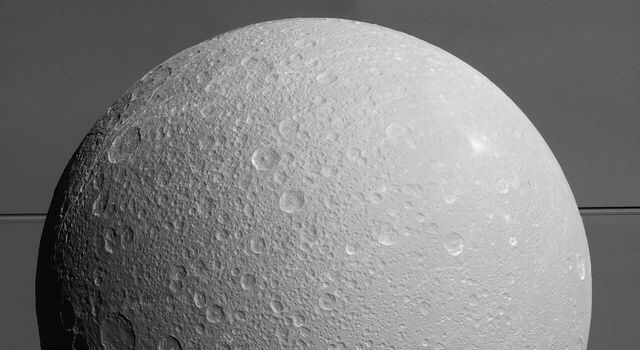
NASA’s Cassini probe this week sent back stunning photos of Saturn’s moon, Dione, which is one of the 64 moons orbiting the crown jewel of the solar system.
That thin black line behind Dione in the image above is the edge of Saturn’s rings. Amazing.
We can fling a tiny piece of gadgetry a billion miles away and see what 2 million years of human existence couldn’t possibly imagine. Before this image I had never heard of this moon.
For all our woes and inanities and immaturity as a species, achievements like this glimmer with hope for what we can do and be.
Bertrand Russell on the good life
Kottke posted a link to University of Utah professor Matt Might’s thoughtful career and life advice.
There is so much worth pondering in that post. But the career applications especially stand out.
Might’s academic career floundered when he saw his work as a means to an end. But his work flourished when he did work for its inherent value and for its meaning to him.
Focus on being awesome, not on being successful.
And he shared a portion of this quote:
“The good life is one inspired by love and guided by knowledge. Knowledge and love are both indefinitely extensible; therefore, however good a life may be, a better life can be imagined. Neither love without knowledge, nor knowledge without love can produce a good life.” –Bertrand Russell
So good.
Love and knowledge. Beauty and truth.
Indefinitely extensible.
Inexhaustible.
Enough to fill a life.
A good life.
Stephen Colbert on radical acceptance and steering toward fear
Stephen Colbert will be taking over David Letterman’s old slot on The Late Show soon. This GQ profile of Colbert by Joel Lovell is so good.
The writer goes much deeper than Colbert’s take on comedy and television. Colbert’s father and two of his brothers were killed in a plane crash when he was a 10-year-old. He ended up channeling that pain in a profound way.
From the article:
He said he trained himself, not just onstage but every day in life, even in his dream states, to steer toward fear rather than away from it. “I like to do things that are publicly embarrassing,” he said, “to feel the embarrassment touch me and sink into me and then be gone. I like getting on elevators and singing too loudly in that small space. The feeling you feel is almost like a vapor. The discomfort and the wishing that it would end that comes around you. I would do things like that and just breathe it in.” He stopped and took in a deep yogic breath, then slowly shook his head. “Nope, can’t kill me. This thing can’t kill me.”… And then he said, “Obviously there’s something defensive about it. What you’re doing is sipping little bits of arsenic so that you can’t be poisoned by the rest of your discomfort. You’re Rasputin-ing your way through the rest of your life.”
This is classic Stoicism. Face the pain. Embrace the obstacle.
He had an improv teacher who challenged students to “love the bomb”, to relish failure and use it as fuel to make you better.
And Colbert took that lesson well beyond the mere embarrassment of screwing up on stage:
“ ‘You gotta learn to love the bomb,’ ” he said. “Boy, did I have a bomb when I was 10. That was quite an explosion. And I learned to love it. So that’s why. Maybe, I don’t know. That might be why you don’t see me as someone angry and working out my demons onstage. It’s that I love the thing that I most wish had not happened.”
“I love the thing that I most wish had not happened.” –Stephen Colbert
Why resist what has happened? Time travel is not an option. Radical acceptance is.
It’s been ten years since my mother died. I can’t say so clearly, as Colbert does, that “I love the thing that I most wish had not happened.” But I can be grateful for what I had in my 41 years with my mom and what I still hold on to, not only from memories of her but also from how her loss has challenged me and hopefully given me gifts and graces and perspective that I otherwise would not have.
The article concludes powerfully:
“ ‘What punishments of God are not gifts?’ ” he said again. His eyes were filled with tears. “So it would be ungrateful not to take everything with gratitude. It doesn’t mean you want it. I can hold both of those ideas in my head.”
The next thing he said I wrote on a slip of paper in his office and have carried it around with me since. It’s our choice, whether to hate something in our lives or to love every moment of them, even the parts that bring us pain. “At every moment, we are volunteers.”
The kind of life you lead
“You are scared of dying—and, tell me, is the kind of life you lead really any different than being dead?” –Seneca
Ouch.
Tough love from Seneca.
And I had one of those days today. I didn’t do a lot of living in the past 24 hours. I just muddled through and don’t have much to show for it. I didn’t cause any harm or make life worse for anyone, but I don’t have any highlights to make this day particularly worth remembering.
It was better than being dead, though.
Note to self: If you regularly remind yourself that someday, you indeed will be dead, you just might add a little more life and meaning to days that otherwise might get muddled through. Actively lead your life so you can truly live your life.
ht @RyanHoliday
All we know
Sunday night Stoic: Think on these things
I’ve been listening to the audiobook version of the late Christopher Hitchens’s autobiography, Hitch-22: A Memoir. Hitchens was notable for his eloquence and strongly stated opinions on controversial topics.
He was no man of faith, but tells in his memoir that he chose the scripture reading for his father’s funeral. It was Phillipians 4:8:
“Finally, brethren, whatsoever things are true, whatsoever things are honest, whatsoever things are just, whatsoever things are pure, whatsoever things are lovely, whatsoever things are of good report; if there be any virtue, and if there be any praise, think on these things.”
I was reminded of what an excellent verse it is. And it could just as easily look like a line pulled straight from Marcus Aurelius’s Meditations. It has a clear Stoic shine to it.
This line from Paul’s letter would be a fine bit of scripture for anyone’s memorial service.
When I was a young man, I wrote a personal mission statement that began with this line:
“Pursue truth no matter the cost.”
I regularly have fallen short of that audacious aim. Often the cost of such a pursuit is more than I’m willing to pay. But that pursuit challenges me even more now.
I’m no scientist or activist. I’m not on any heroic, risk-filled quest to right wrongs. But I still care deeply about being true and honoring honest inquiry and letting go of comfortable fictions that only obscure reality.
I want to retain the curiosity that compels discontent with mere conventional wisdom and popular opinion.
I want to fill my mind with what is true and honest and just and pure and lovely.
These are the things most worthy of our attention.

