Lay down your boat

Imagine a traveler on an epic journey, a quest. He’s making progress through tough terrain and comes to a wide, roiling river with no bridge in sight. But he discovers a small, abandoned row boat near the river bank. He takes the boat and uses it to get across the river. Once he reaches the other side he picks up the boat, lofts it overhead, and begins to carry the boat as he continues his quest on foot.

His journey would be easier and more reasonable if he put the boat down and left it behind. But the boat was valuable to him, precious even. It got him across what seemed to be an uncrossable river, and he wasn’t going to let go of such a useful tool, even though it was no longer serving its useful purpose. In fact, the boat was impeding the traveler’s quest now. Why not put it down and continue the journey unburdened?

A story like this is attributed to the Buddha. And it resonates with me. I’ve had boats – philosophies, habits, opinions, beliefs – that were useful in my life’s journey, that got me further along the path and helped me grow. And then I clung to them even though I had moved into territory where they weren’t needed any longer. I was convinced the boat was crucial because of the good it had done me. I feared letting go of the boat – the cherished idea or belief – would leave me lost and stall my journey.

But I’ve learned I can honor the role the boat played in my quest and still put it down and move on. And if I get to another roiling river on my journey, I’ll go get another boat or find a bridge or swim.

Attach yourself only to this step on the path, to this moment. Drop old boats and any other cherished but unnecessary burdens and lighten your load for a more excellent journey.

Practice makes awesome

I’m reading a brilliant book, The Talent Code by Daniel Coyle, which was recommended by one of my students. (Thanks, Sarah Elizabeth.) The author explores what accounts for those people who possess extraordinary talent. How do the greats get great? This book points toward an unexpected answer which just might be the Holy Grail for anyone who wants to be world class, who wants to get really, really good at something.

There is some fascinating science explained in the book, and a previously mysterious and lightly regarded substance in our bodies, myelin, takes the spotlight. Just being aware of this substance and how it works could change your life. Go read the book, but I will tell you that the more myelin you develop in your body, the more awesome you will become. LeBron, Tiger, Yo-Yo Ma… those guys and anyone who are masters of their crafts are loaded with myelin.

You want the shortcut, the quick recipe for loading up on myelin and generating the kind of awesomeness that has made masters out of regular humans for centuries? Here you go:

Practice.

You knew this, right? Most of us have now heard of the 10,000 hour rule: it takes 10,000 hours of practice to get really good at something. But there’s a bit more to it. Masters practice in a certain way that makes all the difference. “Deep practice” is necessary to get great. It’s the kind of practice where you keep bumping up against your limitations and sticking with it till you overcome and move on to a higher level.

I learned to juggle when I was a teenager, thinking girls would be impressed. They were not. (Toddlers, though, are wowed. Who knew?) It was a struggle when I was learning. I dropped a lot of bean bags, got frustrated, but kept going until I mastered the basic three bag juggle. But, from then on, whenever I practiced juggling I just did the same trick over and over. And I never got better. Never learned anything more than how to juggle three items in the same pattern. A master juggler would have kept going, pushing past the basics, failing again and again with new moves and tricks until finally gaining mastery.

Deep practice requires facing struggle and persevering. And repeating. Over and over. Don’t just practice the easy stuff, the stuff you’ve already got. Push yourself to conquer the hard stuff.

And practice daily. Myelin, which is created by this repetitive, deep practice, is living tissue and needs to be nurtured and replenished

You want to be a writer? Write every day, even when, especially when you don’t feel it flowing. Want to perform? Seek out every opportunity to perform, to stand before audiences. See what works and what doesn’t, and then hone in on getting every little detail sharpened.

What’s the Kryptonite that can weaken the skills of a master? Don’t let them practice. From Coyle’s book:

As Vladimir Horowitz, the virtuoso pianist who kept performing into his eighties, put it, “If I skip practice for one day, I notice. If I skip practice for two days, my wife notices. If I skip for three days, the world notices.”

Same for the great Louis Armstrong:

“You can’t take it for granted. Even if we have two, three days off I still have to blow that horn a few hours to keep up the chops. I mean I’ve been playing 50 years, and that’s what I’ve been doing in order to keep in that groove there.” -Louis Armstrong via Kottke

I’ve been guilty in the past of almost pridefully disdaining preparation and practice, confident I could wing it and still be good. I’ve been learning, though, that practice, deep practice, makes the difference between being good enough and being awesome.

How great do you want to be? Target the skills that you want to strengthen and get busy practicing. Embrace frustration and struggle and pain as the signs you’re on the right path to mastery. If it’s easy, you’re doing it wrong. But if it were easy, everyone would be a master.

20130717-145232.jpg

The end is NOT near

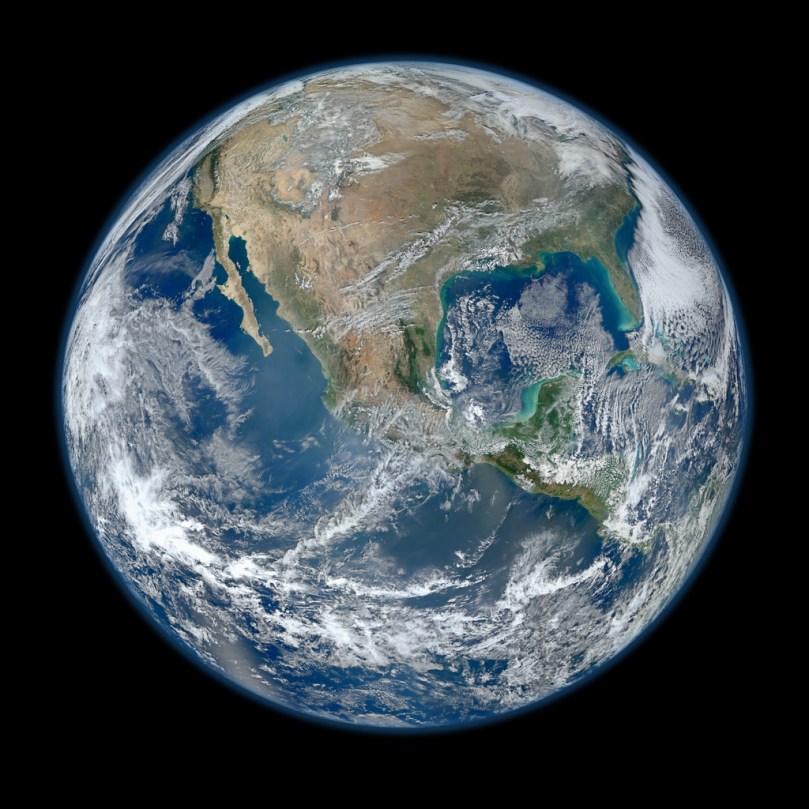
What if the end is not near? What if we are just getting started on this planet?

The earth is, what, 4.5 billion years old give or take a few million years and may have at least another billion years or more to support life before the sun scorches it. Modern Homo sapiens, though, have been here for only a mere 200,000 years, possibly. We look at 2,000 years ago as though it’s ancient history. That’s actually just a blip in time on the cosmic clock.

Every century has had its doomsday fervor. First century Christians, for example, were certain Jesus would be right back. There have been countless proclamations and errant prophecies of when everything would end. It’s as though people want to be in the last generation.

But, what if humans have a run like the dinosaurs did? Dinosaurs ruled the planet in various species for millions of years. Maybe we are at the very beginning, relatively, rather than close to the end. Of course, dinosaurs didn’t have the power to wipe themselves out the way we humans do now.

Let’s be optimistic for a moment, though, and, barring another cataclysmic asteroid collision, assume the human penchant for massive self-destruction as demonstrated throughout the past hundred years is just a phase we will get through. What if these are our “teenage” years as a species and we will mature into truly rational beings who use our big brains exclusively for constructive ends? Imagine what a fascinating world could lie ahead for our descendants.

What could human life look like 1,000 years from now? 10,000 years, 100,000 years from now? Surely, humans, if we make it another century or two, will be smarter and kinder and more civilized. The intelligence it will take to get past this phase of self-destructiveness almost ensures that, if we do survive, we will be better than we are now.

What can we do now to live our lives in such a way that we can help our species mature in the direction of a long, bright future for humanity? I do think about how my decisions affect my children’s future. I should also take the long view and consider the ramifications for generations yet unborn.

If we don’t blow ourselves up or destroy our environment, I’m certain we can continue to evolve and adapt and get better as a species. We each can do our part by being discontent with just getting by and striving to improve ourselves a little each day. Evolve intentionally. You, by being a bit more awesome this week than you were last week, can nudge the whole human race forward and toward an unimaginably fascinating future.

Taking the really long view can really change your perspective. Let’s think of this time we’re living in as just the beginning of the magnificent and very long human era on earth. Centuries from now our descendants could look back on our generation as the one that made the difference, that began a golden age of human existence.

6760135001_58b1c5c5f0_b
Image via NASA Goddard Space Flight Center

Education is not training

20130715-222848.jpg

Education is not training. A puppy can be trained, but not educated. True education grabs hold of you and sparks a powerful, consuming desire for lifelong learning stoked by curiosity and wonder.

“He who can no longer pause to wonder and stand rapt in awe, is as good as dead; his eyes are closed.” -Albert Einstein

“The thrill of discovery”

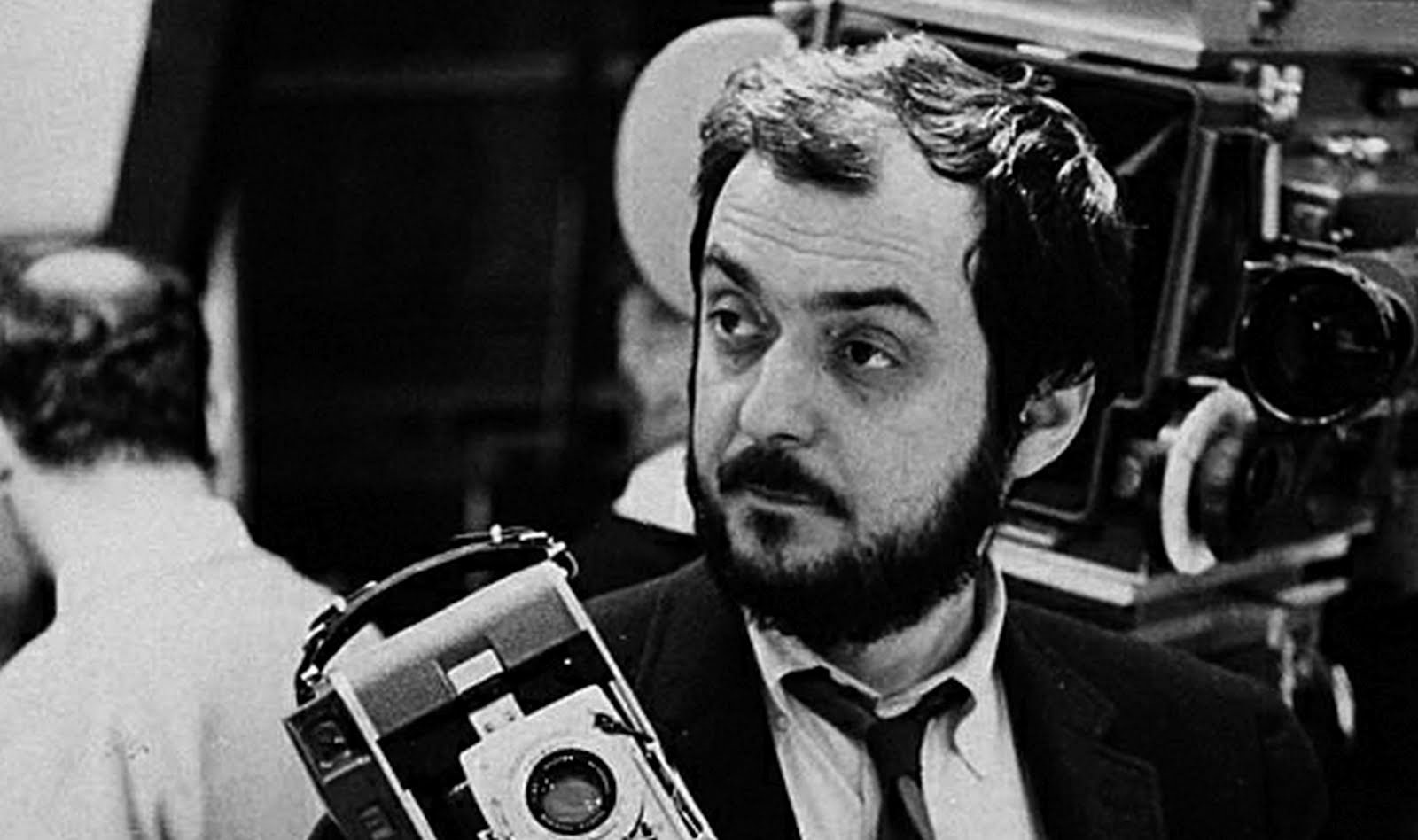
“If you really want to communicate something, even if it’s just an emotion or an attitude, let alone an idea, the least effective and least enjoyable way is directly. It only goes in about half an inch. But if you can get people to the point where they have to think a moment what it is you’re getting at, and then discover it … the thrill of discovery goes right through the heart.” -Stanley Kubrick*

This has me puzzling and reflecting on moments of insight in my own life. Do we want knowledge handed to us? Yes, actually. But does it take that way? How well does it stick?

Figuring something out for yourself has got to be stickier than just being handed an idea. A well structured story or movie can you have trying to guess the twist and then surprise you with an insight or a plot turn you hadn’t considered. We all love an “aha” moment, that “thrill of discovery” that changes a perspective or opinion, that could change your life.

This probably is an obvious communication strategy to great teachers and novelists and filmmakers. But the rest of us should consider how we can prompt discovery in our communication efforts.

I’m imagining now how I can be more intentional about building discovery into my presentations and even into conversations with my kids. Have your audience do their own thinking. Make them earn the transformation. This requires more thought, more planning. Instead of the old speech prescription – “Tell them what you’re going to tell. Tell them. Tell them what you told them.” – appreciate the audience’s intelligence and help lead them on a journey where they have to arrive at an insight on their own. Give them a chance for an “aha” moment that just might change everything.

via ParisLemon.com

*Kubrick’s wisdom keeps popping up in things I’m reading. Clearly, I need to catch up on his films.

20130713-205424.jpg

Dogma

20130712-162457.jpg

Inspired by Stephen Covey’s 7 Habits of Highly Successful People, I wrote a personal mission for myself close to twenty years ago. The first line was: “Pursue truth no matter the cost.” I’m no martyr. I have not had to face hardships to pursue truth. The biggest cost I’ve paid in pursuit of truth is the loss of comfort, the kind of comfort that comes with a set worldview. I don’t always have fixed stars to guide my journey through uncertain seas. But it makes for a more interesting journey.

Now, who can really say what capital-T Truth is? Some “true” things I have believed are no longer true for me, while some truths remain. Letting go of “truths” that were cherished, that shaped my identity and character, was not easy.

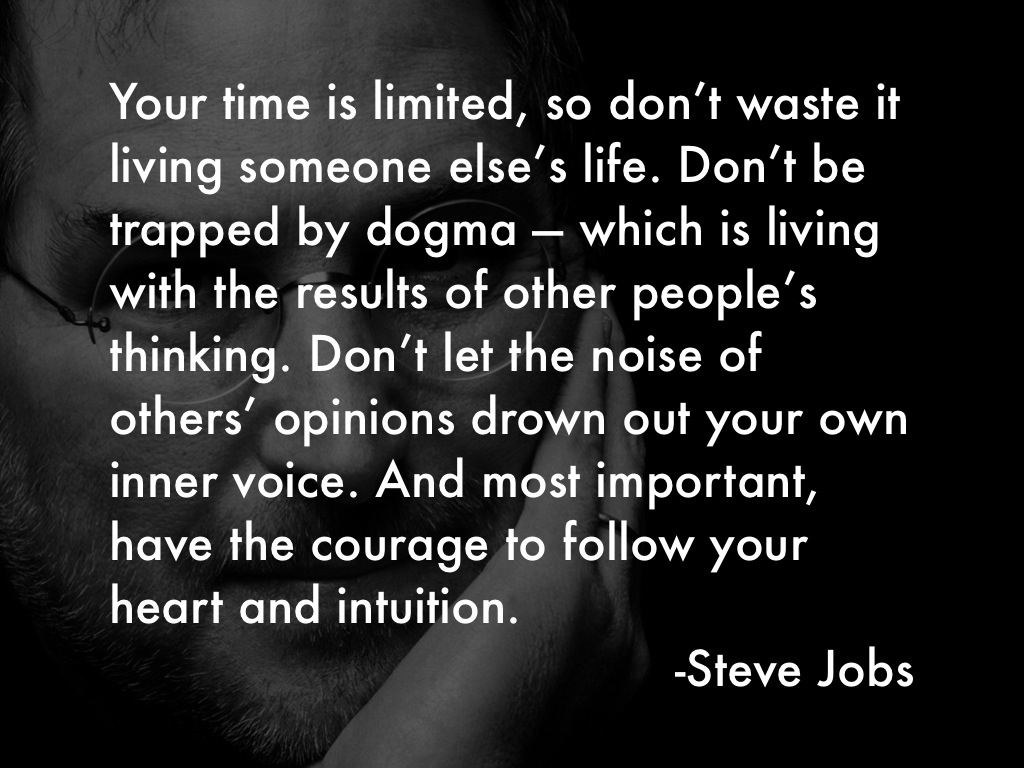
I still keep shifting in my understanding and experience of truths, big and small. It would be easy and comfortable to just accept what is assumed by most to be true, to embrace conventional wisdom and the dogma that has informed generations, to pick an opinion and stick with it. But to be a human and not use your amazing ability to reason, to question and explore and think for yourself… That would be a hollow life.

“I’m glad I’m not dead!”

The great author Oliver Sacks has this delightful essay, The Joy Of Old Age. (No Kidding), in the New York Times.

We who are younger often imagine life diminishing as we get older. Sacks is celebrating being 80 and the perspective on life it gives him.

Eighty! I can hardly believe it. I often feel that life is about to begin, only to realize it is almost over. My mother was the 16th of 18 children; I was the youngest of her four sons, and almost the youngest of the vast cousinhood on her side of the family. I was always the youngest boy in my class at high school. I have retained this feeling of being the youngest, even though now I am almost the oldest person I know.

I relate to this, still thinking of myself as this kid who’s just getting started even though I just turned 49. In my mind I’m still the kid brother, the boy wonder, the wide-eyed, brown-haired guy on the verge of my life’s adventure. Of course, my young daughters, when they draw family portraits, reach only for the grey crayon to fill in my hair. And the college students I work with think of me as a father figure instead of the cool older brother figure I imagine myself to be.

Maybe it’s having a wife ten years younger and coming to parenthood late that’s prolonging my illusion of youthfulness. But I do think age is such a state of mind. I’m proud to have reached 49. It’s better than the alternative, to not have made it this far. (As Sacks proclaims, “I’m glad I’m not dead!”)

And each decade of my life completed seems better than the one before. My thirties topped my twenties, and my forties have been richer and more meaningful than any decade in my life so far. I’m looking forward to turning 50 next year.

Here’s Sacks’s similar sentiment:

My father, who lived to 94, often said that the 80s had been one of the most enjoyable decades of his life. He felt, as I begin to feel, not a shrinking but an enlargement of mental life and perspective.

I do feel I’m only now beginning to embrace how little I truly know. And I’m excited at what I hope the decades ahead of me will unfold in knowledge and experiences. Sacks in his essay yearns for even a little more time “to continue to love and work, the two most important things, Freud insisted, in life”.

I agree. I will gladly embrace the good fortune of aging if I continue to fill my days with love and kindness and people I care deeply about and with meaningful, engaging work that seems more like play.

The happiest people I know are often the oldest people I know. The sweetness of life seems to expand for many as its end nears.

I’m looking forward to this final year of my forties. But bring on 50.

Seth Godin on bad PowerPoint

While corresponding recently with a friend asking for presentation design tips, I dug up this 12-year-old but still helpful and delightfully short Seth Godin e-book:

Really Bad PowerPoint (and how to avoid it)

“Almost every PowerPoint presentation sucks rotten eggs.” -Seth Godin

I use Apple’s Keynote software instead of PowerPoint, but it can be misused just as easily. They are fine pieces of software that need to be used simply as tools to support presenters rather than serving as the centerpiece of a presentation. I could go on (and I have) about what I’ve learned about presentation design, but the key is to understand that a presentation is about the interaction of the speaker and the audience. It’s about a transfer of emotion. It’s about provoking a change in thinking or action. It’s the speaker guiding the audience on a journey from “Why?” to “How?”.

Putting your outline or talking points on the screen for all to see does not help accomplish this. If the audience just needs to read your points, why even show up? Just send a memo or report instead.

If you use slides, use words on the screen sparingly. Put only one thought on each slide. Use powerful images to make your point stickier and to highlight the emotion you’re conveying.

Having the attention of an audience is a wonderful gift and an opportunity to make something good happen. Don’t let poorly designed slides get in the way of your chance to make a difference and do something worth talking about.

photo

A modern superpower

When is the last time you were in a conversation and felt someone was genuinely, deeply listening and trying to understand you? When is the last time you genuinely, deeply listened to someone? Not just going through the motions, nodding at key moments while actually just waiting your turn to speak. Not listening just enough to give the impression you care while you’re really composing your next thought to share when an acceptable pause gives you your chance to talk.

The gift of attention is as priceless a gift as you can offer or receive, especially in this age of distraction where so many stimuli are tugging at us, beeping, vibrating, pinging away at our limited supply of attention.

What if you put away your devices, ignored alerts, and zeroed in on the person in front of you? It’s not easy. Make it a practice to really listen, without judgment, without formulating your response. Just try to understand. You don’t have to be particularly wise or have great answers of your own. Paying attention is more powerful and more generous than offering advice, wit, or wisdom. It’s a skill anyone can cultivate, but so few do that it seems to be a rare, special power, a superpower even.

No cape required. No advanced degrees. No years of toil. Just listen and be present and be a hero for someone in need of genuine, old fashioned human connection.

20130707-220520.jpg

Ian McEwen on science

The novelist Ian McEwen on his fascination with science:

“Science is simply organised human curiosity and we should all take part. It’s a matter of beauty. Just as we treasure beauty in our music and literature, so there’s beauty to be found in the exuberant invention of science.”

This is from a great interview over on fivebooks.com, which is a site well worth getting lost in to explore lists of good books and interviews with book lovers.

For the love of science

We had a conversation with our campus tour leaders this week about science. Most tour leaders are not science majors. For whatever reason, few science students are drawn to our work. We get plenty of business and journalism majors, and there’s no shortage of English and political science students either.

But as campus tours unfold and they pass by science buildings, it’s easy for the non-science students on our team to dismiss science or apologize that we require at least a couple of science classes for all of our students.

I felt that way when I was an undergraduate. I just wanted to get past my science requirements with as little stress as possible. Now, I regret how little attention I paid to those subjects. Science has become significantly more fascinating to me in recent years.

In the history of humanity, it is the development of and amazing advances in science that stand out as our greatest achievements. Art and statecraft have their place, but science, even though it’s a relatively recent endeavor, has changed our lives exponentially for the better and sparked our inclination to explore and discover as never before. More people should honor and understand science. If we don’t do that in higher education, where will we?

I have begun trying to absorb more now about science and adding books to my reading list by or about Feynman, Darwin, Sagan, and Einstein. I don’t always understand. It’s like reading something written in a foreign language at times. But I can’t help but get excited about approaching the frontier of mysteries our ancestors could not even imagine.

This is the first video in the delightful Feynman Series. Check out the Sagan Series as well.

“I can live with doubt and uncertainty and not knowing. I think it’s much more interesting to live with not knowing than to have answers which might be wrong.” -Richard Feynman

Aim high

20130704-170555.jpg

There is more competition to be average than there is to be awesome. The fear of falling short keeps most people from aiming high. Most aim for safe and comfortable and unremarkable. So, if you pursue crazy big ideas you at least have the benefit of less competition.

The end is near

I was at a conference in Denver last year and saw a headline in the local newspaper that said astronomers had determined conclusively that the nearest galaxy to ours, the Andromeda galaxy, is on a collision course with our very own Milky Way. There’s no way around it. It will be catastrophic, cataclysmic. Andromeda definitely will collide with the Milky Way… in four billion years.

The good news is that our solar system, our tiny little corner of the galaxy won’t be impacted by the collision until about two billion years after the initial impact. So, we’ve only got six billion years.

Need perspective? Think big picture. Really big picture. While pondering the scale of galaxies and the mind-boggling expanse of time and space may make you feel small and insignificant, our smallness and our life’s brevity are reality. But how amazing is it that we are a part – and a conscious, intelligent, aware part – of such a grand, awesome, beautiful universe?

Pause and reflect regularly on the wonder of it all. Look up. Look closely at the mysteries that surround us, from the blade of grass underfoot to the galaxies spinning far beyond. Be wowed by all that is and that anything is at all.

“The most beautiful thing we can experience is the mysterious. It is the source of all true art and all science. He to whom this emotion is a stranger, who can no longer pause to wonder and stand rapt in awe, is as good as dead: his eyes are closed.” -Albert Einstein

20130703-211850.jpg

Adapt, survive, thrive

20130702-210224.jpg

Strength and intelligence alone mean little when your environment changes. What was smart in one situation may be perilous when things change. The newspaper industry and the music industry seemed to have bulletproof business models for most of the twentieth century. Then the internet happened. Only the players who have adapted to those changes rather than clinging tightly to what used to be smart and strong are thriving now.

I’m in higher education, and I imagine it’s in for some major shifts and rethinking in the next decade. Broadcast television, government, small business, religion… This century will look very different than the previous one.

Those institutions and people that have the courage to let go of relying on outdated strengths and conventional wisdom are the ones likely to thrive as we face an era of unprecedented change.

How can you brace yourself and condition yourself for change personally? How can you shed habits and patterns and try on new approaches and behaviors to be prepared to adapt and thrive?

The ultimate mission for each generation

20130701-223316.jpg

The more we know, the more we realize we don’t know.

What an awesome, overwhelmingly mysterious universe we live in.

“He who thinks he knows, doesn’t know. He who knows he doesn’t know, knows.”

You want a calling, a noble mission that can consume your life? Make it your work to help push humanity’s understanding of the universe and our place in it even a little further into the vastness of the unknown.

Art is infection

Tolstoy said you shouldn’t have to puzzle over art and try hard to figure it out. Great art, he thought, should be able to be grasped by even a child. An artist has a feeling, an idea, something that moves him, and he wants to share it with others. If he makes good art, then others, those who read his writing or view his painting or hear his speech, will get that same feeling. “Art is infection,” he said.

All of us are artists. What is meaningful enough to you to want to share with others? How can you convey it simply and memorably, in such a way that even a child could get it?

20130630-223501.jpg