Real freedom

The late David Foster Wallace on real freedom, overcoming our default settings and responding to life, or the “real world”, wholeheartedly and authentically:

The really important kind of freedom involves attention, and awareness, and discipline, and effort, and being able truly to care about other people and to sacrifice for them, over and over, in myriad petty little unsexy ways, every day. -David Foster Wallace

https://vimeo.com/75422173

Video by Max Temkin

Wonder why

“Learn to ask of all actions, ‘Why are they doing that?’
Starting with your own.” -Marcus Aurelius, Meditations

Reading those lines this morning reminded me of some great Stephen Covey insights I wish I was more inclined to consistently apply in my life.

I’m paraphrasing, but Covey, author of The 7 Habits of Highly Effective People, suggested when you’re inclined to judge, stop yourself and attempt, instead, to try to understand.

“Why?” is the king of questions. And if you ask “I wonder why…?” on a regular basis, you will open yourself to possibilities and to compassion, for others and for yourself.

Asking “I wonder why that driver is driving so recklessly?” can transform you from an angry observer to a curious one. What if the driver was on the way to the hospital for an emergency? Unlikely? Sure. But just framing the question can give you pause and defuse an unhelpful emotion.

Got some bad habits or frustrating tendencies in your own life? Wonder why and you just might go a little easier on yourself while sparking the possibility for genuine understanding and possibly a breakthrough.

Instead of labeling or judging or reacting, use the gap between stimulus and response to try to understand.

Want to spark more meaningful conversations? Ask “Why?” often, not in a pestering way, but with the intent to truly understand the other.

Want a clear vision for your family or your organization or your work? Ask “Why?” and pursue the answers relentlessly.

Why not make “Why?” your go-to question, the spark for possibilities that otherwise would remain undiscovered.

Screen Shot 2014-06-02 at 5.09.11 PM


“Resistance”: Using fear to find your way

This afternoon I made a trip to the backyard hammock. I had survived my daughter’s 7th birthday Frozen slumber party and was looking forward to a quiet day. I picked up my old Kindle e-reader, the one with no touch screen and no apps. I usually read on my iPad mini, but reading in a hammock outside is a Kindle occasion.

The book that happened to be at the top of the list when I powered the Kindle on was Steven Pressfield’s The War of Art. Such a great read. It’s the ultimate kick in the seat of the pants for anyone who wants to get something done but who keeps not doing the thing they want to do.

Pressfield is a novelist (his Gates of Fire is terrific), but The War of Art is non-fiction and non-B.S. It’s straight talk about the battle we all face when confronted by the desire to make something meaningful or to live a nobler life. He names the force that opposes our efforts the “Resistance”. From the opening pages:

“Most of us have two lives. The life we live, and the unlived life within us. Between the two stands Resistance.”

The greats are great because they mustered the will to overcome this Resistance. The greats didn’t wait on inspiration; they put their butts in their chairs and did work, whether they felt like it or not.

Instant gratification, comfort, pleasure, pain-avoidance of any sort are all forms of Resistance. Beating Resistance is a daily undertaking. It’s not a one and done kind of battle. Pressfield encourages us, though, to use Resistance to our advantage:

“Like a magnetized needle floating on a surface of oil, Resistance will unfailingly point to true North – meaning that calling or action it most wants to stop us from doing.

We can use this. We can use it as a compass. We can navigate by Resistance, letting it guide us to that calling or action that we must follow before all others.

Rule of thumb: The more important a call or action is to our soul’s evolution, the more Resistance we will feel toward pursuing it.”

So, search yourself and explore the grand plans of your imagination. The plans for the kind of person you would like to be and the dreams of the work you want to do. Find where there is the most Resistance, those things that seem to be too much of a stretch, where the fear of action is greatest. There’s your calling. Head in that direction.

warofart

The Long Game and the patient pursuit of awesomeness

This two-part video series was inspired by one of my favorite recent books, Mastery by Robert Greene.

It takes a long time and focused effort to become an “overnight” success. Imagine being a 20-year-old whose primary focus was to peak at 60? How would such a mindset change your decisions? It’s so natural to be in a hurry, to be ambitious for success right away. But consider focusing on the “long game”, the steady, patient pursuit of awesomeness over the long arc of a life worth talking about.

via BrainPickings.org

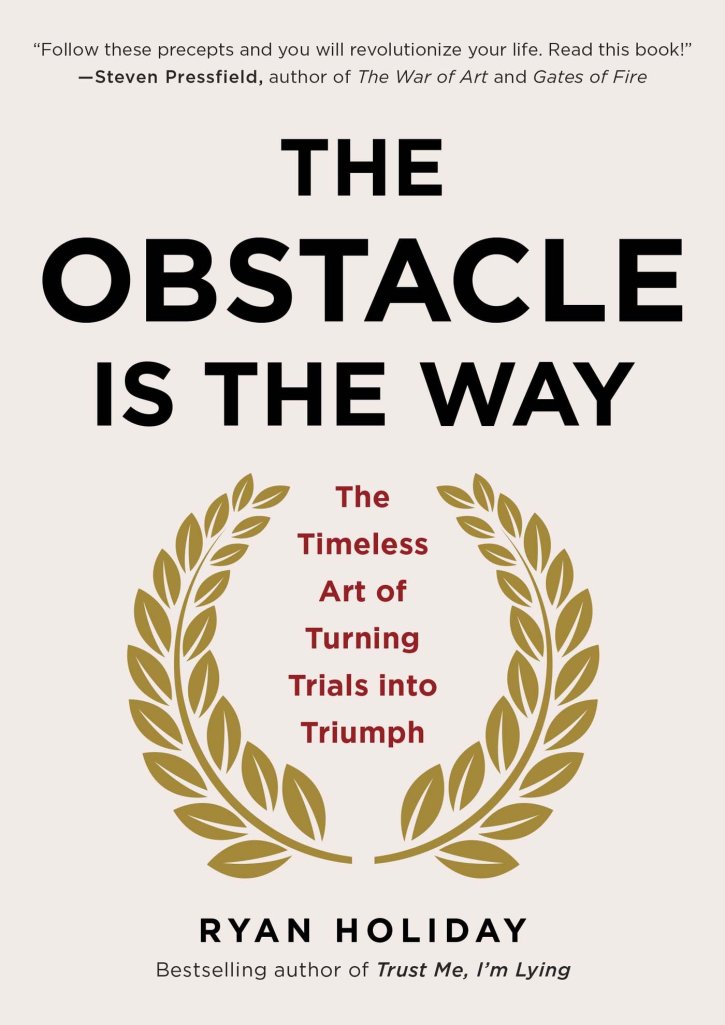
The Obstacle is the Way

The impediment to action advances action. What stands in the way becomes the way. -Marcus Aurelius

Ryan Holiday is an impressive young author. He’s in his mid-twenties and just published his third book, The Obstacle is the Way, which is a delightful, short, story-filled exploration of the value of embracing adversity. Ryan’s writing is influenced by the Stoics, and Marcus Aurelius’s Meditations is one of his favorite books also. (So, he must be cool, right?)

I’ve already given The Obstacle is the Way to a few young friends. It’s a quick read and filled with examples of great men and women who thrived in spite of, or, actually, because of the difficulties seemingly blocking their way.

Holiday, the author, has had an interesting career. He left college before graduating, but has continued his own education through some killer work experiences and a prolific consumption of books. My friend, Nick, recommended Holiday’s reading recommendation newsletter, and I’ve been impressed with the quality and quantity of his book suggestions.

This is a solid podcast interview with Ryan by Tim Ferriss. I listened to this while doing yard work recently and found Holiday to be just as engaging and thoughtful in conversation as he is in his writing. It’s a bit humbling to me that this guy who is almost half my age has accomplished so much and seems so wise already.

College students and others just getting started (and even old guys like me who are still trying to figure things out) will appreciate his take on building a meaningful and artful life.

obstacle

The daily grind, the daily find

A year ago I committed myself to sharing something daily on this site. It didn’t have to be a well composed, lengthy essay about weighty matters. It could have been something small I had found or something I was trying to learn more about. I was fine with reaching the end of a night and simply posting a quotation or link just to fulfill my commitment to sharing something every day.

Often, that attempt to post some small item led to more searching and insight than I had expected. And I loved surprising myself with unanticipated output, with creative pursuits that wouldn’t have been given a chance except for my humble attempt to find just one little thing to share every day, to keep that commitment. I had a blast and looked forward to what would surprise me each day.

I kept that commitment for several months and felt, eventually, like I had accomplished a goal and could go back to posting sporadically. My posting was feeling more like a daily grind, a burden to come up with something worth sharing.

I realize now that I miss trying to fulfill the daily writing commitment. My life seemed clearer, more intentional when I had this tiny task every day. My brain was on a regular search to find something worth writing about. I’m reminded of Leo Buscaglia whose childhood was enriched by a father who expected every kid in the family to share at dinner each night something new they learned that day. Leo said he often would rush to the encyclopedias right before dinner, desperate to find something worth sharing.

The quest to better understand and better experience life is speeded along by an effort to express, to articulate, to share.

I don’t presume to have an audience (thank you lone reader, this one’s for you), but my target audience is myself. I write to know myself better, to figure things out, to see what I have to say. To write the internet I would enjoy reading. Secondarily, I write to my young daughters, who have no interest now in any of this. But, maybe someday they will find some value buried in here.

Even if I’m writing for myself alone, I owe it to myself to be as awesome as I can be. Sharing every day will produce a lot of bad writing and banal ideas. But bad could lead to okay. And okay might eventually produce something pretty good. The road to awesome is paved with a whole lot of mediocre, but mediocre action is better than no action.

So, brace yourself, lone reader. I’m back to the daily grind.

Sunday morning Stoic

From Marcus Aurelius’s Meditations:

“External things are not the problem. It’s your assessment of them. Which you can erase right now.
If the problem is something in your own character, who’s stopping you from setting your mind straight?
And if it’s that you’re not doing something you think you should be, why not just do it?
—But there are insuperable obstacles.
Then it’s not a problem. The cause of your inaction lies outside you.
—But how can I go on living with that undone?
Then depart, with a good conscience, as if you’d done it, embracing the obstacles too.”

“Concentrate on what you have to do. Fix your eyes on it. Remind yourself that your task is to be a good human being; remind yourself what nature demands of people. Then do it, without hesitation, and speak the truth as you see it. But with kindness. With humility. Without hypocrisy.”

Richard Sherman on craftsmanship: “meticulous attention to detail”

Kottke just shared this fascinating video of Seattle Seahawks star cornerback Richard Sherman talking about his craft. (Sherman is one of the more interesting personalities in the NFL. A Stanford grad with some serious smarts who is most well known now for his colorful comments. He talks, but he sure can back it up.)

I feel like I’m a decent athlete, but my tape study and my meticulous attention to detail are what make me a good ball player. -Richard Sherman

This video feature on Sherman is worth watching, even if you don’t have any interest in football. Sherman acknowledges he’s not the most athletically gifted at his position, but he’s considered maybe the best cornerback in the NFL. And it’s all because of how he prepares. He pursues his work with an obsessive attention to detail. Practice doesn’t necessarily make perfect, but thoughtful, strategic, relentless preparation can set you apart because so few, even the most gifted, pursue excellence with such focus.

Screen Shot 2014-05-09 at 4.07.54 PM

Mother’s Day gift: Sarah Kay’s poem

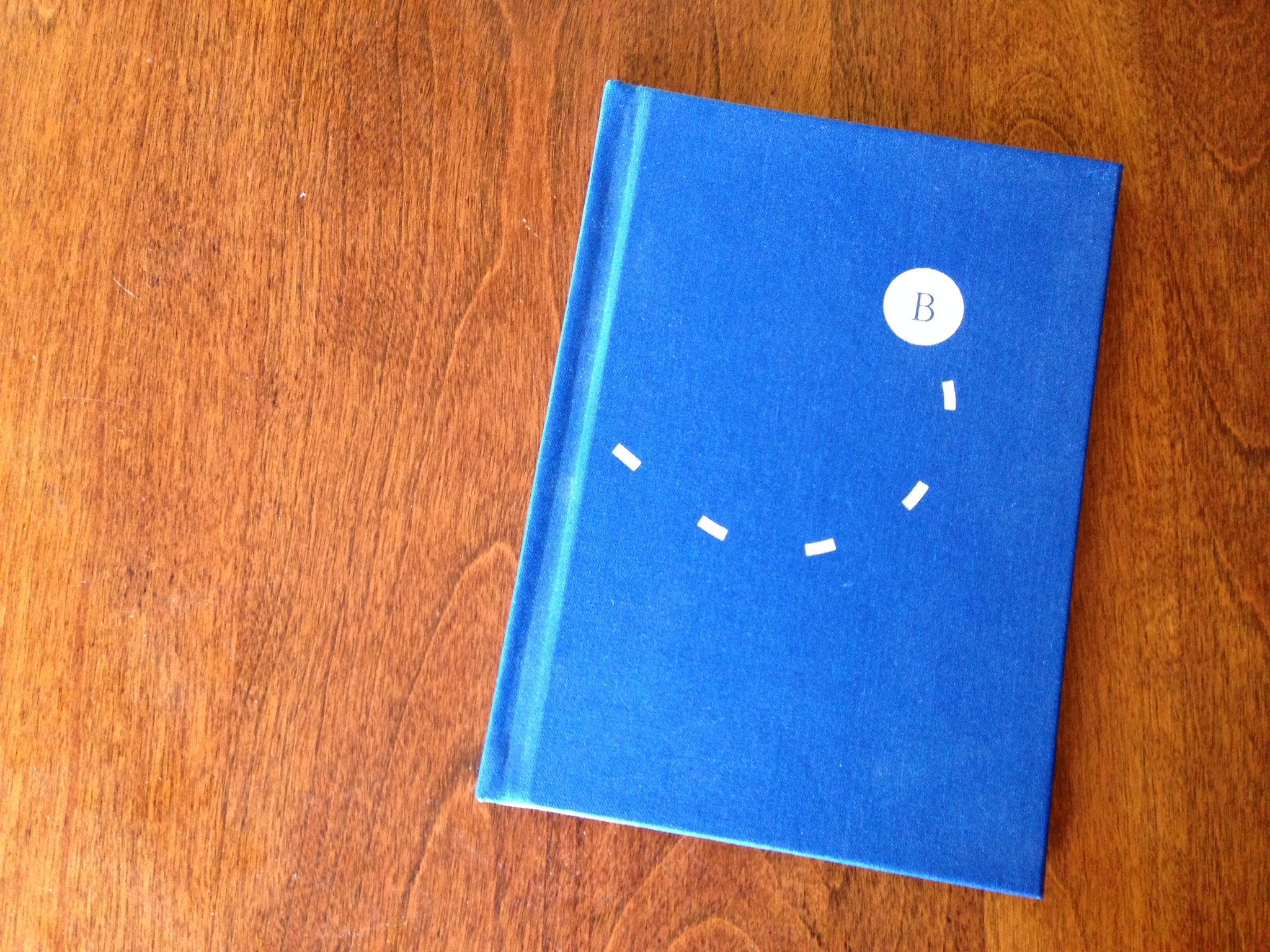
Need something thoughtful for a mother in your life for Mother’s Day this weekend? My daughters and I gave this lovely little book of Sarah Kay’s poem B to my wife a couple of years ago.

It’s the poem Sarah performed on the TED stage to much acclaim. I loved her dynamic presence on stage as much as her message.

Mothers and daughters will especially appreciate the message of this poem, but fathers and sons and any human would, too.

IMG_4862

John Mayer on craftsmanship

I’ve written before about my appreciation of John Mayer’s artistry as a musician. I just saw this new documentary, Someday I’ll Fly, about his career and came away impressed. It’s a thorough review of how he got to mastery. Mayer narrates and offers several gems of insight throughout:

“I used to be at home in my bedroom and pretend that I was on stage, and now I’m on stage and I pretend that I’m home in my bedroom.”

“I want to bring my playing all the way up to the the top of ability…there are some nights my playing goes over my ability. I kind of hit that place where I’m unsure. But then I always find that I get a little further into the craft by doing that.”

“That craft responds to truth, and you’ve got to stay truthful. No matter how many records you’ve sold or performances you’ve played, you come home, the whirlwind stops and you go back to the craft.”

When he was a teenager Mayer was so obsessed with getting good at playing guitar that his mom had to give him a “guitar curfew”, a time he had to stop playing every night. John Mayer wasn’t born with a gift for guitar. He worked hard to become great.

It’s both comforting and convicting to know that our own levels of mastery are completely up to us. If we want to get really good at something, we only need to be willing to obsess enough to consistently devote quality time and smart effort.

via shawnblanc.net

“Talent is not stopping.”

This interview with Everything Is A Remix creator Kirby Ferguson is solid. Love his advice for those just getting started:

What would your advice be to the 20-year-old version of you, who’s just starting their career?

I wish I had Everything Is A Remix when I was younger. I wish I knew that you can just start copying other people’s stuff and fiddling with it, and putting stuff into it, and just sort of build from there. It’s okay to be primitive. That’s a perfectly fine way to start making things.

I wish the earlier me understood work and practice more. Just the repeated concerted effort to get better at things. I wish I didn’t have the notions of talent and genius I had back then. I thought, “Oh, these other people, they just have something that I don’t have.” When really, they are just people who work more.

I wish I understood work. Work is the key to anything you want to do. If you want to play the guitar—anybody can learn to play the fucking guitar—you can be good at it. Maybe you won’t get to be a genius but you could be good.

You can be good enough to write good songs or make a good film or whatever. There’s no such thing as not having enough talent to get to that level. I mean, persistence is talent, really. Just sticking with it. Talent is not stopping.

I keep coming across this simultaneously reassuring and frightening notion that genuine talent is not based on innate ability. We’ve got no excuse for not being great. It’s all about effort and persistence and thoughtful, incremental improvement. Sure, some people have genetic advantages, but the hard work and clear focus of someone of average ability can overtake the half-hearted efforts of a genius slacker.

Do the work. Be awesome.

On reading books that change you

I think we ought to read only the kind of books that wound and stab us. If the book we are reading doesn’t wake us up with a blow on the head, what are we reading it for? …we need the books that affect us like a disaster, that grieve us deeply, like the death of someone we loved more than ourselves, like being banished into forests far from everyone, like a suicide. A book must be the axe for the frozen sea inside us. -Franz Kafka

Kafka is a bit extreme here (hyperbole suits him, of course), but I share his desire for books and for any art that pitches me out of my complacency, that disrupts my comfort of safe ideas and undisturbed feelings.

There’s a numbness to most of our daily existence. Well worn paths are trodden mindlessly. Wake up and go through the motions. Cling thoughtlessly to our tight little circle of opinions and beliefs.

There are landmark moments in my life, though, where an artist has shaken me and provoked a new way of seeing. It’s a surprisingly refreshing kind of pain.

I remember being twenty-something and crashing while riding a bicycle, landing hard on a gravel road and scraping my leg in the process. And it was euphoric. The pain startled me into a sudden awareness that I was indeed alive.

I need that kind of euphoric intellectual and emotional blow regularly. I should embrace the pursuit of ideas that stretch my mind and challenge me to reconsider comfortable assumptions. A truly great book can send me on a journey of discovery that changes everything.

I don’t mind some occasional mindless entertainment, but life is too short to not seek out regular doses of mental and emotional nourishment – provocative, mind altering, life altering works of art.

Fiction: novel ideas

My friend Richard is a writer. We met for lunch a couple of months ago, and he told me he’s working on a novel. (So, yes, I have lunch with novelists.) We worked together on Capitol Hill many years ago, and now he’s retired from the political world and is focused on writing. He saw my post about books I’m reading and asked me why there are no novels on my to-read list.

I didn’t have a good answer. I’ve gone through phases where I read a lot of fiction and other times where I think I need to focus exclusively on non-fiction to get as much value as possible from my reading. But a great novel is more than a pleasant mental diversion. Fiction can awaken and enlighten in ways that non-fiction cannot. And a remarkable novel makes an indelible mark on my memory. There are passages from Tolstoy that evoke emotion twenty years after first reading them. (Read Tolstoy. His masterpieces may seem overwhelming, but they are simply long, not impenetrable. To the contrary, his writing is remarkable for its clarity and profound insight into the simplest of human experiences. He’s considered the greatest novelist ever for a reason.) The joyous experience of reading books like I, Claudius and The English Patient remain as vivid as recalling the greatest conversations I’ve ever had.

So, Richard’s question prompted me to add novels back into my regular reading routine, and it’s been a wonderful change. I try to read fiction at the end of the night. Novels are less likely to spark my mental to-do list or inspire brainstorming when I really need to go to sleep. I’m currently switching between two novels: The Signature of All Things by Elizabeth Gilbert and The Martian by Andy Weir. They are very different stories and provide a nice change of pace when I want to switch my attention, kind of like changing channels on TV for a different mood.

I’m more than three-quarters through each book, and I’m enjoying them both. I’ve also started Zorba the Greek and just purchased Memoirs of Hadrian. (I’m a sucker for Roman historical fiction, and this one gets such rave reviews.)

Getting lost in a great story is a singular pleasure. Being in a reading zone, where all else falls away, dispels distractions like few other activities. And in a distracted age such focused attention is precious therapy and a prod to more wholehearted living.

The delight and insight offered by a good story well told justify making the time for novels in your reading habit.

913MaEC1LvL


the-martian-by-andy-weir

Systems, not goals

This is from the cartoonist, Scott Adams, as quoted in The Farnam Street blog (Farnam Street is regularly excellent, by the way.):

“If you do something every day, it’s a system. If you’re waiting to achieve it someday in the future, it’s a goal.

[O]ne should have a system instead of a goal. The system-versus-goals model can be applied to most human endeavours. In the world of dieting, losing twenty pounds is a goal, but eating right is a system. In the exercise realm, running a marathon in under four hours is a goal, but exercising daily is a system. In business, making a million dollars is a goal, but being a serial entrepreneur is a system.

Goal-oriented people exist in a state of continuous pre-success failure at best, and permanent failure at worst if things never work out. Systems people succeed every time they apply their systems, in the sense that they did what they intended to do. The goals people are fighting the feeling of discouragement at each turn. The systems people are feeling good every time they apply their system. That’s a big difference in terms of maintaining your personal energy in the right direction …”

This is great insight. Instead of aiming for some goal out there, arbitrary as most goals are, aim instead to be the kind of person and do the kinds of things that someone who achieves those goals would be and do. And then don’t obsess on the goals. Just do the work and live the life. Act as if you are who you want to be.

A daily or weekly routine, a consistent application of even small habits, will transform our lives more effectively than striving for some overwhelmingly large goal.

20140421-204913.jpg

Do less, better

I met with a group of university freshmen yesterday. They were part of a leadership program that required them to interview faculty and administrators to collect advice on how to have a great college experience.

One of the students asked which college activities I recommend. Several organizations came to mind, and I shared a list of the ones that seem to have strong reputations and offer worthwhile experiences.

But I cautioned them not to spend their college years trying to build a long and seemingly impressive resume. There’s some merit to trying a lot of activities early on. But the most remarkable students I’ve known were those who focused on depth over breadth, who invested deeply in a few activities they genuinely cared about

These college superstars invariably chose their pursuits, academic and extracurricular, for their intrinsic worth, not necessarily as a means to an end or for their potential to move them up the ladder of accomplishment. And their focus allowed them to shine in ways that those who spread themselves across more obligations did not.

Explore possibilities thoroughly and “try on” a variety of pursuits to see what might fit well. But commit to only those activities that resonate and are most worthy of your limited time. And then go be awesome there.

This is not just a strategy for college success. I need this in real world life. Do less, but do it better. I need to say “no” consistently to inessential opportunities and commitments, even noble ones, in order to give my best effort to the few, key priorities I’ve chosen to build my work and my life around.

“If you seek tranquillity, do less.” Or (more accurately) do what’s essential—what the logos of a social being requires, and in the requisite way. Which brings a double satisfaction: to do less, better.
Because most of what we say and do is not essential. If you can eliminate it, you’ll have more time, and more tranquillity. Ask yourself at every moment, “Is this necessary?”
But we need to eliminate unnecessary assumptions as well. To eliminate the unnecessary actions that follow” –Marcus Aurelius

Awakening

20140401-221123.jpg

On a day of silly pranks, how blind were we to the magnificent mysteries all around us? The unfamiliar warmth of the spring sun and the shower of blossoms floating from the trees were enough to catch me by surprise. The seasonal awakening of nature can stir us from our winter lethargy. Let’s come alive with wonder and delight.

We are walking in a wonderland every day and yet tread ploddingly, numbly along.

“It’s about awakening the mind’s attention from the lethargy of custom and the film of familiarity and redirecting it instead to the wonders of existence.” -Jason Silva