“If everyone had the luxury to pursue a life of exactly what they love, we would all be ranked as visionary and brilliant. … If you got to spend every day of your life doing what you love, you can’t help but be the best in the world at that. And you get to smile every day for doing so. And you’ll be working at it almost to the exclusion of personal hygiene, and your friends are knocking on your door, saying, ‘Don’t you need a vacation?!,’ and you don’t even know what the word ‘vacation’ means because what you’re doing is what you want to do and a vacation from that is anything but a vacation — that’s the state of mind of somebody who’s doing what others might call visionary and brilliant.” -Neil DeGrasse Tyson
“Not enough love.” That was the response from Frank Chimero’s design professor after looking through some of his work.
“My work was flat, because it was missing the spark that comes from creating something you believe in for someone you care about. This is the source of the highest craft, because an affection for the audience produces the care necessary to make the work well.”
…
“The work has enough love when enthusiasm transfers from the maker to the audience and bonds them.”
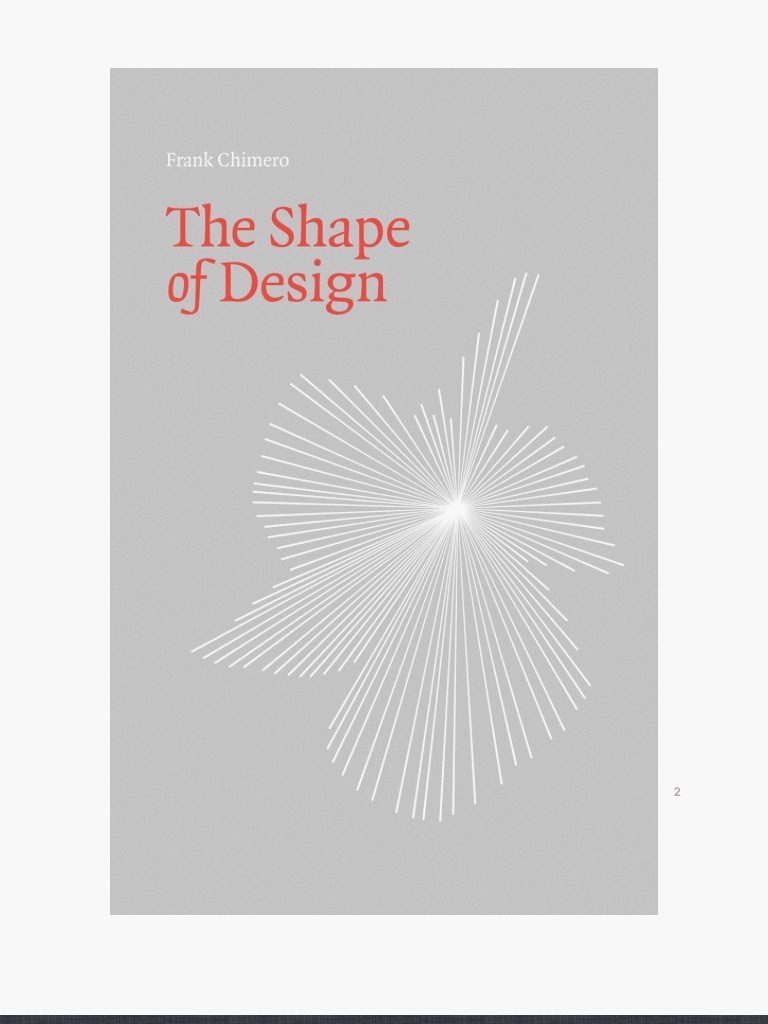
This is from Chimero’s excellent book, The Shape of Design. The passage above reminds me of Tolstoy’s claim that “Art is infection.” An artist, a teacher, a maker of any sort, has an idea or feeling and wants to share it. It’s effective, it’s art, when the audience gets that very same feeling or sees that idea just as the maker did.
You’ve got to care enough about your work and those you serve – an audience, a customer, a student – that you fill your work with all the love you can, with care and attention to detail and enthusiasm.
When I write, I often imagine my audience to be my young daughters reading this many years from now, maybe even after I’m gone. Don’t you know that informs my efforts. When I lose sight of my ultimate audience, it’s easy to lapse into just going through the motions. Then flatness abounds.
What if we examined all our work in this light? What gift can we offer to our audiences? Our colleagues or customers? Our families? Are we putting enough love into our labors?
“Whoever then wishes to be free let him neither wish for anything nor avoid anything which depends on others” –Epictetus: The Essential Writings
The only sport I now follow with any real interest is college football. This reminder to put our happiness in our own hands is much needed as the season begins. Our happiness in the hands of 20-year-old football players is a silly thought.
Why waste any worry or frustration over things that we have no control over?
Don’t aim at success — the more you aim at it and make it a target, the more you are going to miss it. For success, like happiness, cannot be pursued; it must ensue, and it only does so as the unintended side-effect of one’s dedication to a cause greater than oneself or as the by-product of one’s surrender to a person other than oneself. Happiness must happen, and the same holds for success: you have to let it happen by not caring about it. I want you to listen to what your conscience commands you to do and go on to carry it out to the best of your knowledge. Then you will live to see that in the long run—in the long run, I say!—success will follow you precisely because you had forgotten to think of it. -Victor Frankl
This is non-attachment. Do the thing for the thing itself, not for some desired outcome. Get lost in the path – the journey, the way – and the destination will meet you there.
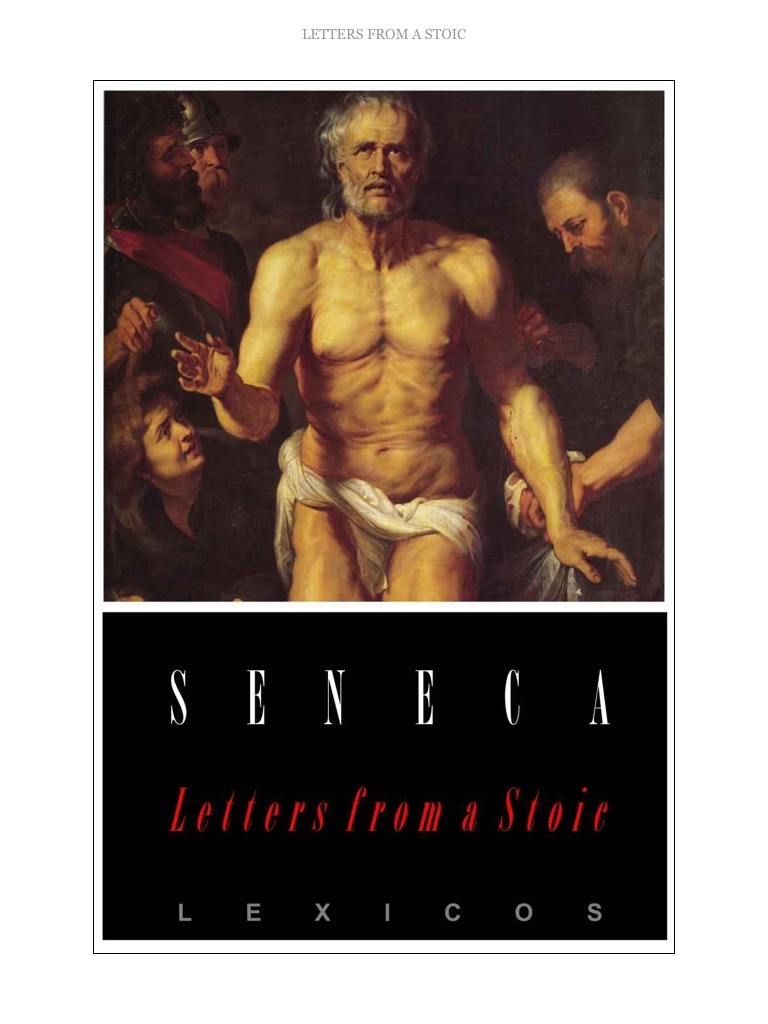
“… no prizefighter can go with high spirits into the strife if he has never been beaten black and blue; the only contestant who can confidently enter the lists is the man who has seen his own blood, who has felt his teeth rattle beneath his opponent’s fist, who has been tripped and felt the full force of his adversary’s charge, who has been downed in body but not in spirit, one who, as often as he falls, rises again with greater defiance than ever.”
The late, great Leo Buscaglia was a dynamic whirlwind of positive energy. He was a professor at USC and became famous on campus for teaching a non-credit class about love that would overflow the lecture hall with standing room only for the crowd of interested students. He wrote several books and took his wisdom and hugs on the road spreading the good news of love.
I had a few of his lectures on tape (cassette tapes, kids) and would listen on road trips. When he was a child, Leo and his family ate dinner together every night, and his dad would begin the nightly family dinner by asking everyone at the table what they had learned that day. And he expected everyone to have learned something. Leo said there were many days that, just before dinner time, he would rush to find an encyclopedia (that’s a tiny internet in a big stack of books, kids) and look up something new to learn just to make sure he wouldn’t come up empty when his dad asked that question at dinner.
I like that daily expectation, pressure even, to learn at least one thing each day. That’s what this blog is doing for me. I’m committed to writing daily, and there have been days when, just before bed time, I scramble to find something worth sharing. A quotation. A video. A book recommendation. A minor epiphany.
By committing to sharing regularly, I’m committing to learning regularly. Learn something every day. And share what you learn.
“Too often we underestimate the power of a touch, a smile, a kind word, a listening ear, an honest compliment, or the smallest act of caring, all of which have the potential to turn a life around.” -Leo Buscaglia
Here’s a brief bit of video from one of Buscaglia’s lectures, just to give you a sense of this guy’s energy:
John Mayer is among my favorite performers. He broke onto the scene seeming like he might just be another pop sensation, but he has become quite the soulful virtuoso with thoughtful music that keeps evolving.
I’ve been wearing out his latest album, Born and Raised, which has a 70’s, Eagles kind of vibe to it. I appreciate that his music is not predictable and formulaic. And he does, too.
His fabulous live performance in Los Angeles in December 2007 was made into a concert film, Where The Light Is. The whole thing is available on YouTube now. He does three different performances during the concert. He opens with a solo acoustic set. Then he changes clothes and comes back to the stage with his blues band for a blues concert. Finally, he returns to the stage with his full touring band to wrap up the night.
He keeps stretching his musical chops, trying on different styles and formats. It would be easy for a guy who hit it big at such a young age to just stick with what brought him his success. He could phone it in for decades and play the same kind of stuff to big crowds of loyal fans. But, instead, he’s taking risks and going in directions that his fans may not want to follow.
He says this at the beginning of the “Where the light is” concert film:
“It’s only fun when you’re trying to get it in your grasp. It’s like, you know, once you catch it, throw it back in the water then catch it again. That’s really what I want to do my whole career.”
A good reminder for anyone who realizes it’s about the journey rather than the destination.
Here’s your reminder as you prepare to begin another week. Go, be awesome.
I’ve posted previously about the Cal Newport book whose title was inspired by this Steve Martin quote. And you really ought to do yourself a favor and listen to Martin’s great audiobook, which I’ve raved about before.
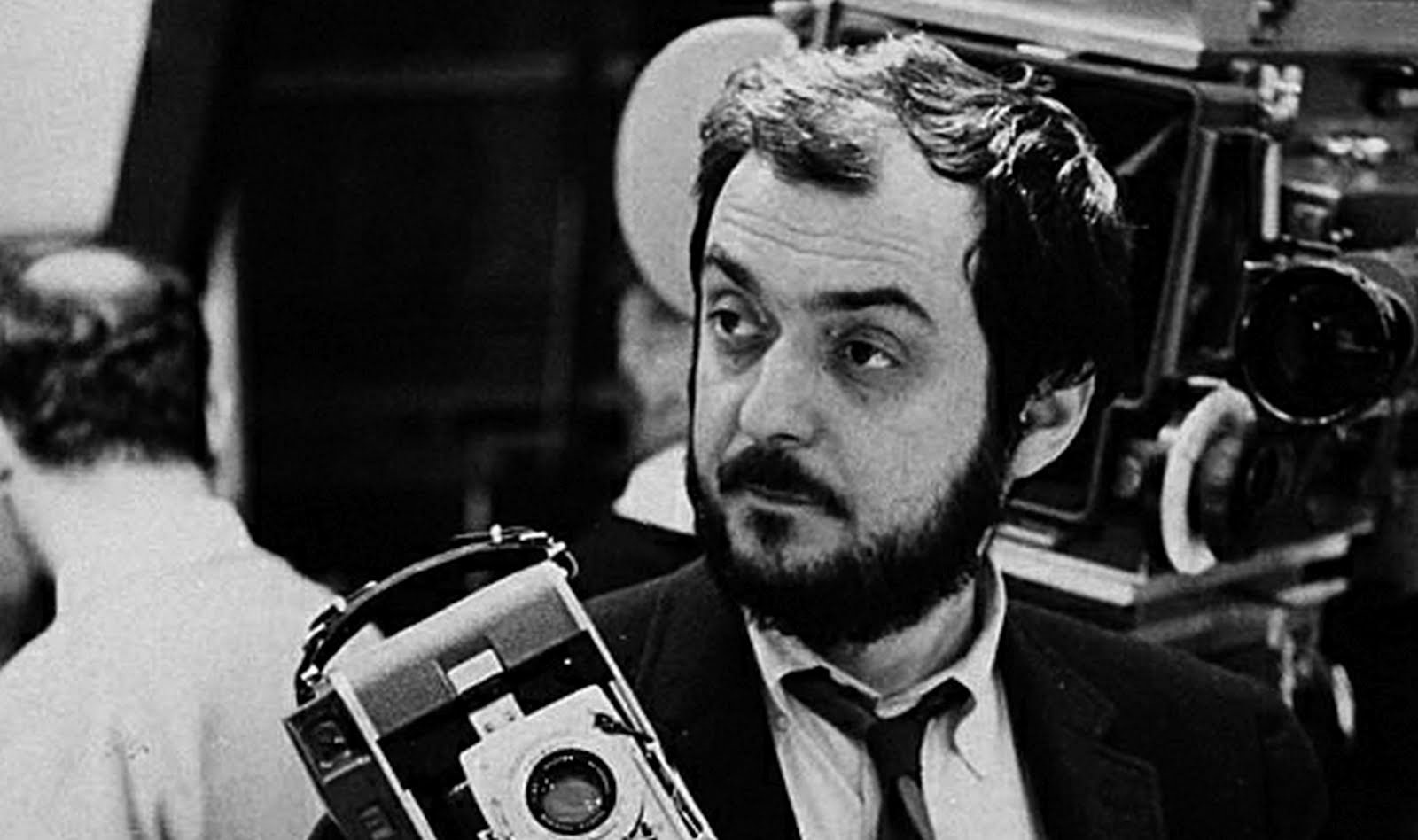
“If you really want to communicate something, even if it’s just an emotion or an attitude, let alone an idea, the least effective and least enjoyable way is directly. It only goes in about half an inch. But if you can get people to the point where they have to think a moment what it is you’re getting at, and then discover it … the thrill of discovery goes right through the heart.” -Stanley Kubrick*
This has me puzzling and reflecting on moments of insight in my own life. Do we want knowledge handed to us? Yes, actually. But does it take that way? How well does it stick?
Figuring something out for yourself has got to be stickier than just being handed an idea. A well structured story or movie can you have trying to guess the twist and then surprise you with an insight or a plot turn you hadn’t considered. We all love an “aha” moment, that “thrill of discovery” that changes a perspective or opinion, that could change your life.
This probably is an obvious communication strategy to great teachers and novelists and filmmakers. But the rest of us should consider how we can prompt discovery in our communication efforts.
I’m imagining now how I can be more intentional about building discovery into my presentations and even into conversations with my kids. Have your audience do their own thinking. Make them earn the transformation. This requires more thought, more planning. Instead of the old speech prescription – “Tell them what you’re going to tell. Tell them. Tell them what you told them.” – appreciate the audience’s intelligence and help lead them on a journey where they have to arrive at an insight on their own. Give them a chance for an “aha” moment that just might change everything.
When is the last time you were in a conversation and felt someone was genuinely, deeply listening and trying to understand you? When is the last time you genuinely, deeply listened to someone? Not just going through the motions, nodding at key moments while actually just waiting your turn to speak. Not listening just enough to give the impression you care while you’re really composing your next thought to share when an acceptable pause gives you your chance to talk.
The gift of attention is as priceless a gift as you can offer or receive, especially in this age of distraction where so many stimuli are tugging at us, beeping, vibrating, pinging away at our limited supply of attention.
What if you put away your devices, ignored alerts, and zeroed in on the person in front of you? It’s not easy. Make it a practice to really listen, without judgment, without formulating your response. Just try to understand. You don’t have to be particularly wise or have great answers of your own. Paying attention is more powerful and more generous than offering advice, wit, or wisdom. It’s a skill anyone can cultivate, but so few do that it seems to be a rare, special power, a superpower even.
No cape required. No advanced degrees. No years of toil. Just listen and be present and be a hero for someone in need of genuine, old fashioned human connection.
The novelist Ian McEwen on his fascination with science:
“Science is simply organised human curiosity and we should all take part. It’s a matter of beauty. Just as we treasure beauty in our music and literature, so there’s beauty to be found in the exuberant invention of science.”
This is from a great interview over on fivebooks.com, which is a site well worth getting lost in to explore lists of good books and interviews with book lovers.
There is more competition to be average than there is to be awesome. The fear of falling short keeps most people from aiming high. Most aim for safe and comfortable and unremarkable. So, if you pursue crazy big ideas you at least have the benefit of less competition.
I was at a conference in Denver last year and saw a headline in the local newspaper that said astronomers had determined conclusively that the nearest galaxy to ours, the Andromeda galaxy, is on a collision course with our very own Milky Way. There’s no way around it. It will be catastrophic, cataclysmic. Andromeda definitely will collide with the Milky Way… in four billion years.
The good news is that our solar system, our tiny little corner of the galaxy won’t be impacted by the collision until about two billion years after the initial impact. So, we’ve only got six billion years.
Need perspective? Think big picture. Really big picture. While pondering the scale of galaxies and the mind-boggling expanse of time and space may make you feel small and insignificant, our smallness and our life’s brevity are reality. But how amazing is it that we are a part – and a conscious, intelligent, aware part – of such a grand, awesome, beautiful universe?
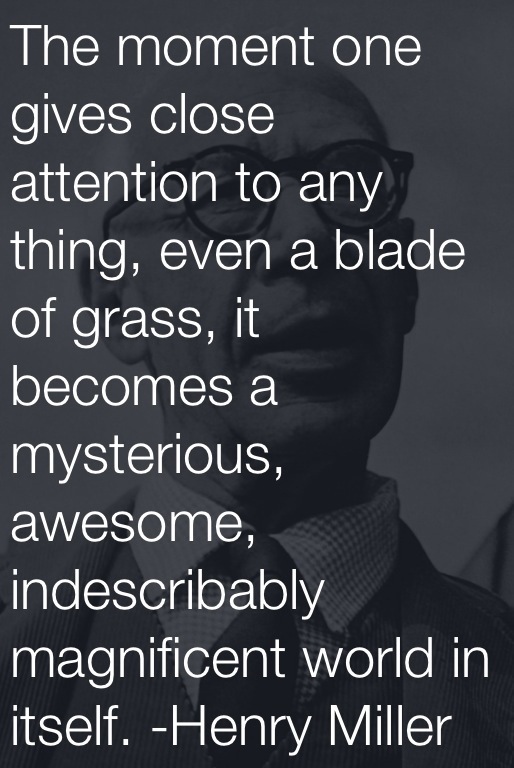
Pause and reflect regularly on the wonder of it all. Look up. Look closely at the mysteries that surround us, from the blade of grass underfoot to the galaxies spinning far beyond. Be wowed by all that is and that anything is at all.
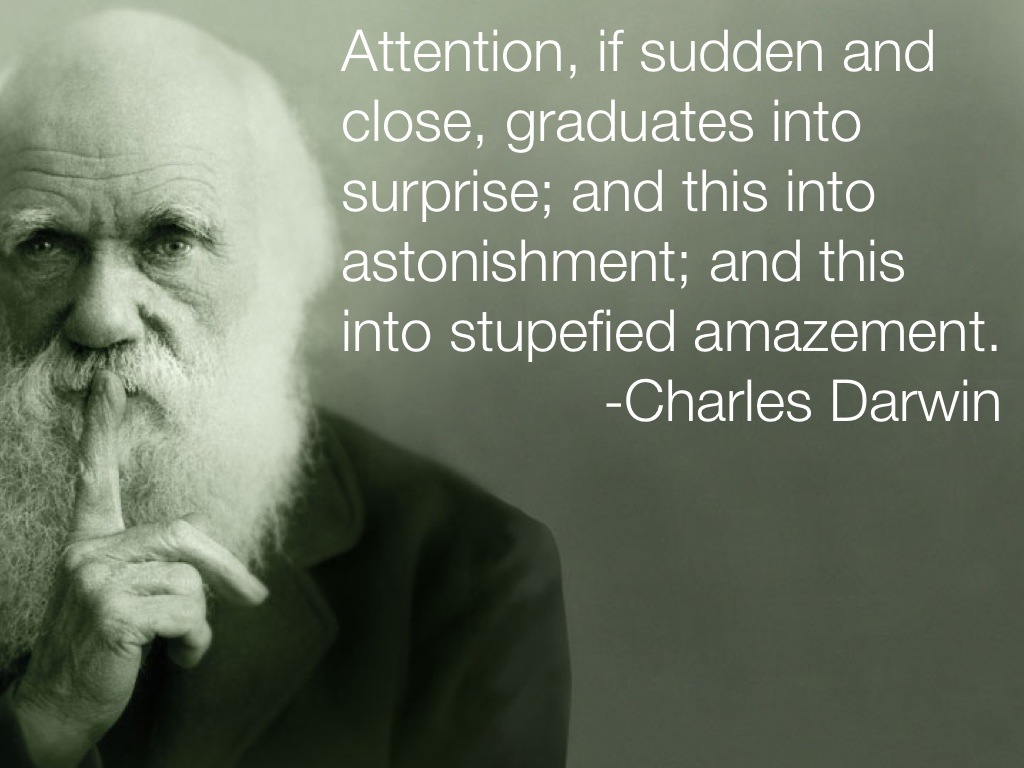
“The most beautiful thing we can experience is the mysterious. It is the source of all true art and all science. He to whom this emotion is a stranger, who can no longer pause to wonder and stand rapt in awe, is as good as dead: his eyes are closed.” -Albert Einstein
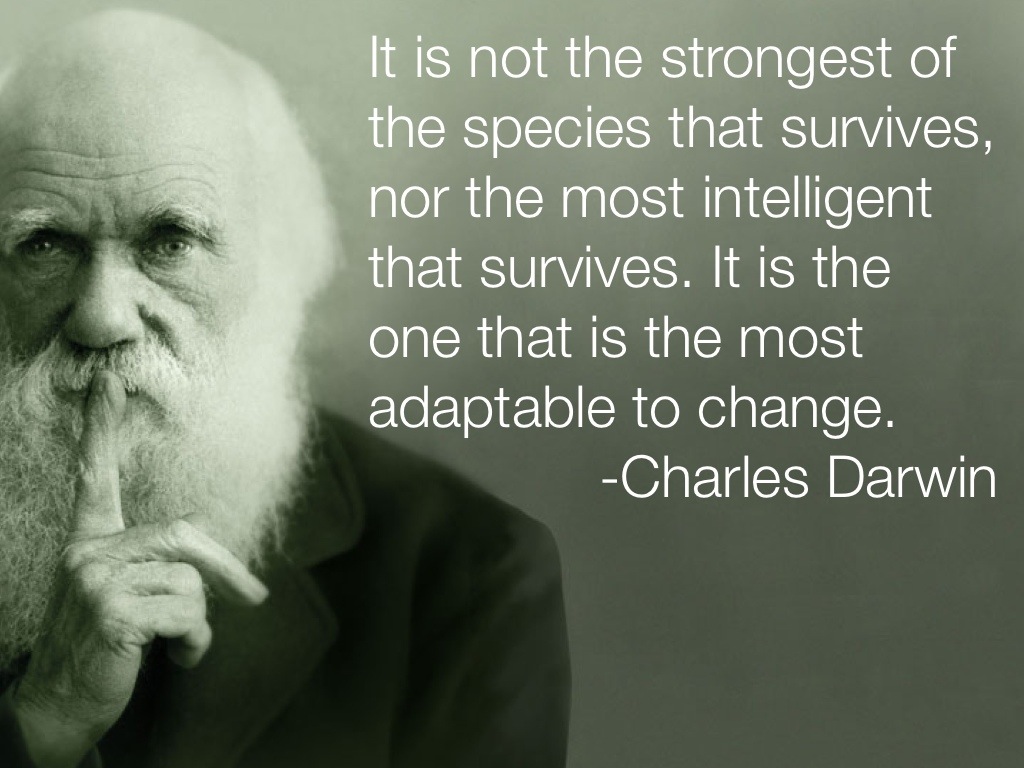
Strength and intelligence alone mean little when your environment changes. What was smart in one situation may be perilous when things change. The newspaper industry and the music industry seemed to have bulletproof business models for most of the twentieth century. Then the internet happened. Only the players who have adapted to those changes rather than clinging tightly to what used to be smart and strong are thriving now.
I’m in higher education, and I imagine it’s in for some major shifts and rethinking in the next decade. Broadcast television, government, small business, religion… This century will look very different than the previous one.
Those institutions and people that have the courage to let go of relying on outdated strengths and conventional wisdom are the ones likely to thrive as we face an era of unprecedented change.
How can you brace yourself and condition yourself for change personally? How can you shed habits and patterns and try on new approaches and behaviors to be prepared to adapt and thrive?
The more we know, the more we realize we don’t know.
What an awesome, overwhelmingly mysterious universe we live in.
“He who thinks he knows, doesn’t know. He who knows he doesn’t know, knows.”
You want a calling, a noble mission that can consume your life? Make it your work to help push humanity’s understanding of the universe and our place in it even a little further into the vastness of the unknown.
Tolstoy said you shouldn’t have to puzzle over art and try hard to figure it out. Great art, he thought, should be able to be grasped by even a child. An artist has a feeling, an idea, something that moves him, and he wants to share it with others. If he makes good art, then others, those who read his writing or view his painting or hear his speech, will get that same feeling. “Art is infection,” he said.
All of us are artists. What is meaningful enough to you to want to share with others? How can you convey it simply and memorably, in such a way that even a child could get it?





 Excellent Journey