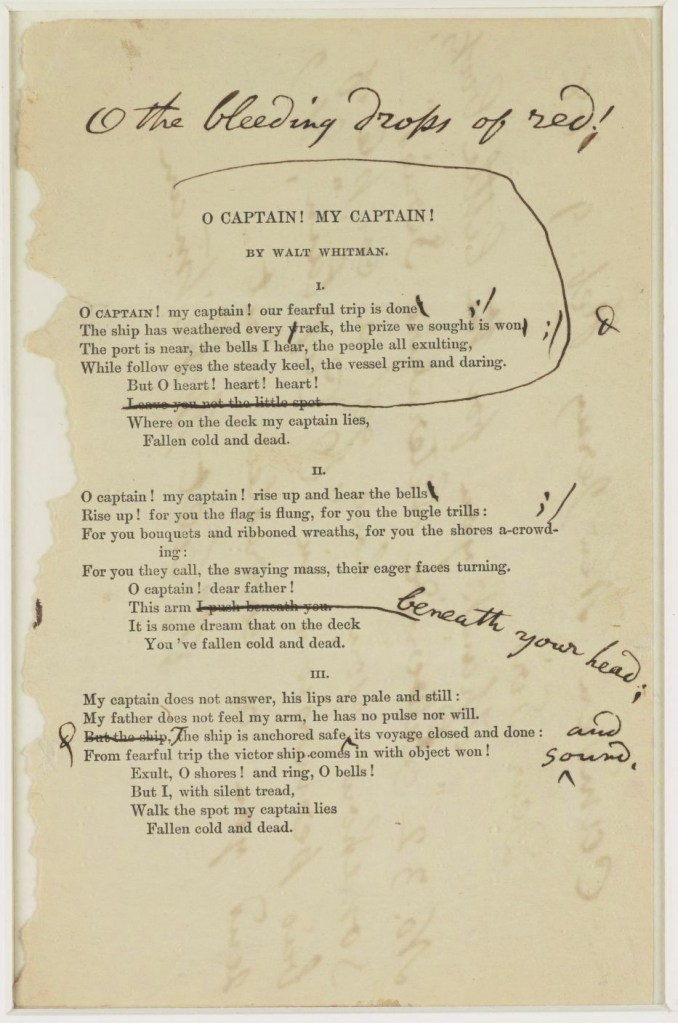
By heart: O Captain! My Captain! by Walt Whitman + Lincoln’s Gettysburg Address

1888 draft with Whitman’s handwritten corrections

I have an Abraham Lincoln problem. I’ve lost track of how many biographies on Lincoln I’ve read—this one more than once. I’ve got a bust of him on the window ledge by my office desk. He’s my automatic answer to the question “Who in history would you want to meet?” I have been in awe of him since I was a child in elementary school reading the little biography about him in our school library. And the more I learn about him, the more in awe I become. His intelligence and wit. His large-hearted wisdom and self-effacing humor and steely resolve. The effusive affection he engendered among those who got to know him well is telling. And, of course, he is the single most significant figure in the history of our nation, a nation that would not exist as it does now were it not for him.

Lincoln is a wonder, and that he appeared on the planet where and when he did is an excellent argument in favor of divine intervention in the affairs of men and nations.

Today happens to be Lincoln’s birthday. (It’s also Charles Darwin’s birthday, and that two of the most remarkable men of the 19th century were born on the exact same day in 1809 is one of history’s most charming coincidences.) So, this month, in honor of Mr. Lincoln, I have chosen to learn by heart Walt Whitman’s tragic poem about Lincoln’s death. (His death, and its ill timing, set the nation back in a way we are still recovering from, so maybe an argument against divine intervention.)

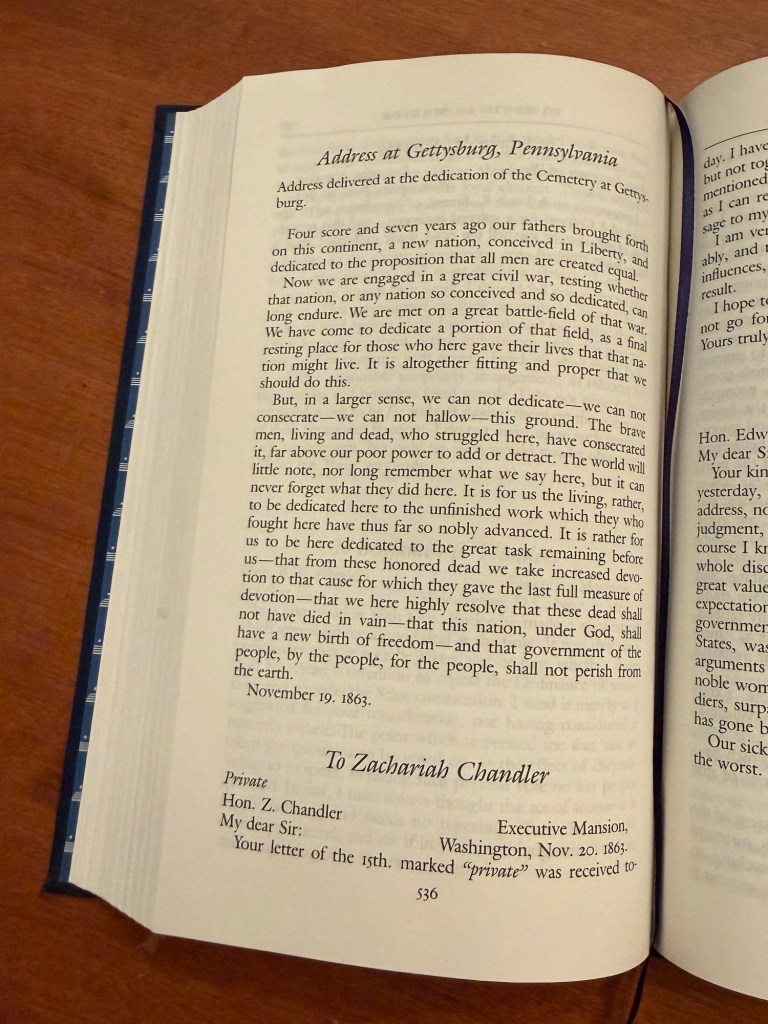
This poem is so sad. But, to balance out the pathos of that poem with something more positive, I’m also going to lock in Lincoln’s Gettysburg Address, which, though not a poem, is a kind of civic art of the highest order. It is a jewel of simplicity and clarity and elegance reframing our national purpose.

From Lincoln: Speeches and Writings 1859-1865

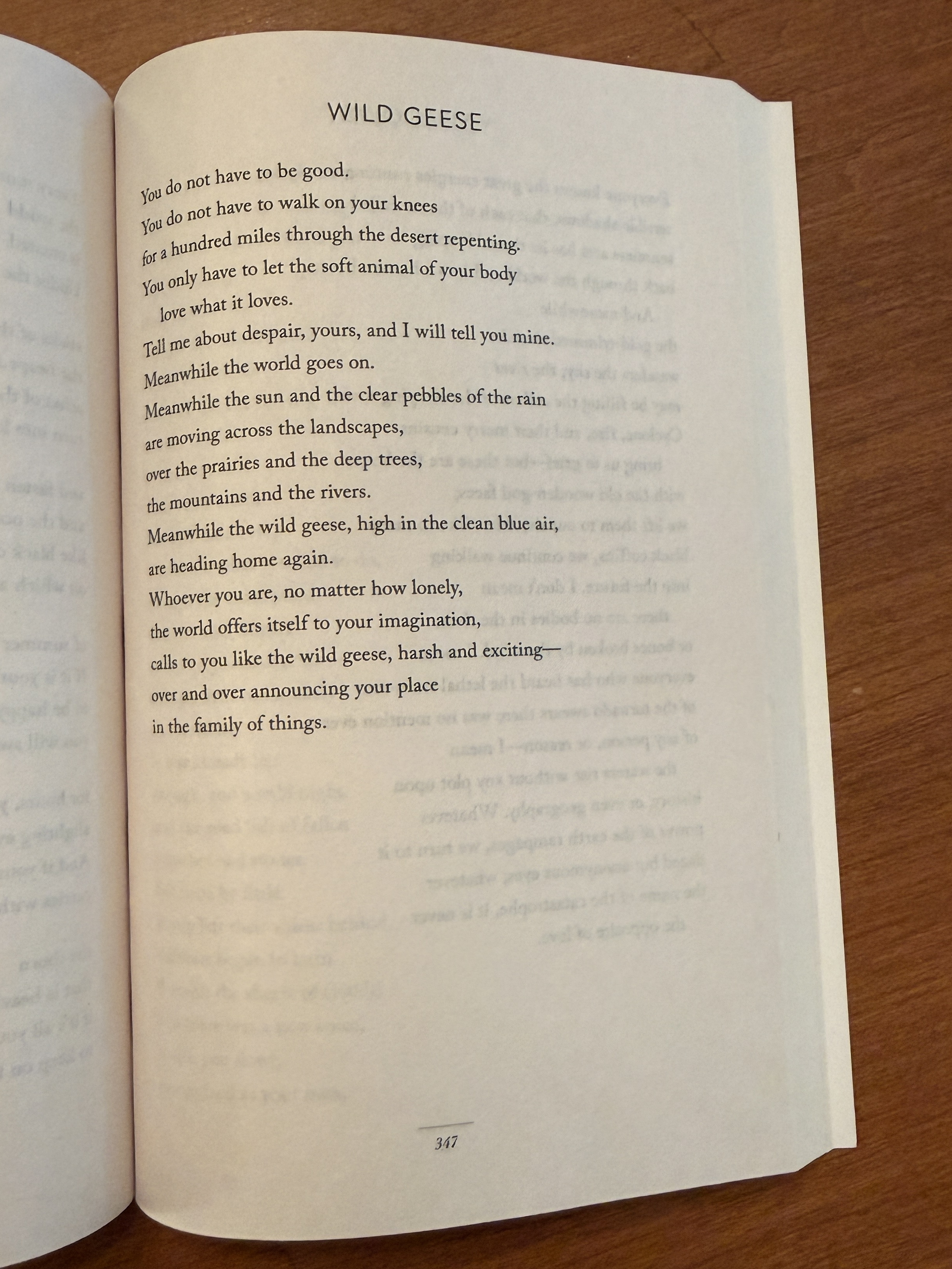
By heart: Wild Geese by Mary Oliver

From Devotions by Mary Oliver

My poem to memorize for this month is another Mary Oliver selection, one of her most well known, and a good one for the start of the year.

It echoes last month’s David Whyte poem a bit, with his “Everything is waiting for you” and her “the world offers itself to your imagination”.

I pondered whether I should repeat a poet so soon, but I’m just going to do what I want to do, to let my disposition “love what it loves”. No obligations. No expectations. No master list of must-memorize poems. Just follow where the fascination and the delight leads. Good guidance in general.

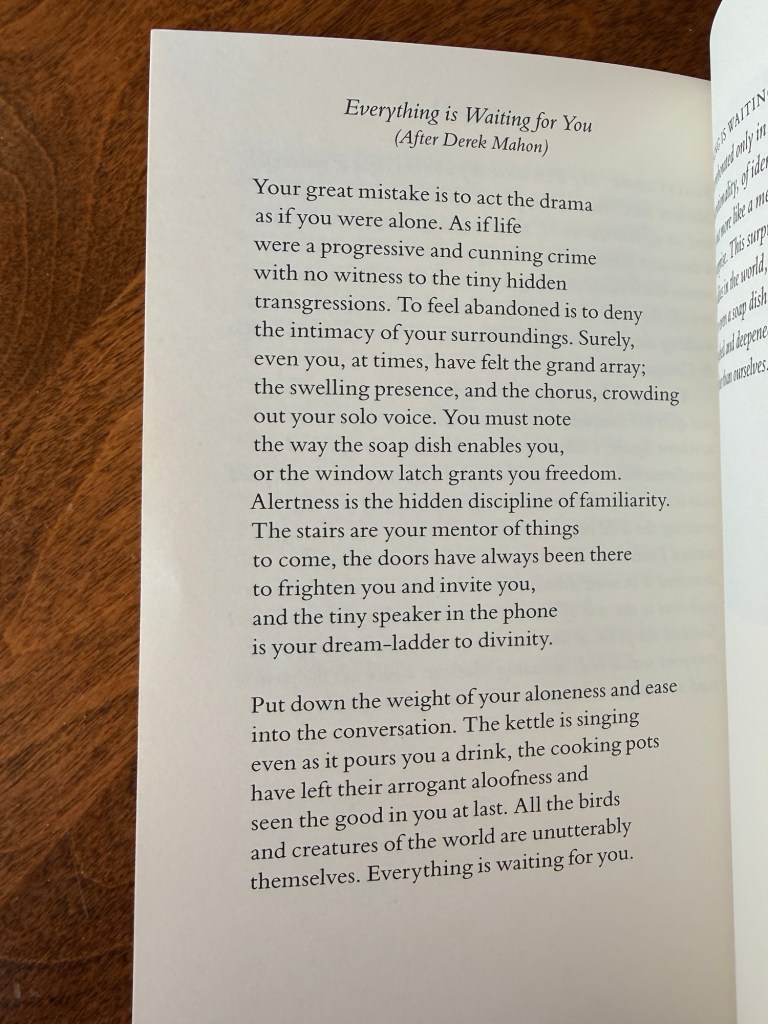
By heart: Everything is Waiting for You by David Whyte

From Essentials by David Whyte

David Whyte is who you would cast to play a poet in a movie. He has a wise sage aura and an amazingly resonant, warm, comforting voice. (Go listen to Rick Rubin’s conversation with him.)

And it was listening to multiple David Whyte interviews that inspired me to begin memorizing poetry. Poems flow out of him—his own and others.

So, for December, I’ll have David Whyte in my head, reminding me that I’m a part of something so much grander than my own little constricted perspective usually allows and that “Everything is waiting for you.”

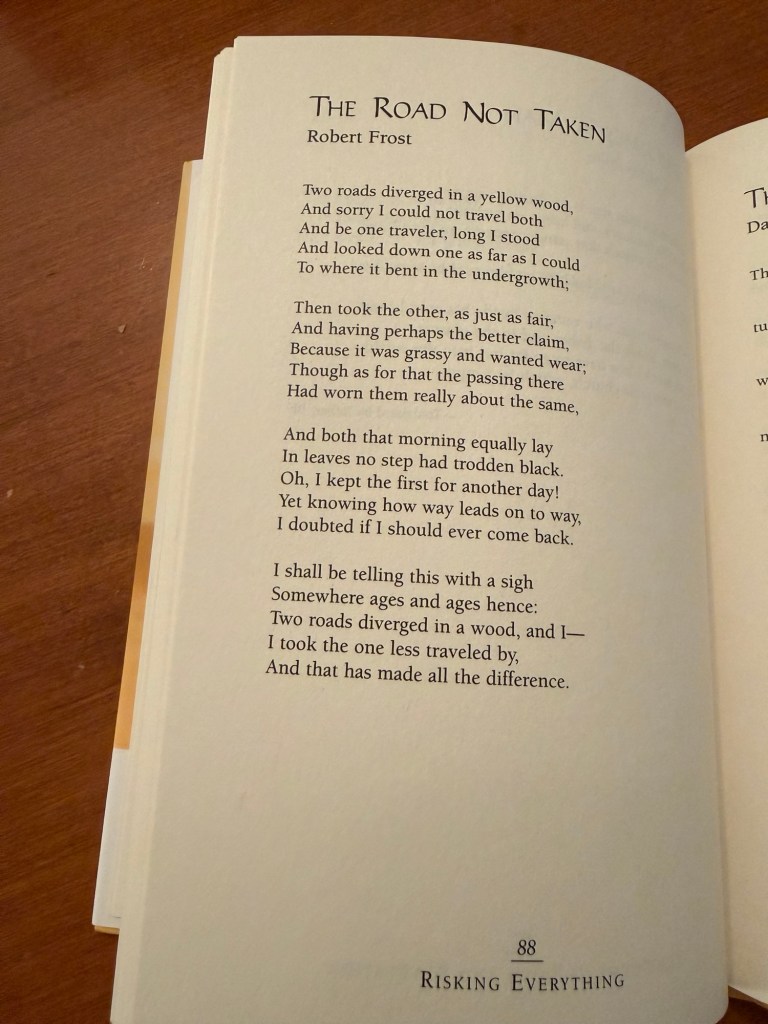
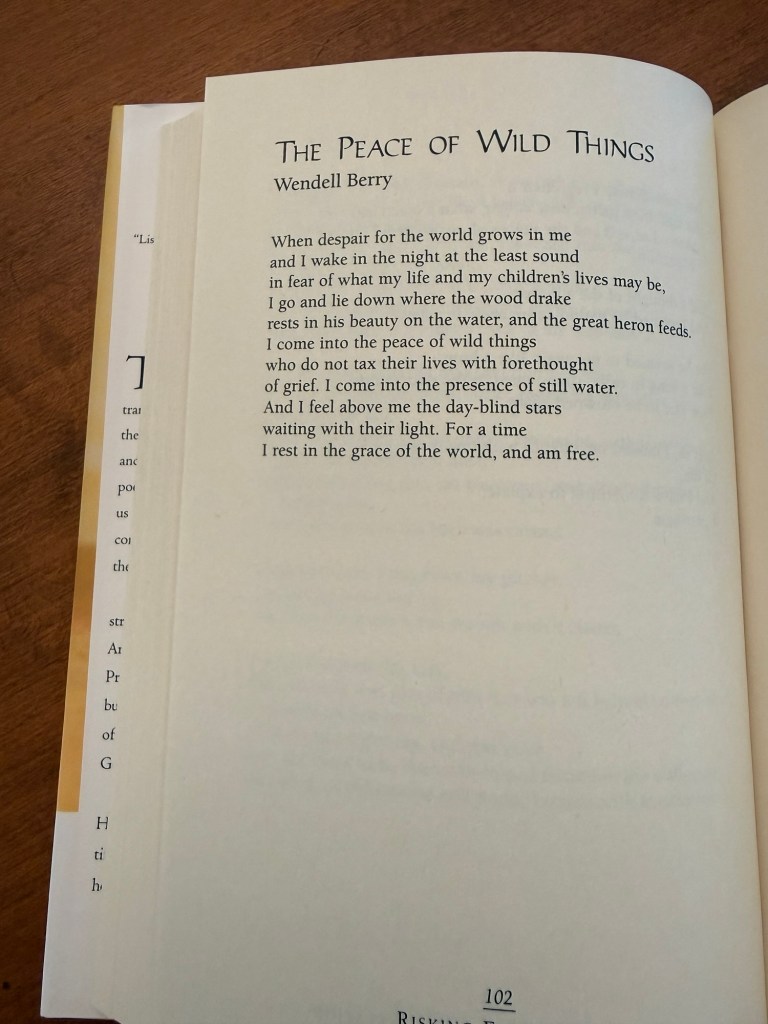
By heart: The Road Not Taken by Robert Frost

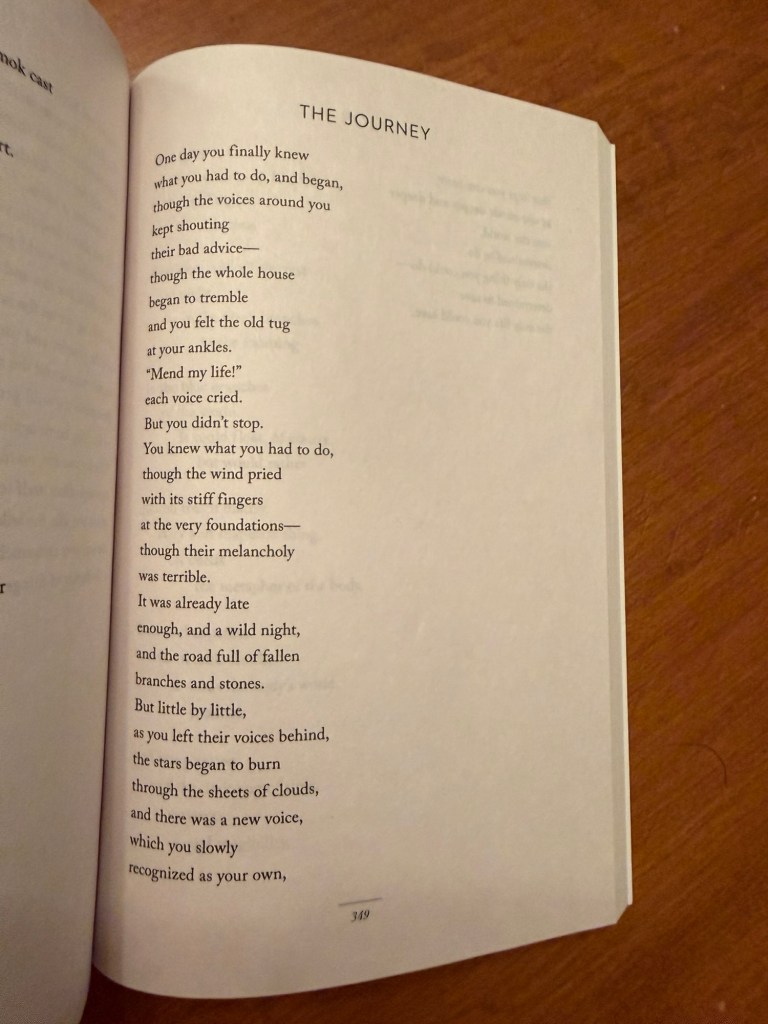
I’m memorizing one poem a month. I learned Mary Oliver’s The Journey last month. The first couple of days I worked on it I felt like I was never going to get it. Then I kept at it, and it just clicked. And I found myself saying it out loud to myself as I walked, as I drove, as I did errands and chores. It’s been a delight to have it just there, in my mind, ready to summon. I even recited it out loud at the end of a presentation I did for a group of college freshmen because it fit so well with what I was sharing with them.

So, this month I chose probably the most famous American poem, Robert Frost’s The Road Not Taken. There were actually a couple more Mary Oliver poems I was tempted to add to do a deep dive into her work, but I’m opting for Frost instead. It is a classic, and the rhyming structure is more traditional and hopefully easier to memorize than Oliver’s prose style. Choosing this one, though, is choosing, in opposition somewhat to the point of it, one of the most well traveled poems in the English language. But classics are classic for a reason, and it seems appropriate to add this one to the so far very little library of poetry in my mind.

From Risking Everything: 110 Poems of Love and Revelation by Roger Housden

I want to be a better friend to my dog

I heard this Billy Collins poem about dogs today while listening to the TED Radio Hour*:

I laughed, but now I want to be a better friend to my dog, Mosley.

*The TED Radio Hour is such a stellar podcast. If you haven’t discovered podcasts yet, this is a great one to subscribe to to get started. Every episode is solid.

The Revenant
by Billy Collins

I am the dog you put to sleep,
as you like to call the needle of oblivion,
come back to tell you this simple thing:
I never liked you – not one bit.

When I licked your face,
I thought of biting off your nose.
When I watched you toweling yourself dry,
I wanted to leap and unman you with a snap.

I resented the way you moved,
your lack of animal grace,
the way you would sit in a chair and eat,
a napkin on your lap, knife in your hand.

I would have run away,
but I was too weak, a trick you taught me
while I was learning to sit and heel,
and – greatest of insults – shake hands without a hand.

I admit the sight of the leash
would excite me
but only because it meant I was about
to smell things you had never touched.

You do not want to believe this,
but I have no reason to lie.
I hated the car, the rubber toys,
disliked your friends and, worse, your relatives.

The jingling of my tags drove me mad.
You always scratched me in the wrong place.
All I ever wanted from you
was food and fresh water in my metal bowls.

While you slept, I watched you breathe
as the moon rose in the sky.
It took all my strength
not to raise my head and howl.

Now I am free of the collar,
the yellow raincoat, monogrammed sweater,
the absurdity of your lawn,
and that is all you need to know about this place

except what you already supposed
and are glad it did not happen sooner –
that everyone here can read and write,
the dogs in poetry, the cats and the others in prose.
Dropping keys

Screen Shot 2014-07-10 at 2.58.52 PM

Catch yourself locking others up in your expectations, your dogma. And stop it.

Break out of the constraints others place on you. Be authentic. Be real. Be your rowdy, unfiltered self, regardless of what others want you to be and regardless of how imperfect you will be exposed to be.

Your freedom just might liberate someone else. Your vulnerability just might embolden those around you who are only going through the motions, who feel trapped in cages built by someone else.

The wise man accepts the beautiful messiness of life and does not try to fix others. He just wants them to be free.

Stop building cages. Start a jail break.

Mother’s Day gift: Sarah Kay’s poem

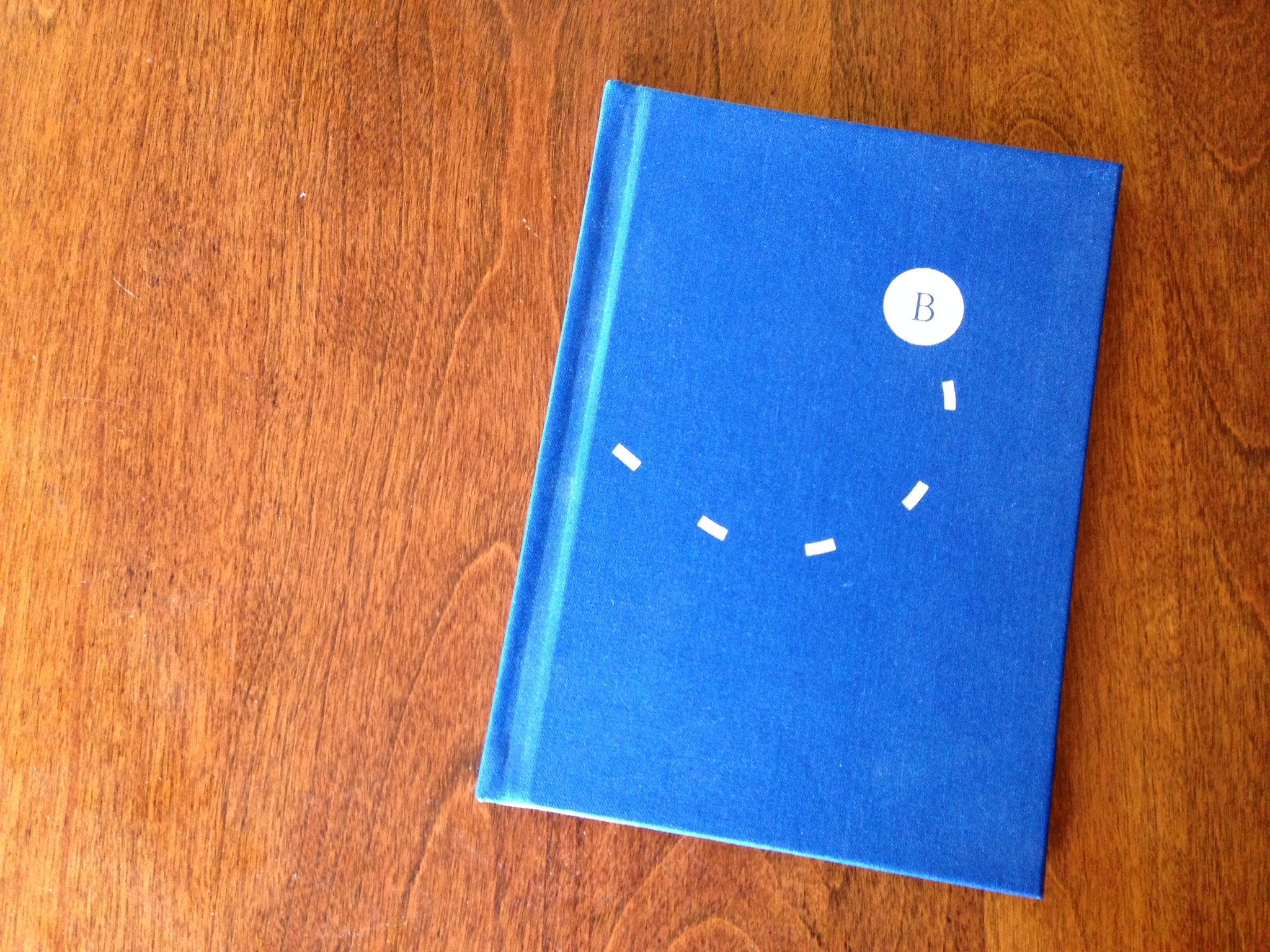
Need something thoughtful for a mother in your life for Mother’s Day this weekend? My daughters and I gave this lovely little book of Sarah Kay’s poem B to my wife a couple of years ago.

It’s the poem Sarah performed on the TED stage to much acclaim. I loved her dynamic presence on stage as much as her message.

Mothers and daughters will especially appreciate the message of this poem, but fathers and sons and any human would, too.

IMG_4862