“Resistance”: Using fear to find your way

This afternoon I made a trip to the backyard hammock. I had survived my daughter’s 7th birthday Frozen slumber party and was looking forward to a quiet day. I picked up my old Kindle e-reader, the one with no touch screen and no apps. I usually read on my iPad mini, but reading in a hammock outside is a Kindle occasion.

The book that happened to be at the top of the list when I powered the Kindle on was Steven Pressfield’s The War of Art. Such a great read. It’s the ultimate kick in the seat of the pants for anyone who wants to get something done but who keeps not doing the thing they want to do.

Pressfield is a novelist (his Gates of Fire is terrific), but The War of Art is non-fiction and non-B.S. It’s straight talk about the battle we all face when confronted by the desire to make something meaningful or to live a nobler life. He names the force that opposes our efforts the “Resistance”. From the opening pages:

“Most of us have two lives. The life we live, and the unlived life within us. Between the two stands Resistance.”

The greats are great because they mustered the will to overcome this Resistance. The greats didn’t wait on inspiration; they put their butts in their chairs and did work, whether they felt like it or not.

Instant gratification, comfort, pleasure, pain-avoidance of any sort are all forms of Resistance. Beating Resistance is a daily undertaking. It’s not a one and done kind of battle. Pressfield encourages us, though, to use Resistance to our advantage:

“Like a magnetized needle floating on a surface of oil, Resistance will unfailingly point to true North – meaning that calling or action it most wants to stop us from doing.

We can use this. We can use it as a compass. We can navigate by Resistance, letting it guide us to that calling or action that we must follow before all others.

Rule of thumb: The more important a call or action is to our soul’s evolution, the more Resistance we will feel toward pursuing it.”

So, search yourself and explore the grand plans of your imagination. The plans for the kind of person you would like to be and the dreams of the work you want to do. Find where there is the most Resistance, those things that seem to be too much of a stretch, where the fear of action is greatest. There’s your calling. Head in that direction.

warofart

The Long Game and the patient pursuit of awesomeness

This two-part video series was inspired by one of my favorite recent books, Mastery by Robert Greene.

It takes a long time and focused effort to become an “overnight” success. Imagine being a 20-year-old whose primary focus was to peak at 60? How would such a mindset change your decisions? It’s so natural to be in a hurry, to be ambitious for success right away. But consider focusing on the “long game”, the steady, patient pursuit of awesomeness over the long arc of a life worth talking about.

via BrainPickings.org

Mother’s Day gift: Sarah Kay’s poem

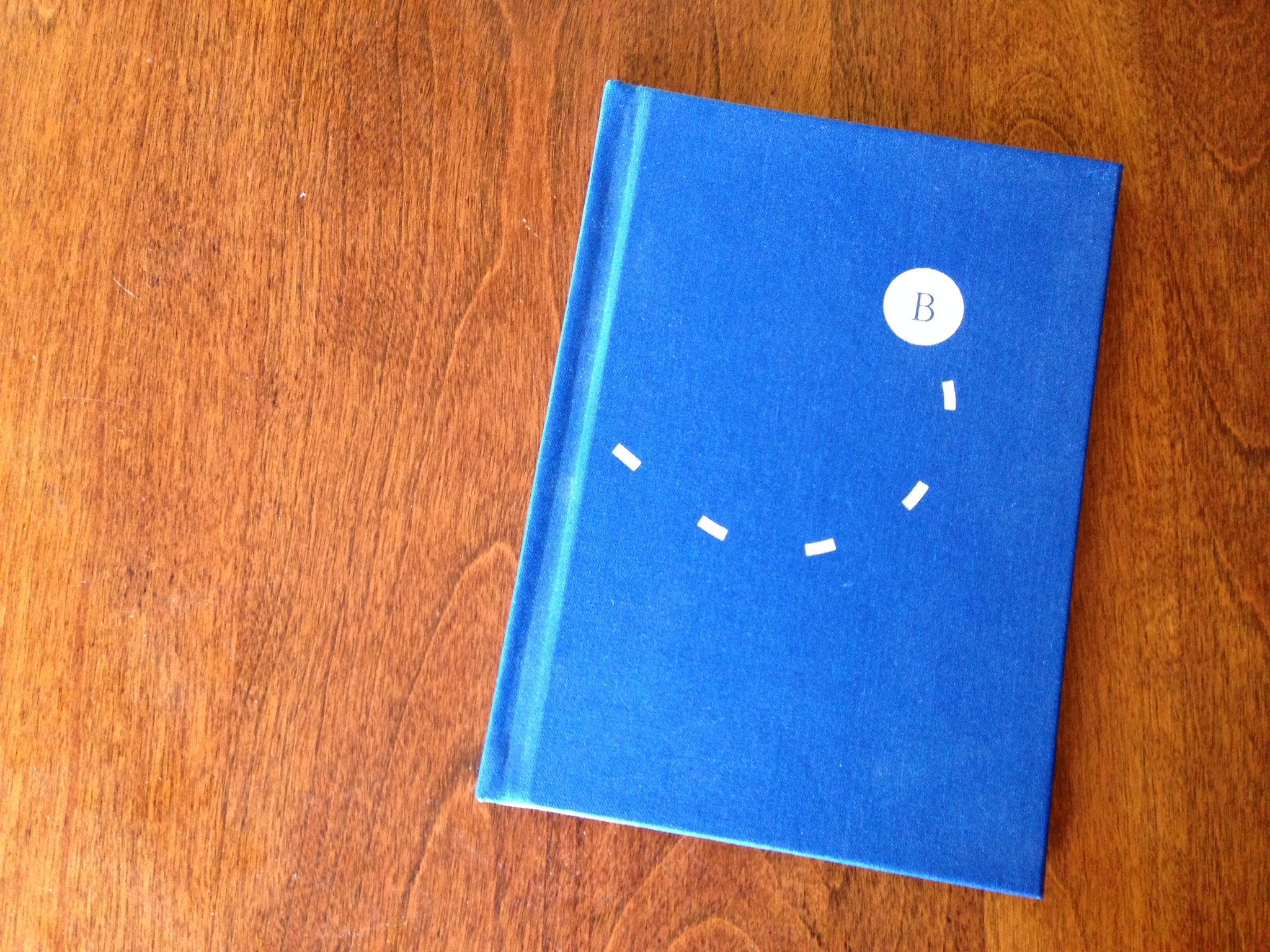
Need something thoughtful for a mother in your life for Mother’s Day this weekend? My daughters and I gave this lovely little book of Sarah Kay’s poem B to my wife a couple of years ago.

It’s the poem Sarah performed on the TED stage to much acclaim. I loved her dynamic presence on stage as much as her message.

Mothers and daughters will especially appreciate the message of this poem, but fathers and sons and any human would, too.

IMG_4862

On reading books that change you

I think we ought to read only the kind of books that wound and stab us. If the book we are reading doesn’t wake us up with a blow on the head, what are we reading it for? …we need the books that affect us like a disaster, that grieve us deeply, like the death of someone we loved more than ourselves, like being banished into forests far from everyone, like a suicide. A book must be the axe for the frozen sea inside us. -Franz Kafka

Kafka is a bit extreme here (hyperbole suits him, of course), but I share his desire for books and for any art that pitches me out of my complacency, that disrupts my comfort of safe ideas and undisturbed feelings.

There’s a numbness to most of our daily existence. Well worn paths are trodden mindlessly. Wake up and go through the motions. Cling thoughtlessly to our tight little circle of opinions and beliefs.

There are landmark moments in my life, though, where an artist has shaken me and provoked a new way of seeing. It’s a surprisingly refreshing kind of pain.

I remember being twenty-something and crashing while riding a bicycle, landing hard on a gravel road and scraping my leg in the process. And it was euphoric. The pain startled me into a sudden awareness that I was indeed alive.

I need that kind of euphoric intellectual and emotional blow regularly. I should embrace the pursuit of ideas that stretch my mind and challenge me to reconsider comfortable assumptions. A truly great book can send me on a journey of discovery that changes everything.

I don’t mind some occasional mindless entertainment, but life is too short to not seek out regular doses of mental and emotional nourishment – provocative, mind altering, life altering works of art.

Fiction: novel ideas

My friend Richard is a writer. We met for lunch a couple of months ago, and he told me he’s working on a novel. (So, yes, I have lunch with novelists.) We worked together on Capitol Hill many years ago, and now he’s retired from the political world and is focused on writing. He saw my post about books I’m reading and asked me why there are no novels on my to-read list.

I didn’t have a good answer. I’ve gone through phases where I read a lot of fiction and other times where I think I need to focus exclusively on non-fiction to get as much value as possible from my reading. But a great novel is more than a pleasant mental diversion. Fiction can awaken and enlighten in ways that non-fiction cannot. And a remarkable novel makes an indelible mark on my memory. There are passages from Tolstoy that evoke emotion twenty years after first reading them. (Read Tolstoy. His masterpieces may seem overwhelming, but they are simply long, not impenetrable. To the contrary, his writing is remarkable for its clarity and profound insight into the simplest of human experiences. He’s considered the greatest novelist ever for a reason.) The joyous experience of reading books like I, Claudius and The English Patient remain as vivid as recalling the greatest conversations I’ve ever had.

So, Richard’s question prompted me to add novels back into my regular reading routine, and it’s been a wonderful change. I try to read fiction at the end of the night. Novels are less likely to spark my mental to-do list or inspire brainstorming when I really need to go to sleep. I’m currently switching between two novels: The Signature of All Things by Elizabeth Gilbert and The Martian by Andy Weir. They are very different stories and provide a nice change of pace when I want to switch my attention, kind of like changing channels on TV for a different mood.

I’m more than three-quarters through each book, and I’m enjoying them both. I’ve also started Zorba the Greek and just purchased Memoirs of Hadrian. (I’m a sucker for Roman historical fiction, and this one gets such rave reviews.)

Getting lost in a great story is a singular pleasure. Being in a reading zone, where all else falls away, dispels distractions like few other activities. And in a distracted age such focused attention is precious therapy and a prod to more wholehearted living.

The delight and insight offered by a good story well told justify making the time for novels in your reading habit.

913MaEC1LvL


the-martian-by-andy-weir

My bookshelf

I’ve gone to iBooks as my primary reading app. Books just look better in iBooks compared to the Kindle app. iBooks allows for a natural ragged right margin, which is so much more appealing than the jarring full justification of Kindle titles. And I’m kind of digging the scrolling option that iBooks offers rather than standard page turns.

I received a generous iTunes gift card for Christmas from my in-laws. When my wife asked me what my favorite gift was, I said it was the iTunes card. It was a pleasure to ponder and explore book recommendations for a couple of weeks, and I was emboldened to be more adventurous with my acquisitions.

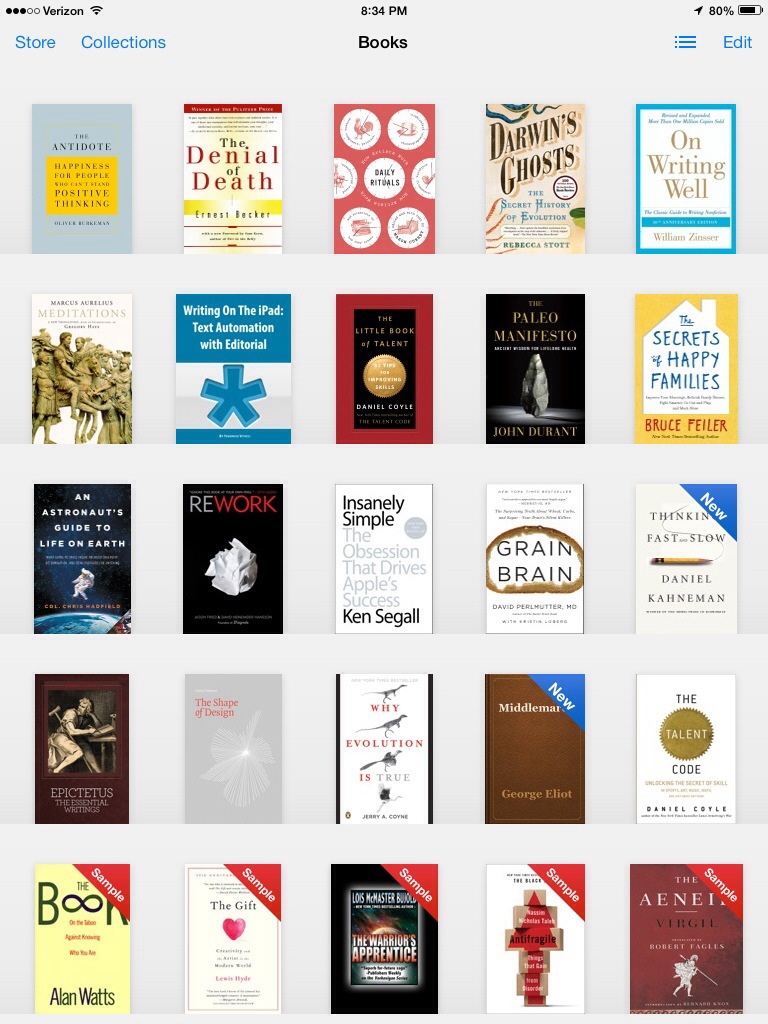
Below is a screenshot of the top of my bookshelf on my iPad. I’m especially enjoying Oliver Burkeman’s The Antidote, a wry look at the positive benefits of negative thinking. It’s a nice complement to my recent readings in the Stoic philosophers.

I recently finished Candice Millard’s excellent Destiny of the Republic, a page-turner of a history book. I’ll post some thoughts on it soon.

I tend to dip in and out of books until one grabs hold and compels me to commit to it. Burkeman’s book is pulling me in now. Looking forward to working my way through this stack.

20140210-232525.jpg

Carbs are ruining your brain

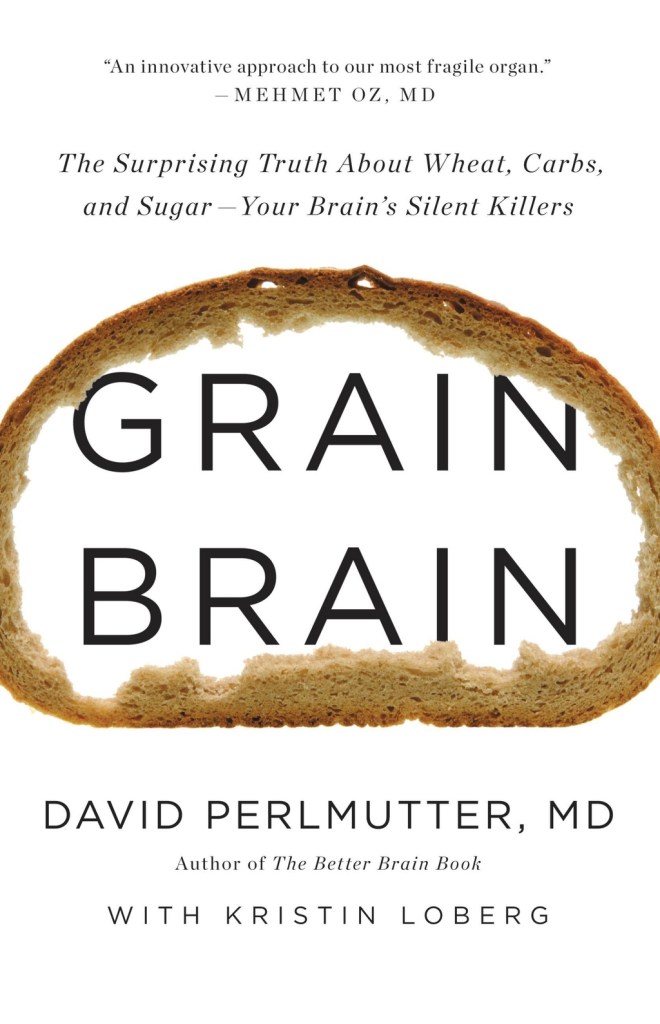
I just downloaded Grain Brain on iBooks today. It’s a potentially game changing book by a prominent board-certified neurologist, David Perlmutter, who also happens to be a Fellow of the American College of Nutrition.

The basic point of the book: carbohydrates are toxic for your brain. Seriously. Even so-called healthy whole grains and most fruit.

He’s even got traditionally conventional low-fat/whole grain-touting Dr. Oz turning around on this. Here’s Perlmutter on Oz’s show discussing how carbohydrate consumption may be a key culprit in the rise of Alzheimer’s.

Conventional wisdom has been stubborn, but I’m seeing more mainstream acceptance recently of the merits of a low-carb/high-fat diet. Usually, it’s related to fighting obesity and diabetes. This focus on brain health, though, is startling and may make for a double-whammy that begins to change our culture’s attachment to the old, failed emphasis on cutting fat and eating more whole grains.

I know just reading the first few pages of this book has me recommitting to a low-carb approach. Both my brain and my waistline will thank me.

Grain Brain cover

Fill your work with love

“Not enough love.” That was the response from Frank Chimero’s design professor after looking through some of his work.

“My work was flat, because it was missing the spark that comes from creating something you believe in for someone you care about. This is the source of the highest craft, because an affection for the audience produces the care necessary to make the work well.”

“The work has enough love when enthusiasm transfers from the maker to the audience and bonds them.”

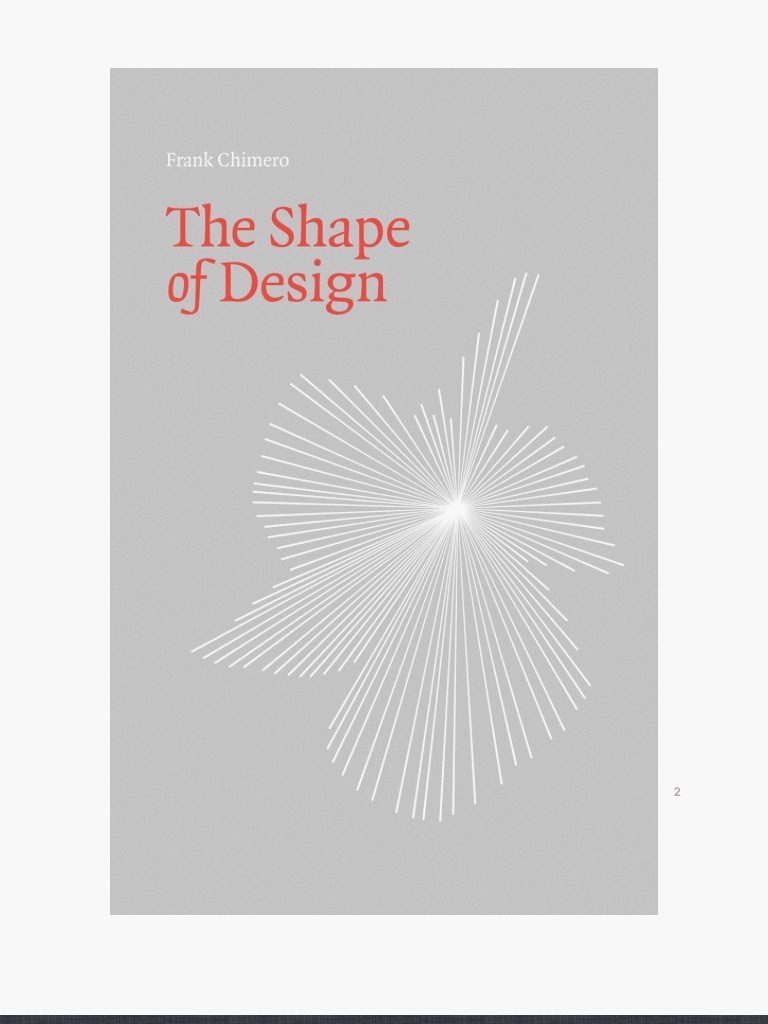
This is from Chimero’s excellent book, The Shape of Design. The passage above reminds me of Tolstoy’s claim that “Art is infection.” An artist, a teacher, a maker of any sort, has an idea or feeling and wants to share it. It’s effective, it’s art, when the audience gets that very same feeling or sees that idea just as the maker did.

You’ve got to care enough about your work and those you serve – an audience, a customer, a student – that you fill your work with all the love you can, with care and attention to detail and enthusiasm.

When I write, I often imagine my audience to be my young daughters reading this many years from now, maybe even after I’m gone. Don’t you know that informs my efforts. When I lose sight of my ultimate audience, it’s easy to lapse into just going through the motions. Then flatness abounds.

What if we examined all our work in this light? What gift can we offer to our audiences? Our colleagues or customers? Our families? Are we putting enough love into our labors?

20130903-220319.jpg

Sunday morning Seneca: The fighter

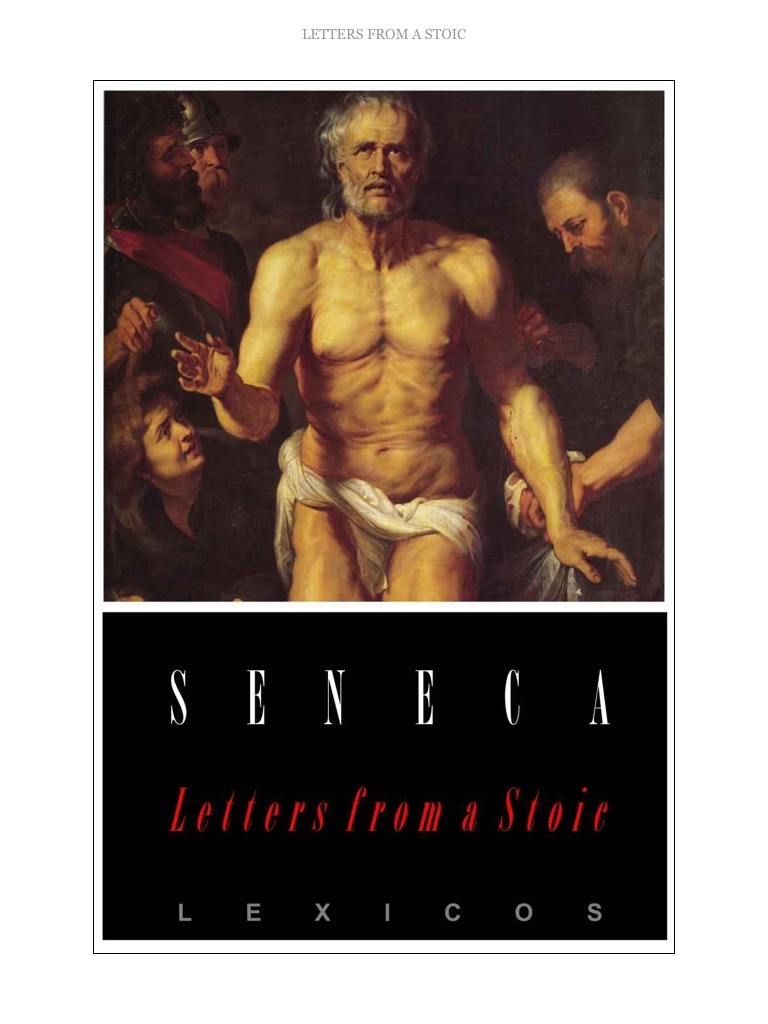
From Seneca’s Letters from a Stoic:

“… no prizefighter can go with high spirits into the strife if he has never been beaten black and blue; the only contestant who can confidently enter the lists is the man who has seen his own blood, who has felt his teeth rattle beneath his opponent’s fist, who has been tripped and felt the full force of his adversary’s charge, who has been downed in body but not in spirit, one who, as often as he falls, rises again with greater defiance than ever.”

20130825-074718.jpg

Ready Player One

My more structured reading plan is off to a good start this week.

I’ve slowly been working through The Shape of Design, but my stab at getting into some fiction as well has been a hit so far. I’m enjoying Ready Player One, a science fiction adventure set in the year 2044.

It’s a clever story about a teenage underdog in a bleak American future who takes on a massive, immersive video/role-playing game created by a Steve Wozniak type genius who was obsessed with the 1980’s. The pop culture references are a blast, especially for those of us who come from the 80’s.

I’m appreciating the lightness and playfulness of this type of fiction. It’s a nice balance to the denser, more challenging books I’ve got on my list.

20130820-213126.jpg

“Steal Like An Artist” is a steal today

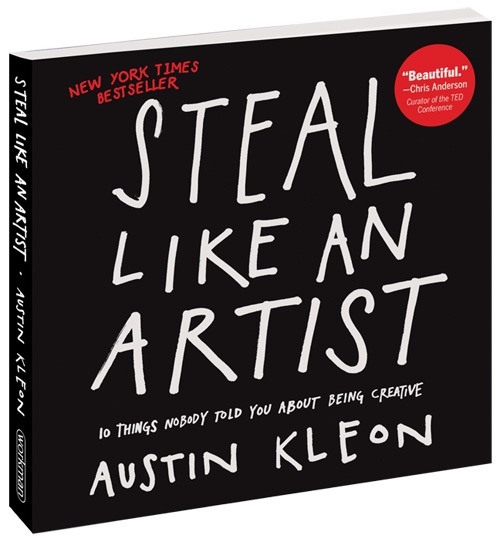
Today I purchased the ebook version of Austin Kleon’s Steal Like An Artist for only $1.99. Now, that’s a steal. Today may be the only day it’s that price, so jump on it tonight.

I spent just an hour reading it this afternoon and got more than halfway through. It’s a delight, filled with practical advice and genuine epiphanies. I kept highlighting passages, and I know I will go back and read it again.

It’s for anyone who makes anything. It’s for humans every where. I’ve already got some tips from it that I’m going to implement when I get to work tomorrow, like making a clear delineation between the digital and analog work spaces in my office. (Read the book.)

Kleon already inspired me to show my work earlier this year, and this book is a solid kick in the pants to dump your excuses and get busy creating.

20130811-202346.jpg

Read good books. Get smarter.

I really enjoyed this recent post on the Farnam Street blog: The Buffett Formula – How To Get Smarter.

Warren Buffett and his partner, Charlie Munger, have done something right in their careers. They attribute much of their success and a lot of their time to one key activity: reading.

Warren Buffett says, “I just sit in my office and read all day.” What does that mean? He estimates that he spends 80% of his working day reading and thinking.

“You could hardly find a partnership in which two people settle on reading more hours of the day than in ours,” Charlie Munger commented.

When asked how to get smarter, Buffett once held up stacks of paper and said “read 500 pages like this every day. That’s how knowledge builds up, like compound interest.”

The reading they recommend is deep and challenging, not news and Twitter updates. I’ve got a stack of great books piled up in my iPad, but I need to be more intentional and structured about digging into and finishing them, not just grazing randomly through portions.

Reading good books throughout my life has affected my worldview and my character more than any other activity. As a new academic year begins this week, I’m going to put together my own personal syllabus for getting smarter and reading books that spark new possibilities.

20130806-225905.jpg

In praise of ebooks

It’s great living in the future. The world’s information is in our pockets. We have no end of things to read and watch and play. Consequently, there also is no end of empty, worthless, even harmful diversions that can consume our time and attention.

Just as you should be mindful of what you put in your mouth, take care to put worthwhile things in your mind. Be a good curator of what merits your attention. Life is short. Use your very limited time and attention to consume books, articles, music, and other art that will make you better and happier.

I’m now a reader of ebooks. I have always been a book reader. I’ve collected and read books since I was old enough to read. Just picking up certain books in my collection can cause a rush of memories associated with reading them. But I’m not particularly nostalgic about the demise of paper books and newspapers and magazines. Paper is just a vehicle for the content. It’s the content that matters.

Ebooks ensure that you can easily access your entire collection of books from anywhere. John Adams advised his son, John Quincy, to “Always have a poet in your pocket”, to carry a book with you constantly to make good use of any down time. Now, there is no excuse not to have a good book or other reading material constantly available to you.

Ebooks make reading a pleasure for me. You can change the font and adjust the font size as well as the background. You can sync your books across multiple devices. You can highlight passages and make your own notes. I use both iBooks and Kindle. I prefer the iBooks reading experience. iBooks has a more pleasing page layout, including a ragged right edge, and offers a scroll option in addition to the conventional page turns. Kindle has a bigger selection of books to offer, though.

When people see my bookshelves, they often ask, “Have you read all of these?” Of course not. I have read some of most and all of some. I have no shame about stockpiling books. Ebooks make that even easier. Just a click on my iPad or my Mac, and the book is instantly downloaded. How cool is that? And now I don’t have to worry about having enough shelf space.

I do want a more disciplined reading routine, and this is one area where ebooks cause problems. I open my iPad and see dozens of books I might want to read or re-read. I plunge into one, and if my mind goes on a tangent, I can easily open another or go check Twitter. Paper books are much better at focusing my attention.

20130628-191712.jpg

Books have greatly affected my life and continue to do so. Choose your inputs wisely. Read classics. They are classics for a reason. Read the works of great writers and smart thinkers. Find an author that speaks to you and read everything she’s written. It’s the best way to really get an author. Ask friends and mentors what books have meant the most to them. This question alone can fill a dinner with great conversation. Challenge yourself to read at least one book each month. Some people read a book a week. Imagine going through 52 books every year. Make a wish list. Ask for iBooks or Amazon gift cards for holiday or birthday gifts. Start a reading group with kindred spirits.

Establish a reading habit. Family life makes it hard for me to disappear into a book regularly at home, so my daily lunch break works well for me.

Next time you find yourself channel surfing, flipping through the dismal array of reality shows on TV, grab a good book and get lost in the life of the mind that a book can create. Our culture is committed to extending literacy universally in the hopes there will be no one who can’t read. But the sad reality is that so many who can read actually do not.