From Epictetus’s The Art of Living:
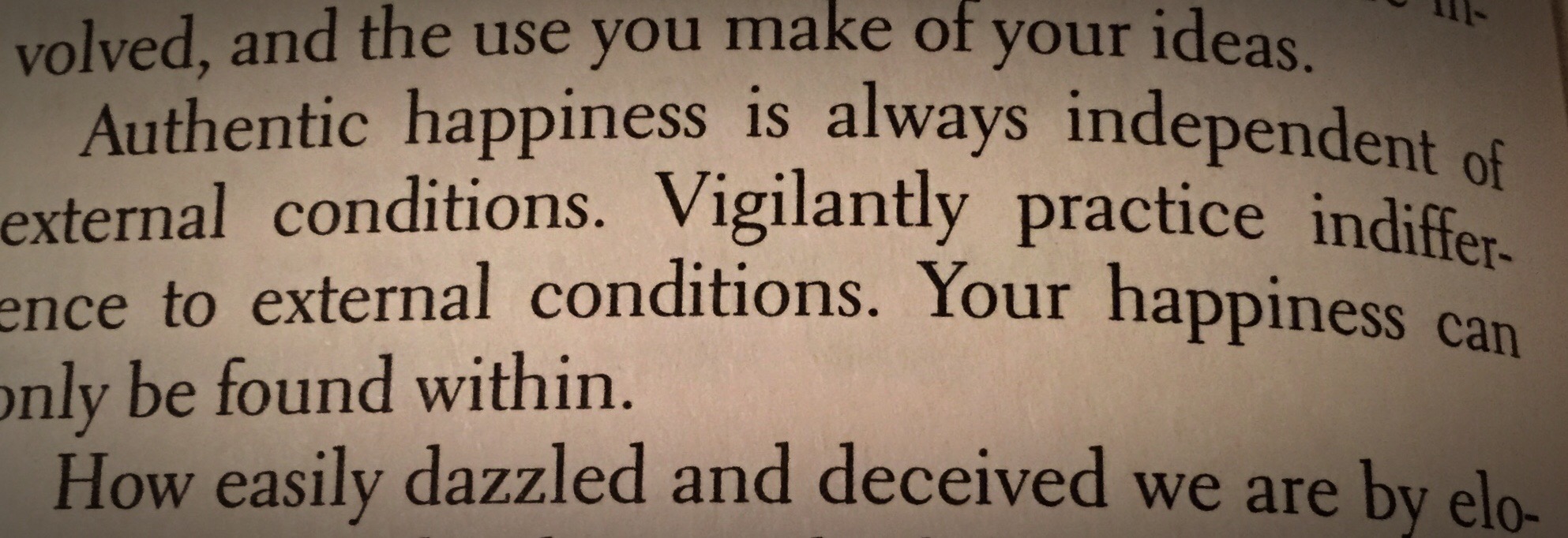
Your happiness can only be found within.
From Epictetus’s The Art of Living:
Your happiness can only be found within.
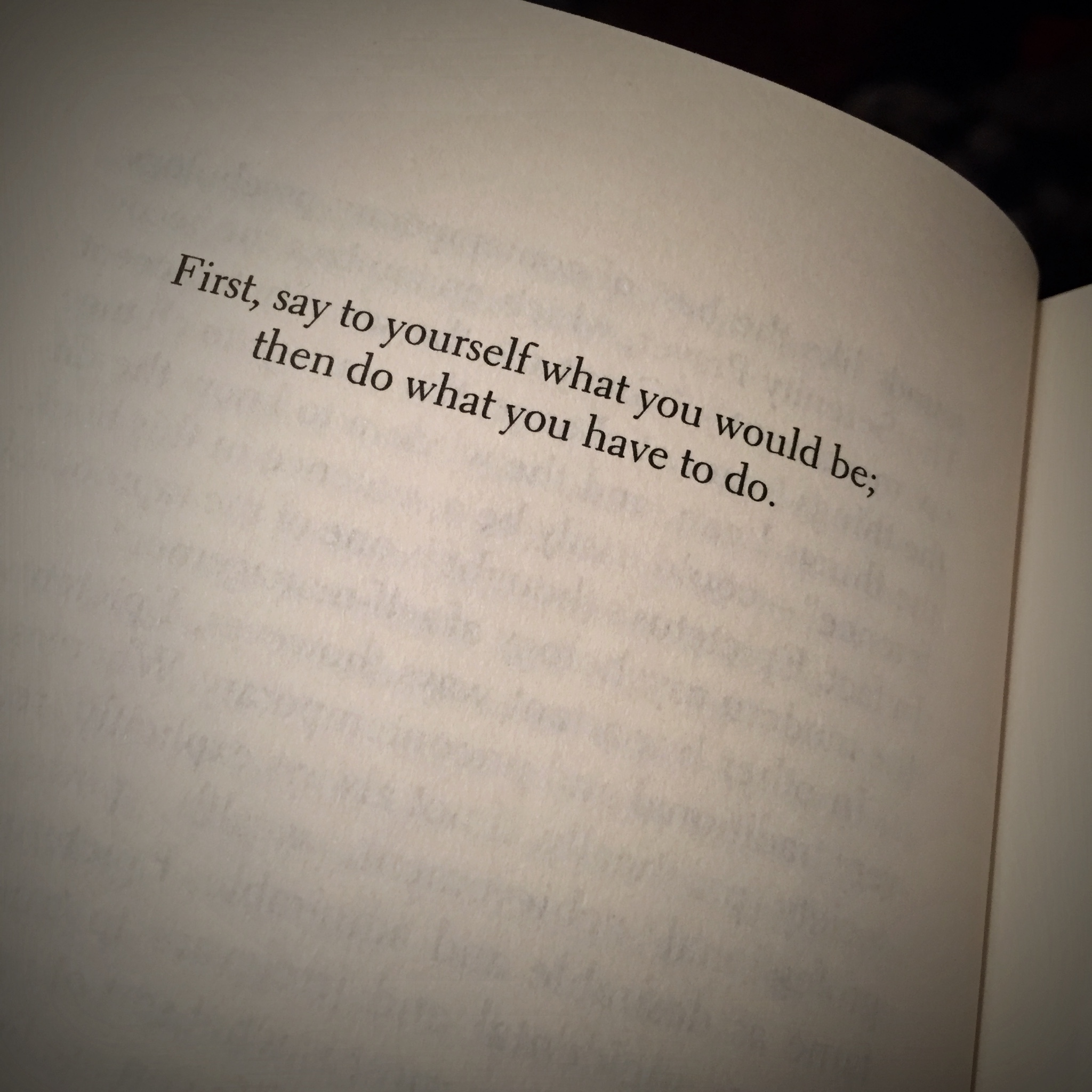
My wife put a lamp by the deeply cushioned chair in our bedroom last night to make a new reading spot in our house, and I gave it a go. I sat down to read from an actual book, made from paper. It was my hardcover copy of The Art of Living, Sharon Lebell’s collection of the best of the wisdom of the first and second century Stoic teacher Epictetus.
Epictetus had been a slave who earned his freedom through his excellence as a student and, eventually, a teacher of Stoic philosophy. Nothing he may have written survives, but his students collected and saved his teachings, which went on to influence everyone’s favorite philosopher king, Marcus Aurelius. (Marcus was an emperor, not a king, of course. Philosopher emperor was beyond even Plato’s imagination.)
The single sentence on the opening page above is as good an exhortation as anyone could need. But it’s followed on the next page by this jewel of simple yet often neglected common sense:
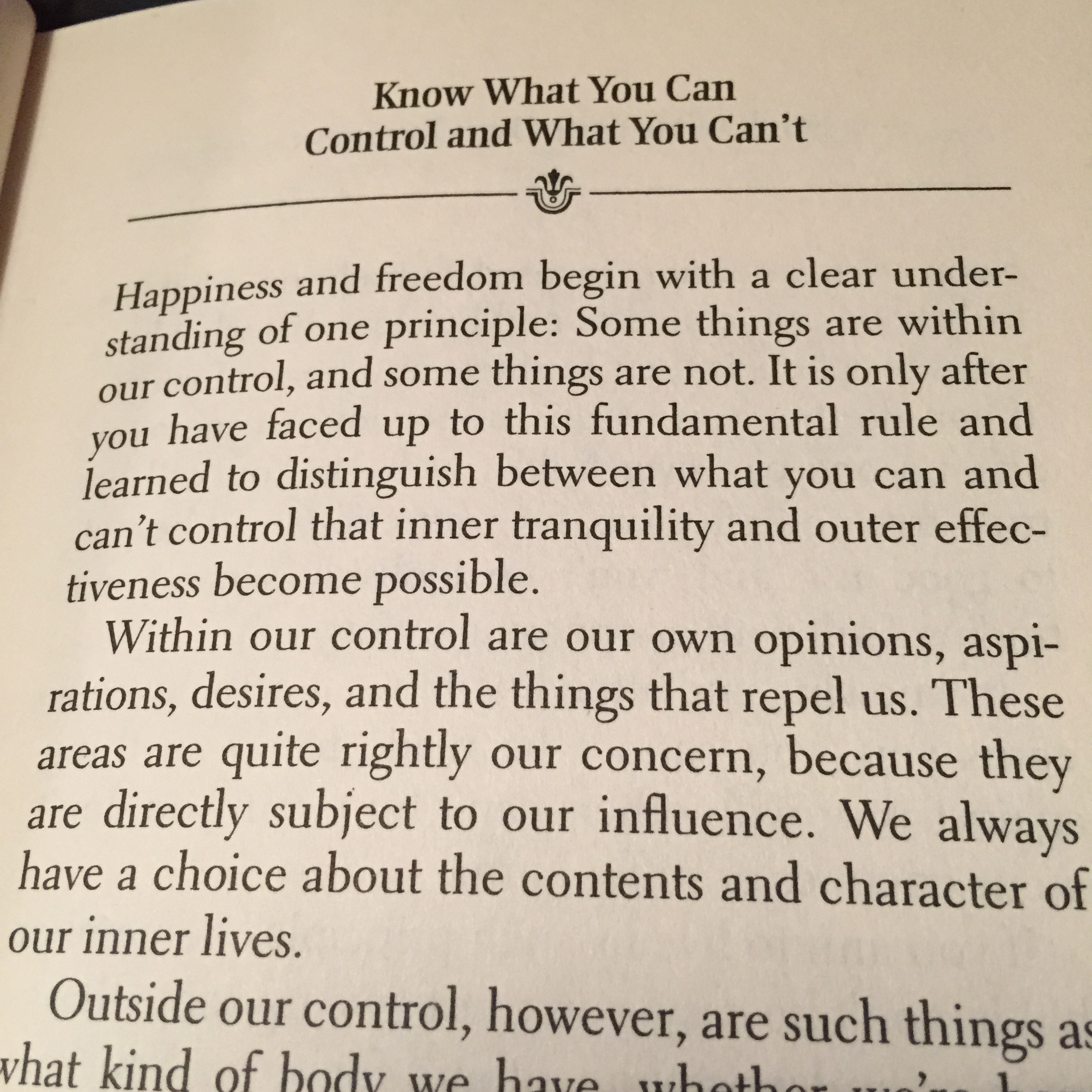
We always have a choice about the contents and character of our inner lives.
We don’t have much control over what happens around us and to us, but we do get to choose our response. Easy to understand. Hard, though, to own that choice standing in the often very small, poorly lit gap between stimulus and response.
I’ve got to at least be more aware that I am making these choices. I am responsible – able to choose my response – and not made to do or be anything not in my choosing. No one or no thing can make me angry, for example. I may choose to be angry in response, but it’s my choice, whether I own up to it or not.
I need these reminders regularly. Searching to share something insightful every day has been a great way to live a more adventurous inner life and to remind myself to do better, to grow and improve. These notes to self that I share publicly have become a daily discipline that I hope will keep me sharp and curious. I recommend this to anyone looking to make better sense of their own thinking and their place in the universe. Oh, that’s everyone. Of course, everyone should write.
We all are artists creating a unique life, a life that’s never been before and never will be again. Choose to craft yours as though you’re sculpting a masterpiece.
From Ryan Holiday’s excellent book The Obstacle is the Way:
The great psychologist Viktor Frankl, survivor of three concentration camps, found presumptuousness in the age-old question: “What is the meaning of life?” As though it is someone else’s responsibility to tell you. Instead, he said, the world is asking you that question. And it’s your job to answer with your actions.
In every situation, life is asking us a question, and our actions are the answer. Our job is simply to answer well.
Meditations 7.59:
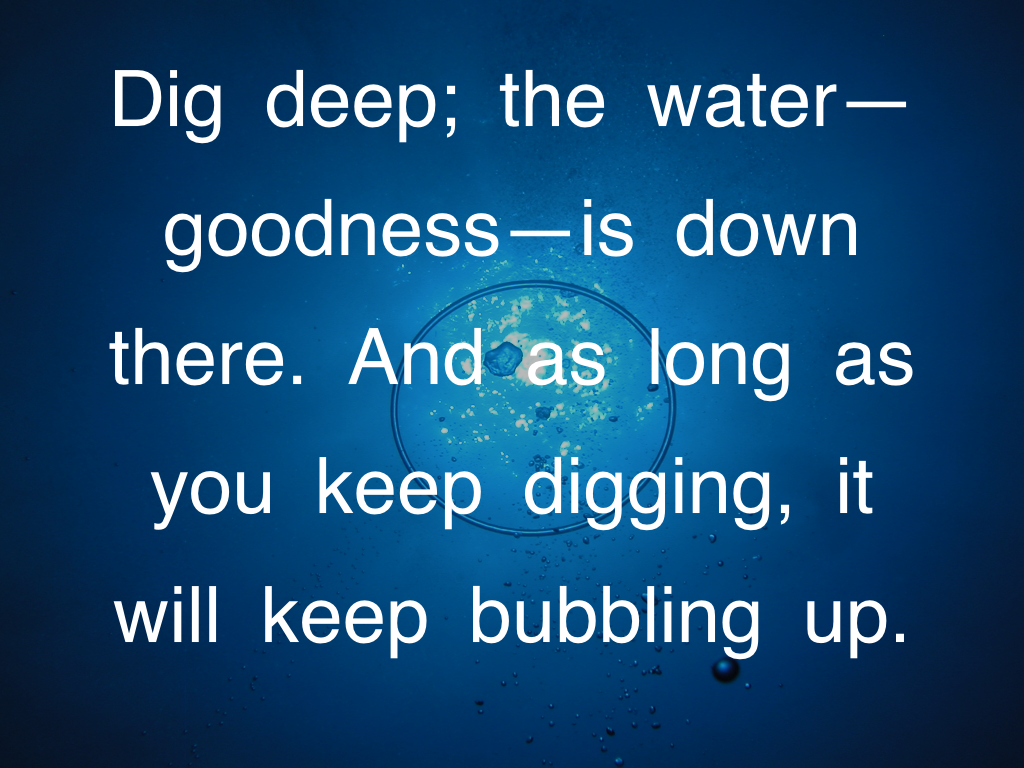
Digging is hard. It’s easy to just stay on the surface. But the good stuff often is buried down deep and will require some effort to get to. But the good stuff is worth the effort.
That hard conversation? That creative project? The vision you have for the kind of person you truly want to be? Dig deep and conquer the resistance keeping you from the goodness buried below.
Meditations 5.23-24:
23. Keep in mind how fast things pass by and are gone—those that are now, and those to come. Existence flows past us like a river: the “what” is in constant flux, the “why” has a thousand variations. Nothing is stable, not even what’s right here. The infinity of past and future gapes before us—a chasm whose depths we cannot see.
So it would take an idiot to feel self-importance or distress. Or any indignation, either. As if the things that irritate us lasted.
24. Remember:
Matter. How tiny your share of it.
Time. How brief and fleeting your allotment of it.
Fate. How small a role you play in it.
Meditations 5.9:
Not to feel exasperated, or defeated, or despondent because your days aren’t packed with wise and moral actions. But to get back up when you fail, to celebrate behaving like a human—however imperfectly—and fully embrace the pursuit that you’ve embarked on.
No need to be down on yourself for failing to be perfect. Accept that you are imperfect. Embrace it, even. But get up and keep aiming for the ideal you have for yourself. Be a human and stand up and try again. This could be the best day of your life.
This long feature on SB Nation by Jeremy Collins – Thirteen Ways of Looking at Greg Maddux – is beautifully written and heartbreaking.
Yes, it’s about Greg Maddux, my favorite baseball player and one of the most enigmatic, masterful athletes of our generation. But it’s mostly about the author coming to terms with the tragic loss of his childhood friend, a friend who was obsessed with and inspired by Greg Maddux.
Maddux was not some physical freak who overpowered batters with strength. He just out-thought and out-executed those he faced. He was a mere mortal who through his own will and savvy and plodding discipline became the best in the game. And he approached the game with an apparent detachment that belied the ferocity with which he performed so fully in the present. When he misfired, a loud profanity punctuated the moment. And then an immediate reset. Back to the moment at hand, calm, calculating. His approach was a Stoic one, dealing with only what he could control and shaking off anything out of his hands.
The story Jeremy Collins tells ties this ideal that Maddux represented, control and mastery, to the tragedy of his friend who reached for that ideal as he grasped for hope in reorienting his young, ill-fated life.
Collins’s piece is well worth the time to read it. You know when you’ve read something that was written with both heart and mastery. This bit of writing is Maddux-like in its artistry. It’s a fitting tribute to a lost friend and to an iconic, inspiring hero. Like a pitch from Maddux, it knicks the edges and moves unpredictably and so effectively.
Meditations 2.5:
Concentrate every minute like a Roman—like a man—on doing what’s in front of you with precise and genuine seriousness, tenderly, willingly, with justice. And on freeing yourself from all other distractions. Yes, you can—if you do everything as if it were the last thing you were doing in your life, and stop being aimless, stop letting your emotions override what your mind tells you, stop being hypocritical, self-centered, irritable. You see how few things you have to do to live a satisfying and reverent life? –Marcus Aurelius
“Things work out best for those who make the best of the way things work out.” –John Wooden
Coach Wooden would have made a good Stoic. He focused his attention and his team’s on what was in their control. He didn’t focus on the opponent. He didn’t focus on winning. He focused on maximizing his team’s potential, on bringing out their best.
No matter the circumstances, you can still control how you respond. There’s no use in resisting what is. Put up a fight, sure. But fight to make the best of whatever circumstances you’re facing.
Meditations 4.33:
Everything fades so quickly, turns into legend, and soon oblivion covers it.
And those are the ones who shone. The rest—“unknown, unasked-for” a minute after death. What is “eternal” fame? Emptiness.Then what should we work for?
Only this: proper understanding; unselfish action; truthful speech. A resolve to accept whatever happens as necessary and familiar, flowing like water from that same source and spring.
What if you embraced whatever happens as if you chose it? Even – especially! – if it is something that seems like a setback.
You have so little control over almost everything external to you. But you always have control over how you respond. If you choose to be curious, intrigued, or fascinated instead of perturbed, discouraged, or angry, imagine how everything changes.
My young friend Nick is impressive. He’s a full-time student who works as a Resident Assistant and as a personal trainer, and he’s a serious student of life wisdom. He shares my fascination with Meditations by Marcus Aurelius, and he came to me early in the summer and told me he was researching Marcus with plans to write something somewhat audacious about Meditations.
He just posted the result of his recent Stoic studies, a great essay that takes the key points from Meditations and culls out what he considers the most significant themes. He’s calling it a sort of “Stoic creed”.
Nick has a nice insight about “grooving the pattern”, impressing thoughts and habits in a way that sticks in your life:
To “groove the pattern” its been helpful to keep small axioms and maxims around. I decorate the inside of my weekly planners and the walls around my workspace with words and lists that resonate with me so that I can give them a glance occasionally in idle time.
He then goes on to share the seventeen precepts of Stoic conduct as drawn from his readings of Meditations. It’s a thoughtful collection of reminders and guiding principles well worth anyone’s time to consider and imprint in your memory for when you need to know how to respond to life’s challenges.
Go read Nick’s post and consider collecting your own personal scripture, your own creed, to guide your thoughts and actions.
Just as doctors always keep their implements and scalpels ready at hand in case of emergency treatment, so should you have your guiding principles ready in order to understand things human and divine… –Meditations 3.13
At dawn, when you have trouble getting out of bed, tell yourself: “I have to go to work—as a human being. What do I have to complain of, if I’m going to do what I was born for—the things I was brought into the world to do? Or is this what I was created for? To huddle under the blankets and stay warm?”
—But it’s nicer here.…
So you were born to feel “nice”? Instead of doing things and experiencing them? Don’t you see the plants, the birds, the ants and spiders and bees going about their individual tasks, putting the world in order, as best they can? And you’re not willing to do your job as a human being? Why aren’t you running to do what your nature demands?
—But we have to sleep sometime.…
Agreed. But nature set a limit on that—as it did on eating and drinking. And you’re over the limit. You’ve had more than enough of that. But not of working. There you’re still below your quota.
From Meditations by Marcus Aurelius
Think of all the years passed by in which you said to yourself “I’ll do it tomorrow,” and how the gods have again and again granted you periods of grace of which you have not availed yourself. It is time to realize that you are a member of the Universe, that you are born of Nature itself, and to know that a limit has been set to your time. —Marcus Aurelius
The day has come. When you wake up it will be tomorrow, the day you’ve promised to take action, to be the person you’ve dreamed you could be.
If not now, when? Be awesome while you can.
Via Farnam Street
From Marcus Aurelius’s Meditations:
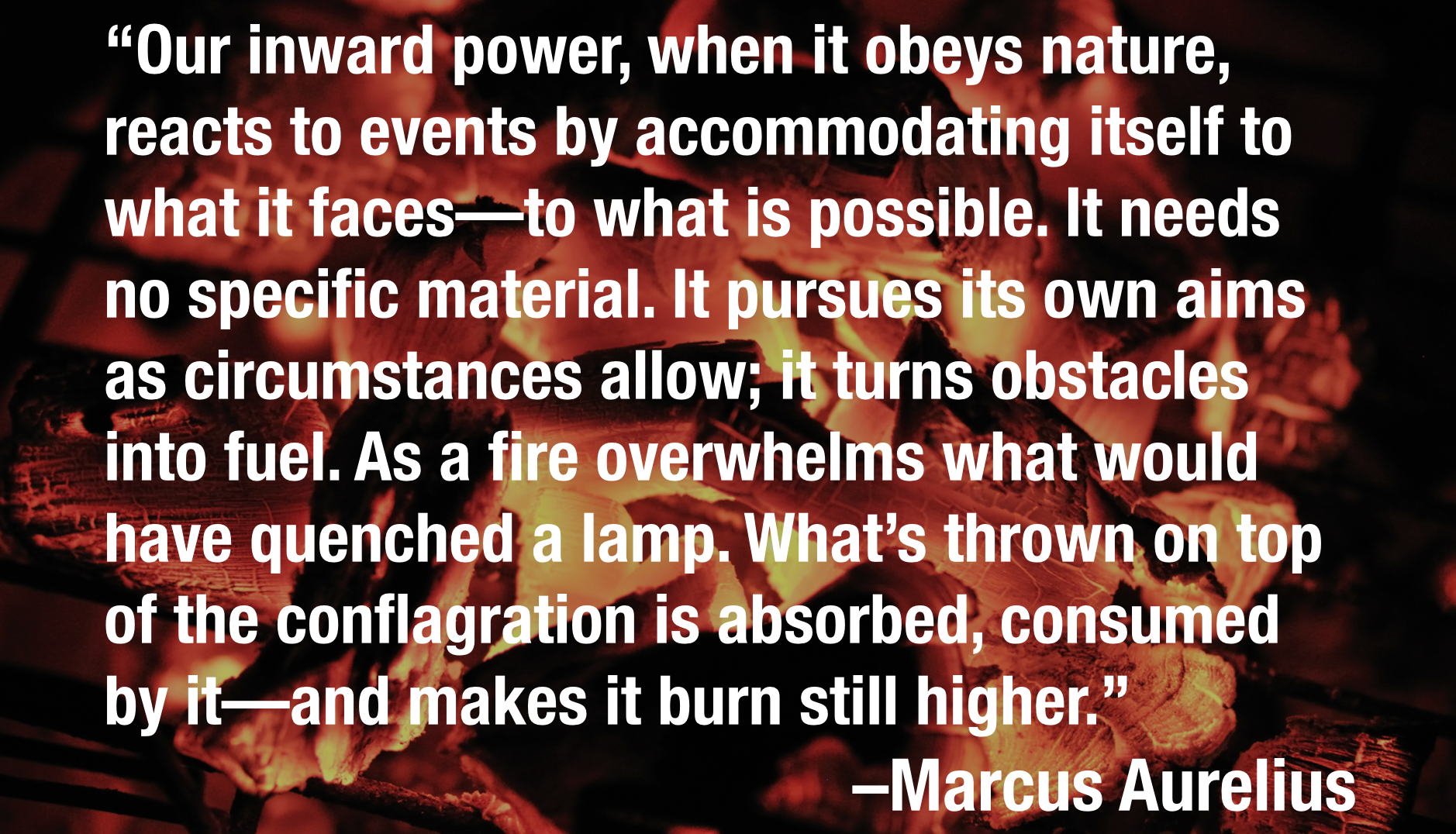
“The obstacle is the way” is such encouragement when facing adversity. And when aren’t we? Your nature calls for you to embrace difficulty and failure, to turn “obstacles into fuel” to propel yourself further.
Things not going as planned? Unforeseen problems appearing? Failure seems certain? Excellent! Use those obstacles to grow stronger, to reorient, to see previously unimagined possibilities. Seek out a path you know will be difficult if you want to grow and improve and live a life that burns brightly, that shines with the fire of your resolve.

A clear-eyed pessimism to inspire action. Kubrick’s perspective may seem bleak, but like the Stoics, he expects no external motivation, whether it’s there or not.
Whether you imagine the universe to be indifferent, against you, or on your side, do what you can to make your life meaningful, to shine brightly where there is darkness, to “rage against the dying of the light.”
Nice Sunday morning thought from Marcus Aurelius’s Meditations:
People try to get away from it all—to the country, to the beach, to the mountains. You always wish that you could too. Which is idiotic: you can get away from it anytime you like.
By going within.
Nowhere you can go is more peaceful—more free of interruptions—than your own soul. Especially if you have other things to rely on. An instant’s recollection and there it is: complete tranquillity. And by tranquillity I mean a kind of harmony.
…So keep this refuge in mind: the back roads of your self. Above all, no strain and no stress. Be straightforward. Look at things like a man, like a human being, like a citizen, like a mortal. And among the things you turn to, these two:
i. That things have no hold on the soul. They stand there unmoving, outside it. Disturbance comes only from within—from our own perceptions.
ii. That everything you see will soon alter and cease to exist. Think of how many changes you’ve already seen.
“The world is nothing but change. Our life is only perception.”
Head out on “the back roads of your self” when the world seems too distracting, too full. Unplug for a while and be intentional about finding a moment of tranquility. No vacation necessary.
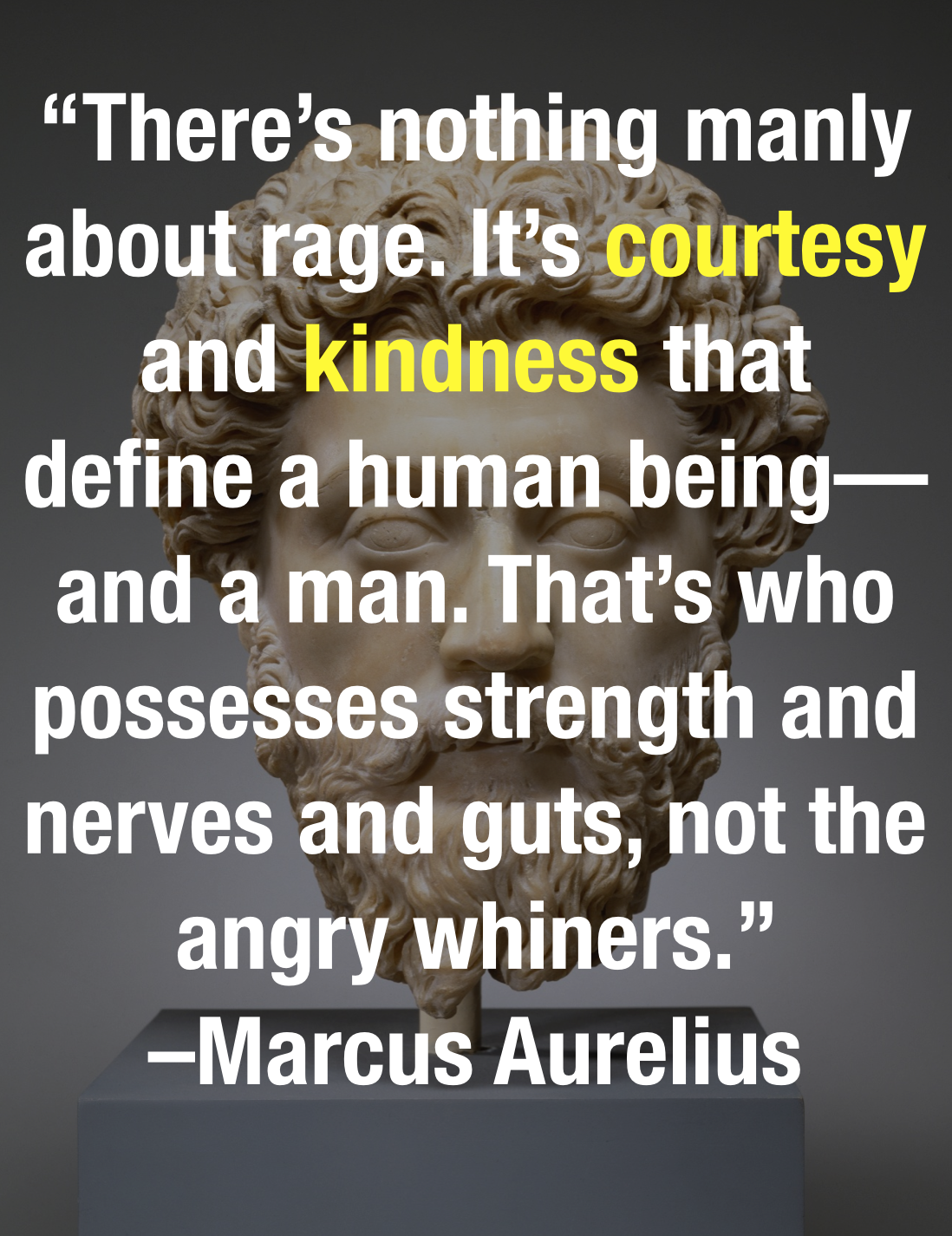
Kindness is the king of virtues.
Rage can win headlines and whip a crowd into a frenzy. A stadium roars in approval when a coach goes on a rampage against an official. A politician’s poll numbers will rise if she goes off on a sanctimonious rant against an opponent in a debate. “Look how tough I am” is often the message. Ego is at stake.
Anger is loud. Kindness is quiet.
It’s easy to give in to anger. It’s a powerful emotion. That’s why defaulting to kindness and courtesy, especially when righteous anger seems justified, when someone has done you wrong, requires great strength and genuine courage. Whenever I have snapped at someone (which, truly, does not happen often), the regret is immediate and painful.
Next time I feel I’m losing my temper or itching to rant, I need to catch myself in the act and find the strength to observe the emotion rather than venting it.
Never compare your insides to someone else’s outsides – it’s another way of saying that there’s no upside to envy.
My wife, Shanna, shared this Rob Lowe quote with me recently. (Yes, that Rob Lowe, the “brat pack” actor you remember from the 80s and more recently of The West Wing TV series.)
That quote is a nice bit of wisdom. When she read it to me I responded that it reminded me of a line I had just read in Marcus Aurelius’s Meditations.
And Shanna laughed.
She’s got a great laugh. She thought it was funny that she was quoting a Hollywood celebrity, and I was quoting a second century philosopher-king. She’s amused by my eggheaded eccentricities.
We’re a good match, she and I.
It’s a nice reminder that wisdom doesn’t have to be ancient to be meaningful. Nor does it have to come from a sage. And really, everyone, regardless of education or station in life, has a bit of Yoda or Mr. Miyagi or Marcus Aurelius (or Rob Lowe) in them, a unique insight on life that could only come from living their life, from seeing the world through their eyes.
Be open to insight and wisdom from anyone. And don’t judge yourself or be discouraged in comparison to the person you perceive someone else to be. Trust Rob Lowe on this.
It never ceases to amaze me: we all love ourselves more than other people, but care more about their opinion than our own.
—
If you are distressed by anything external, the pain is not due to the thing itself but to your own estimate of it; and this you have the power to revoke at any moment.
–Marcus Aurelius
How amazing that you, yes you, are in the exact geographic center of the universe.
At least that’s what your brain sort of tells you. All of reality exists for you, spins in orbit around you.
That is what we all feel to some extent. Our perception of reality is self-centered, centered on the world as we experience it.
All humans have experienced life this way. We each are living in a bubble of our own creation and filtering life through this perspective of a me-centered universe. It’s easy to ignore that every human around you is experiencing reality separately, oblivious, somehow, to the fact that you are the actual center of the universe.
It’s worth attempting to regularly shift that perspective and see yourself as the short-lived speck of a being you are. Here for a moment, fleeting. Not here as the reason for all that is. But a part, an astoundingly conscious part, of all that is.
It was Romans who reminded the high and the mighty, “Memento mori.” Remember you are mortal.
Your death may not be the thought you are eager to reflect on regularly. Most of us can relate to this sentiment instead:
I don’t want to achieve immortality through my work; I want to achieve immortality through not dying. I don’t want to live on in the hearts of my countrymen; I want to live on in my apartment. ― Woody Allen
But we’re all goners, it’s just a matter of when and how. And reflecting on the brevity of your own life can unburden you from feeling the weight of the me-centric world you create for yourself. It can embolden you to make something of that ripple in the pond that is your existence, your time under the sun.
A hundred years from now, you may have left a legacy worth talking about still, but you won’t be around for the conversation. The universe will go on, spinning into infinity without you. What you’ve got right now, the experience of being alive in the universe, is precious and finite. Live now, and live well, while you can.

 Excellent Journey