Be kind to everyone

IMG_1030.PNG

Be kind to everyone, even those who seem undeserving, who do not seem to have much kindness in them.

Who knows what burden they’re bearing or what has drained the kindness from them?

You don’t have to yield or give in. You can be strong and kind. But be kind if that’s all you can give. Your kindness may awaken some dormant spark of goodness that just needs a smile or gracious word.

Paying for quality

20140805-091252-33172048.jpg

You pay for quality.

If it’s poor quality you’ve purchased, you pay again with annoyance or frustration and regret and possibly lost time and maybe repairing or replacing.

High quality purchases may typically only require the initial payment.

Things are ultimately just things. But great things can add value and beauty and more consistently satisfying moments than things that are merely cheap.

It’s much better to have fewer things that you find useful and beautiful than to have a lot of things that ultimately do not delight you past the purchase price.

Get away from it all

Nice Sunday morning thought from Marcus Aurelius’s Meditations:

People try to get away from it all—to the country, to the beach, to the mountains. You always wish that you could too. Which is idiotic: you can get away from it anytime you like.
By going within.
Nowhere you can go is more peaceful—more free of interruptions—than your own soul. Especially if you have other things to rely on. An instant’s recollection and there it is: complete tranquillity. And by tranquillity I mean a kind of harmony.

So keep this refuge in mind: the back roads of your self. Above all, no strain and no stress. Be straightforward. Look at things like a man, like a human being, like a citizen, like a mortal. And among the things you turn to, these two:
i. That things have no hold on the soul. They stand there unmoving, outside it. Disturbance comes only from within—from our own perceptions.
ii. That everything you see will soon alter and cease to exist. Think of how many changes you’ve already seen.
“The world is nothing but change. Our life is only perception.”

Head out on “the back roads of your self” when the world seems too distracting, too full. Unplug for a while and be intentional about finding a moment of tranquility. No vacation necessary.

Begin now

Ira Glass did an interview with Lifehacker filled with details about how he works, his routines and tools. It’s a worthwhile read for insight into how such a prolific creator gets things done.

His final response is a compelling call to action for anyone who wants to make something:

Don’t wait for permission to make something that’s interesting or amusing to you. Just do it now. Don’t wait. Find a story idea, start making it, give yourself a deadline, show it to people who’ll give you notes to make it better. Don’t wait till you’re older, or in some better job than you have now. Don’t wait for anything. Don’t wait till some magical story idea drops into your lap. That’s not where ideas come from. Go looking for an idea and it’ll show up. Begin now. Be a fucking soldier about it and be tough. –Ira Glass

ht  Grant Huhn

No place like home

Screen Shot 2014-07-31 at 10.52.57 AM

Photo by lwpkommunikacio on Flickr

I delight in being in and around water. It’s a soul-satisfying joy to have my feet in the sand while gazing toward the horizon across the ocean. That first plunge into a swimming pool, wet and weightless, is bliss. Jumping waves with my kids or dangling my feet off a dock by the lake – so good. The feel of the sun on my skin with the sound of water rippling nearby uncoils pent up tension. I even welcome rain – mist or torrent, daylong downpour or quick storm. It somehow pitches me back into the real world.

The genuine comforts of touching the real world can get submerged in the artificial world most of us live in day to day.

Our time here is short. Heartbreak could be around the corner. Or joy. But this place is home and we should accept what is and immerse ourselves fully in the human experience. Too often we yearn to be somewhere other than here and now, or we live for what we hope will be some eternal reward. But life before death, that’s the challenge, that’s what is before us every day, every moment.

We are not strangers in a strange land, set apart from nature. We are of this world no matter how much we attempt to disconnect from it. Put your bare feet on the grass and know that you are in your element. Wade in the water; walk in the rain. Breathe in and breathe out in full awareness of the life force of this incredible planet. There’s no place like home.

My purpose

Screen Shot 2014-07-28 at 3.21.00 PM

My friend Megan was challenged in a sermon to ask three people she admires to answer this: “Why did God place you on earth, and what is your purpose?” So, she emails me with these questions. Of course, I’m honored that someone as wholehearted and bright as Megan is admires me and thought to ask me this question. I’m actually delighted by the challenge of thinking this through and writing down my thoughts. And I’m so overwhelmed by the question to have put this response off for many weeks. Sorry, Megan.

This is one of THE big questions, if not the biggest. “What’s your purpose?” Anyone who’s confident about their answer probably hasn’t given it enough thought.

At the moment (I’ll probably have a different answer next week) here’s my answer:

I don’t feel I was “placed” on earth. I used to feel I was here on purpose, carefully placed in time and space as part of a grand master plan. I no longer think that. Over time I’ve come to appreciate the overwhelming size of space and the phenomenal length of time, and I’ve realized our tiny, brief little lives don’t amount to much in the context of the universe as we now know it. (Insert existential angst here.)

I don’t imagine reality being a story that I am a character in. Instead, I feel more like a lucky winner of the biological lottery. To be a human born on Earth in the 20th century in a prosperous country to a remarkably happy family… That’s great good fortune.

While I used to find comfort in imagining I was designed for some divine purpose, it also was a burdensome thought. It was on me to figure out that purpose, to search for a calling that I was expected to pursue, to play a set role. And if I didn’t figure it out and play along I would risk mis-living my life.

What if my purpose simply is to fulfill my potential as a human being? What is a bird’s purpose? Or a tree’s? We humans, though, are blessed and cursed with a brain complex enough to ponder this and torment ourselves with too much thinking.

My purpose is to be the best human I can be, to live in harmony with the reality of the universe we find ourselves in. Harmony is the key, I think. Move in sync with the rhythm of life. Go with the flow of the way things are and resist only what is contrary to our nature and to our well-being and the well-being of others.

We are rational creatures – or we’re supposed to be – and we have an affinity for connection with each other and for an appreciation of beauty and meaningful patterns. Reason and rhyme. Truth and beauty.

I’m making it my purpose to live an excellent life, filled with truth and beauty and kindness.

What does that look like every day, though? How do I make my way through the daily dilemmas and mind-numbing monotony and the regular heartbreaks, big and small, of a typical human life?

I don’t know. I get a fresh start every day, though. Some days are just going to suck. Move on and try to make the next one better.

To be awake and aware in such a grand and incomprehensibly vast universe should be delight enough for me. And knowing how small I am in the big picture should ease the angst of worrying that I need to be a big deal and do big things for some higher purpose. Ambition is overrated. Living a good life is aspiration enough for anyone.

“Consider the lilies”, right? Maybe humans should play along with the rest of nature and fulfill our role without so much strain and thinking and worry.

Be happy and kind. Enjoy each day as much as you can. Do work you love, and if you can’t love your work, do it well anyway. Be as authentic a human as you can be, in the ways you move and think and work and play. Align your life with truth and beauty and seek to understand and express those values as well as you can.

The path is the goal. The climb, the quest, the narrative arc is an illusion, or at least a mismatched metaphor. This step, this moment is your life. Make it excellent.

“A man’s job is to make the world a better place to live in, so far as he is able—always remembering the results will be infinitesimal—and to attend to his own soul.”–Leroy Percy

“To live your brief life rightly, isn’t that enough?”–Marcus Aurelius

Courtesy and kindness

Screen Shot 2014-07-26 at 9.13.45 AM

Kindness is the king of virtues.

Rage can win headlines and whip a crowd into a frenzy. A stadium roars in approval when a coach goes on a rampage against an official. A politician’s poll numbers will rise if she goes off on a sanctimonious rant against an opponent in a debate. “Look how tough I am” is often the message. Ego is at stake.

Anger is loud. Kindness is quiet.

It’s easy to give in to anger. It’s a powerful emotion. That’s why defaulting to kindness and courtesy, especially when righteous anger seems justified, when someone has done you wrong, requires great strength and genuine courage. Whenever I have snapped at someone (which, truly, does not happen often), the regret is immediate and painful.

Next time I feel I’m losing my temper or itching to rant, I need to catch myself in the act and find the strength to observe the emotion rather than venting it.


Inspiration will jilt you. Move on without it.

From Erin Rooney Doland‘s chapter in the excellent book, Manage Your Day-to-Day:

Leigh Michaels, prolific author of more than eighty romance novels, once said that “waiting for inspiration to write is like standing at the airport waiting for a train.” Conditions to produce one’s craft are rarely ideal, and waiting for everything to be perfect is almost always an exercise in procrastination.

Inspiration will leave you in the lurch and repeatedly break your heart. You still will love it and long for it and put up with its philandering ways. And you will wait and postpone good things in hopes that it will arrive any moment now.

The best way to summon it is to ignore it, play hard-to-get, and just start doing your work, whether you feel like it or not.

I aim to write something every day. Some days I wait and wait, longing for even a tiny nudge of inspiration, and the day gets late with no love from the muse. Then I just have to start writing something to keep that daily commitment, even if I’m sure what I write will be lame or trite or completely unoriginal. This is one of those posts.

Inspiration did not arrive, but I did.

Rob Lowe and Marcus Aurelius

Never compare your insides to someone else’s outsides – it’s another way of saying that there’s no upside to envy.

Rob Lowe

My wife, Shanna, shared this Rob Lowe quote with me recently. (Yes, that Rob Lowe, the “brat pack” actor you remember from the 80s and more recently of The West Wing TV series.)

That quote is a nice bit of wisdom. When she read it to me I responded that it reminded me of a line I had just read in Marcus Aurelius’s Meditations.

And Shanna laughed.

She’s got a great laugh. She thought it was funny that she was quoting a Hollywood celebrity, and I was quoting a second century philosopher-king. She’s amused by my eggheaded eccentricities.

We’re a good match, she and I.

It’s a nice reminder that wisdom doesn’t have to be ancient to be meaningful. Nor does it have to come from a sage. And really, everyone, regardless of education or station in life, has a bit of Yoda or Mr. Miyagi or Marcus Aurelius (or Rob Lowe) in them, a unique insight on life that could only come from living their life, from seeing the world through their eyes.

Be open to insight and wisdom from anyone. And don’t judge yourself or be discouraged in comparison to the person you perceive someone else to be. Trust Rob Lowe on this.

It never ceases to amaze me: we all love ourselves more than other people, but care more about their opinion than our own.

If you are distressed by anything external, the pain is not due to the thing itself but to your own estimate of it; and this you have the power to revoke at any moment.

–Marcus Aurelius

Advice for getting started after college

My first job out of college was on Capitol Hill, working on the staff of a member of Congress. I lived alone on the Hill and walked to work every day. There was no internet in 1987, of course, and no cable TV then, surprisingly, on the Hill. I didn’t have much money and didn’t socialize much. Dinner was often finger food from whatever Congressional reception was on my boss’s schedule for the night. My family was far away. I had friends, but it was a very introspective, often delightfully solitary, relatively distraction-free time in my life.

My primary pastime when I wasn’t working was reading. I spent whatever I could on acquiring books, mostly biographies and history. As I was beginning my adult life with audacious dreams of greatness I wanted to be instructed by the examples of the lives of great men and women. I particularly remember reading Plutarch’s Lives and biographies of U.S. presidents. A fun Friday night for me was browsing the shelves of a bookstore.

It wasn’t exactly a monk-like existence, but I often wondered if I shouldn’t have been more social and had more fun. Looking back on it, though, I realize it was a great way to begin forming my identity and learning to think for myself and being intentional about who I wanted to be. I wasn’t molded by peers or social expectations or distracted by frivolities. That alone time was worthwhile. Much of who I am now and the way I think was formed in those years as a bachelor with books.

I was reminded of this time in my life by a post on Brain Pickings. The author Florence King gives her advice to young people on getting started in their adult lives, and it sounds a lot like what I did:

Put yourself on cruise control and go into limbo for a year. I’m not talking about a neo-grand tour; don’t bop around Europe, you’ll just get in trouble. Nor am I talking about what your parents’ generation called “dropping out.” I mean forget about success for a while, get yourself an ordinary job, an ordinary place to live, and live without worrying about what Americans call, in uppercase, the Future.

Go somewhere different, but stay away from big cities. If you’re from a place you call “godforsaken,” go to a small city in another part of the country…

Get a dead-end job — they’re plentiful now because nobody wants them. Tell your employer the truth: that you’ll be around only a year or so, but promise to work hard. Keep your promise. Little triumphs are the pennies of self-esteem. If you do well in such a job and make yourself indispensable to somebody, you will realize Robert E. Lee’s farewell words to his men after the surrender at Appomattox: “You will take with you the satisfaction that proceeds from a knowledge of duty faithfully performed.”

Live alone, even at a financial sacrifice. If you have a roommate, the whole college uproar will just start all over again…

Read, read, read. When you don’t have to worry about passing exams on them, subjects you studied in school suddenly become interesting…

What I am recommending is traditionally called “finding yourself.” The difference is, there is no bohemian excess here, none of the “experiencing everything” that comprises nostalgia de la boúe. It’s productive, constructive goofing-off.

This was close to my experience of being on my own for the first time. I was in a big city but was not particularly living a big city life. I was alone, far from family and old friends, and I used that time to read and think and start figuring out what was important to me. I didn’t have a “dead-end” job. It was intense, yet fun, and I learned what it meant to do good work and to be part of a team. But it didn’t end up being the field I would devote my career to.

I remember about that time discovering the work of Joseph Campbell, the great expert on mythology and comparative religion. His influence continues to resonate with me. He told of a similar period early in his career during the Great Depression when he couldn’t land an academic job. He ended up living in an isolated place for a few years, and all he did was read. Campbell credits that quiet time in his life for the success he ultimately found in his work life.

I know what it’s like to be 22 and eager to make your mark, to prove you’ve “arrived” and are bound for something big. Our connected and distracting world today only makes this impulse more irresistable and more burdensome. But understanding that it’s the long game that’s more meaningful is so reassuring. Attempt to peak at age 60 rather than, say, 27, and you’ll likely be more awesome at 27 than you would have been playing the short game, trying to succeed fast.

Take the time to ease your way into your adult life, to ponder and reflect and get to know who you are and who you want to be outside of the expectations of your family and the influence of your friends. There’s no hurry, people. The future is arriving fast enough.
Striving

Screen Shot 2014-07-16 at 4.17.02 PM

If the most satisfying rewards are the intrinsic ones, striving for mastery, for artistry in your work, becomes a joyful end in itself. “Making it” is an illusion. You never get there. There is no there there. Imagine how dull life would be if you did “arrive” and just sat by the pool all day. I could take a week by the pool, mind you, maybe even two, but a life of leisure with nothing to strive for, nothing to keep you sharp, sounds miserable.

John Mayer expressed practically the same sentiment as Coltrane’s:

It’s only fun when you’re trying to get it in your grasp. It’s like, you know, once you catch it, throw it back in the water then catch it again. That’s really what I want to do my whole career. -John Mayer

Comfortable? Got it figured out? Time to get busy upping your game, mastering something new, starting from scratch, striving.

Well conceived, clearly said

I saw the quotation below in this article yesterday: Microsoft’s New CEO Needs an Editor.

“Whatever is well conceived is clearly said,
And the words to say it flow with ease.” -Nicolas Boileau

Many words and fancy words do not impress. They communicate, instead, a lack of clarity and likely an ill-conceived idea.

When my sentences keep getting more complex and tangled in paragraphs that need yet another paragraph to explain further, I should stop and rethink what I’m trying to accomplish. Go back to “Why?” and scrap it if I can’t come up with a clear answer.

Tolstoy called for us to be honest and brave and “to act and speak that your motives should be intelligible to an affectionate seven-year-old boy.” (I’ve got a seven-year-old daughter who is mostly affectionate. Tolstoy would nominate her to be my editor.)

Flow is the desired state. I might need to write my way into it and hack through adverbs and jargon to get there, but what I deem inessential should not make it past my Publish button or Print icon.

Share nothing that is not simply stated and easily understood.


Learn from everyone

I saw this Emerson quotation referenced in an Austin Kleon tweet yesterday:

I will learn from everyone and be no one’s disciple.

I couldn’t find the original source for it, but it seems very Emersonian.

Learn from everyone. Don’t assume you are wiser than anyone you encounter. Every person has experienced things you haven’t. Be open to what others can teach you. Be humble. Assume nothing about anyone.

When inclined to judge, try to understand instead.

This is all easy to say. Not so easy, though, to be the kind of person who truly faces the world so open-heartedly, so teachable and humble. Maybe this means asking more questions of others and genuinely listening to the answers. Listening more than you talk.

Then there’s the “be no one’s disciple” half of the phrase. No matter how together someone seems or how authoritative they are said to be, don’t bow down to their opinions and copy them into your worldview. Accept nothing without reasonable inquiry and solid evidence. Don’t give over your freedom to anyone else. Ever.

Dropping keys

Screen Shot 2014-07-10 at 2.58.52 PM

Catch yourself locking others up in your expectations, your dogma. And stop it.

Break out of the constraints others place on you. Be authentic. Be real. Be your rowdy, unfiltered self, regardless of what others want you to be and regardless of how imperfect you will be exposed to be.

Your freedom just might liberate someone else. Your vulnerability just might embolden those around you who are only going through the motions, who feel trapped in cages built by someone else.

The wise man accepts the beautiful messiness of life and does not try to fix others. He just wants them to be free.

Stop building cages. Start a jail break.

An audacious pursuit

20140709-161043-58243966.jpg

Take on some project that scares you because of how extraordinary it could be. Even if the project never comes to fruition, just working toward something you imagine to be awesome will amp up your life and spark possibilities that never would have occurred without an audacious pursuit.

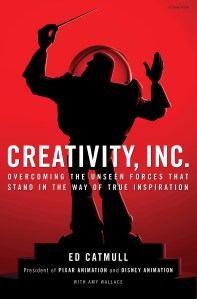
Creativity, Inc.

© Disney • Pixar

I recently finished reading Creativity, Inc. by Ed Catmull, the President of Pixar and Disney Animation. It’s really good. So many business books come across as superficial or self-serving PR pieces. But Catmull has created an enlightening, useful book filled with candid insights into the creative powerhouses he has helped to build.

Catmull tells the fascinating story of how Pixar came to be and then goes on to share how they have adapted in response to internal challenges to continue making remarkable movies. This is a particularly great read if you are responsible for leading other creative people or if you are part of a team of creatives. Catmull doesn’t sugarcoat Pixar’s success. He focuses repeatedly on failures and stresses that have forced the company to keep reinventing its processes.

This book is worthwhile for anyone who wants to understand what it takes to create and cultivate a great organizational culture.

If you’re part of an organization or a team or a family even, and you care about it being the best it can be, you must care about the group’s culture. If you’re not intentional about shaping and cultivating the culture, then brace yourself for the culture to be shaped randomly, and possibly destructively. Culture is everything for an organization.

It’s clear that Catmull and his partner John Lasseter (and the late Steve Jobs) were meticulous in crafting the culture of Pixar to bring out the best in the creative people on their team. And they’re still learning and failing and trying new approaches.

Here are some passages I highlighted as I read:

“Figuring out how to build a sustainable creative culture—one that didn’t just pay lip service to the importance of things like honesty, excellence, communication, originality, and self-assessment but really committed to them, no matter how uncomfortable that became—wasn’t a singular assignment. It was a day-in-day-out, full-time job. And one that I wanted to do.”

“My hope was to make this culture so vigorous that it would survive when Pixar’s founding members were long gone, enabling the company to continue producing original films that made money, yes, but also contributed positively to the world.”

“Getting the right people and the right chemistry is more important than getting the right idea.”

“Candor isn’t cruel. It does not destroy. On the contrary, any successful feedback system is built on empathy, on the idea that we are all in this together, that we understand your pain because we’ve experienced it ourselves.”

“You need storms. It’s like an ecology. To view lack of conflict as optimum is like saying a sunny day is optimum. A sunny day is when the sun wins out over the rain. There’s no conflict. You have a clear winner. But if every day is sunny and it doesn’t rain, things don’t grow. And if it’s sunny all the time—if, in fact, we don’t ever even have night—all kinds of things don’t happen and the planet dries up. The key is to view conflict as essential, because that’s how we know the best ideas will be tested and survive. You know, it can’t only be sunlight.”

“My rule of thumb is that any time we impose limits or procedures, we should ask how they will aid in enabling people to respond creatively. If the answer is that they won’t, then the proposals are ill suited to the task at hand.”

“Better to have train wrecks with miniature trains than with real ones.”

“Paying attention to the present moment without letting your thoughts and ideas about the past and the future get in the way is essential. Why? Because it makes room for the views of others. It allows us to begin to trust them—and, more important, to hear them. It makes us willing to experiment, and it makes it safe to try something that may fail. It encourages us to work on our awareness, trying to set up our own feedback loop in which paying attention improves our ability to pay attention. It requires us to understand that to advance creatively, we must let go of something. As the composer Philip Glass once said, ‘The real issue is not how do you find your voice, but … getting rid of the damn thing.'”

“My goal has never been to tell people how Pixar and Disney figured it all out but rather to show how we continue to figure it out, every hour of every day. How we persist. The future is not a destination—it is a direction. It is our job, then, to work each day to chart the right course and make corrections when, inevitably, we stray. I already can sense the next crisis coming around the corner. To keep a creative culture vibrant, we must not be afraid of constant uncertainty. We must accept it, just as we accept the weather. Uncertainty and change are life’s constants. And that’s the fun part.”

“Unleashing creativity requires that we loosen the controls, accept risk, trust our colleagues, work to clear the path for them, and pay attention to anything that creates fear. Doing all these things won’t necessarily make the job of managing a creative culture easier. But ease isn’t the goal; excellence is.”

What a refreshing book. Great stories. Candid insights. Humble confessions. Helpful advice from many of the key players at Pixar on how to work in a more effective and creative way. Pixar can seem to do no wrong. (Except for Cars 2. What happened there?) This book continues the string of excellent stories from what has become maybe our nation’s most iconic story teller.


A day’s work

20140706-224534-81934524.jpg

Bring on a new week, a new chance to make things and make things better.

A new chance to make a difference and awaken possibility.

A fresh start to connect and share and to be kind to someone who might need only a heartfelt smile or a listening ear to come alive and offer the same to others.

Best week ever, because it is this week. It is now. And it is on.

The elusive now

There would seem to be nothing more obvious, more tangible and palpable than the present moment. And yet it eludes us completely. All the sadness of life lies in that fact. -Milan Kundera