Fill your work with love

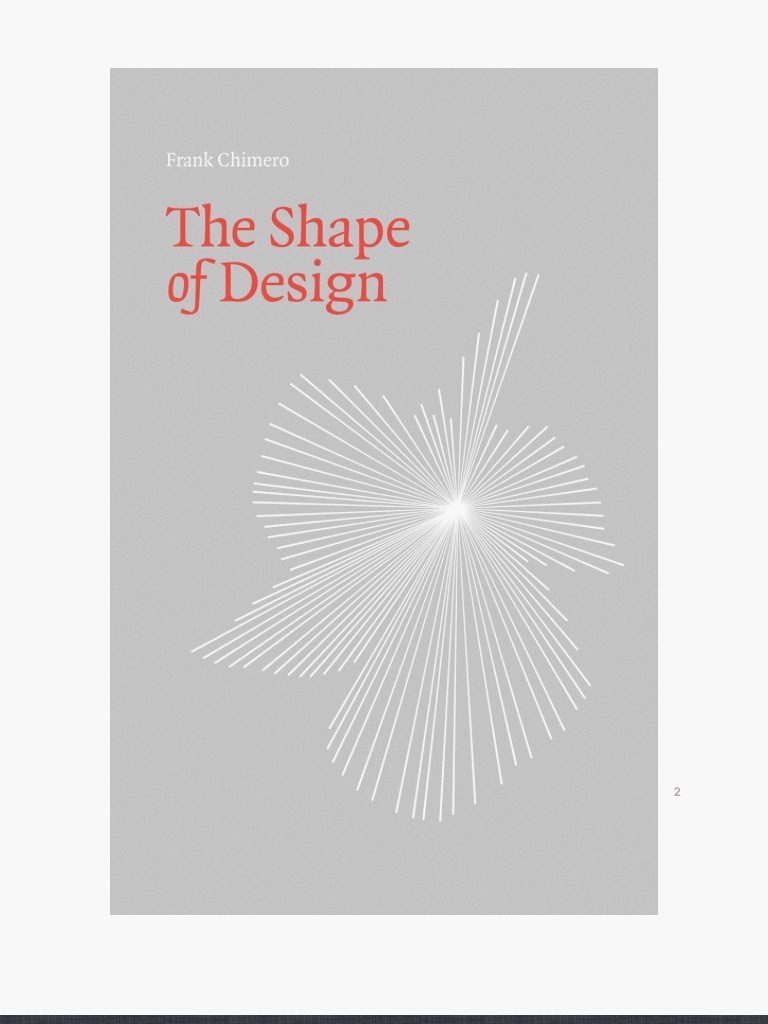
“Not enough love.” That was the response from Frank Chimero’s design professor after looking through some of his work.

“My work was flat, because it was missing the spark that comes from creating something you believe in for someone you care about. This is the source of the highest craft, because an affection for the audience produces the care necessary to make the work well.”

“The work has enough love when enthusiasm transfers from the maker to the audience and bonds them.”

This is from Chimero’s excellent book, The Shape of Design. The passage above reminds me of Tolstoy’s claim that “Art is infection.” An artist, a teacher, a maker of any sort, has an idea or feeling and wants to share it. It’s effective, it’s art, when the audience gets that very same feeling or sees that idea just as the maker did.

You’ve got to care enough about your work and those you serve – an audience, a customer, a student – that you fill your work with all the love you can, with care and attention to detail and enthusiasm.

When I write, I often imagine my audience to be my young daughters reading this many years from now, maybe even after I’m gone. Don’t you know that informs my efforts. When I lose sight of my ultimate audience, it’s easy to lapse into just going through the motions. Then flatness abounds.

What if we examined all our work in this light? What gift can we offer to our audiences? Our colleagues or customers? Our families? Are we putting enough love into our labors?

20130903-220319.jpg

Sunday morning Seneca: The fighter

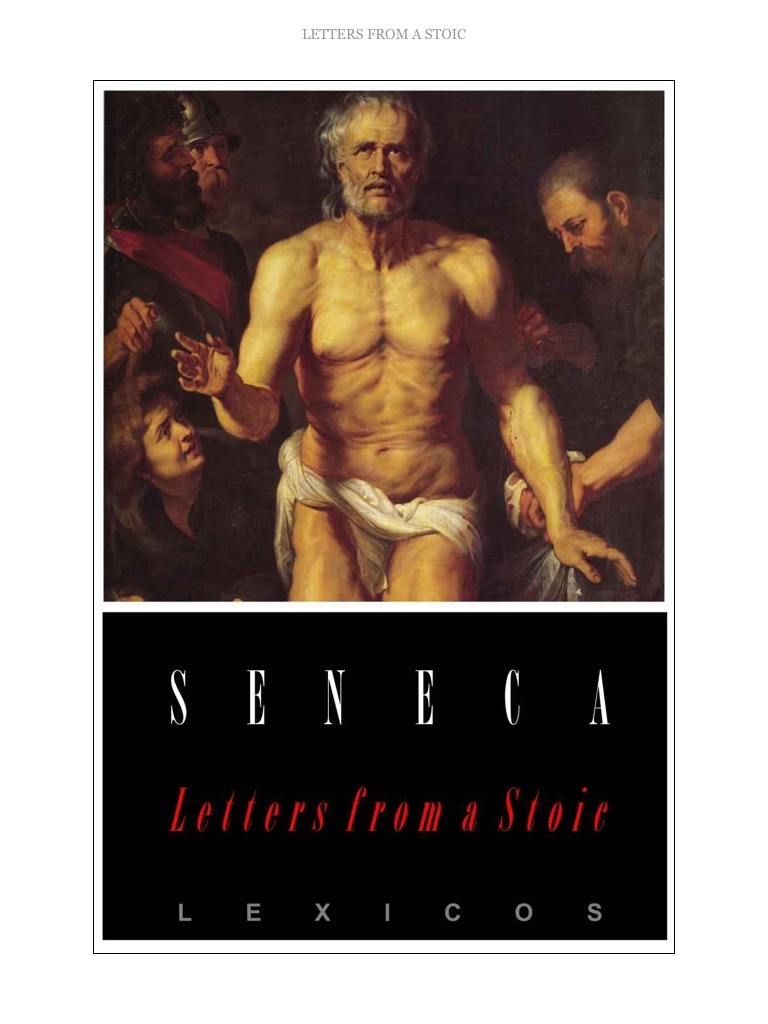
From Seneca’s Letters from a Stoic:

“… no prizefighter can go with high spirits into the strife if he has never been beaten black and blue; the only contestant who can confidently enter the lists is the man who has seen his own blood, who has felt his teeth rattle beneath his opponent’s fist, who has been tripped and felt the full force of his adversary’s charge, who has been downed in body but not in spirit, one who, as often as he falls, rises again with greater defiance than ever.”

20130825-074718.jpg

Ready Player One

My more structured reading plan is off to a good start this week.

I’ve slowly been working through The Shape of Design, but my stab at getting into some fiction as well has been a hit so far. I’m enjoying Ready Player One, a science fiction adventure set in the year 2044.

It’s a clever story about a teenage underdog in a bleak American future who takes on a massive, immersive video/role-playing game created by a Steve Wozniak type genius who was obsessed with the 1980’s. The pop culture references are a blast, especially for those of us who come from the 80’s.

I’m appreciating the lightness and playfulness of this type of fiction. It’s a nice balance to the denser, more challenging books I’ve got on my list.

20130820-213126.jpg

What I’m reading now

I’m refining my reading habits. I’ve been dipping into too many books without finishing. I need some structure and some discipline to get the most out of what I read.

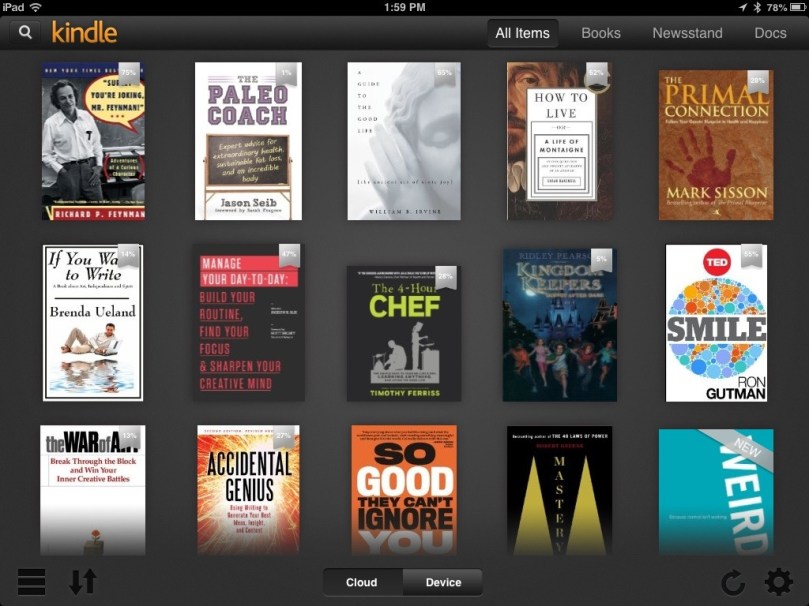
Here’s the current lineup of books* that I have been in and out of recently on my iPad mini:

I’ve downloaded samples of these books to see if I’m interested enough to purchase them:

This is a tantalizing but overwhelming list of intriguing books.

I’m going to use my lunch break for reading time. At night, it’s hard to always work reading time around my family life. My aim is to save what time I can get at night for lighter reading, like fiction, or for wisdom literature, like the works of the Stoics. An “idea book” often gets my brain too engaged, and I don’t wait to stay up late chewing on possibilities when I ought to be sleeping.

I plan to start at the top of the list above and focus on one book at a time until either I finish the book or I decide I’ve gotten all I want out of it. I will highlight key passages for later reference, and, if the book’s impact merits it, I will post what I learn from it.

*The book links are mostly to Amazon’s Kindle store, but I have most of these in my iBooks library instead. I prefer the look and interface of iBooks to Kindle, but I linked to Amazon since it’s the more common format.

Choosing your response

Men are disturbed not by things that happen, but by their opinion of the things that happen. -Epictetus

Between stimulus and response there is a gap. In that gap we can choose our response. This insight is from Victor Frankl’s profound little book, Man’s Search For Meaning. Frankl noticed a small number of fellow concentration camp prisoners who chose to be optimistic and encouraging in the midst of their horrifying reality. They had no control over their daily physical life, but these handful of prisoners he noticed exercised what Frankl called the “last of human freedoms”, the freedom to choose your attitude regardless of the circumstances. No one can deny you that final, ultimate freedom.

We can’t control the world and the actions of others. The weather, the traffic, the people we encounter – not in our control. We can control our own attitude and our own actions.

We all have regularly wasted too much emotion and mental energy fretting or stewing or worrying over things we can do absolutely nothing about.

What if, when I’m prone to respond with frustration or anger or anxiety, I simply chose to be curious instead.

“I wonder why that driver cut me off.”

“How interesting that it’s raining on the day of our picnic.”

“It’s fascinating that this person is angry with me. I wonder what’s at the root of their response.”

“Fascinating…” is a delightfully effective response when you’re otherwise inclined to react negatively.

We are not machines, right? No one or no thing can make you respond in a certain way. You’ve got a choice. It’s inaccurate to say “________ makes me mad.” You may choose to be mad because of ________, but it is your choice.

I know I’m choosing an unproductive response when I start feeling defensive. It’s a clear indicator I’m heading down a wrong path.

I heard someone say “Never take anything personally.” Nothing anyone does or says truly is about you, even if it seems so. Others’s actions are their own and are about them, not you.

This is not easy. We have to be mindful of how we are programmed and take control to reprogram our responses with that gap, that opportunity to choose, as the key to living a more wholehearted, mindful human life.

Fascinating.

frankl

“Write as if you were dying.”

Brain Pickings is as prolifically wise and challenging and enlightening as any site on the internet. Hooray for it’s creator, Maria Popova! It’s worthwhile to subscribe to her free weekly email newsletter so you don’t miss out.

I found this post about Annie Dillard’s book, The Writing Life, in yesterday’s newsletter. I have the paperback version of the book, but I’ve never read it. I will remedy that now that I’ve read the book excerpts highlighted in the post.

This passage is a powerful reminder of why we create and how our mortality, and that of our audience, should inform our work:

“Write as if you were dying. At the same time, assume you write for an audience consisting solely of terminal patients. That is, after all, the case. What would you begin writing if you knew you would die soon? What could you say to a dying person that would not enrage by its triviality?

[…]

Why are we reading if not in hope that the writer will magnify and dramatize our days, will illuminate and inspire us with wisdom, courage, and the possibility of meaningfulness, and will press upon our minds the deepest mysteries, so we may feel again their majesty and power? What do we ever know that is higher than that power which, from time to time, seizes our lives, and reveals us startlingly to ourselves as creatures set down here bewildered? Why does death so catch us by surprise, and why love? We still and always want waking.” -Annie Dillard from The Writing Life

Wow.

Consider yourself and everyone else, for that matter, to be terminal. It is true. And living and thinking in the light of dying should add perspective and meaning that we would otherwise shut our eyes to.

I often imagine that my audience is just my two young daughters who will read this as adults, maybe after I’m gone. Thinking like that can’t help but shape my words and shame me away from pettiness and silliness.

We should not get lost in fretting over our mortality and miss out on actually living. But summoning the ultimate and embracing our impermanence are crucial to writing anything or making anything that lets us touch immortality.

anniedillard_thewritinglife

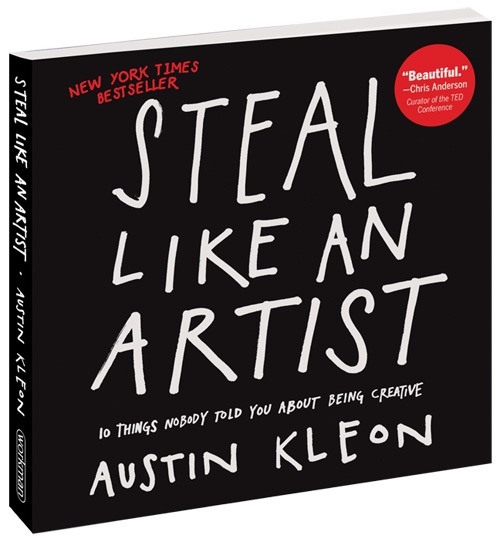
“Steal Like An Artist” is a steal today

Today I purchased the ebook version of Austin Kleon’s Steal Like An Artist for only $1.99. Now, that’s a steal. Today may be the only day it’s that price, so jump on it tonight.

I spent just an hour reading it this afternoon and got more than halfway through. It’s a delight, filled with practical advice and genuine epiphanies. I kept highlighting passages, and I know I will go back and read it again.

It’s for anyone who makes anything. It’s for humans every where. I’ve already got some tips from it that I’m going to implement when I get to work tomorrow, like making a clear delineation between the digital and analog work spaces in my office. (Read the book.)

Kleon already inspired me to show my work earlier this year, and this book is a solid kick in the pants to dump your excuses and get busy creating.

20130811-202346.jpg

Read good books. Get smarter.

I really enjoyed this recent post on the Farnam Street blog: The Buffett Formula – How To Get Smarter.

Warren Buffett and his partner, Charlie Munger, have done something right in their careers. They attribute much of their success and a lot of their time to one key activity: reading.

Warren Buffett says, “I just sit in my office and read all day.” What does that mean? He estimates that he spends 80% of his working day reading and thinking.

“You could hardly find a partnership in which two people settle on reading more hours of the day than in ours,” Charlie Munger commented.

When asked how to get smarter, Buffett once held up stacks of paper and said “read 500 pages like this every day. That’s how knowledge builds up, like compound interest.”

The reading they recommend is deep and challenging, not news and Twitter updates. I’ve got a stack of great books piled up in my iPad, but I need to be more intentional and structured about digging into and finishing them, not just grazing randomly through portions.

Reading good books throughout my life has affected my worldview and my character more than any other activity. As a new academic year begins this week, I’m going to put together my own personal syllabus for getting smarter and reading books that spark new possibilities.

20130806-225905.jpg

Improv Wisdom

“Don’t prepare. Just show up.”

Seems to defy not just conventional wisdom but common sense as well. I’ve recently been all about the need for “deep practice” and rehearsal. But hear this out. This is different. What if you let go of your scripts, your automatic responses to typical situations, your inclination to live in your head most of the time?

Consider those icebreaker activities where everyone in a circle is asked a question like, “What’s your favorite book?” The point is to have everyone get to know each other a little better. But what really happens is that most people in the circle spend their time preparing their response in their mind and not actually listening to the responses of others.

What if you truly spent that time, instead, trying to understand the responses of the others and gave absolutely zero thought to what you will say when it’s your turn? Would you really draw a complete blank when your name is called or offer something embarrassingly inelegant? Trust that your amazing brain would be able to shift gears from listening mode and summon an intelligible, maybe even intelligent response on the spot. In fact, a spontaneous, improvised response without any forethought might be more authentic and original and more interesting than what you would have rehearsed.

Now, imagine a job interview or a date or a conversation with a friend or family member. Instead of using the time when others are speaking to prepare and rehearse for when you get a turn to speak, simply “show up” and listen and try your best to understand, and then have confidence that you’ll do just fine when it’s your turn to speak.

Just showing up, just being present and focused on the moment at hand, is not easy. Those cool cats on that improv TV show are quite brilliant in their zaniness. But their brilliance is hard won through years of experience, through countless moments of stretching their capacity to create on the spot. They have prepared to be unprepared.

The best jazz musicians and teachers and public speakers are ones who have prepared so thoroughly that they can create something new in the moment as they respond to the audience in front of them. Their preparation has earned them the right and the ability to “wing it” and improvise and create something beautiful.

There’s a terrific little book, Improv Wisdom by Patricia Ryan Madson, that explores this topic. Madson, an improv teacher, challenges readers to live a more unscripted life and applies lessons from improvisational theater to everyday situations we all face.

We all need to practice being unpracticed. Prepare for spontaneity and improvisation. We will look silly at times and occasionally say and do things that are far from excellent. But we will be more real. We will be more interesting and find others more interesting as well. And we will laugh more.

Improv Wisdom

In praise of ebooks

It’s great living in the future. The world’s information is in our pockets. We have no end of things to read and watch and play. Consequently, there also is no end of empty, worthless, even harmful diversions that can consume our time and attention.

Just as you should be mindful of what you put in your mouth, take care to put worthwhile things in your mind. Be a good curator of what merits your attention. Life is short. Use your very limited time and attention to consume books, articles, music, and other art that will make you better and happier.

I’m now a reader of ebooks. I have always been a book reader. I’ve collected and read books since I was old enough to read. Just picking up certain books in my collection can cause a rush of memories associated with reading them. But I’m not particularly nostalgic about the demise of paper books and newspapers and magazines. Paper is just a vehicle for the content. It’s the content that matters.

Ebooks ensure that you can easily access your entire collection of books from anywhere. John Adams advised his son, John Quincy, to “Always have a poet in your pocket”, to carry a book with you constantly to make good use of any down time. Now, there is no excuse not to have a good book or other reading material constantly available to you.

Ebooks make reading a pleasure for me. You can change the font and adjust the font size as well as the background. You can sync your books across multiple devices. You can highlight passages and make your own notes. I use both iBooks and Kindle. I prefer the iBooks reading experience. iBooks has a more pleasing page layout, including a ragged right edge, and offers a scroll option in addition to the conventional page turns. Kindle has a bigger selection of books to offer, though.

When people see my bookshelves, they often ask, “Have you read all of these?” Of course not. I have read some of most and all of some. I have no shame about stockpiling books. Ebooks make that even easier. Just a click on my iPad or my Mac, and the book is instantly downloaded. How cool is that? And now I don’t have to worry about having enough shelf space.

I do want a more disciplined reading routine, and this is one area where ebooks cause problems. I open my iPad and see dozens of books I might want to read or re-read. I plunge into one, and if my mind goes on a tangent, I can easily open another or go check Twitter. Paper books are much better at focusing my attention.
20130628-191712.jpg

Books have greatly affected my life and continue to do so. Choose your inputs wisely. Read classics. They are classics for a reason. Read the works of great writers and smart thinkers. Find an author that speaks to you and read everything she’s written. It’s the best way to really get an author. Ask friends and mentors what books have meant the most to them. This question alone can fill a dinner with great conversation. Challenge yourself to read at least one book each month. Some people read a book a week. Imagine going through 52 books every year. Make a wish list. Ask for iBooks or Amazon gift cards for holiday or birthday gifts. Start a reading group with kindred spirits.

Establish a reading habit. Family life makes it hard for me to disappear into a book regularly at home, so my daily lunch break works well for me.

Next time you find yourself channel surfing, flipping through the dismal array of reality shows on TV, grab a good book and get lost in the life of the mind that a book can create. Our culture is committed to extending literacy universally in the hopes there will be no one who can’t read. But the sad reality is that so many who can read actually do not.
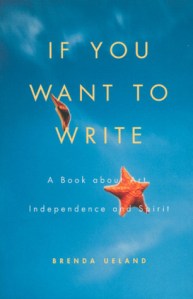
If You Want To Write

If You Want To Write by Brenda Ueland

I mentioned my favorite book, If You Want To Write, in a recent post. I discovered this little book back in the ’90s, and it remains one of the few books I’ve read more than once and recommended almost aggressively to others. The author, Brenda Ueland, was a writing instructor in the early 20th century. Reading this book is like sitting in her living room and having a pleasant conversation with a favorite aunt. She is kind and wise and funny, and her advice about writing is transferable to almost any endeavor. Really, the book could be titled, If You Want To Live A Happy Life.

Ueland’s book introduced me to the letters of Vincent van Gogh and the poetry of William Blake. Tolstoy is cited often as well. But it’s Ueland’s gentle, yet compelling, encouragement to take action, avoid being critical (of yourself and others), to be free, be bold, and be “microscopically truthful” with your work that stays with me. She says that everyone is an artist capable of creating something beautiful and meaningful. And we have the opportunity to help others express themselves. This quote from a van Gogh letter to his brother, Theo, has challenged me and informed my work ever since:

Many a man has a bonfire in his heart, and no one comes to warm himself at it. -Vincent van Gogh

How sad to imagine all the genius and insight and talent that has never been given a chance to grow and flourish in most people. Indeed, our culture is cruelly proficient at stamping out signs of originality and creative imaginings early in childhood even. It is a noble calling to be the one warming by the fire and fanning the flame that’s within someone who doesn’t think he’s got even a spark to share. If I produce nothing notable or lasting on my own but can help awaken possibility in others, that is a grand accomplishment.

If you ever need a dose of inspiration and a fresh perspective on what it means to be an artist, whether you want to write or perform or create a business or build a beautiful family, I highly recommend this sweet and powerful book.

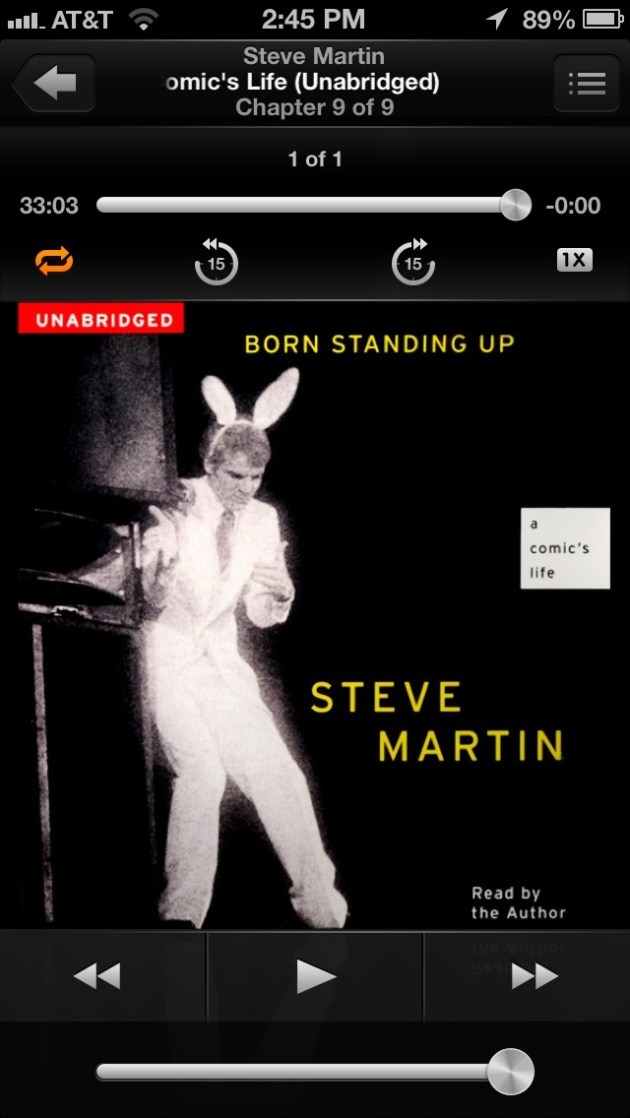
A great audiobook: Born Standing Up by Steve Martin

I recently finished listening to Steve Martin’s memoir of his stand-up comedy career, Born Standing Up. He narrates the audio book, and his reading of his own story gives it a richness and authenticity of tone that can certainly not be matched by the written word. This book has a surprising sweetness about it and is now a new favorite. I was too young to have fully gotten him when he rose to fame in the 1970’s, but the era he describes is familiarly nostalgic for me. I laughed out loud multiple times at his stories. He persevered through 14 years of relatively modest success before finally breaking through. He is a true craftsman who committed to making remarkable, original work. I think I’m going to listen to it all over again.

Image

Your life is now

“We are very good at preparing to live, but not very good at living. We know how to sacrifice ten years for a diploma and we are willing to work very hard to get a job, a car, a house, and so on. But we have difficulty remembering that we are alive in the present moment, the only moment there is for us to be alive.” —Thich Nhat Hanh

I came across this quote in an excellent post by Jonathan Mead about preparing to live but never really living. Check out the video embedded in that post. It’s a fascinating interview with Ido Portal who looks like some kind of superhuman gymnast Zen ninja. Very cool.

As far back as my undergraduate days I’ve been talking about and pondering this dilemma of seeing everything in life as a means to an end but nothing as an end in itself. I remember giving a talk to a group during my senior year of college and saying something like, “You want to graduate so you can get a job so you can get a car so you can get a house so you can get a wife or husband… Then what? A bigger car? A bigger house? A bigger wife or husband…?!” I got a good laugh from that line, and still do, but it’s a legitimate quandary (except for the bigger spouse part).

We always seem to be getting ready for something out there in the future but never truly living in the present. But when you get to the future, it’s just the present, right? The peak moments in life are the ones where past and future fall away because you’re so aware of and alive in the present moment. Think back on the moments in your life when you felt most alive and see if that’s not true. That’s why thrill-seeking is a thing. It’s hard to worry about next week or feel regret for last week when you’re on a roller coaster or jumping out of an airplane. Or when you’re truly listening to someone you love or in a tickle fight with your kids or completely engrossed in work you love. Go read Thich Nhat Hanh’s classic little book, Peace Is Every Step. What an awake, aware life he must lead. Yes, the unexamined life is not worth living, but most of us most of the time are actually living a sort of unconscious life, hoping we’ll get there, someday.

So, how do you have more of those moments? This 2-minute video featuring an Alan Watts story beautifully exposes how our culture ingrains this future focus in us and leads to most of us never truly living. And he offers a nice metaphor for how to shift your perspective for a more excellent experience of life: